



Think a quick pinch of skin always proves dehydration?
Not quite, but it’s one of the fastest clues you can use at home or on the go.
Skin turgor measures how fast pinched skin snaps back, and that speed hints at how much water the tissue underneath is holding.
In this post I’ll show how to do the test the right way for babies, adults, and older people, explain common recoil times, and highlight which extra signs to check so you don’t misread the result.
Performing the Skin Turgor Test (Step-by-Step Guidance)

Skin turgor measures how elastic your skin is, which tells you a lot about whether the tissues underneath are holding onto enough water. When your body’s got plenty of fluid, skin snaps back right away after you pinch it. When you’re running low on water, it returns slower or stays tented for a few seconds. It’s a simple physical clue that helps you figure out if dehydration might be happening and whether you need to take action.
Where you test matters, and it changes with age. For adults and older kids, pinch the skin on the back of the hand or forearm. These spots have steady elasticity and they’re easy to reach. In babies and small children, test the abdomen or front of the chest instead. Infant hand skin is super elastic naturally, so it can give you the wrong answer. Don’t test over bones, scars, or anywhere that’s swollen. Those areas won’t give you accurate information.
How to perform the skin turgor test:
-
Wash your hands and let the person know what you’re about to do if they’re awake and can understand you.
-
Make sure the skin is dry and at room temperature. Cold skin recoils slower even when hydration is totally normal.
-
Use your thumb and index finger to gently pinch a small fold of skin (around 2 to 3 centimeters wide) and lift it up for about 2 seconds.
-
Let go and watch closely to see how long it takes to flatten back down.
-
If you’re not sure about the result, try it again on the same spot or pick a different area on the same person to compare.
What Skin Turgor Results Mean and How to Interpret Recoil Times
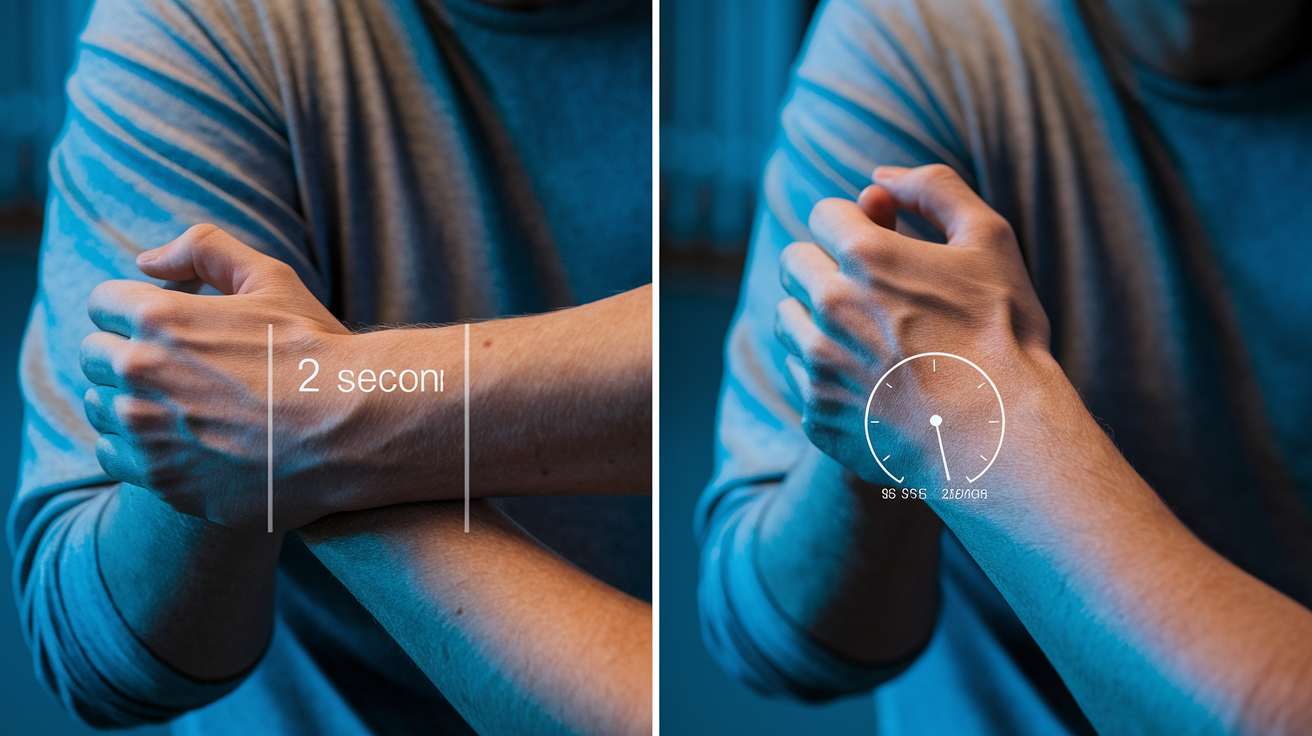
Skin recoil time shows you how fast the pinched skin goes back to flat. That speed reflects the water content sitting in the tissue beneath your skin. Normal hydration means skin holds its shape well and bounces back right away because the tissue is full and firm. When the body loses water, the tissue loses some of that support structure and the skin tent collapses slower. This happens because the fluid between cells drops, leaving less volume to push the skin back where it belongs.
In someone who’s properly hydrated, skin returns to flat in under 2 seconds. If it takes 2 to 5 seconds, that suggests possible mild to moderate dehydration. When the skin tents and takes more than 5 seconds to flatten, that raises concern for more significant water loss. These are rough guidelines, not hard rules. You’ve got to combine recoil time with other things you’re noticing before deciding what to do.
How you interpret results shifts with age. Babies have really elastic skin and might show normal recoil even when they’re moderately dehydrated, so the belly pinch works better than the hand. Older adults often have slower recoil naturally, sometimes taking up to 20 seconds to return even when their fluid levels are fine. Aging reduces skin elasticity on its own. In older people, lean on supporting signs instead of trusting turgor alone.
| Recoil Time (seconds) | Likely Interpretation |
|---|---|
| Less than 2 | Normal hydration; no significant dehydration |
| 2 to 5 | Possible mild to moderate dehydration; check other signs |
| More than 5 | More significant dehydration; combine with vitals and urine output |
Several things besides dehydration can mess with skin turgor:
- Dehydration from throwing up, diarrhea, or just not drinking enough
- Severe malnutrition or fast weight loss
- Connective tissue disorders like Ehlers-Danlos syndrome or scleroderma
- Being out in the heat too long or heat exhaustion
Always check other signs alongside recoil time. The most useful ones are:
- Urine output: Adults should make at least 0.5 milliliters per kilogram per hour. Kids and babies should make at least 1 milliliter per kilogram per hour. An infant with fewer than one wet diaper in 6 to 8 hours is a red flag.
- Capillary refill time: Press a fingernail or the skin of the palm and let go. Color should come back in under 2 seconds. A refill time longer than 2 to 3 seconds points to poor circulation or low volume.
- Heart rate: Really fast heart rate, like resting above 100 to 120 beats per minute in adults (adjusted for kids), often goes hand in hand with dehydration.
Dry or sticky mucous membranes are another useful clue. In someone who’s well hydrated, the inside of the mouth and gums look moist and smooth. When dehydration kicks in, these tissues get dry, tacky, or pale. Checking mucous membranes takes seconds and adds context to your turgor result.
Factors That Affect Skin Turgor Test Accuracy
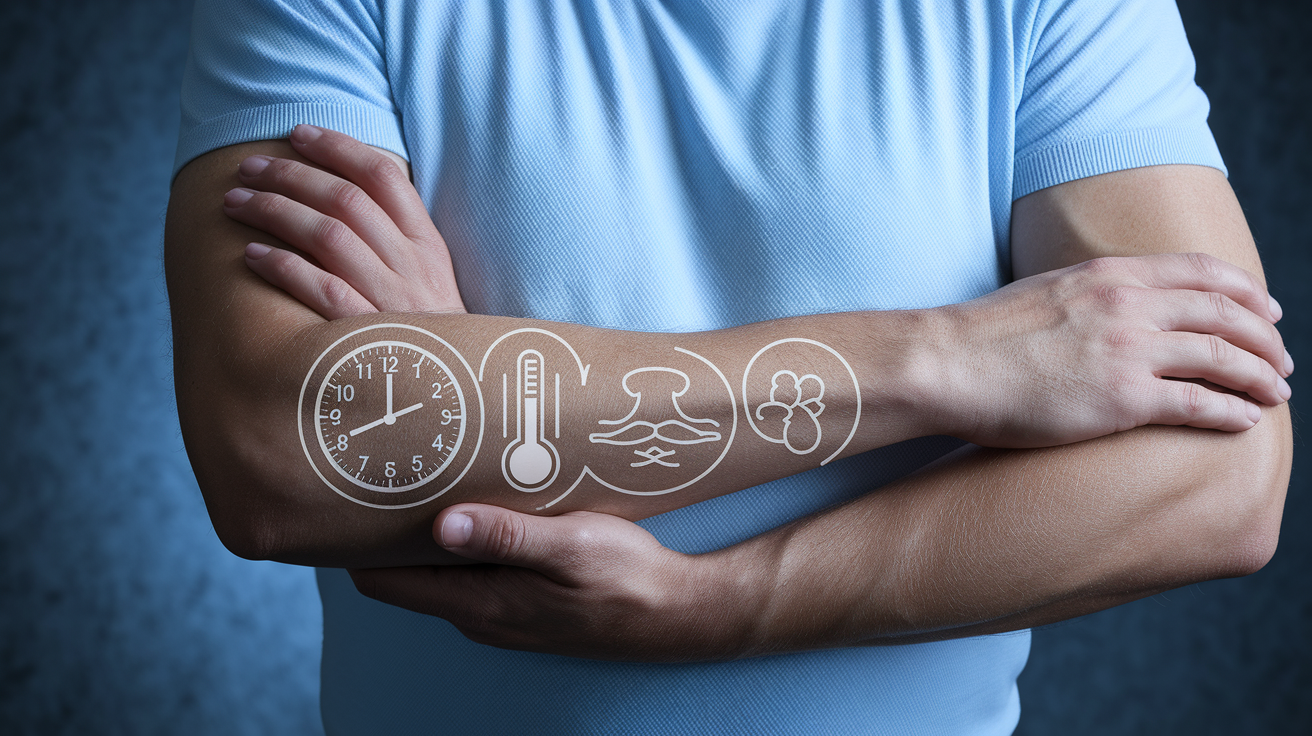
Age is the biggest thing that throws off skin turgor readings. Older adults lose collagen and elastin as they age, which drops baseline skin elasticity. An older person’s skin might take many seconds to return to flat even when they’re drinking plenty of water and their blood tests look fine. In one review, recoil times up to 20 seconds showed up in hydrated older adults. This makes the test way less reliable in people over 65, and you should always pair results with vital signs, urine output, and weight changes.
Cold temperature slows skin recoil even in young, healthy people. If you test someone who just came in from the cold or who has cool skin, the result might look worse than reality. Warm the skin to room temperature first if you can. Obesity can hide findings because extra fat under the skin changes how tenting looks and feels. Really thin or underweight people may show slow recoil because of tissue volume loss instead of actual dehydration. Swelling from heart failure, kidney disease, or other causes can make skin look falsely normal or even overly elastic, masking true dehydration underneath.
Common causes of false or confusing results:
- Advanced age with natural elasticity loss
- Long-term sun damage or chronic skin exposure
- Steroid medications or long-term topical steroid use
- Connective tissue disorders like Ehlers-Danlos or scleroderma
- Obesity, severe weight loss, or swelling
In babies, the hand and forearm don’t work as test sites. Baby skin on the arms and legs is super elastic by design and often snaps back fast even when the baby’s dehydrated. Test the belly or chest instead, and watch for a sunken fontanelle (the soft spot on top of the head) as a stronger sign of volume loss.
Broader Systemic Signs of Dehydration to Check Beyond Skin Turgor

Skin turgor is just one piece of the puzzle. How the body reacts to losing water shows up in the heart, the kidneys, and the brain. Checking these broader signs helps you figure out whether slow skin recoil is a real warning or a false alarm. Always step back and ask what else the body is telling you.
Tachycardia, or a faster than normal heart rate, is a common early sign of volume loss. When blood volume drops, the heart tries to keep things going by beating faster. In adults, a resting heart rate over 100 to 120 beats per minute is concerning, especially if the person isn’t anxious or in pain. In kids, age-adjusted norms apply, but a steady rapid pulse combined with decreased skin turgor suggests the body’s working hard to make up for lost fluid. Blood pressure changes matter too. A systolic blood pressure under 90 millimeters of mercury in an adult signals possible shock or severe dehydration. Orthostatic changes, like a drop in blood pressure or a jump in heart rate when standing up, show that the body can’t keep circulation steady in different positions and volume is low.
Mental status changes often pop up when dehydration gets moderate to severe. Confusion, drowsiness, extreme crankiness, or trouble staying awake all suggest the brain isn’t getting enough blood flow or that electrolyte imbalances are messing with function. Dizziness or feeling lightheaded, especially when standing or moving fast, points to poor circulation. Muscle cramps or twitching can signal electrolyte trouble, especially low sodium or potassium, which often come along with dehydration from vomiting or diarrhea.
Watch for these signs alongside skin turgor:
- Dizziness or feeling faint, especially when you stand up
- Confusion, sluggishness, or trouble focusing
- Muscle cramps or weird twitching
- Symptoms when standing like heart racing or vision going dim
Skin Turgor Test Variations for Infants, Children, and Older Adults
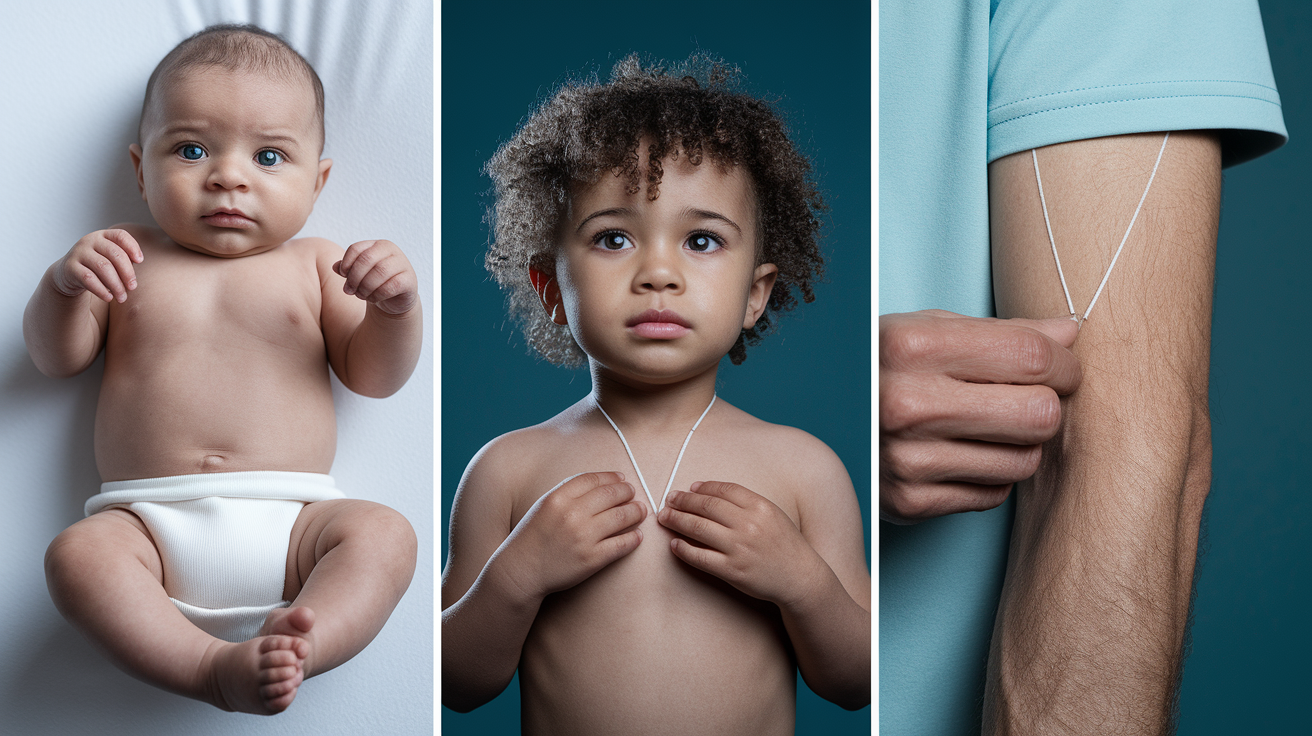
The standard adult method doesn’t work well across all ages. Babies, young kids, and older adults each have unique skin properties that need different approaches. Testing the same way for everyone leads to missed dehydration in some groups and false alarms in others. Adjusting how you test and what you look for by age improves accuracy and helps you make better calls.
Testing in Infants and Young Children
Babies and toddlers have really elastic skin, especially on their hands and arms. Testing the back of a baby’s hand often shows instant recoil even when the baby’s moderately dehydrated. Instead, gently pinch the skin on the belly or center of the chest. These sites give you better information in children under two. Watch the skin tent carefully. If it takes more than a second or two to flatten, consider it abnormal for this age and check other signs right away.
The fontanelle, or soft spot on top of a baby’s head, is another key marker. A sunken fontanelle means the fluid cushion around the brain has dropped and dehydration is probably significant. Look for fewer than one wet diaper in 6 to 8 hours, dry mucous membranes, or no tears when crying. Babies can’t compensate well for fluid loss, so any mix of delayed skin turgor, a sunken fontanelle, and less urine output needs quick medical attention.
Testing in Older Adults
Older adults lose skin elasticity as a normal part of aging. Recoil can take many seconds without any real dehydration, making the test less helpful on its own. If you pinch a 75-year-old’s forearm and the skin takes 10 seconds to return, you can’t jump straight to a dehydration conclusion. Instead, check mucous membranes for moisture, ask about urine output over the past day, and measure blood pressure and heart rate. Weight change is especially helpful in older people. A drop of several pounds over a few days is a much clearer signal than slow skin recoil.
Lean more heavily on supporting signs in this group. Look for dry mouth, less frequent urination or dark urine, dizziness when standing, and a recent drop in how much they’re drinking. A detailed timeline of symptoms often tells you more than the turgor test by itself.
Limitations of the Skin Turgor Test and When to Seek Medical Care

Skin turgor is fast and noninvasive, but it’s got real limits. Multiple studies from 1991 to 2015 back up that the test has low sensitivity and specificity, especially in older adults. Sensitivity means how often the test correctly spots dehydration when it’s there. Specificity means how often the test correctly shows normal results in someone who’s well hydrated. Both are weak for skin turgor. This means the test can miss dehydration or wrongly flag it when hydration is actually fine. A 2007 review of pediatric studies found only moderate accuracy in children, and a 2015 review said skin turgor isn’t very effective as a standalone tool in people over 65.
Use the test as a first step, not a final answer. If results are unclear or if symptoms don’t match what the turgor finding says, move to checks that give you better information. Urine output, vital signs, and recent weight are all more definitive. When you can get them, lab tests like blood urea nitrogen (BUN) to creatinine ratio, serum osmolality, and electrolyte panels give you objective proof. These tests measure actual blood concentration and kidney function instead of relying on a physical exam trick that can get thrown off by skin condition and how you do it.
Certain warning signs need immediate medical evaluation no matter what the skin turgor test shows:
- Ongoing vomiting or diarrhea for more than 24 hours with less fluid going in
- Fainting, almost fainting, or can’t stand without dizziness
- Confusion, extreme tiredness, or trouble staying awake
- Very low urine output (no urination in 8 to 12 hours for an adult, fewer than one wet diaper in 6 to 8 hours for a baby)
- Systolic blood pressure below 90 millimeters of mercury, capillary refill time longer than 3 seconds, or heart rate staying really fast despite rest
When Laboratory Confirmation Is Recommended
If skin turgor is delayed and the person has any of the red flags above, get lab work done as soon as you can. Blood tests that help confirm dehydration include the BUN to creatinine ratio (a high ratio suggests dehydration), serum sodium and other electrolytes (to check for imbalance), and serum osmolality (a direct measure of blood concentration). Urine specific gravity and urine osmolality show how concentrated the urine is, another marker of hydration status. These tests are especially important in older adults, people with chronic illness, and anyone whose symptoms are severe or getting worse.
Hydration Treatment Options After Identifying Poor Skin Turgor

Once you spot decreased skin turgor and back it up with supporting signs, the next step is getting fluid balance back. How intense treatment needs to be depends on severity. Mild dehydration, where skin recoil is a little delayed and the person is still alert and able to drink, usually responds to drinking fluids by mouth. Offer small, frequent sips of water or oral rehydration solution. Oral rehydration solutions have a specific balance of sodium, potassium, and glucose that helps the intestines absorb water better than plain water alone. You can buy these solutions over the counter and they’re especially useful if the person’s been throwing up or has diarrhea.
Moderate to severe dehydration may need intravenous fluids. When someone can’t keep liquids down, is too out of it to drink, or shows signs of shock like low blood pressure or very fast heart rate, IV therapy puts fluid straight into the bloodstream and skips the digestive system. Sometimes kids get fluids through a nasogastric tube if getting an IV in is hard. Anti-nausea medications might get prescribed to stop vomiting and let the person drink. Once vomiting stops, oral rehydration can usually take over and IV fluids can be stopped.
Preventing dehydration beats treating it. Use these strategies to keep hydration up and catch problems early:
- Drink fluids steadily throughout the day instead of waiting until you feel thirsty. Thirst is a late sign of dehydration.
- Replace electrolytes during illness, heavy sweating, or long stretches in the heat. Plain water alone can water down electrolytes if losses are high.
- Watch urine color and how often you go. Pale yellow urine and regular urination signal good hydration.
- Stay out of extreme heat and humidity when you can. If you have to be in hot conditions, boost fluid intake ahead of time.
- Catch early signs like dry mouth, less urine output, or mild fatigue, and respond by drinking more before skin turgor or vital signs start changing.
Final Words
Do the pinch: 2–3 cm of skin, hold about 2 seconds, release, and watch how fast the skin springs back.
This post covered the best sites for adults and infants, what different recoil times often suggest, factors that can skew the test, and other signs to check. We also noted the test’s limits and when lab checks or medical care make sense.
Treatments range from sipping an oral rehydration solution to IV fluids in serious cases. Use the skin turgor test for dehydration as a simple clue, track it with other signs, try small fixes, and reassess. You’ll often spot useful patterns quickly.
FAQ
Q: What is a positive skin turgor test?
A: A positive skin turgor test usually means the pinched skin stays tented or returns slowly, showing reduced elasticity and suggesting dehydration or low fluid volume; check other signs to confirm.
Q: What are the 5 warning signs of dehydration?
A: The five warning signs of dehydration are dry mouth, low or dark urine, dizziness or lightheadedness, a fast heart rate, and confusion or extreme tiredness.
Q: How to fix poor skin turgor?
A: To fix poor skin turgor, replace fluids with water or an oral rehydration solution, rest in a cool place, treat vomiting if present, and seek medical care if symptoms worsen or don’t improve.
Q: What is the most accurate test for dehydration?
A: The most accurate test for dehydration is blood testing—especially serum osmolality and the BUN/creatinine ratio—since labs best confirm fluid loss and electrolyte changes.