


Think the number on your scale tells the whole story?
It doesn’t.
Body water percentage—how much of your weight is water—actually shows hydration, muscle-versus-fat changes, and short-term swelling from salt or inflammation.
This post walks you through simple, repeatable ways to measure it at home, what to control before each test, and how to spot real trends instead of panicking over one odd reading.
Follow these steps and you’ll get useful data you can act on.
Practical Methods to Measure Body Water Percentage at Home
Body water percentage tells you how much of your total weight is water. Your body stores water in two main places: inside cells (intracellular water, ICW) and outside cells in blood and between tissues (extracellular water, ECW). Combined, these make up your total body water (TBW). At birth, TBW sits around 80 percent of body weight. By adulthood, that drops to roughly 45 to 65 percent. Tracking this number helps you spot dehydration early, monitor changes in muscle and fat, and catch patterns like water retention from high sodium or inflammation.
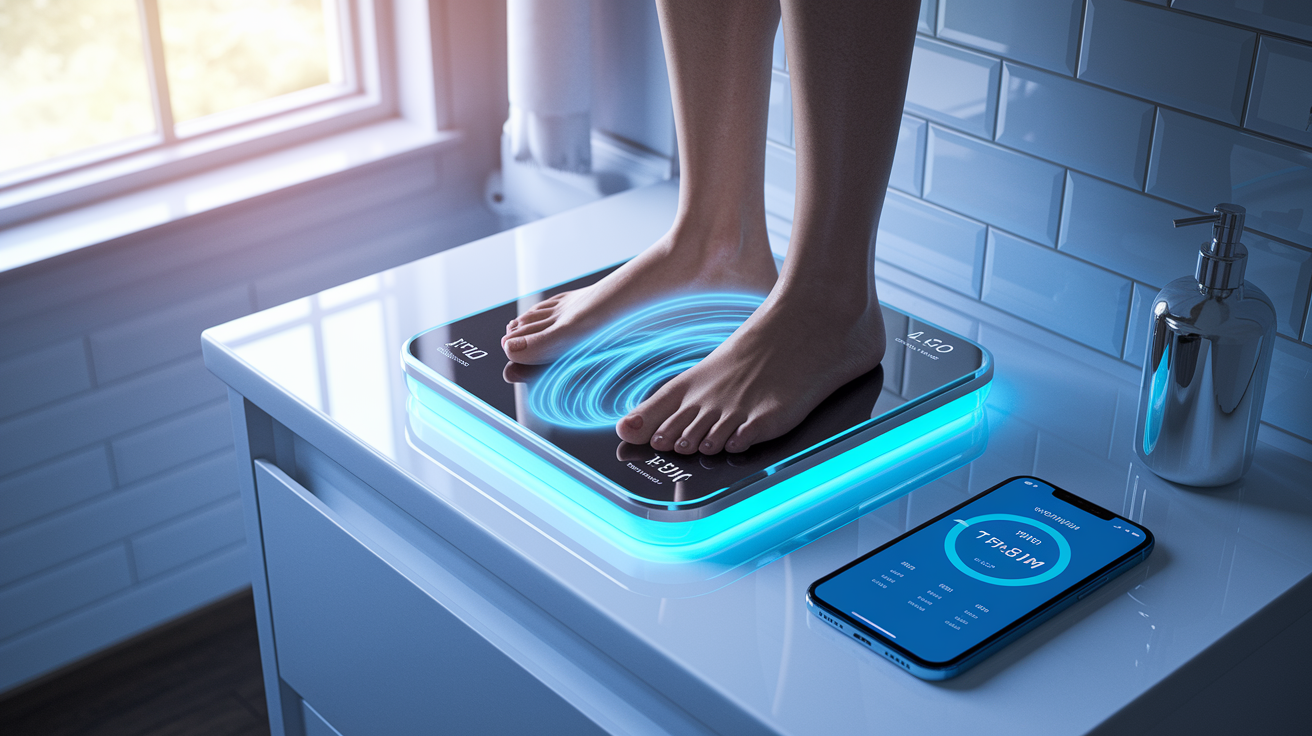
The most practical way to measure body water percentage at home is with a bioelectrical impedance analysis (BIA) scale. These devices send a tiny, painless electrical current through your body via metal footpads. Because water conducts electricity and fat resists it, the scale measures how much the current slows down (impedance) and uses that data to estimate your water percentage. Advanced BIA scales can even split the reading into ICW and ECW. Accuracy varies by device and conditions. Hydration, recent meals, and exercise all shift readings. But BIA is fast, affordable, and good enough for tracking trends over weeks and months.
If you see extreme readings, persistent imbalances, or symptoms like swelling or rapid unexplained weight changes, a clinical test like isotope dilution or advanced multi-frequency BIA may be needed. Those tests offer precision that home scales can’t match. But for everyday monitoring, a consumer BIA scale and consistent routine will give you useful, actionable data.
How to take a home BIA measurement
-
Measure at the same time every day. Ideally first thing in the morning after waking, before eating or drinking.
-
Use the bathroom before stepping on the scale. A full bladder adds temporary weight and shifts water distribution.
-
Avoid exercise, alcohol, and heavy meals for at least 12 hours before measuring. Sweat, fluid shifts, and digestion all change readings.
-
Stand barefoot with clean, dry feet on the metal electrode pads. Moisture, lotion, or dirt blocks the current and skews results.
-
Record your reading and repeat the measurement at the same time tomorrow. Single readings bounce around. Trends over a week or more tell the real story.
Understanding Total Body Water and What Influences Your Body Water Percentage
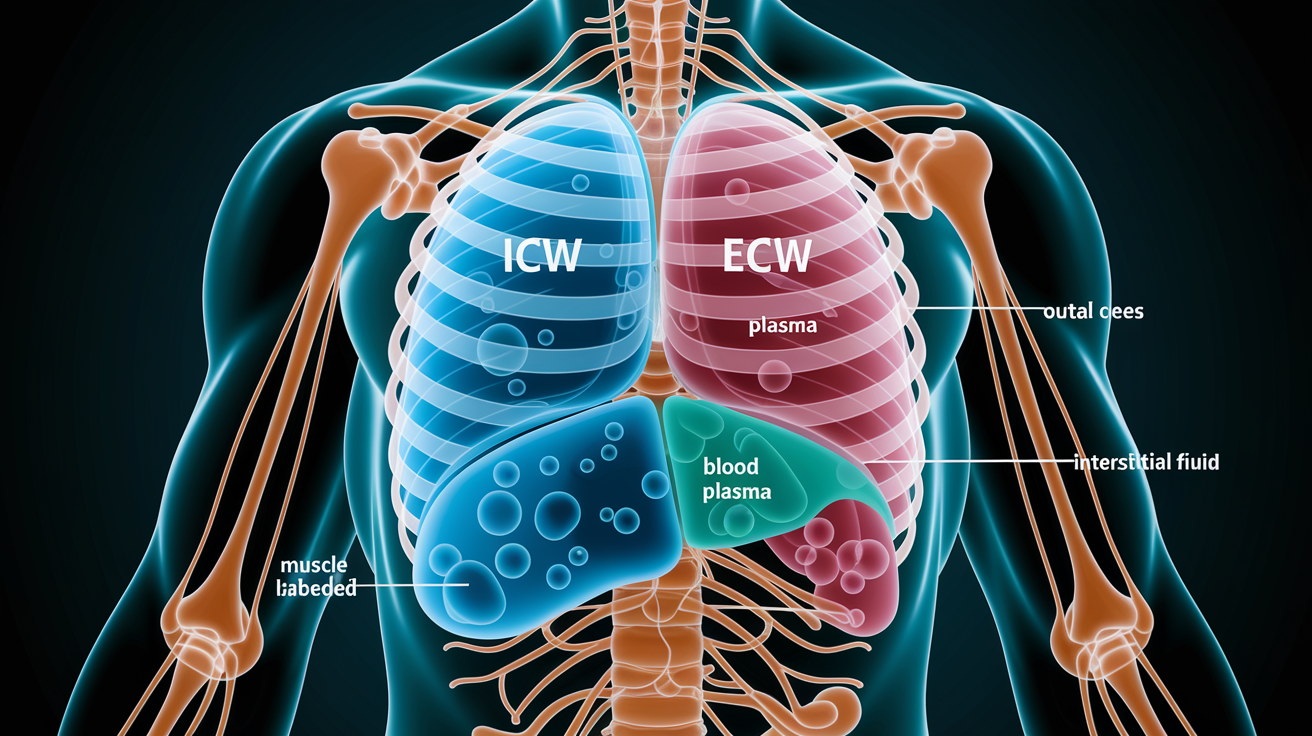
Total body water is the sum of intracellular water (ICW) and extracellular water (ECW). ICW lives inside your cells and makes up about two thirds of your body water. ECW sits outside cells in blood plasma, lymph, and the spaces between tissues, accounting for the remaining one third. A healthy ICW to ECW distribution is roughly 3:2. Water content varies by tissue. Lungs hold about 83 percent water, muscles and kidneys around 79 percent, brain and heart about 73 percent, skin 64 percent, and bones roughly 31 percent. When you measure TBW percentage, you’re capturing the weighted average of all those tissues.
Body composition strongly influences your TBW percentage. Muscle tissue is dense with water, while fat tissue contains very little. If you have more muscle and less fat, your TBW percentage will be higher. If you carry more body fat, your TBW percentage drops even if you’re drinking plenty of fluids. That’s why two people at the same weight can show very different body water readings. One with more muscle will clock in at 60 percent TBW, the other with more fat might sit at 50 percent. Resistance training and building lean mass naturally raise TBW percentage over time.
Shifts in extracellular water affect what you measure and how you feel. When ECW rises above normal proportions, it often signals water retention from high sodium intake, inflammation, kidney dysfunction, or heart issues. You’ll notice puffiness in fingers, ankles, or around your eyes. Excess ECW throws off your ICW:ECW ratio and can make TBW percentage look artificially high even though the extra water isn’t supporting healthy cell function. Tracking ECW separately (with advanced BIA devices) helps you tell the difference between muscle building water gains and unhealthy fluid retention.
Measurement Techniques for Body Water: From BIA to Gold Standard Clinical Testing

Bioelectrical impedance analysis comes in three main types: single frequency, multi frequency, and bioimpedance spectroscopy (BIS). Single frequency BIA, used in most home scales, sends one electrical frequency (typically 50 kHz) through your body and estimates total body water from the resistance reading. It’s fast and cheap but can’t separate ICW from ECW. Multi frequency BIA applies several frequencies. Low frequencies stay outside cells and measure ECW. High frequencies penetrate cell membranes and estimate ICW. This method is more accurate and useful for spotting fluid imbalances, but the devices cost more and are usually found in fitness centers or clinics. Bioimpedance spectroscopy scans a wide range of frequencies and builds a detailed picture of fluid distribution. BIS is the most precise BIA option and approaches the accuracy of lab methods, but it requires professional equipment and trained operators.
The gold standard method for measuring total body water is isotope dilution, most commonly using deuterium oxide (heavy water). You drink a measured dose of deuterium labeled water, wait several hours for it to distribute evenly throughout your body, then give a blood or saliva sample. A lab measures the concentration of deuterium and calculates TBW from the dilution ratio. The test takes four to six hours and requires strict control of food and fluid intake during the waiting period. Sodium bromide can be used the same way to measure ECW specifically. Isotope dilution is extremely accurate but expensive, time consuming, and only available in research labs or specialized hospitals. Clinicians use it when absolute precision is critical. Kidney disease monitoring, clinical trials, or diagnosing severe fluid imbalances.
Dual energy X ray absorptiometry (DEXA) and magnetic resonance imaging (MRI) offer indirect body water measurement. DEXA scans measure bone density, lean mass, and fat mass. TBW is estimated from lean tissue mass since muscle holds most of the body’s water. DEXA is widely available, takes 10 to 20 minutes, and exposes you to minimal radiation, about the same as a cross country flight. MRI creates detailed cross sectional images of tissues and can directly visualize water in different compartments. It’s the most detailed option but also the most expensive, often running hundreds to over a thousand dollars per scan. MRI is used in research settings or when doctors need high resolution data for diagnosis, not for routine body water tracking.
| Method | Accuracy Level | Cost Range | Best Use Case |
|---|---|---|---|
| Single frequency BIA (home scale) | Moderate (±3–5%) | $30–$150 | Daily tracking, trend monitoring, home use |
| Multi frequency BIA or BIS | High (±2–3%) | $200–$2,000+ device; $50–$150 per test at clinic | ICW/ECW analysis, clinical or training centers |
| Isotope dilution (deuterium/bromide) | Very high (±1–2%) | $300–$800+ per test | Research, renal or cardiac disease monitoring, gold standard validation |
| DEXA scan | Moderate to high (indirect estimate) | $50–$250 per scan | Body composition assessment, bone density screening, fitness tracking |
| MRI | Very high (direct tissue imaging) | $500–$3,000+ per scan | Research, detailed clinical diagnosis, compartment level analysis |
Preparing for Accurate Body Water Measurement: Timing, Protocols, and Avoiding Errors
Hydration status is the biggest factor that throws off body water measurements. If you’re dehydrated, your reading will be artificially low, even if your body composition hasn’t changed. If you drank a liter of water an hour before stepping on the scale, the reading will spike temporarily. Exercise and heat exposure cause sweating, which pulls water out of extracellular compartments first and shifts the ICW to ECW ratio. A hard workout or sauna session can drop your TBW reading by 2 to 3 percent or more, and it takes hours to rehydrate fully. Food, especially carbohydrate rich meals, influences water retention because every gram of stored glycogen binds roughly 3 grams of water. A big pasta dinner will raise your TBW reading the next morning. Alcohol acts as a diuretic and lowers TBW temporarily. Sodium intake causes short term water retention, mainly in ECW, which can make you look heavier and more hydrated than you actually are. Women often see cyclical TBW changes during the menstrual cycle. Water retention peaks in the days before menstruation due to hormonal shifts, then drops after. All these factors mean that a single reading is just a snapshot. You need consistent conditions to track real change.
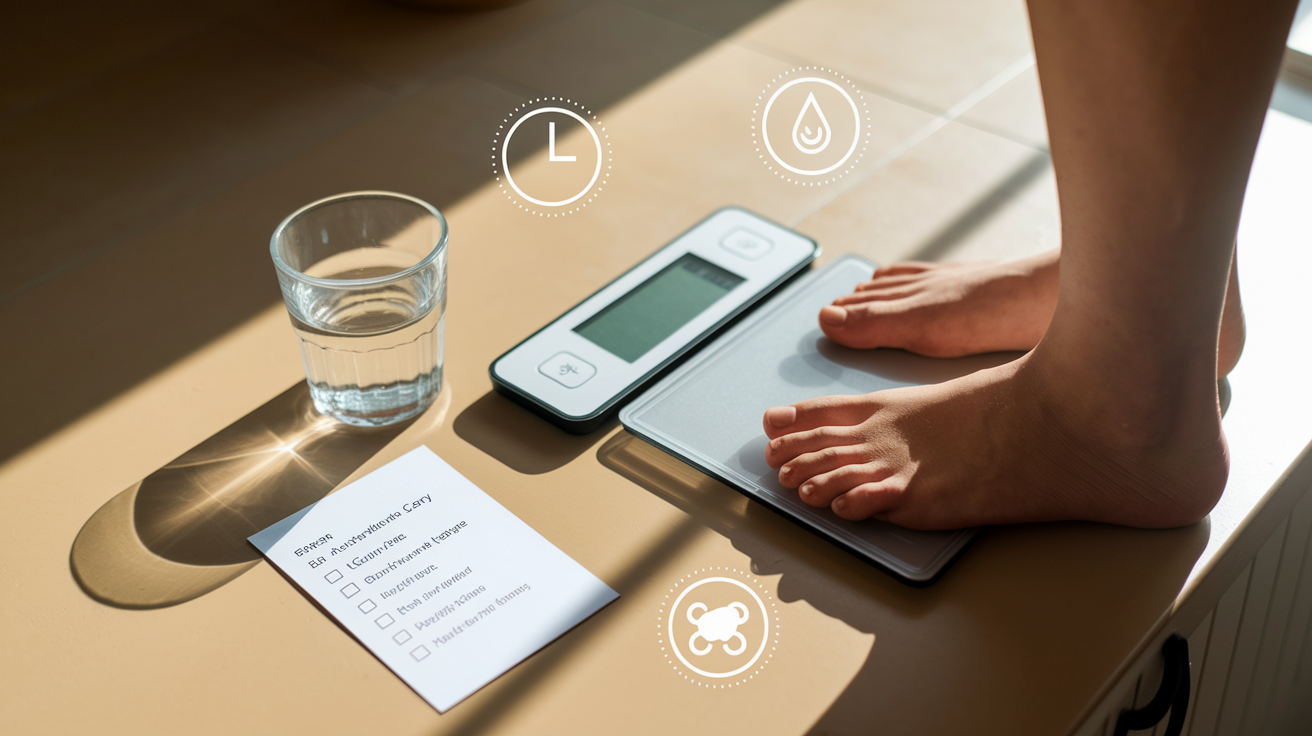
To get the most accurate and repeatable body water measurements, follow these preparation rules every time:
Fast for at least 3 to 4 hours before measuring. An empty stomach means less temporary water from digestion and more stable ECW levels.
Void your bladder (and bowels if possible) right before stepping on the scale. A full bladder adds weight and shifts fluid distribution.
Measure at the same time every day. First thing in the morning after waking is ideal because hydration status is most stable overnight.
Avoid exercise, hot showers, or saunas for at least 12 hours before measuring. Sweat and heat stress alter ECW and take time to normalize.
Keep room temperature consistent, ideally between 68 and 72°F (20–22°C). Cold environments constrict blood vessels and push fluid toward your core. Heat does the opposite.
Skip alcohol and minimize sodium intake the day before measuring. Both create temporary water shifts that mask real trends in body composition.
Using Formulas to Estimate Total Body Water
If you don’t have access to a BIA scale or clinical test, you can estimate total body water with the Watson formula. The formula uses your age, height, and weight to predict TBW in liters. It’s less precise than device based methods but gives you a ballpark number that’s useful for hydration planning or quick comparisons. For men, the formula is: TBW (liters) = 2.447 − (0.09516 × age in years) + (0.1074 × height in cm) + (0.3362 × weight in kg). For women, the formula is: TBW (liters) = −2.097 + (0.1069 × height in cm) + (0.2466 × weight in kg). Plug in your numbers, do the math, and you’ll get an estimate of how many liters of water your body holds.
Once you have TBW in liters, convert it to a percentage by dividing TBW by your body weight in kilograms, then multiply by 100. Here’s a sample calculation for a 30 year old man who weighs 80 kg and is 180 cm tall: TBW = 2.447 − (0.09516 × 30) + (0.1074 × 180) + (0.3362 × 80) = 2.447 − 2.855 + 19.332 + 26.896 = 45.82 liters. Then, TBW percentage = (45.82 ÷ 80) × 100 = 57.3 percent. That number sits comfortably in the typical adult male range. The Watson formula doesn’t account for body composition. It treats all weight the same. So it works best for people with average muscle and fat levels. If you’re very muscular or carrying high body fat, the estimate may be off by several percentage points.
| Formula Name | Inputs Required | Precision Level |
|---|---|---|
| Watson (male) | Age, height (cm), weight (kg) | Moderate (±3–5%); best for average body composition |
| Watson (female) | Height (cm), weight (kg) | Moderate (±3–5%); best for average body composition |
| Hume Weyers | Height (cm), weight (kg) | Similar to Watson; used in some clinical settings |
Interpreting Body Water Percentage Results and Understanding Normal Ranges
Typical adult total body water percentages fall between 45 and 65 percent of body weight, but the range shifts with sex, age, and fitness level. Men generally sit higher, around 55 to 65 percent, because they carry more muscle mass and less body fat on average. Women tend to fall between 45 and 55 percent due to higher essential fat stores and slightly lower muscle mass. Newborns start at roughly 80 percent body water, which drops to about 65 percent by age one as body composition changes. Elderly adults often see TBW drop below 50 percent as muscle mass declines and fat tissue increases with age. Athletes, especially those training for strength or endurance, frequently measure above 60 percent because muscle is dense with water and they maintain low body fat.
A high body water percentage relative to your weight usually means you have more lean tissue and less fat. If your reading is climbing over weeks or months while your weight stays stable or increases slightly, you’re likely building muscle. If it spikes suddenly, say, 3 to 5 percent in a day or two, that’s probably water retention from sodium, carbohydrate loading, or inflammation, not a true change in body composition. A low TBW percentage suggests higher body fat, dehydration, or both. If your number is dropping while your weight is stable, you might be losing muscle or chronically under hydrated. If it falls sharply after a workout or hot day, rehydrate and measure again the next morning before drawing conclusions.
Watch for patterns that don’t match your activity or diet. If your TBW is rising but you’re also noticing swelling, puffiness, or unexplained weight gain, you may have excess extracellular water from kidney issues, heart problems, or chronic inflammation. If your reading is consistently below 40 percent and you’re fatigued, weak, or experiencing muscle cramps, consider a clinical body composition test or bloodwork to rule out underlying conditions. Muscle mass strongly shapes TBW results. Track your strength, training volume, and body measurements alongside water percentage to see the full picture.
Troubleshooting Body Water Percentage Measurements and Improving Accuracy Over Time
Most errors in home BIA measurements come from inconsistent testing conditions. Poor electrode contact is a common culprit. Dry, calloused skin or dirt on your feet blocks the electrical current and makes the scale underestimate body water. Lotion, sweat, or wet feet do the opposite, lowering resistance and inflating the reading. Timing matters just as much. Measuring right after exercise, a hot shower, or a big meal will shift your numbers by several percentage points. Hydration swings create the biggest noise. If you’re dehydrated one day and well hydrated the next, your readings will bounce even if your actual body composition hasn’t changed. Consumer BIA scales also vary in quality. Single frequency models are the least consistent, especially for tracking ICW and ECW separately. Multi frequency devices and professional grade BIA units are more reliable but cost significantly more.
To validate your home scale, compare it against a clinical BIA or DEXA scan. Schedule a professional test and measure yourself on your home device within a few hours under identical conditions. If your home scale reads consistently 2 to 3 percent lower or higher, note the offset and adjust your interpretation going forward. If the difference is larger than 5 percent, your scale may not be accurate enough for meaningful tracking. Professional BIA units, often found in gyms, sports medicine clinics, or physical therapy offices, use multi frequency analysis and give more detailed breakdowns of ICW, ECW, and phase angle. Expect to pay $50 to $150 per session. Long term trends are more meaningful than any single reading. A half percent change day to day is noise. A 2 to 3 percent shift over four to six weeks, measured under consistent conditions, is a real signal.
Five troubleshooting strategies for consistent body water measurements
Weigh yourself and measure body water at the exact same time each day. Set a morning alarm, use the bathroom, and step on the scale before eating or drinking anything.
Clean the electrode pads on your scale weekly. Wipe them with a damp cloth to remove skin oils and residue that interfere with current flow.
Track hydration habits in a simple log. Note how much water you drank the day before each measurement so you can spot patterns when readings spike or dip.
Repeat the measurement two or three times in a row and average the results. Step off the scale for 30 seconds between readings to reset the device.
Compare your scale readings to a professional test every three to six months. This recalibrates your expectations and confirms your home device is still tracking accurately.
Final Words
Start measuring with the simple BIA routine we laid out: consistent timing, void before weighing, avoid exercise and alcohol, and use barefoot contact. That gives a repeatable home check you can trust more than a one-off number.
Combine those readings with the TBW basics and troubleshooting tips so shifts mean something instead of causing confusion. If results worry you, consider a clinical test.
Try the morning routine for a week, track trends, and you’ll get confident about how to measure body water percentage. You’ll spot useful patterns and can act on them.
FAQ
Q: What should my body water percentage be for my age?
A: The body water percentage for your age should usually fall within adult ranges: roughly 45–65% for most adults. Infants are about 80%, one‑year‑olds ~65%, and older adults often trend lower.
Q: What are the 10 signs you’re not drinking enough water?
A: The 10 signs you’re not drinking enough water include: thirst, dark yellow urine, dry mouth, fatigue, headache, dizziness, low urine output, dry skin, muscle cramps, and lightheadedness.
Q: Is your body 60 or 70 percent water?
A: Whether your body is 60 or 70 percent water depends on age, sex, and muscle mass. Most adults fall between 45–65%, so 60% is common while 70% is uncommon except in very lean young people.
Q: Why does my scale say I have low body water?
A: Your scale says you have low body water because bioelectrical impedance (BIA) devices estimate water from electrical resistance, and readings shift with hydration, recent exercise, full bladder, poor foot contact, salty meals, or device limits.