



Think you need expensive tests to find food triggers? You don’t.
When you log exactly what you eat and when, paired with clear symptom notes, you build a map that shows likely culprits.
A headache, bloating, or afternoon crash becomes useful data instead of a guess.
This post walks you through simple tracking steps: precise timestamps, full ingredient lists, severity scores, and a clean reintroduction method to confirm triggers fast.
Treat it like a short experiment, track the results, and stop guessing—start spotting real food-to-symptom patterns.
How Nutrition Tracking Reveals Symptom Patterns and Food Triggers

When you track what you eat next to how you feel, you’re building a map. Not a vague one. A real map showing cause and effect. Log your meals with exact times and pair them with symptom notes (when it started, how bad it was, how long it lasted) and you’ve got a dataset that can tell you whether that headache, bloating, or energy crash keeps showing up after certain foods or eating patterns. This kind of paired data moves you from “I feel bad sometimes” to “I feel bad 90 minutes after eating dairy, every single time.”
Lots of symptoms trace back to specific ingredients or meal timing. Digestive stuff like bloating, gas, constipation, diarrhea? Often points to intolerance, fiber issues, or gut reactions. Headaches and migraines can link to histamine foods, alcohol, or blood sugar swings. Fatigue, brain fog, mood dips might follow high carb meals that spike glucose, inflammatory oils, or eating while stressed. Skin reactions (rashes, eczema flares, acne) may show up hours or even days after dairy, gluten, or high glycemic foods. Track these with severity scores (0 to 10) and precise timing windows (minutes or hours after eating) and the connection gets stronger.
To build reliable food to symptom connections, capture these six things at every meal and symptom event:
- Date and time (meal timestamp and when the symptom started)
- Full ingredient list and portion sizes (grams, ounces, cups, tablespoons)
- Symptom type, severity (0 to 10), and how long it lasted (minutes or hours)
- Context stuff (sleep hours, stress rating 0 to 10, recent activity, medications or supplements)
- Biometric data if you’ve got it (CGM readings before and after meals, heart rate, steps)
- Photos of meals (optional but helps with portion accuracy and remembering what you ate)
You need repeated observations before assuming causation. One headache after pizza doesn’t prove gluten sensitivity. Three headaches after three separate gluten meals, with no headaches on gluten free days? Now you’re building a case. Aim for at least three occurrences of the same symptom following the same food before treating it as confirmed. This keeps you from eliminating foods unnecessarily.
Practical Nutrition Tracking Methods for Symptom Pattern Detection

Consistency and detail decide whether your tracking reveals real patterns or just noise. Every meal and every symptom needs a timestamp that’s accurate to the minute when you can manage it. Logging “breakfast” is vague. Logging “oatmeal with walnuts and honey at 7:15 a.m., fatigue hit at 8:45 a.m.” gives you something testable about timing and ingredients.
Timestamped entries also let you map symptom onset windows. Some reactions happen within 30 minutes (blood sugar spikes, immediate allergic responses). Others take two to four hours (digestive symptoms, histamine reactions). A few show up the next day (skin flares, joint pain). Without precise meal and symptom times, you lose the ability to match cause to effect.
Follow these seven steps for accurate tracking:
- Log every meal immediately with date, time, and meal label (breakfast, lunch, dinner, snack).
- List all ingredients including condiments, oils, hidden additives (dressings, sauces, seasoning blends).
- Quantify portions in grams, ounces, cups, or tablespoons. Eyeballing leads to inconsistent data.
- Label symptoms as they occur with the exact start time, type (headache, bloating, fatigue, rash), and how long they last.
- Rate severity on a 0 to 10 scale where 0 is no symptom and 10 is the worst you’ve experienced.
- Add contextual notes about sleep quality, stress level, recent exercise, and any medication or supplement use that day.
- Attach meal photos if your app supports it. Photos improve portion accuracy and help you remember complex meals.
Add extra context whenever your routine changes. Note a bad night of sleep, a high stress day at work, an unusually intense workout, or a new medication. These variables can independently trigger symptoms or amplify food reactions. Documenting them prevents you from blaming the wrong factor. If you had three hours of sleep and skipped breakfast, that afternoon headache may not be the salad dressing.
Using Apps to Track Nutrition and Symptoms More Efficiently

Apps automate the tedious parts and reduce human error. Barcode scanners pull nutrition data from large databases instantly, so you don’t have to manually enter every nutrient value. Photo logging with AI ingredient parsing identifies what’s on your plate and estimates portions. CGM integration overlays your meal timestamps with real time glucose curves, showing exactly when blood sugar spikes or crashes. Wearable syncing imports sleep, heart rate, and activity data. All your context variables live in one place.
The right app depends on what you’re measuring. If you suspect blood sugar swings drive your symptoms, choose an app that pairs with CGMs and shows glucose trends alongside meals. If you need detailed micronutrient breakdowns to spot deficiencies or excesses, pick a database heavy tool. If you want a clinician to review your logs remotely, look for apps with provider portals. All the major platforms connect to Apple Health, Google Fit, or Fitbit, so your wearable data flows in automatically.
When evaluating apps, prioritize database size, integration options, and whether the app supports custom symptom fields. Some platforms let you tag mood, energy, digestion, and pain separately. Others limit you to generic notes. The more structured your symptom logging, the easier your analysis becomes.
| App | Best Feature | Ideal For |
|---|---|---|
| Nutrisense | CGM pairing with glucose trend interpretation, AI ingredient parsing, and 1:1 dietitian video support | Users tracking blood sugar responses, energy crashes, and post meal fatigue |
| MyFitnessPal | Very large nutrition database with barcode scanner and custom recipe creation | General nutrition tracking with minimal manual entry |
| Cronometer | Detailed macro and micronutrient breakdowns using USDA and research grade databases | Users who need nutrient dense analysis and want to spot deficiencies or excesses |
| Nutritionix | Freeform voice logging and Coach Portal for clinician or coach review of client food logs | Users working with dietitians or health coaches who need shared access |
| Fooducate | Rates foods A to D based on nutrition profile and flags trans fats and added sugars | Users who want quick food quality feedback and alternative suggestions |
Most apps offer free tiers with basic logging and charge for premium features like advanced nutrient data, CGM syncing, or provider collaboration. Noom costs around or above $200 annually for behavior change coaching and mini lessons. Nutrisense requires a CGM subscription on top of the app fee. What can nutrition tracking apps help you do? Barcode scanning, photo logs, CGM integration, and wearable syncing all reduce friction and improve compliance, so you stick with tracking long enough to spot patterns.
Running an Elimination Diet to Confirm Food to Symptom Patterns
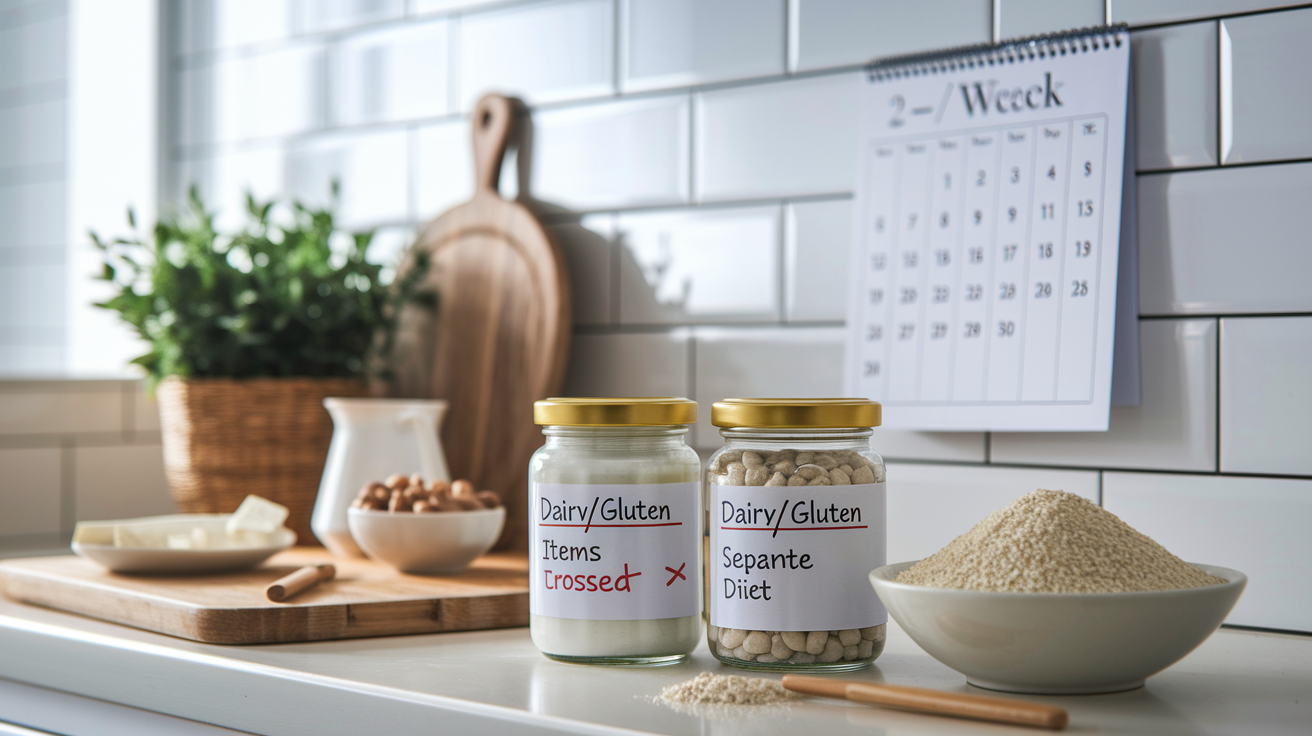
An elimination diet removes suspected trigger foods for a defined window, then reintroduces them one at a time while tracking symptoms. This method isolates variables and tests whether a food truly drives your reaction or whether the association was coincidental. The standard elimination window is two to six weeks. Long enough for symptoms to resolve if the removed food was the cause.
During elimination, keep everything else constant. Eat similar meal timing, maintain your usual sleep schedule, and hold exercise intensity steady. If you eliminate dairy but also start a new workout program and cut caffeine, you won’t know which change improved your symptoms. The point is to test one hypothesis cleanly.
Log every meal and symptom event during the entire elimination phase. Note the absence of symptoms as clearly as you note their presence. If bloating disappears two weeks after removing gluten, that’s data. If it persists, gluten may not be the trigger.
How to Conduct a Clean Reintroduction
Reintroduce one eliminated food at a time, in a normal portion size, and track symptoms for one to three days. If you removed dairy, gluten, soy, and eggs, bring back only dairy on day one. Eat it at two meals that day, then wait. Monitor for immediate reactions (within 30 minutes to two hours) and delayed reactions (up to 48 hours). Common delayed symptoms include digestive upset, headaches, joint pain, skin changes, and mood shifts. Compare symptom severity before and after reintroduction using your 0 to 10 scale.
A clean reintroduction follows these four steps:
- Identify suspect foods based on prior tracking or common allergens (dairy, gluten, eggs, soy, nuts, shellfish, nightshades, FODMAPs, histamine rich foods).
- Remove all suspects for two to six weeks while logging meals and symptoms daily to confirm symptom resolution.
- Track symptoms throughout the elimination window and note when they improve or disappear.
- Reintroduce one food at a time for one to three days and compare symptom frequency and severity to your elimination baseline.
If symptoms return during reintroduction and repeat across multiple exposures, you’ve confirmed a trigger. If symptoms don’t return, the food is likely safe. If results are unclear, repeat the test after another elimination window. Some people need two or three cycles to get a definitive answer, especially with delayed or variable reactions.
Common elimination targets include dairy (lactose intolerance, casein sensitivity), gluten (celiac disease, non celiac gluten sensitivity), FODMAPs (irritable bowel syndrome, small intestinal bacterial overgrowth), histamine rich foods (histamine intolerance, mast cell activation), nightshades (autoimmune or inflammatory conditions), and high glycemic foods (blood sugar dysregulation, reactive hypoglycemia). Each group requires its own elimination trial. Don’t eliminate multiple groups simultaneously unless guided by a clinician, because overly restrictive diets can create nutrient deficiencies and disordered eating patterns.
N of 1 Nutrition Experiments for Personal Symptom Insights

N of 1 experiments let you test specific hypotheses about food and symptoms without committing to a full elimination diet. These are small, controlled trials where you change one variable for five to fourteen days, track the outcome, then revert or adjust. The goal is to isolate cause and effect in your own body, using repeated observations to confirm or reject a hypothesis.
Latency windows matter in N of 1 experiments. Some symptoms appear within minutes (allergic reactions, blood sugar spikes). Others take one to four hours (digestive symptoms, energy crashes, headaches). A few show up the next day or later (skin flares, joint pain, mood changes). Track symptom onset time relative to meal time so you can map the reaction window accurately. If fatigue always hits 90 minutes after lunch, test lunch variables. If it happens at random times, look at cumulative factors like sleep debt or overall carb load.
Six practical N of 1 experiments you can run right now:
- Meal timing shifts Eat your largest meal at lunch instead of dinner for one week and compare evening energy, sleep quality, and next morning digestion.
- Single ingredient swaps Replace butter with olive oil, cow’s milk with oat milk, or white rice with quinoa, and track symptom changes over seven days.
- Portion tests Halve your typical serving of a suspected trigger food (cheese, bread, coffee) and log whether symptom severity decreases proportionally.
- Fiber increases Add two tablespoons of ground flaxseed or one cup of cooked lentils daily for ten days and monitor bowel movements, bloating, and satiety.
- Post meal movement Take a ten minute walk immediately after dinner every night for one week and compare post meal glucose (if using a CGM), energy levels, and sleep onset.
- Hydration adjustments Drink one extra glass of water before each meal for five days and track headache frequency, energy, and digestive comfort.
Assess results by counting symptom frequency and averaging severity scores. If headaches drop from five episodes per week to one, and severity falls from 7 out of 10 to 3 out of 10, your intervention worked. If there’s no change, the variable you tested isn’t the driver. If symptoms worsen, you’ve identified a harmful factor. Document everything so you can repeat successful experiments and avoid repeating failures.
Correlation doesn’t guarantee causation, even in your own data. A headache that coincides with eating nuts may actually be caused by dehydration, stress, or poor sleep that same day. This is why N of 1 experiments require multiple repetitions and controlled conditions. Run the same test at least three times under similar circumstances before concluding the food is the trigger.
Analyzing Nutrition and Symptom Patterns with Data Techniques

Pattern analysis turns raw tracking data into actionable insights. Start by plotting your meal timestamps and symptom events on a timeline. Visual patterns often jump out immediately. Three afternoon energy crashes all occurring 90 minutes after high carb lunches, or five bloating episodes all following meals with raw vegetables. If your app doesn’t offer built in visualization, export your data to a spreadsheet and create simple time series charts.
Ingredient tagging makes filtering faster. Tag meals with keywords like “dairy,” “gluten,” “fried,” “raw,” “spicy,” or “high sugar.” Then filter your symptom log to show only entries that followed tagged meals. Count how many times each tag appears alongside a symptom. If “dairy” shows up in 80 percent of your bloating events and only 30 percent of your total meals, you’ve got a strong signal.
Overlay biometric data when available. If you use a CGM, plot your glucose curve on the same timeline as your symptom log. Look for consistent glucose spikes or crashes that align with fatigue, headaches, or mood dips. If you track heart rate or sleep quality via a wearable, compare those metrics to digestive symptoms or next day energy. Multi layered data reveals whether symptoms are driven by food composition, meal timing, sleep debt, or stress.
Five steps to confirm repeatable symptom patterns:
- Aggregate all entries where the suspected trigger food appears, regardless of meal type or day.
- Filter by ingredient or meal context (meals containing eggs, or meals eaten under stress).
- Compare average symptom severity for meals with the trigger versus meals without it.
- Evaluate timing consistency by checking whether symptom onset windows cluster (always 60 to 90 minutes post meal).
- Check for confounding variables like poor sleep, high stress, or medication changes that could explain the symptom independently.
Statistical significance matters less in personal tracking than effect size and repeatability. Even two or three clear, repeated events can justify a dietary change if the symptom is severe and the pattern is consistent. Use your judgment and prioritize quality of life. If removing a food eliminates a daily symptom, the experiment succeeded.
Preparing Your Nutrition and Symptom Records for Healthcare Providers

Clinicians need clean, organized datasets to interpret your patterns and recommend next steps. A two to twelve week window of paired meal and symptom logs gives them enough data to spot trends without overwhelming them. Export your records as CSV or PDF files, and include summary statistics: total meals logged, symptom event counts, repeated reactions (bloating occurred after 5 of 7 meals containing dairy), and average symptom severity for suspected triggers versus control meals.
Trend screenshots add visual context. If your app generates charts, capture images of your glucose curves overlaid with meal markers, or symptom frequency over time. Annotate key events with notes like “eliminated gluten here” or “reintroduced soy on this date.” Providers can see the pattern faster than reading raw data rows.
Document any controlled experiments you ran. If you eliminated dairy for three weeks and symptoms resolved, then reintroduced it and symptoms returned, summarize that timeline with exact dates and severity scores. Include your medication and supplement list with dosages and timing, because some drugs and nutrients interact with food or independently cause symptoms that mimic food reactions.
| Data Type | Why It Matters | Example |
|---|---|---|
| Meal logs with timestamps and full ingredient lists | Lets the clinician reconstruct your diet and spot patterns in nutrient composition, meal timing, and food combinations | “Breakfast 7:10 a.m.: scrambled eggs (2 large), whole wheat toast (1 slice), butter (1 tbsp), coffee with milk (8 oz)” |
| Symptom charts showing type, severity, onset, and duration | Reveals symptom frequency, severity trends, and temporal relationships to meals | “Bloating 9:00 a.m., severity 6 out of 10, lasted 90 minutes, started 110 minutes after breakfast” |
| CGM glucose overlays or wearable biometric data | Confirms or rules out blood sugar dysregulation, stress responses, or sleep impacts on symptoms | “Glucose spiked from 95 mg/dL to 160 mg/dL at 8:15 a.m., fatigue began at 9:00 a.m., glucose dropped to 70 mg/dL by 10:00 a.m.” |
| Medication, supplement, and relevant lab results | Rules out drug food interactions and provides clinical context (inflammatory markers, allergy panels, thyroid function) | “Taking 20 mg omeprazole daily, magnesium glycinate 400 mg at bedtime; recent lab: CRP 8 mg/L, IgE normal” |
Bring specific examples to appointments. Pick two or three clear symptom events with full meal details, context notes, and any biometric readings. Walk your provider through the timeline: “I ate this meal at this time, my glucose did this, my symptom started here, and this is how long it lasted.” Concrete cases are easier to discuss than abstract summaries. If you completed an elimination and reintroduction, bring those results with symptom severity before, during, and after. That evidence helps the clinician recommend next tests (breath tests for SIBO, allergy panels, endoscopy, food sensitivity labs) or refer you to a specialist.
Final Words
Start by logging each meal, symptom, and context, including timestamps, ingredients, portions, symptom severity, sleep, stress, and any meds.
Use a simple template or app so entries stay consistent. Add photos or CGM overlays when helpful. Run short N-of-1 tests or a focused elimination and reintroduction to see if patterns repeat.
Look for at least three similar reactions across 2 to 12 weeks before assuming a trigger. nutrition tracking for symptom patterns turns fuzzy worries into clear, testable clues you can act on, and that’s a good place to start.
FAQ
Q: How does nutrition tracking reveal symptom patterns and food triggers?
A: Nutrition tracking reveals symptom patterns and food triggers by pairing timed meal details with symptom reports, letting you spot repeated links between specific ingredients, portion sizes, timing, and reaction severity.
Q: What fields should I log to detect food–symptom correlations?
A: You should log timestamps, ingredients, portion sizes, symptom severity (0–10), symptom onset and duration, sleep and stress notes, medications/supplements, and any objective metrics like CGM readings.
Q: How long should I track to validate suspected triggers?
A: You should track for at least 2 weeks and ideally up to 12 weeks, aiming to see a suspected trigger appear in three or more separate events before treating it as likely causal.
Q: What are practical meal-logging steps and best practices?
A: Practical meal logging means recording every meal with a timestamp, listing ingredients, measuring portions, labeling symptoms and severity, noting context like sleep or stress, and attaching photos when possible.
Q: When should I add extra context like stress, sleep, or medication changes?
A: You should add extra context whenever stress, poor sleep, exercise changes, or medication adjustments occur, and any time symptoms start—these details help rule out confounders and clarify patterns.
Q: Which apps help track nutrition and symptoms, and what features matter?
A: Apps like Nutrisense, MyFitnessPal, Cronometer, Nutritionix, and Fooducate help; prioritize barcode/photo logging, big nutrient databases, AI ingredient parsing, and CGM or wearable integration for richer insights.
Q: How do I run an elimination diet to confirm a food–symptom pattern?
A: An elimination diet confirms patterns by removing the suspect food for 2–6 weeks, logging symptoms carefully, then reintroducing one item at a time for 1–3 days while comparing symptom changes.
Q: How do I conduct a clean reintroduction?
A: A clean reintroduction means reintroducing one food for 1–3 days, comparing symptom timing and severity to baseline, and repeating until you see consistent reactions at least three times to confirm a trigger.
Q: What are N‑of‑1 nutrition experiments and how do I use them?
A: N‑of‑1 experiments are short, controlled tests (5–14 days) changing only one variable—like timing, portion, or ingredient—while tracking symptoms and biometrics to look for consistent effect sizes.
Q: How should I analyze nutrition and symptom data to spot patterns?
A: You should analyze by plotting time series, tagging ingredients, counting symptom frequency, averaging severity, checking post-meal biometric deltas, and only trusting patterns that repeat three or more times.
Q: How do I prepare nutrition and symptom records for my healthcare provider?
A: Prepare 2–12 week exports (CSV/PDF), trend screenshots, counts of repeated reactions, symptom severity averages, and clear notes on medications, supplements, and any controlled experiments you ran.