


You don’t need a sleep lab to know what your nights look like.
You can track sleep cycles at home easily with a phone app, a wearable, or even a simple notebook.
Each method gives different detail, but the real win comes from setup and sticking with one method for at least two weeks.
This post shows quick-start options, what to expect from each one, and tiny experiments you can try tonight to see if caffeine, late workouts, or screen time are changing your sleep stages.
Ready to pick one and test?
Quick-Start Sleep Monitoring Options
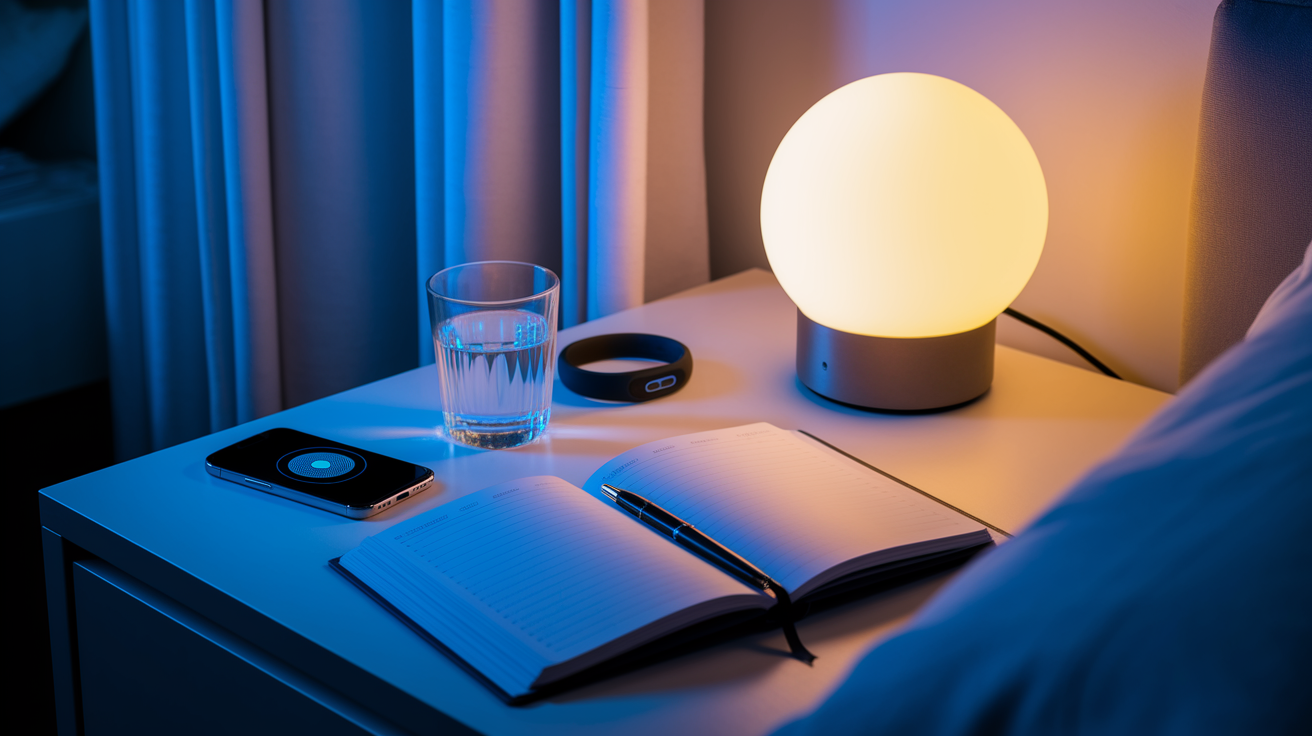
If you want to know how to track sleep cycles at home tonight, here’s the short version. A wearable gives you the strongest consumer-level trends because it pairs movement with heart rate and other body signals. A sleep tracker app is the free or low-cost way to start, using your phone’s built-in microphone and accelerometer. A sleep journal is the fully manual route, no devices, no subscriptions, just you and a notebook.
Whichever method you pick, the setup matters more than the tool itself.
- Select one primary tracking method that fits your budget, how much detail you want, and how willing you are to wear or set up a device.
- Use that same method every night for at least 14 consecutive nights.
- Record bedtime, wake time, nighttime awakenings, caffeine, alcohol, exercise, and how rested you felt, each morning.
- Compare weekly averages and recurring patterns instead of reacting to one night’s sleep-stage numbers.
Here’s a simple breakdown to help you choose:
| Method | Typical Cost | Setup | Metrics | Accuracy | Best Use |
|---|---|---|---|---|---|
| Smartphone apps | Free to low-cost | Phone placement near bed, microphone and motion permissions | Sleep duration, movement, sound, estimated stages | Moderate, trend-level | Quick, no-hardware starting point |
| Wearables | Higher purchase price, often plus subscription | Charge, pair with app, wear nightly | Heart rate, HRV, movement, sleep stages, SpO2 | Moderate to good for trends | Strongest overall consumer data |
| Sleep journals | Little to none | Notebook or simple template | Bedtime, wake time, perceived rest, habits | Subjective, but consistent | Budget-friendly, no tech required |
| Manual observation | None | None | General wakefulness, rough timing | Limited detail | Backup or supplemental check |
Tracking consistently for at least two weeks is what makes the difference. That’s usually enough time to start noticing associations with caffeine, alcohol, exercise, or how rested you actually felt.
Pros And Cons Of Tracking Sleep Cycles At Home
There’s no single best answer here. The right choice depends on your budget, what metrics you actually care about, how much convenience you need, and how much daily effort you’re realistically going to keep up.
Pros:
- Convenient nightly monitoring without a sleep lab visit
- Visibility into long-term routines and changes over weeks or months
- Options for nearly every budget, from free to premium
- Integration with health and activity data you’re already collecting
- Greater awareness of habits tied to better or worse sleep
Cons:
- Charging, syncing, and setup requirements that add friction
- Fit or comfort problems with body-worn devices
- Subscription fees or features locked behind a paywall
- Daily work required to keep a manual journal going
- Risk of becoming overly focused on nightly sleep scores
When it comes to free vs paid sleep trackers, a paper journal and a basic phone app sit at the free end. A freemium app with a limited trial sits in the middle. A smart ring or a premium app subscription sits at the paid end. Paying more usually buys you extra sensors, longer data history, more detailed graphs, richer reports, or coaching features. But more expensive doesn’t automatically mean better fit for you. A $400 device you forget to charge is less useful than a $0 journal you actually fill out.
Choosing a sleep tracker really comes down to this: pick the least complicated method you can stick with consistently for at least two weeks. Complexity you abandon by day four tells you nothing.
Wearable Devices For Monitoring Sleep
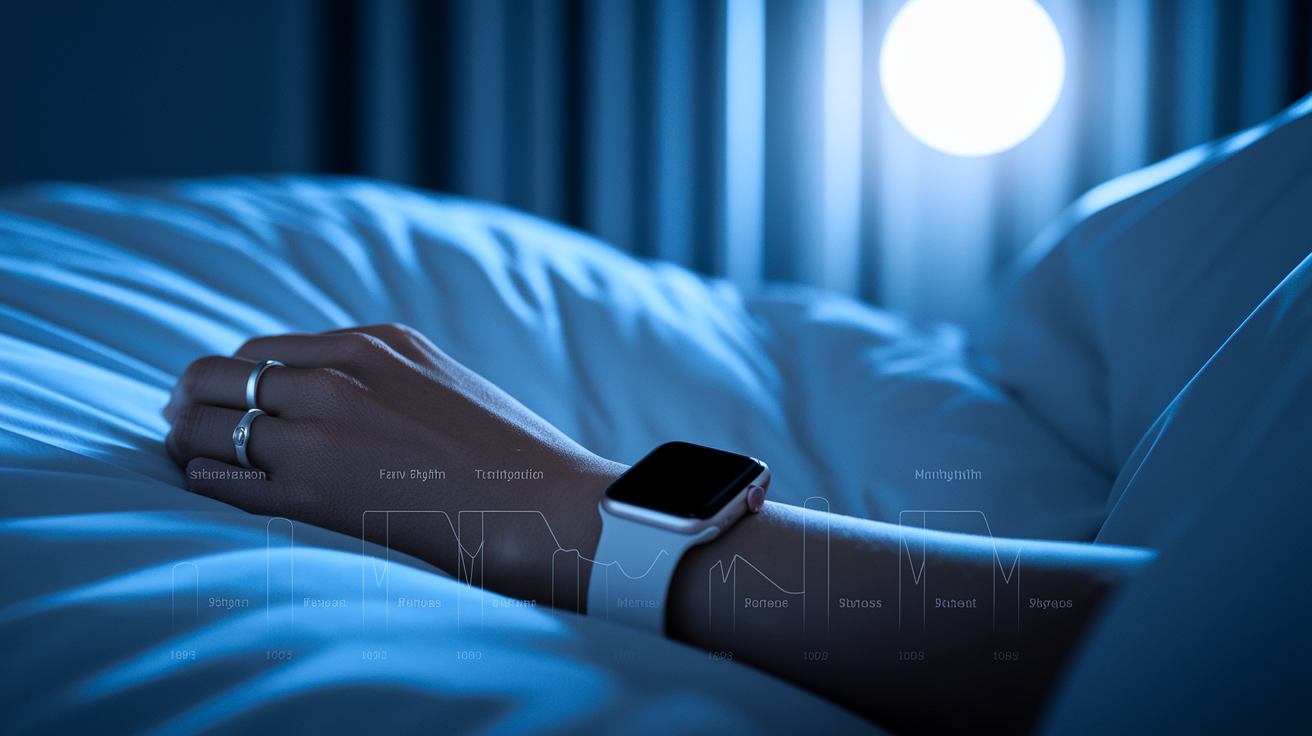
Wearable sleep trackers, rings, watches, and screenless bands, stay in contact with your body all night, quietly collecting movement and biometric data while you sleep.
These devices combine several signals at once: accelerometer data for movement, optical heart rate sensors, heart rate variability for sleep pattern analysis, skin temperature trends, and, on some models, oxygen saturation (SpO2) tracking. The Oura Ring 4 is a paid example worth knowing. It offers up to 8 days of battery life and measures heart rate, temperature trends, SpO2, and sleep stages, but requires iOS 15.0 or later, Android 10 or later, and a subscription ($5.99 monthly or $69.99 annually) to unlock full data. Whoop MG and the Apple Watch Series 11 take a different approach, tracking four sleep stages primarily through heart rate and accelerometer data.
Wearable categories worth comparing:
- Smart rings
- Fitness bands
- Smartwatches
- Screenless bands
- Chest straps
- Smart clothing
Placement matters more than people expect. A loose ring or watch can produce missing or inconsistent readings. Too tight, and it might actually disturb your sleep instead of tracking it peacefully. Follow the manufacturer’s finger or wrist placement guidance closely, check battery levels before bed so you’re not caught with a dead device at 2 a.m., and keep sensor contact points clean. Wear it the same way, every night, for the most reliable comparisons. Before buying, think honestly about your
Final Words
Pick one method and start tonight: wearables for stronger trends, a phone app to start cheap, or a sleep journal if you like no tech.
Use the same method for 14 nights. Each morning note bedtime, wake time, awakenings, caffeine, alcohol, exercise, and perceived rest. Compare weekly averages and look for repeating patterns, not single nights.
This is a simple way to learn how to track sleep cycles at home. Treat it as a two-week experiment, then tweak what you learned. You’ll probably find small changes that add up to better sleep.
FAQ
Q: What is the 3-3-3 rule for sleep?
A: The 3-3-3 rule for sleep is a simple timing guideline many people use: avoid heavy meals, intense exercise, and alcohol within about three hours of bedtime to reduce nighttime sleep disruption.
Q: How many sleep cycles should you go through each night?
A: The typical adult goes through about 4 to 6 sleep cycles per night, each roughly 90 minutes, so aiming for 6 to 9 hours of sleep usually covers those cycles.
Q: How do I get my Apple Watch to track my sleep cycles?
A: To get your Apple Watch to track sleep cycles, enable Sleep Tracking in the iPhone Health and Watch apps, wear the watch snugly overnight, allow health permissions, and keep the device charged.
Q: What is the 10 5 3 2 1 rule for sleep?
A: The 10 5 3 2 1 rule for sleep is a stepwise wind-down: stop caffeine ~10 hours, avoid large meals ~5 hours, skip intense exercise ~3 hours, reduce stimulating work ~2 hours, start calm pre-bed routine ~1 hour.