



Is that pain after a workout a sign you’re getting stronger, or a red flag you should stop for?
Soreness usually shows up a day later, feels broad and dull, and eases with movement.
True injury hits suddenly, is sharp or focal, and often worsens or limits what you can do.
This post shows clear clues, quick checks you can try, and simple next steps to either keep training safely or get help when it matters.
How To Read Exercise-Related Pain
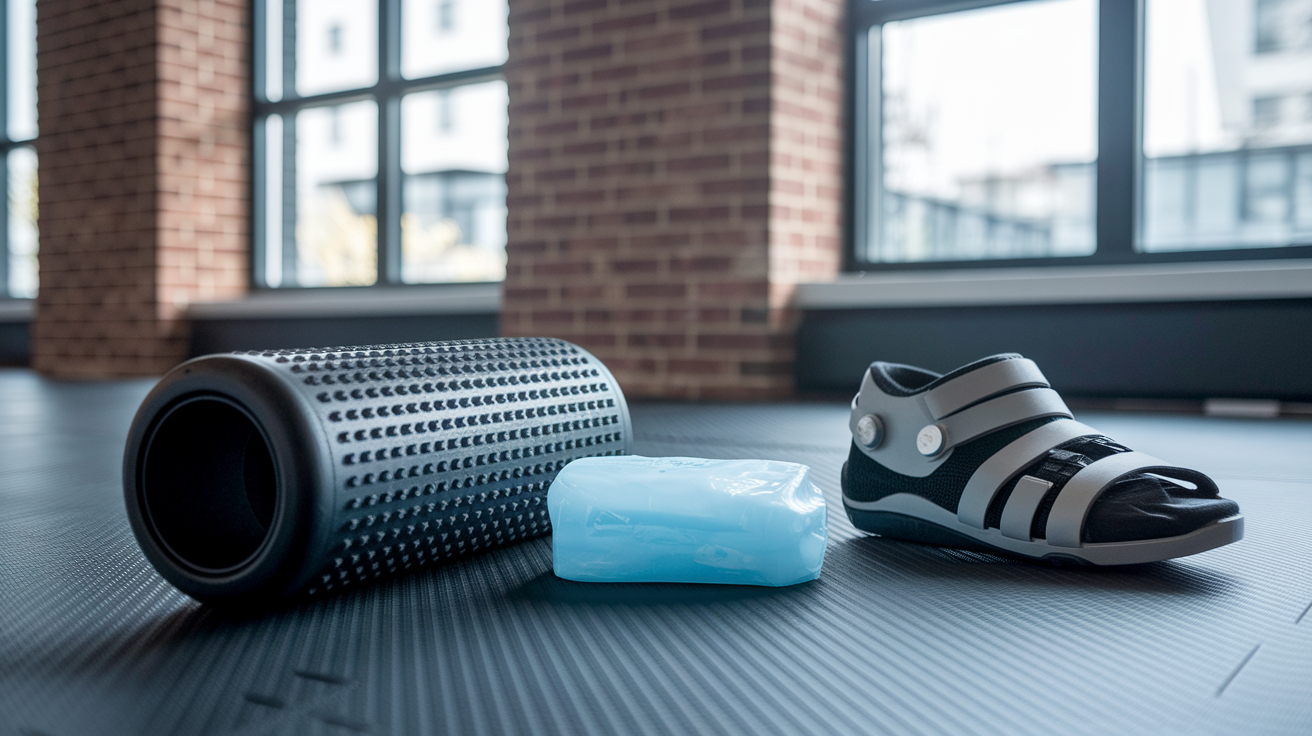
Soreness is your muscles talking after a hard workout. It shows up late, spreads across the muscle you worked, and fades as your body adapts. Injury is different. Something in your muscle, tendon, ligament, joint, bone, or nerve has actually been damaged, and it tends to announce itself with sudden, focal, or worsening pain that doesn’t play by the usual rules.
The tricky part is that both can feel uncomfortable enough to make you stop and wonder what’s going on. So here’s a quick side-by-side to help you sort out what you’re actually dealing with.
| Factor | Soreness (DOMS) | Possible Injury |
|---|---|---|
| Pain quality | Dull, achy, stiff, or tender | Sharp, stabbing, burning, or increasingly painful |
| Onset | Delayed by 12 to 24 hours | Immediate or soon after a specific event |
| Location | Broad discomfort in the muscle belly | Focal pain in a joint, tendon, ligament, bone, or precise point in a muscle |
| Expected duration | Improves gradually, usually resolves within 3 to 7 days | Persists, worsens, or follows a condition-specific recovery period |
| Swelling and bruising | Generally absent or minimal | Visible swelling or bruising |
| Mobility | Stiffness with usable range of motion | Restricted motion, instability, or marked weakness |
| Weight-bearing | Usually possible despite discomfort | Painful or impossible |
| Response to light movement | Commonly improves as muscles warm up | Stays the same or worsens |
If your symptoms are mild, showed up a day or so after exercise, feel muscular rather than joint-based, and ease up as you move, you can probably keep going with some gentle activity.
But if pain came on suddenly, feels sharp or focal, keeps getting worse, limits what you can do, or comes with swelling, bruising, instability, numbness, or trouble bearing weight, stop the activity and get it checked out.
How Soreness And Tissue Damage Develop
(((alt-img2)))
Delayed onset muscle soreness starts with tiny, microscopic disruptions in your muscle fibers, usually after a workout that was more intense, longer, or more unfamiliar than what your body is used to. This sets off an inflammatory response. Think of it as your body sending a cleanup and repair crew to the area. That inflammation isn’t a sign something went wrong, it’s part of the process that leads to repaired, stronger muscle tissue over time. This is adaptation at work, not damage in the clinical sense.
Injury works differently. It happens when force on a tissue goes beyond what that tissue can handle. A muscle strain, for example, occurs when fibers get stretched past their limit or forced to contract with too much force, too fast. The same basic idea applies to tendons, ligaments, bones, nerves, and joint structures. Instead of controlled microtrauma that leads to repair and growth, you get structural damage that needs a different kind of healing process altogether.
Here’s the part that trips people up: how much something hurts doesn’t always match how much damage there actually is. Pain is processed by your nervous system, and that system is shaped by inflammation, stress levels, how well you slept, and even past injuries in the same area. Someone with a nervous system that’s a little more sensitive, say from poor sleep or an old injury, might feel more pain from a similar amount of tissue stress than someone else would. So while pain is a useful signal, it’s not a precise measurement of what’s actually going on underneath.
Treatment And Expected Recovery
(((alt-img3)))
What you should actually do next depends on whether your body is dealing with normal training stress or real tissue damage. These two paths call for pretty different approaches.
Managing Exercise Soreness
If what you’re feeling lines up with typical DOMS, the fix is usually simple. Give the muscle some relative rest, meaning you back off from hammering the same muscle group again right away. Light movement like walking or gentle stretching actually helps, since it increases blood flow without adding more stress. Stay hydrated, get enough sleep, and let your body do its repair work.
Most mild soreness settles within 3 to 7 days. The goal is to ease back into your normal training as the ache fades, not to push through serious discomfort just to stick to a schedule. If it’s still a dull ache and you can move through it, that’s usually a sign you’re on the right track.
Managing A Suspected Injury
If something feels off in a way that points to injury, the first move is to stop whatever activity triggered or worsened it. Protect the area and avoid putting more stress on it. If you’re dealing with impaired function, worsening symptoms, or anything that doesn’t fit the usual soreness pattern, it’s time to get a professional opinion.
From there, treatment really depends on which tissue is involved and how severe the damage is. It might mean modifying your activity for a while, working through guided rehab, using a brace or temporary immobilization, getting imaging done, or in more serious cases, surgery. What you shouldn’t do is numb the pain just enough to keep training through it. That tends to turn a manageable issue into a much bigger one.
Final Words
In the action, we defined soreness as a delayed, temporary muscle response and injury as sudden, focal, or function-limiting tissue damage. We gave a simple table that contrasts pain quality, onset, location, swelling, mobility, weight-bearing, and the effect of light movement.
We also covered how DOMS and true tissue damage develop, practical steps for managing each, and the warning signs that need prompt assessment.
Use these patterns to run small tests and track what changes. Remembering the difference between soreness and injury helps you train smarter and recover with confidence.
FAQ
Q: What are the symptoms of a pulled muscle in the arm?
A: The symptoms of a pulled muscle in the arm are sudden, focal pain during movement or afterward, localized tenderness, weakness, limited range of motion, possible swelling or bruising, and sometimes a popping sensation at the time of injury.
Q: Are hurt and injured the same thing? Are soreness and pain the same? How to tell soreness from injury?
A: Hurt and injured aren’t exactly the same. Soreness and pain aren’t identical either. Soreness is a delayed, dull, temporary muscle response that improves with movement. Injury is immediate, focal, worsening, or function-limiting. Stop and seek assessment.