

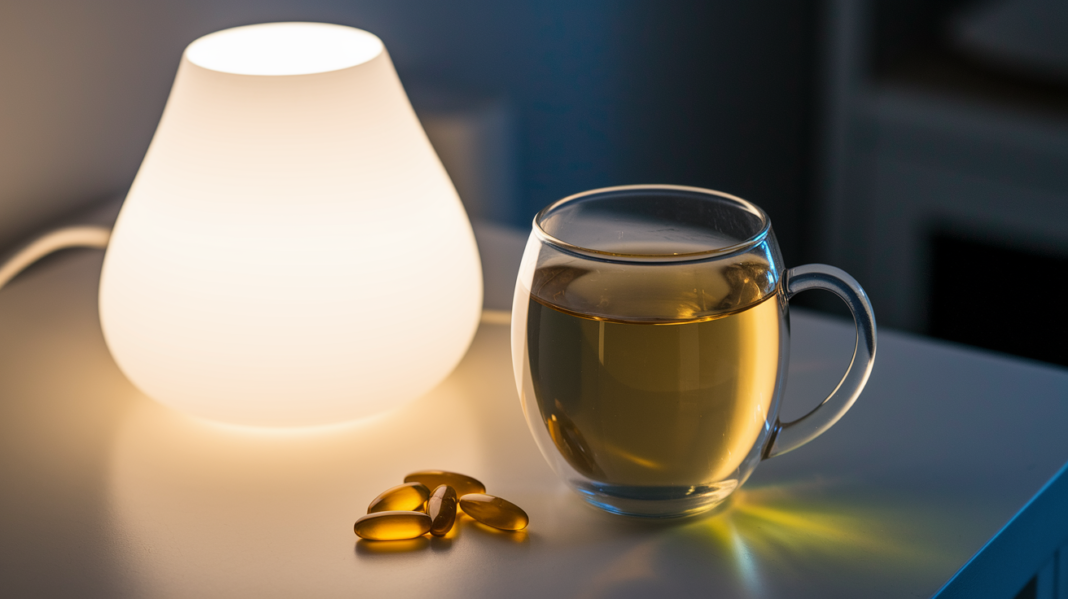

Could a compound in chamomile be a quiet sleep helper?
Short answer. Apigenin often helps people wind down and fall asleep, especially when stress or a racing mind is the problem.
It works by gently boosting the brain’s calm signal, so it feels more like easing off a gas pedal than slamming a brake.
But it’s mild, best for low-level restlessness and shown mostly in chamomile studies, not a cure for sleep disorders.
This post explains what it does, what the evidence says, and how to test it safely.
Does Apigenin Actually Help You Sleep? The Direct Answer

Apigenin is a natural flavonoid, mostly known through chamomile, and the honest answer is yes, it can help, but it’s not a knockout pill. The evidence points to a real calming effect on the nervous system, one that can make it easier to wind down and drift off, rather than forcing sleep the way a strong sedative would.
Here’s what apigenin tends to do well. It can ease the kind of wakefulness that comes from a racing mind or a tense body. It supports relaxation before bed and may shorten the time it takes to fall asleep, especially when stress or low level anxiety is the main thing keeping you up. What it doesn’t do is fix structural sleep problems. If your sleep trouble comes from something like obstructive sleep apnea, restless legs syndrome, or a circadian rhythm that’s out of sync with your schedule, apigenin isn’t built to treat that. Those issues need a different kind of attention, often from a sleep specialist.
It’s also worth knowing where the research actually points. Most of the solid human evidence comes from chamomile extract studies, not from isolated apigenin supplements on their own. One trial gave older adults 200 mg of chamomile extract twice a day for 28 days and saw improvements in subjective sleep quality. That’s encouraging, but it’s chamomile as a whole, not purified apigenin. Typical apigenin supplement doses run 25 to 50 mg, taken 30 to 60 minutes before bed, and the rest of this article walks through what that looks like in practice.
What Is Apigenin and Where Does It Come From?
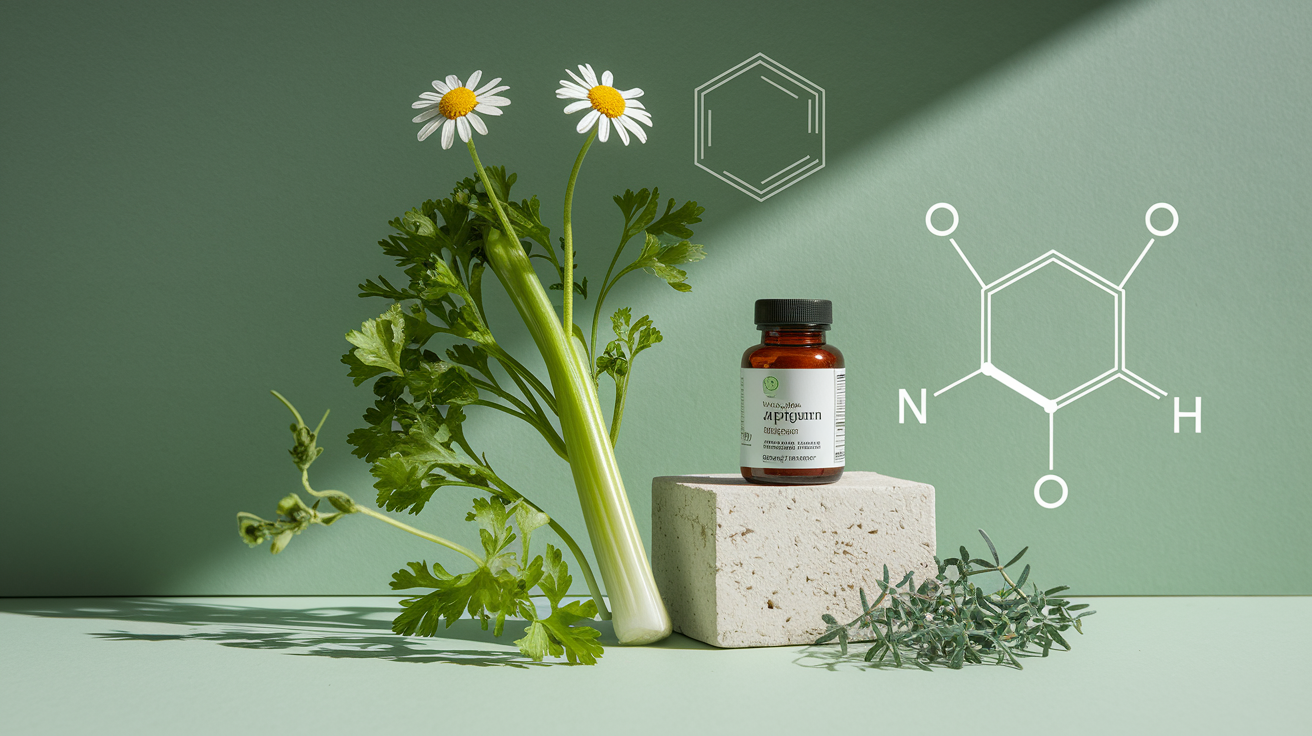
Apigenin, known chemically as 4′,5,7-trihydroxyflavone, belongs to a class of plant compounds called flavones. Flavones are a type of flavonoid, the same broad family responsible for a lot of the antioxidant and anti-inflammatory activity found in fruits, vegetables, and herbs. Apigenin shows up in a surprising number of everyday foods, though usually in small amounts.
Here’s where you’ll find it naturally:
- Chamomile tea. The most well-known source, with roughly 1 to 5 mg of apigenin per cup, depending on how strong you brew it
- Parsley. A common kitchen herb that contains apigenin, though a single serving delivers only a few milligrams
- Celery. Another low dose source, useful as part of a varied diet but not a meaningful sleep aid on its own
- Oregano. Contains apigenin alongside other beneficial plant compounds, mostly in dried, concentrated form
- Chamomile extract supplements. A concentrated source, often standardized to deliver 50 to 300 mg of extract per dose
That gap between food sources and supplements matters. A cup of chamomile tea is a gentle, low dose way to get a small amount of apigenin into your evening routine. Supplements, on the other hand, are formulated to deliver a much higher, more consistent amount, which is why they’re the form most often used when people are specifically trying to target sleep.
How Apigenin’s Mechanism of Action Supports Sleep

The calming effect of apigenin comes down to how it interacts with a receptor in your brain called GABA-A. GABA is your brain’s main calming chemical, the one that slows things down when it’s time to relax. Apigenin binds to the benzodiazepine site on this receptor, the same general spot targeted by prescription drugs like diazepam and lorazepam. This boosts GABA’s inhibitory signal, which is a technical way of saying it helps quiet an overactive mind. The difference is that apigenin produces a much milder effect, and preclinical data hasn’t shown the same dependence or withdrawal concerns seen with benzodiazepine medications.
There’s more to it than just GABA. A 2002 cell study found that apigenin reduced cortisol production in human adrenal cells, pointing to a possible effect on the stress hormone pathway that often keeps people wired at night. And a mouse study from 2000 showed apigenin reduced anxiety like behavior without impairing motor function, which suggests the calming effect isn’t just sedation dragging everything down. It looks more like a targeted easing of anxiety.
One thing worth being clear about. Apigenin doesn’t touch melatonin receptors, and it doesn’t regulate your internal clock. So if your sleep issue is more about timing, like jet lag or shift work, apigenin’s mechanism isn’t built for that job. It’s working on relaxation and stress, not circadian timing.
The Scientific Evidence Behind Apigenin for Sleep

The research picture here is encouraging but still developing. A randomized controlled trial in older adults tested chamomile extract at 200 mg twice daily for 28 days and found measurable improvements in subjective sleep quality, meaning people reported feeling like they slept better, even if the study didn’t track detailed sleep stage data.
A larger 2024 meta-analysis pulled together multiple chamomile studies and found a consistent pattern. Chamomile significantly improved sleep quality and symptoms of generalized anxiety disorder. Interestingly, it didn’t show a significant effect specifically on diagnosed insomnia. That’s an important distinction. Chamomile, and likely apigenin along with it, seems to help people feel calmer and sleep somewhat better, without acting as a clinical treatment for insomnia as a diagnosed condition. The studies included in that review also reported only mild adverse events, which is a reassuring safety signal.
Here’s the tricky part. Almost all of this evidence comes from chamomile as a whole plant extract, not from isolated apigenin supplements tested on their own. Sample sizes in these trials commonly range from 40 to 400 participants, with study durations anywhere from a single day up to 28 days. That’s a reasonable amount of data for chamomile, but it leaves a real gap for anyone taking a standalone apigenin capsule, since we can’t say for certain the extract’s benefits transfer one to one to the isolated compound.
Animal research fills in some of the mechanistic picture. Studies using doses of roughly 1 to 10 mg per kilogram of body weight showed reduced an
Final Words
Takeaway: apigenin is a plant flavone, mostly known from chamomile, that gently calms the nervous system. The post covered what it is, common sources, how it acts on GABA and stress hormones, and the human evidence—mainly chamomile studies—showing modest sleep benefits.
It tends to help with anxiety-driven wakefulness and falling asleep faster. It’s not a fix for sleep apnea, restless legs, or circadian timing issues.
If you want a simple test, try apigenin for sleep at a modest dose and track nights and daytime energy—small experiments often give the clearest answer.
FAQ
Q: Is it safe to take apigenin every day? Who should not take apigenin?
A: Taking apigenin daily is generally safe at common supplement doses (25–50 mg) for many people, but pregnant or breastfeeding people, children, and anyone on sedatives or heavy alcohol should check with a clinician.
Q: How much apigenin should I take for sleep?
A: For sleep, apigenin supplements are typically 25–50 mg taken 30–60 minutes before bed; start low, track sleep for several nights, and adjust since most human evidence comes from chamomile extracts.
Q: Which is better for sleep, apigenin or melatonin?
A: Apigenin and melatonin target different sleep problems: apigenin calms anxiety-driven wakefulness via GABA, while melatonin helps shift sleep timing. Choose apigenin for stress-related trouble, melatonin for circadian issues.