


Could a single amino acid be your best bedtime ally or just another overhyped supplement?
L-tryptophan isn’t a sedative; it’s an essential amino acid your body uses to make serotonin and, later, melatonin.
For many people it may shorten the time it takes to fall asleep and nudge sleep quality in the right direction, but it’s not a guaranteed fix for chronic insomnia.
Whether you notice anything depends on dose, timing, what you ate, and your mood.
This post explains how L-tryptophan works, what the research shows, and simple, safe tests to try.
Does L-Tryptophan Improve Sleep Quality?
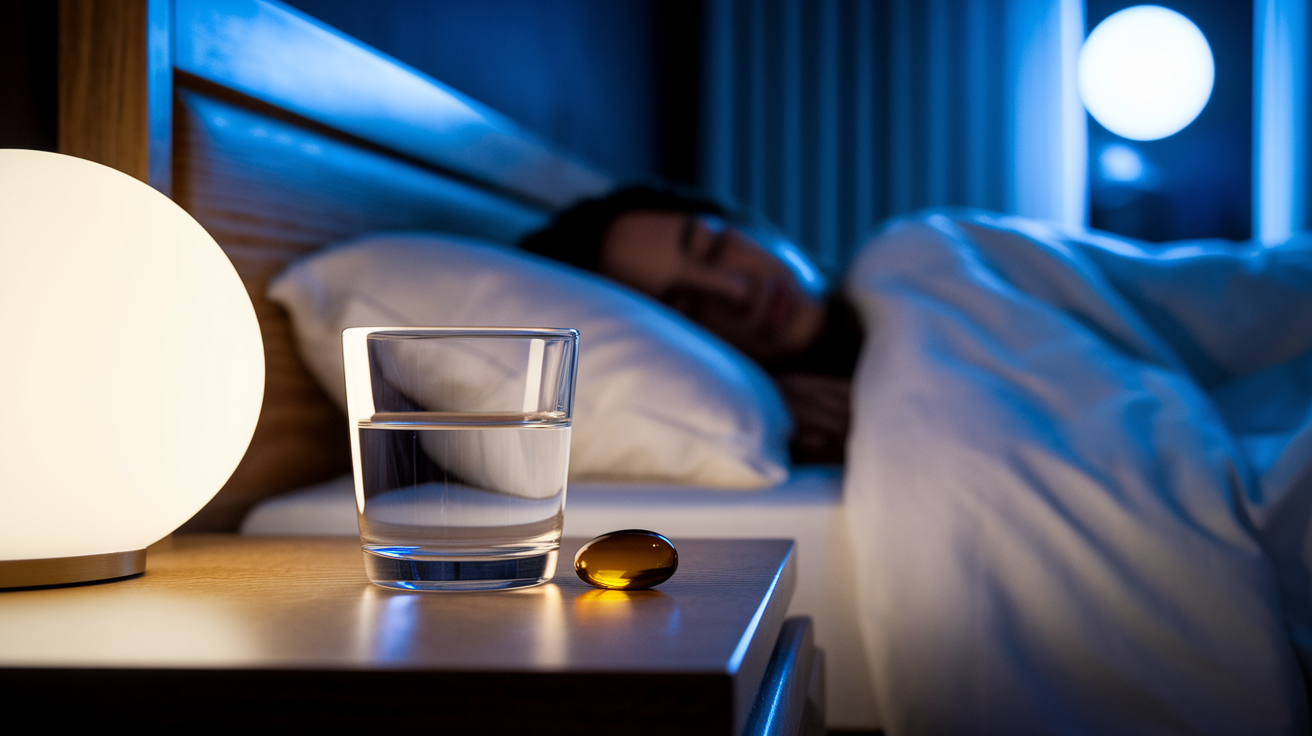
L-tryptophan is an essential amino acid. It’s not a sedative, and it’s not a direct sleep hormone either. Your body can’t make it on its own, so it has to come from food or a supplement. That distinction matters, because it means L-tryptophan works more like a building block than a switch you flip to fall asleep.
The honest answer? It might help, for some people, in some situations. Research suggests L-tryptophan and sleep are connected mainly through modest reductions in sleep latency, meaning it may shorten the time it takes to fall asleep and support sleep quality. But it isn’t a proven fix for chronic insomnia. Research hasn’t gotten there yet. It tends to matter more if your main struggle is falling asleep in the first place, or if your sleep trouble seems tied to your mood.
The commonly cited window of 30 to 60 minutes before bed refers to when people typically take it, not a promise you’ll feel sleepy on that exact timeline. Your metabolism, what you ate that day, and the actual root cause of your sleep trouble all shape whether you notice anything at all. Someone whose sleep issues come from stress will likely respond differently than someone dealing with a shifted body clock.
- Likely benefit: possible modest help falling asleep faster, not a guaranteed fix for chronic insomnia
- Typical starting amount: 500 mg to 1,000 mg (some sources mention up to 1,000 to 2,000 mg for sleep-specific concerns)
- Timing: 30 to 60 minutes before bed, ideally without a heavy meal alongside it
- Safety check: review medication interactions, especially antidepressants, before starting, and watch for nausea, dizziness, headache, or next-day drowsiness that could affect how you function during the day
How L-Tryptophan Supports Serotonin, Melatonin, and Sleep
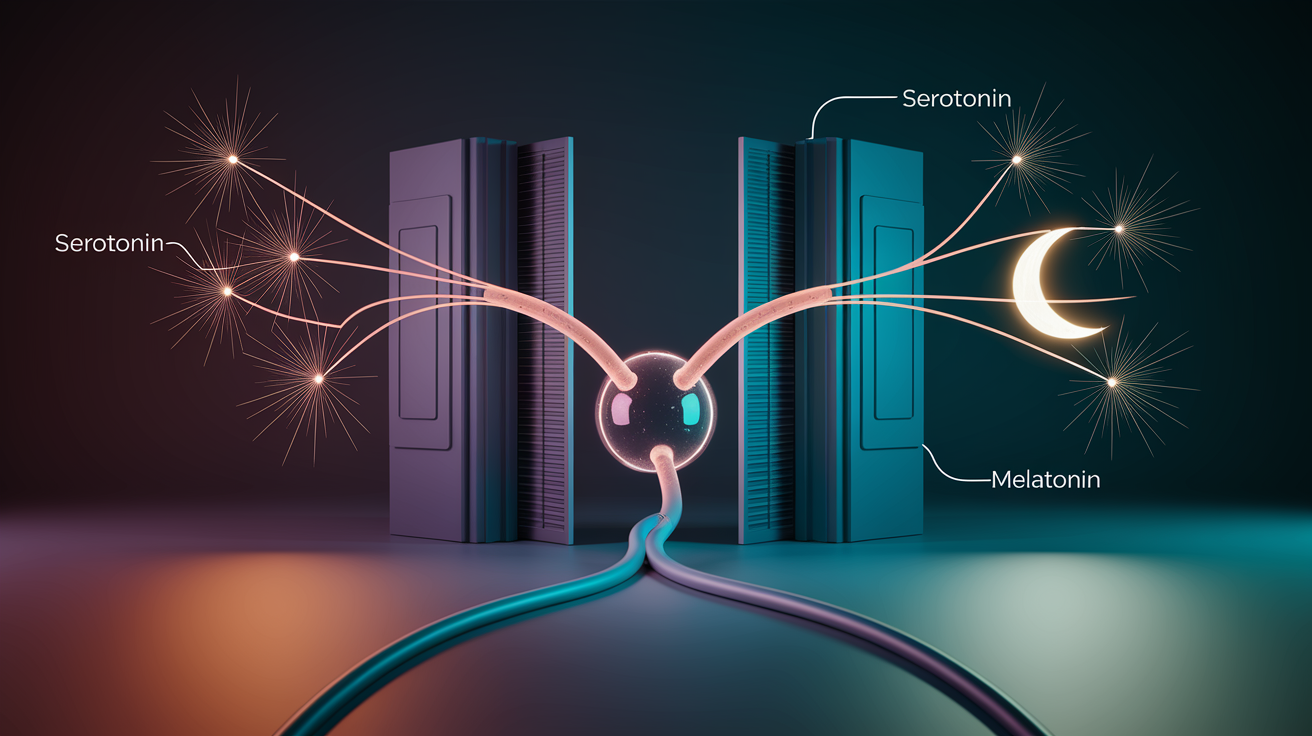
The reason L-tryptophan gets linked to sleep comes down to a chain reaction in your body. It’s not instant, and it’s not identical for everyone. That’s part of why the same dose can feel completely different from one person to the next.
- L-tryptophan is consumed through food or a supplement.
- It’s absorbed and enters the bloodstream.
- A portion crosses the blood-brain barrier after competing with other amino acids for the same transport route.
- It’s converted to 5-HTP, and then to serotonin.
- Serotonin can be converted into melatonin as part of your circadian rhythm, the internal process that tells your body it’s nighttime.
That serotonin precursor role is only half the story though. Serotonin made in your gut (and most of your body’s serotonin is made there) doesn’t simply cross into your brain. Brain serotonin, the kind tied to mood and melatonin production, is a separate pool entirely. This is one reason eating tryptophan-rich food doesn’t automatically translate into better sleep.
What you eat alongside tryptophan matters too. Carbohydrates can actually help tryptophan’s case in a roundabout way, by triggering insulin release that clears out competing amino acids, leaving more room for tryptophan to cross the blood-brain barrier. A big protein-heavy meal brings plenty of tryptophan, sure, but also a flood of competing large neutral amino acids fighting for that same entry point. And not all the tryptophan you take even goes toward serotonin. A large portion gets used through the kynurenine pathway instead, for entirely different purposes.
It’s also worth being clear about cofactors. Vitamin B6 plays a supporting role in these neurotransmitter pathways, but that doesn’t mean piling on extra B6, magnesium, zinc, or iron will boost your results. More isn’t automatically better here. These nutrients just need to be present, not maxed out.
What Research Says About L-Tryptophan for Sleep and Insomnia

So what does the actual evidence show, beyond the general idea that it might help? The picture is promising but mixed. Reviewed research points to suggestive support for improved sleep onset and mild to moderate insomnia, but findings vary quite a bit from study to study, and researchers keep calling for more work here. The clearest potential outcome across the data is a reduction in the time it takes to fall asleep, rather than a broad upgrade to every part of your sleep.
Dosing across studies isn’t consistent either. Some clinical work uses amounts as low as 500 mg per day, while other research goes as high as 3,000 mg per day, split across doses. That’s a wide range, and it makes it hard to point to one “proven” number. Data on long-term use, REM sleep effects, and slow-wave sleep impact remain limited, so claims about deep, restorative sleep improvements should be treated as exploratory rather than settled.
Real-world reports add some texture but not proof. One online account from January 2018 described a person with REM sleep behavior disorder and sleep apnea who said they slept well after combining L-tryptophan with melatonin for a single night. The amount taken was never specified, and a one-night, subjective experience like that can’t establish whether the supplement actually worked, or whether other factors were involved. There’s currently no solid RBD-specific evidence to back up L-tryptophan as a treatment for that condition.
| Evidence Type | What It Suggests | Limitations |
|---|---|---|
| Human volunteer studies | Possible reduction in sleep latency | Small samples, variable dosing (500 to 3,000 mg/day) |
| Placebo-controlled outcomes | Mild to moderate insomnia benefit in some cases | Mixed results across trials |
| Long-term use data | Not well established | Few studies track extended use |
Final Words
L-tryptophan is an essential amino acid that helps make serotonin and melatonin, not a direct sedative. The article explains how food, competing amino acids, and cofactors change how much reaches your brain.
A modest benefit is possible: some people fall asleep a bit faster with doses often around 500–1,000 mg taken 30–60 minutes before bed. It’s not a guaranteed cure for chronic insomnia, and side effects or drug interactions can matter.
Treat l-tryptophan and sleep as a short experiment—track time to fall asleep and next-day alertness, check meds, and reassess. You might find a small, useful boost.
FAQ
Q: Should you take L-tryptophan at night?
A: You can take L-tryptophan at night to help fall asleep; common starting doses are 500–1,000 mg taken 30–60 minutes before bed. Effects vary, so watch for next-day drowsiness and interactions.
Q: Which is better for sleep, tryptophan or magnesium?
A: Tryptophan may shorten time to fall asleep by boosting serotonin, while magnesium often eases tension and sleep quality. Pick based on your main symptom and test one at a time while tracking results.
Q: What not to mix with L-tryptophan?
A: You should avoid mixing L-tryptophan with serotonergic medications (SSRIs, SNRIs, MAOIs), certain migraine drugs, or other serotonin-raising supplements; also be cautious with sedatives or alcohol and consult your clinician.
Q: Which is better for sleep, melatonin or L-tryptophan?
A: Melatonin is usually better for circadian timing, jet lag, or shifting sleep schedules; L-tryptophan may modestly reduce sleep latency and help mood-related sleep trouble—choose based on the cause and track effects.