

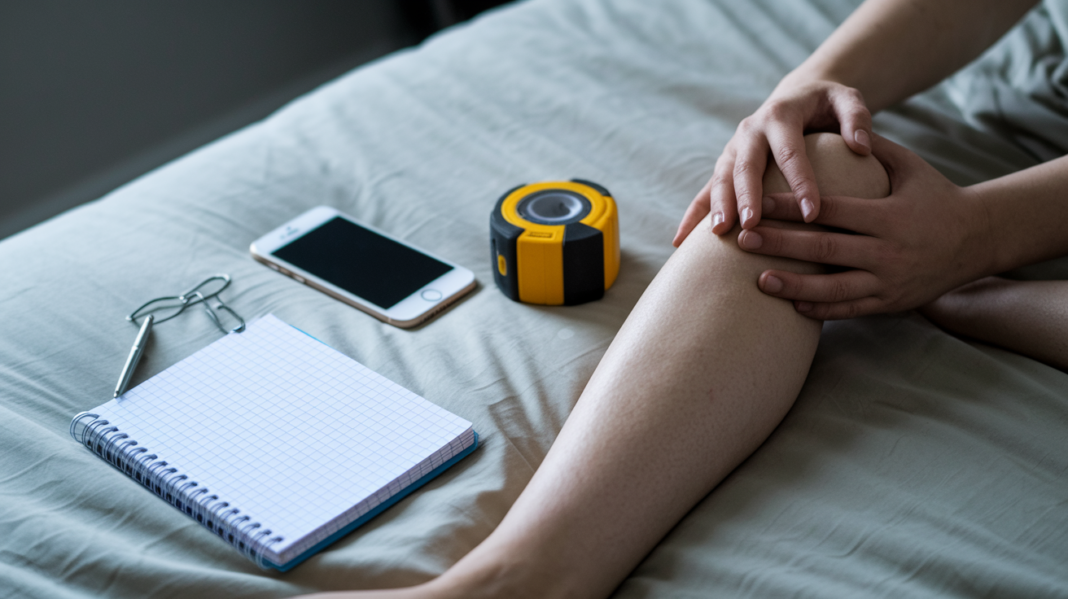

Relying on “I feel better” to decide you’re healed is the fastest way to slow an injury.
Instead, tracking a few clear signals gives you real evidence of progress, not just one good or bad day.
Track pain, range of motion, strength, swelling, sleep, meds, and daily function consistently and you’ll know whether your plan is working.
This post shows exactly what to measure, how often to check, and the small changes that usually mean real improvement so you can test smart and adjust safely.
What To Track For Injury Recovery At A Glance
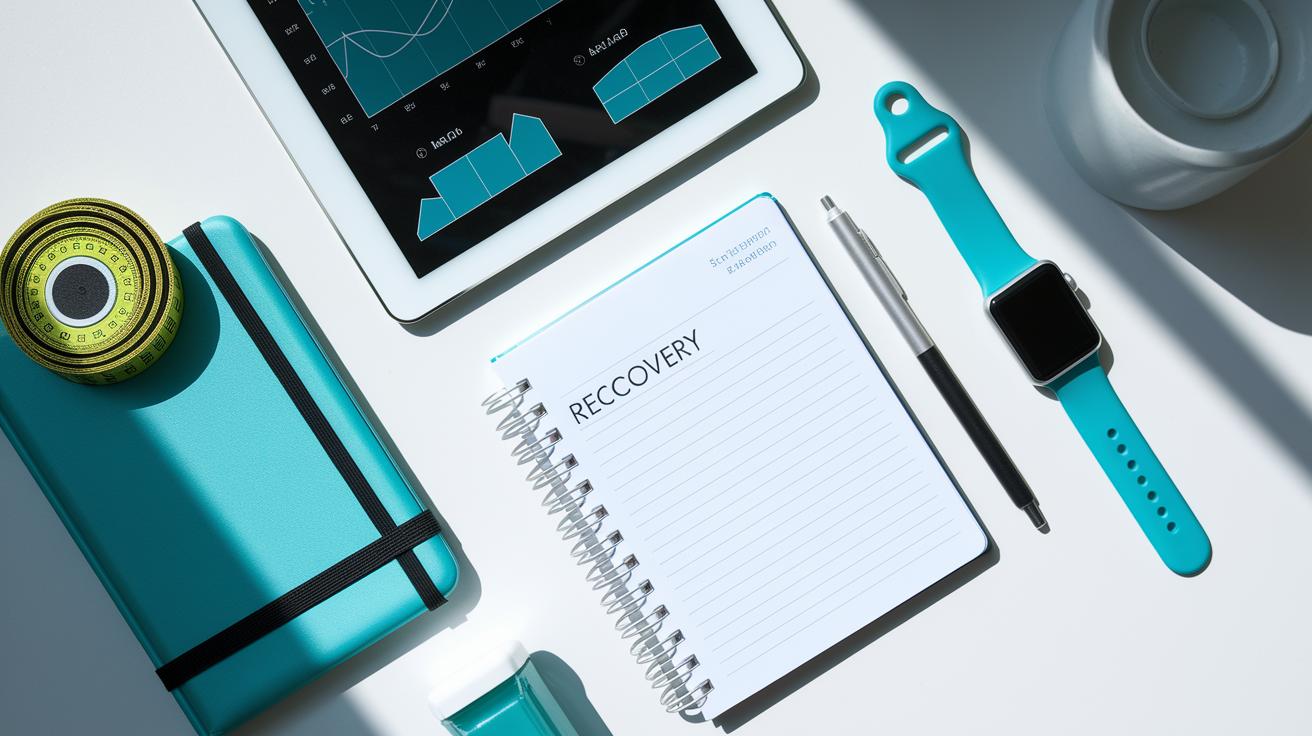
Successful injury recovery comes down to two main things, pain and function. Everything else you might track, swelling, sleep, mood, feeds into one of those two domains. Track them consistently, and you’ll know whether your injury recovery plan is actually working, instead of guessing based on how you feel on any given day.
Here’s what to track for injury recovery, broken down into the essentials:
- Pain levels (intensity, frequency, and what triggers it)
- Range of motion (measured in degrees, at the joint affected)
- Strength metrics tracking (reps, load, or grip strength)
- Swelling and inflammation (circumference in centimeters)
- Daily function and activity tolerance (what you can and can’t do yet)
- Sleep quality (hours and how rested you feel)
- Medication use (how much and how often)
- Mood and fatigue levels (0 to 10 scale)
A few numbers worth keeping in mind as you start. A pain drop of 1 to 2 points on a 0 to 10 scale, held steady for a few days, usually means real improvement. Range of motion gains of around 5 to 10 degrees per week are a solid sign things are moving. Strength metrics often show 5 to 15 percent improvement over 2 to 4 weeks as a reasonable early target. And swelling that shifts by more than 1 to 2 centimeters from your uninjured side is worth paying attention to.
As for when to check each one, daily works for pain, swelling, sleep, and meds. Weekly fits range of motion, strength, and function. Every 2 to 4 weeks is right for more formal tests, especially ones your clinician runs.
Tracking one good day or one bad day won’t tell you much. What separates useful tracking from guesswork is consistency, the same measurements, taken the same way, over time. That’s what turns scattered notes into a recovery plan you can actually trust. The rest of this article breaks down each metric, the tools to measure them, how often to check, and what the numbers actually mean.
Why Injury Recovery Needs More Than Just “How Does It Feel Today”

Healing tissue doesn’t follow a straight line, and neither does how you feel. Your nervous system can be more sensitive on a stressful day, less sensitive after good sleep, and downright unpredictable depending on what you ate, how much you moved, or whether you slept in an odd position. All of this means your day to day feelings, while real, aren’t a reliable measure of where you actually stand in your recovery. One good day doesn’t mean you’re healed. One bad day doesn’t mean you’ve gone backward.
Without structured tracking, people tend to fall into one of two traps. Some overestimate their progress, feeling fine on a given day and pushing hard, while ignoring lingering stiffness or weakness that hasn’t actually resolved. Others do the opposite, fixating on a single rough pain day and assuming they’re regressing, even when their broader trend (ROM, strength, function) is clearly improving. Both reactions skew decisions that matter, like when to increase load, when to pull back, or when to stop therapy altogether. This is exactly why checking in on a regular schedule matters so much. Tracking pain quality and location alongside hard numbers like range of motion or grip strength gives you the full picture, not just the loudest signal of the day.
Pain Tracking: Levels, Patterns, and Triggers

Pain is the metric almost everyone tracks instinctively, probably because it’s the most noticeable. But intensity alone only tells part of the story. Real pain tracking also means paying attention to how often pain shows up, what it feels like, and what sets it off. That nuance is what makes the difference between a useful log and a vague “it hurts” note.
Here’s what to log each time you check in on pain:
- Intensity using a 0 to 10 numeric pain rating scale (NPRS) or visual analog scale (VAS)
- Frequency, meaning how many separate pain episodes happen in a day
- Location and nature, sharp, dull, burning, achy
- What activity triggered it (lifting, walking, sitting too long)
- How long it took to settle down, seconds, minutes, or hours
- Whether it interfered with sleep or work tasks that day
Check in at least once daily, and also right before and right after exercise or rehab sessions. This before and after comparison is one of the most useful things you can track, since it shows you directly how a specific activity affects your pain.
As for what the numbers mean, a sustained drop of 1 to 2 points on your pain scale, held for several days, usually reflects real improvement, not just a lucky day. On the flip side, a rise of 2 or more points that sticks around for 48 to 72 hours, or a jump of more than 30 percent from your baseline, is worth flagging as a possible setback. It’s also worth tracking how well your pain medication is working over time. Needing less medication as weeks go by is a good sign. Needing more, or needing something stronger, is worth bringing up with your clinician.
Range Of Motion And Mobility Logs
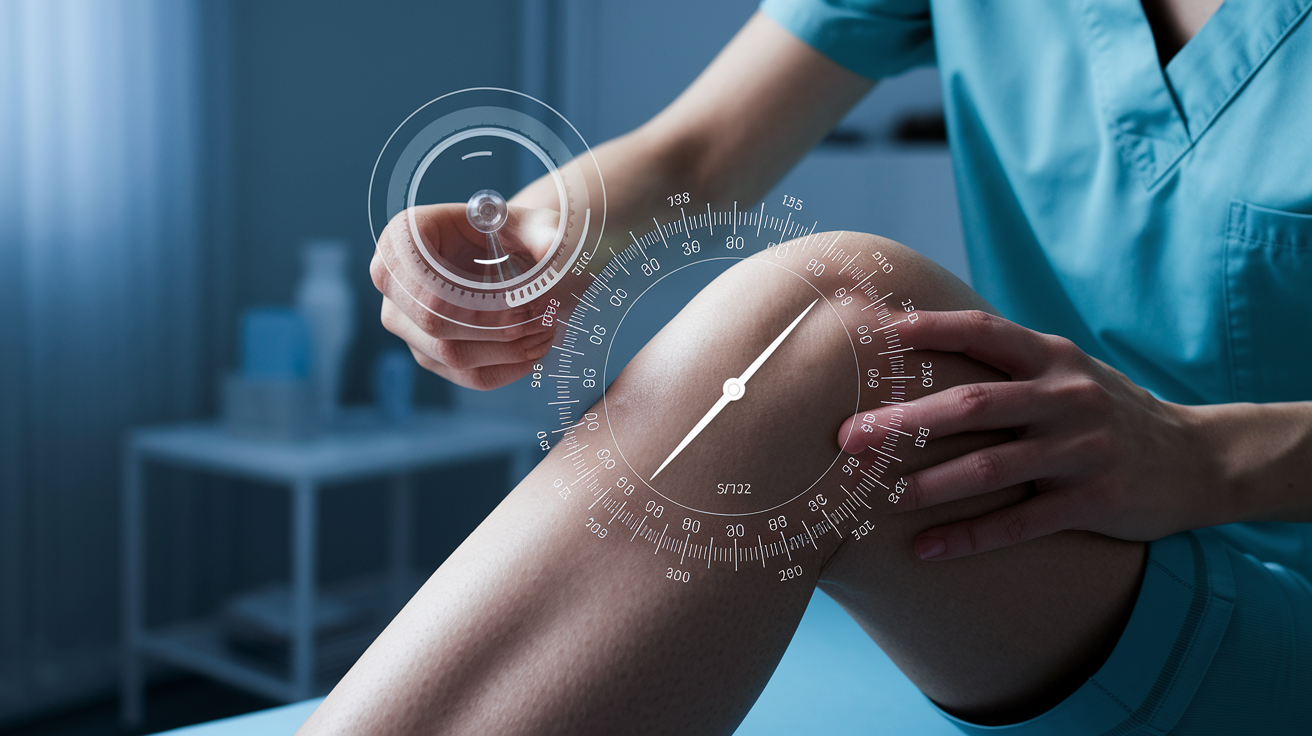
Range of motion measures how far a joint can move, and it’s one of the clearest windows into how your tissue and joint mechanics are healing. Unlike pain, which can be influenced by mood or stress, ROM is a hard number. It either improved this week or it didn’t.
Measure ROM in degrees, and track both active range of motion (what you can move on your own) and passive range of motion (what a clinician can move for you). Take your first measurement on day one as a baseline, then recheck weekly, or every 2 to 3 days if you’re in the acute phase right after injury. A realistic target for many joints is a gain of roughly 5 to 10 degrees per week, though this varies depending on the joint and how significant the injury was.
One of the most useful comparisons you can make is affected side versus unaffected side. Divide your affected side’s measurement by your unaffected side’s, multiply by 100, and you’ve got a percentage that’s easy to track over time. It also helps flag joint stiffness that might not show up in a simple degree measurement, especially stiffness first thing in the morning or after sitting for a while.
Tools For Measuring ROM
Final Words
Start by tracking pain and function, the two core domains that show whether healing is moving forward. Back them up with swelling, sleep, meds, mood, range of motion, strength, and daily activity tolerance.
This article laid out how to log pain details, measure ROM and strength, note swelling, and use a simple cadence and benchmarks so you see real trends.
If you want a quick checklist of what to track for injury recovery, use those eight items and focus on trends over days and weeks. Small, steady checks lead to clearer choices and steady progress.
FAQ
Q: How to recover your injury?
A: Recovering from an injury involves focusing on pain and function trends, doing graded rehab exercises, controlling swelling and sleep, increasing load slowly, setting measurable goals, and checking with a clinician for red flags.
Q: How does healing happen?
A: Healing happens through coordinated tissue repair and nervous system adjustment: inflammation clears, new tissue forms, strength and range of motion return with gradual use, and sensitivity often calms over weeks to months.
Q: What is a good running plan for recovery after an injury?
A: A good running plan for recovery after an injury includes a gradual run-walk return, short easy sessions, strength and mobility work, strict pain checks, and only small weekly volume increases while tracking recovery markers.
Q: What is an injury assessment?
A: An injury assessment is a structured review of pain, range of motion, strength, swelling, function, movement tests, and history; it sets baselines, guides rehab steps, and flags when clinician care is needed.