

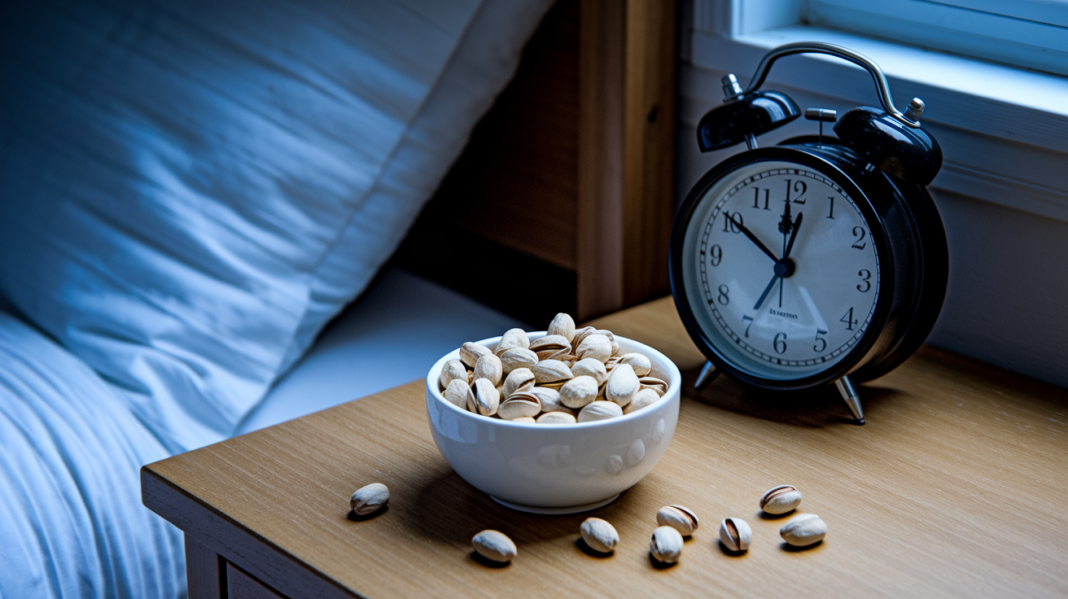

Can a handful of pistachios help you sleep better?
They might, but they’re not medicine and won’t help everyone.
Think of pistachios as a modest, science-backed nudge rather than a fix.
A small serving, about one ounce of unsalted nuts an hour or two before bed, is the practical test many people try.
Pistachios contain melatonin plus magnesium, vitamin B6, and tryptophan, which could support sleep processes, yet melatonin content varies and direct sleep trials are limited.
This post explains what the evidence actually shows and how to test it for yourself.
Can Pistachios Modestly Support Better Sleep?

Pistachios might give your sleep a modest boost, but let’s be clear, they’re not a treatment for insomnia or any other sleep disorder. Think of them as a small, science-backed nudge rather than a fix. If you’re wondering “do pistachios help you sleep,” the honest answer is maybe, a little, for some people, and only as part of a bigger picture.
Here’s the practical starting point. A food-first serving looks like one ounce, about 28 grams or roughly 49 kernels. Go unsalted if you can, and eat them one to two hours before bed. That’s the sweet spot a lot of people land on when they test pistachios sleep benefits for themselves.
The biological rationale behind pistachios and sleep quality comes down to four things, melatonin, magnesium, vitamin B6, and tryptophan. We’ll get into each of these later. For now just know that melatonin content in pistachios varies quite a bit depending on the cultivar and how the nuts were processed. That variability matters, and we’ll explain why.
How Much Melatonin Do Pistachios Contain?
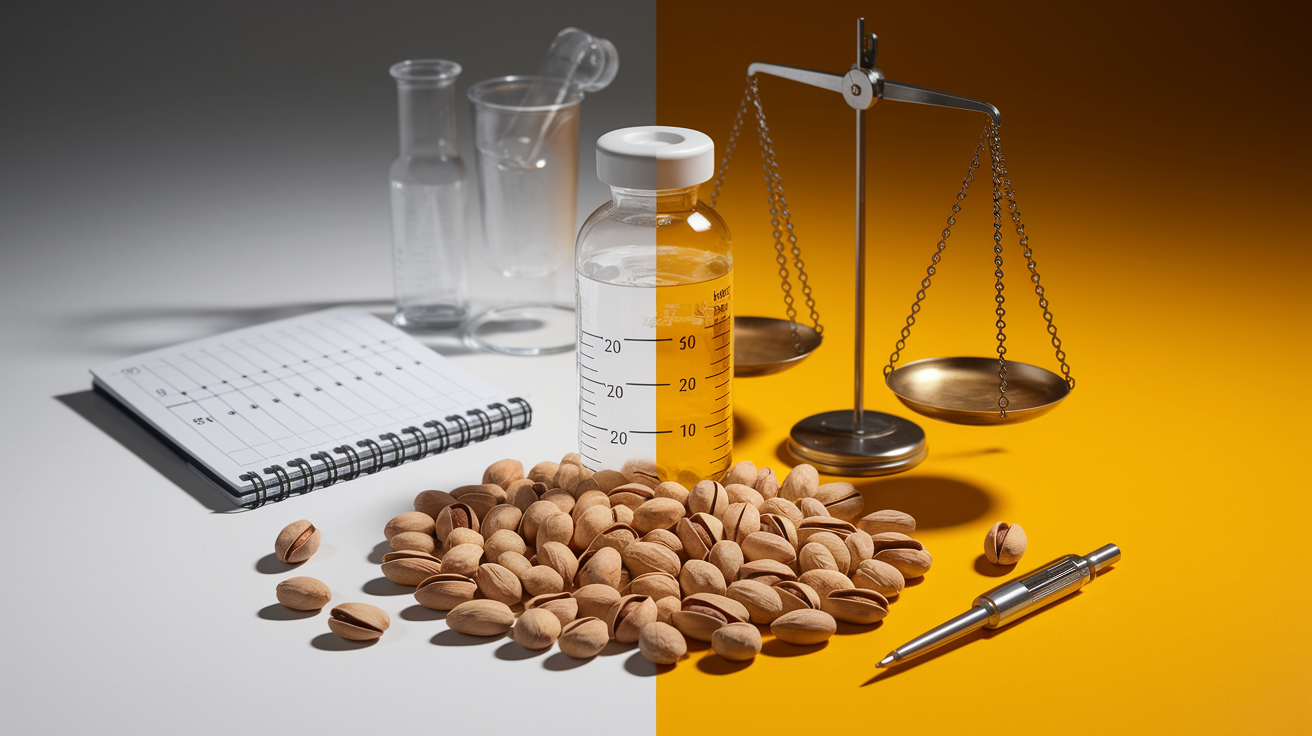
One frequently cited study, Oladi et al. (2014), measured melatonin in pistachio kernels and found some varieties contained up to 660 micrograms per gram. That’s a striking number, but you need to understand where it came from. This measurement was taken from specific pistachio samples under specific conditions, not from every bag you’d grab at the grocery store. A Nutrients journal review has also pointed to nuts generally as notable plant-food sources of melatonin, which lines up with this finding. But “notable” doesn’t mean guaranteed high dose every time.
So why the wide range? Melatonin content in pistachios shifts based on cultivar (basically, the specific variety of pistachio tree), growing conditions like soil and climate, how the nuts were stored after harvest, and processing methods such as roasting. A batch of raw pistachios from one region could have meaningfully different melatonin levels than a roasted, salted batch from another supplier. Heavy roasting may also reduce melatonin content, based on findings referenced in a British Journal of Pharmacology review. None of this is something you can see or taste.
What this means in practice is that exact dietary dosing from pistachios isn’t really possible. You can’t look at a serving and know you’re getting a specific microgram amount. Treat the highest laboratory value reported in research as a ceiling seen under certain conditions, not a number you can count on with your snack tonight.
Magnesium and Vitamin B6: Overlooked Nutrients Linked to Sleep
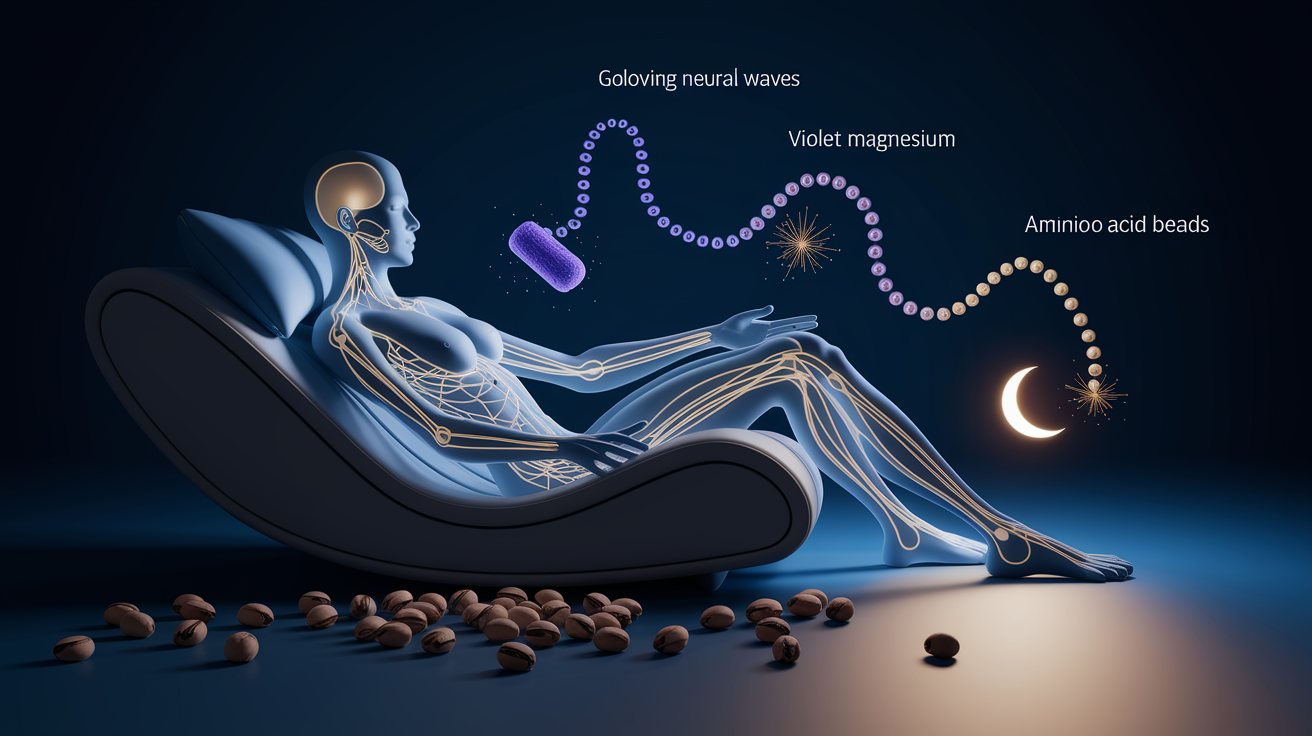
Melatonin tends to get the spotlight, but pistachios also bring two other sleep-relevant nutrients to the table. One ounce provides roughly 34 mg of magnesium, about 8% of a typical adult’s daily recommended intake, along with around 0.5 mg of vitamin B6.
Magnesium plays a role in activating your parasympathetic nervous system, the “rest and digest” side of your body’s operating system, and it’s involved in GABA signalling. GABA is a calming brain chemical that helps quiet down nervous system activity. Research, including a systematic review by Arab et al. (2023), has linked low magnesium status with insomnia. But here’s the distinction worth holding onto, an association between magnesium deficiency and poor sleep isn’t the same as proof that eating pistachios will improve your sleep. It’s a reasonable piece of the puzzle, not a guarantee.
Vitamin B6 matters here too, mostly because of its role in a conversion pathway. Your body needs B6 to turn tryptophan, an amino acid, into serotonin, and serotonin is later converted into melatonin. The NIH Office of Dietary Supplements describes this pathway clearly. So when pistachios provide a bit of tryptophan alongside vitamin B6, they’re supplying two pieces needed for your body’s own melatonin production line, not melatonin that’s already made.
Together, these mechanisms are plausible and grounded in real physiology. But plausible mechanisms in a lab or a textbook don’t automatically translate into a measurable sleep benefit at your kitchen table.
What Does the Research Say About Pistachios and Sleep?

Most of what’s cited about pistachios and sleep research comes from laboratory measurements of melatonin content and well-established physiological roles for nutrients like magnesium and vitamin B6. These lab measurements are useful. They tell us, with reasonable confidence, what’s actually inside a pistachio sample. What they don’t tell us is whether eating that pistachio helps a real person fall asleep faster, stay asleep longer, or wake up feeling more rested.
This is where the evidence gets thin. Knowing that magnesium supports GABA signalling, or that B6 helps convert tryptophan into melatonin, describes a mechanism. It doesn’t confirm an outcome. Direct human trials testing pistachio consumption against measurable sleep outcomes, like sleep onset time, total sleep duration, sleep efficiency, or self-reported sleep quality, are limited. So while asking “do pistachios improve sleep quality” is a fair question, the honest answer right now is that we don’t have strong trial data specific to pistachios that answers it directly.
| Evidence Type | What It Can Show | What It Cannot Prove |
|---|---|---|
| Laboratory nutrient analysis | Measured melatonin, magnesium, or B6 content in a specific sample | That every serving contains the same amount, or that eating it changes sleep |
| Nutrient-mechanism research | How a nutrient functions in the body, such as GABA or serotonin pathways | That consuming the nutrient through food produces a noticeable sleep effect |
| Observational evidence | Patterns or associations between diet and reported sleep quality |