


What if stress isn’t the enemy but a tool, if you can tell which kind you have?
Some stress gives focus, energy, and a sense you can meet a challenge.
Other stress hangs around, drains you, and makes thinking foggy.
This post gives quick clues: check duration, control, and recovery to tell helpful stress from harmful.
You’ll get small, testable steps to try today.
You’ll learn short tests to try for a few days and the body signals to watch, like sleep, focus, and energy.
Eustress and Distress at a Glance
Eustress is the kind of stress that feels like a push in the right direction. It’s short term, it feels manageable, and it tends to leave you a little sharper or more motivated once it’s over. Think of the nervous jolt before a big presentation that turns into focus once you start talking.
Distress is the opposite experience. It’s the stress that hangs around too long, feels bigger than your ability to handle it, and leaves you running on empty. Here’s the tricky part, stress itself isn’t good or bad. What matters is how intense it is, how long it lasts, whether you feel some sense of control, and whether you actually get to recover before the next wave hits. The same deadline that energizes one person can wear another person down, depending on all these factors.
| Feature | Good Stress (Eustress) | Bad Stress (Distress) |
|---|---|---|
| Duration | Minutes to hours, tied to a specific event | Weeks, months, or ongoing with no clear end |
| Perceived control | High, you feel like you have a say | Low, it feels like it’s happening to you |
| Emotional experience | Excited, challenged, alert | Overwhelmed, anxious, hopeless |
| Energy after the event | Energized, satisfied | Drained, depleted |
| Effect on focus | Sharper, more engaged | Scattered, foggy |
| Effect on performance | Often improves it | Often impairs it |
| Recovery pattern | Returns to baseline fairly quickly | Incomplete or absent recovery |
| Likely health outcome | Growth, confidence, learning | Burnout, declining health over time |
Want a simple gut check? Good stress feels like a challenge you can rise to, and you get to come down from it afterward. Bad stress feels inescapable or too big to handle, and it keeps draining you a little more each day.
How Stress Affects the Body, Health, and Performance
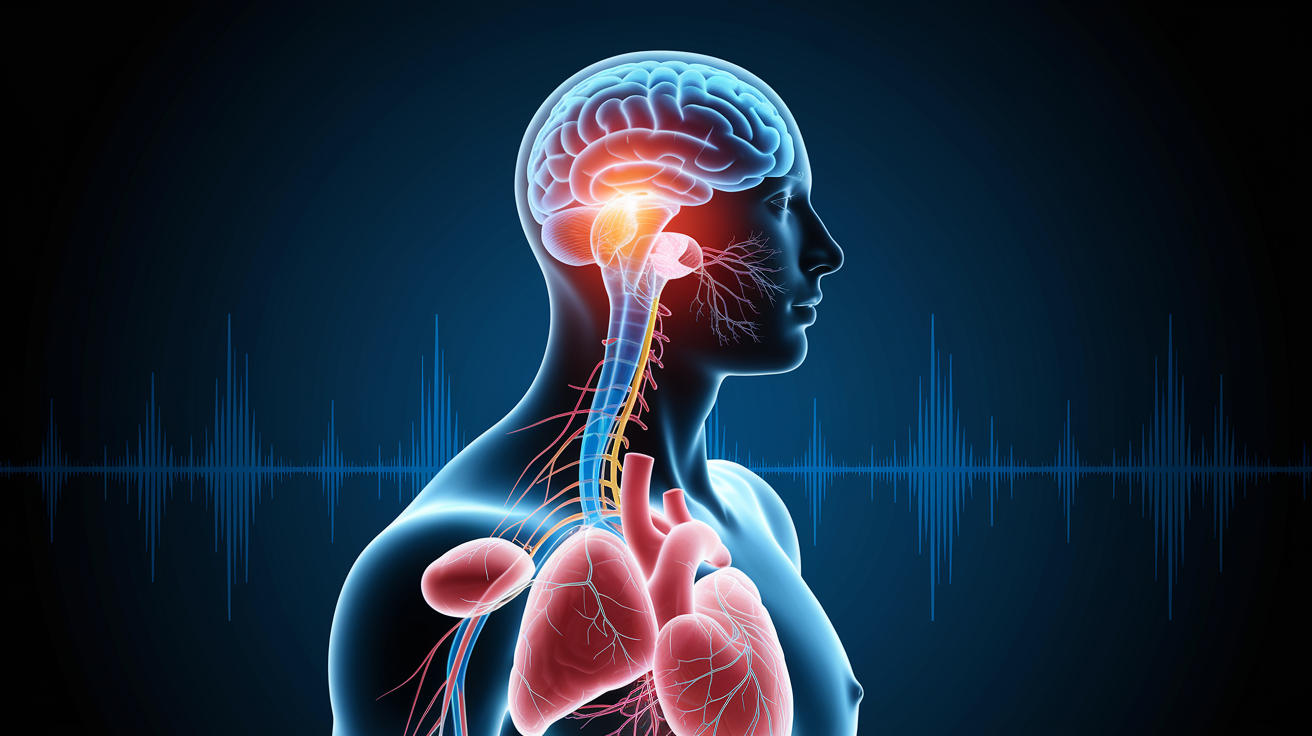
When your brain senses a demand, whether it’s a tiger or a tight deadline, it kicks off the same basic chain of events. Your sympathetic nervous system fires up what’s commonly called fight or flight, and your hypothalamic pituitary adrenal axis (the HPA axis, a communication line between your brain and your adrenal glands) releases stress hormones. Adrenaline hits fast, cortisol follows a bit slower, both working to get your body ready for action.
In a short burst, this looks like a temporary bump. Your heart beats faster, your blood pressure rises a bit, you feel more alert, and your body makes extra energy available. Once the demand passes, a healthy stress response settles back down to baseline. Prolonged distress doesn’t get that off switch. The activation keeps going, recovery stays incomplete, and your body starts running in a semi alert state far longer than it was designed to.
Worth saying this once clearly: acute stress isn’t automatically eustress, and chronic stress isn’t the only form of distress. A single intense, overwhelming event can be distressing even if it’s brief. And ongoing stress can sometimes stay manageable if you have enough control and recovery built in. Intensity, context, how much say you have, and whether you actually get a break all shape the outcome, not just how long the stressor technically lasts.
Over time, unresolved activation doesn’t just sit quietly in the background. It can chip away at sleep quality, concentration, mood, and motivation, and it can spill into relationships and daily performance. That doesn’t mean every rough patch causes lasting harm. It means the body is built for stress responses to come and go, not to stay switched on indefinitely.
Effects of prolonged distress:
- Disrupted sleep and persistent fatigue
- Reduced concentration, memory, and decision making
- Mood changes, declining motivation, and reduced productivity
- Cardiovascular strain, including elevated resting heart rate or blood pressure
- Immune, metabolic, digestive, or reproductive disruption
- Increased vulnerability to anxiety, depression, burnout, and unhealthy coping behaviors
Whether distress becomes a real health risk usually comes down to the total pattern, not one bad night or one hard week. It’s the combination of how intense things get, how long they last, how much control you have, and whether recovery actually happens. If you’re tracking resting heart rate or heart rate variability (a measure of the tiny variations between heartbeats), treat these as trends worth noticing rather than proof of anything on their own, and bring persistent or concerning changes to a healthcare professional.
What Signs Show Whether Stress Is Healthy or Harmful?
There’s no single question that settles whether what you’re feeling is eustress or distress. It’s more about looking at the whole pattern. How much control you feel, how long it’s been going on, whether you recover, how you’re interpreting it emotionally, and whether your daily life is still running smoothly.
Ask yourself, is this more likely eustress or distress?
- Does it feel hard but doable, or impossible to control?
- Is there a clear end point, or does it feel endless?
- Am I focused and engaged, or confused and scattered?
- Do I anticipate a meaningful result, or mainly dread the outcome?
- Do I recover afterward, or remain activated?
- Does it improve performance briefly, or increasingly impair it?
- Do I feel energized, or do
Final Words
Spot the difference: eustress is short, manageable, and often helps you focus or grow. Distress is long, hard to control, and leaves you depleted.
Remember, stress isn’t simply good or bad. Its impact comes down to intensity, duration, perceived control, recovery, and whether it helps or harms daily functioning. Track what you feel, how long it lasts, and whether you bounce back.
Use the good stress bad stress difference as a simple test: challenging but recoverable tends to be helpful; overwhelming and draining calls for a change or support. You’ll learn more by tracking.
FAQ
Q: How can I manage stress in the workplace?
A: Managing stress in the workplace means reducing activation and changing conditions: pick one controllable next step, set limits, break work into focused sessions, take short restorative breaks, use paced breathing, and ask for support.
Q: How to deal with chronic stress reddit?
A: Dealing with chronic stress often involves tracking triggers, improving sleep and movement, practising paced breathing and short breaks, breaking tasks into steps, keeping social support, and seeking professional help if it continues.
Q: What is stress-related exhaustion disorder?
A: Stress-related exhaustion disorder is a prolonged, severe stress state causing deep fatigue, poor concentration, sleep problems, and impaired daily functioning; it usually needs rest, workplace changes, and professional assessment or care.
Q: How to live a stress-free life?
A: Living a stress-free life isn’t realistic; aim to reduce harmful stress by setting boundaries, prioritising sleep and activity, breaking tasks into small steps, scheduling daily recovery, practising breathing, and asking for help when needed.