



You’re not “too sensitive.” Your body often notices stress before your mind does.
That mismatch explains outbursts, shutdowns, and that foggy come-down later.
This post will show how to spot the first signals, like a tight chest, a looping thought, or a sudden urge to flee.
Then you’ll learn a simple way to log patterns and run small experiments to change how you respond.
Mastering emotional stress trigger recognition turns surprise reactions into useful clues so you can act earlier and feel more in control.
Essential Foundations for Emotional Stress Trigger Recognition

An emotional stress trigger creates a reaction that feels way too big for what just happened. You might explode at a throwaway comment, completely shut down during a normal conversation, or feel your chest lock up when someone mentions weekend plans. The intensity doesn’t match the moment. Sometimes you only realize what happened after you’ve cooled off. That gap between the trigger firing and you noticing it? That’s exactly why learning to recognize them matters. Triggers usually show up in your body first, then your emotions, and finally in your thoughts. Catching them early means watching all three layers.
Start by looking back at past patterns with basic questions: who was there, what happened right before, where were you, when did it go down, and why it might’ve hit you that way. Write down recent moments when you felt attacked, judged, disrespected, powerless, or totally swamped. Look for repeating situations (morning meetings, evening texts, family dinners) and jot down any physical responses like breathing changes, sweating, or pain in your head, stomach, back, neck, or hips. This process turns vague bad feelings into specific information you can actually use.
Next step is watching yourself in real time using core recognition signals. Keep an eye out for these six as they surface:
- Emotional intensity that’s too large for the situation (fury over a misplaced item, despair after minor criticism)
- Cognitive loops where the same worried or angry thought spins without getting anywhere
- Physiological activation like rapid heartbeat, tight muscles, shallow breathing, or sudden exhaustion
- Behavioral shifts such as snapping at someone, pulling out of a conversation halfway through, or grabbing a distraction
- Situational cues like specific people, places, times of day, or topics that reliably come before a reaction
- Delayed awareness where you realize hours later that you got triggered, usually after the feeling’s passed
Common Emotional Triggers and Stress Patterns

Emotional triggers pop up across predictable areas. They come from family who repeat critical comments, friends who cancel plans last minute, coworkers who micromanage, news stories that echo personal losses, and current events that stir fear or helplessness. Adverse childhood experiences (neglect, household chaos, abuse) commonly wire your nervous system to react hard to cues that remind you, even subtly, of early threat. A partner’s silence might trigger abandonment panic rooted in a parent’s emotional withdrawal from decades back.
Triggers sort into four useful categories. Each one pulls a different stress lever:
- External triggers come from outside events or media. Watching coverage of a natural disaster might send you into a week of hypervigilance if you survived something similar. One person described a news story in summer 2006 triggering a severe mental health episode that led to hospitalization, and the same type of story triggered two more episodes over the next few years.
- Internal triggers arise from relationship dynamics or fears. A partner who doesn’t text back for a few hours can light up anger or dread tied to past experiences of being ignored or left.
- Trauma triggers are sensory or situational cues linked to a specific traumatic memory. Walking past a hospital where you were admitted during a crisis can reactivate the original distress, even years out.
- Symptom triggers are body shifts that kick off emotional or mental health symptoms. Lost sleep, skipped meals, or blood sugar crashes can trigger irritability, anxiety, or mood episodes in people with underlying vulnerabilities.
- Social triggers emerge in group settings, hierarchies, or public spaces. Being corrected in front of others, overhearing gossip, or feeling excluded from a decision can activate shame, rage, or withdrawal.
Physiological and Emotional Warning Signs for Trigger Recognition

Your body often flags a trigger before your brain catches up. Heart rate climbs, muscles tighten across your shoulders or jaw, palms sweat, or your stomach churns. You might feel a wave of heat, a sudden need to move, or the opposite (a heavy, frozen feeling). Sleep becomes restless or impossible, and appetite shifts (either disappearing or spiking toward comfort foods). These physical changes aren’t separate from the emotional trigger. They’re the trigger’s first language.
Emotional warning signs stack on top of the body ones. Dread settles in without a clear reason. Fear spikes at minor uncertainty. Overwhelm makes simple decisions feel impossible. Irritability flares at small annoyances, and hopelessness colors your view of the day ahead. Intrusive thoughts loop (What if they’re mad at me? or I always mess this up), and your internal dialogue gets louder. These emotional cues often feel like personality traits or bad moods, but they’re reliable signs that a trigger’s active.
Behavioral signals finish the picture. You withdraw from a conversation mid sentence, snap at someone you care about, avoid a task you normally handle easily, or reach for a distraction (phone scrolling, snacking, substances). You might notice yourself working harder to “hold it together” or, opposite end, giving up and shutting down. When these behaviors cluster with physical and emotional shifts, you’ve likely hit a trigger worth mapping.
Journaling and Tracking Techniques for Personal Trigger Mapping

A structured journal turns fleeting reactions into visible patterns. Use a simple log that captures each episode as it happens or soon after. Record the date and time, the situation or context, the stressor you can name, and the type of stress it represents (acute, episodic, or long term). Describe the physical sensations you noticed first, where in your body they showed up, and how intense they felt. Label the emotions that came up, note the thoughts or beliefs running through your mind, and write down what you did next. Rate the overall intensity on a scale of 1 to 10, name any coping you used, and jot down an alternative coping strategy to try next time. Leave space for a short note on whether this pattern’s shown up before and how often.
Track consistently for two to four weeks. Frequency reveals which triggers are daily annoyances and which are rare but high impact. Duration tells you whether a reaction lasts minutes or lingers for hours. Intensity ratings help you see whether certain contexts amplify your response or whether your baseline stress is climbing over time. This data isn’t about judgment. It’s about recognizing the structure of your stress so you can step in earlier.
Trigger Tracking Prompts
Use these prompts after an episode to capture useful detail. What did you notice in your body first (tightness, heat, a sinking feeling, shallow breath)? Where were you physically, and who was nearby? What thoughts ran through your mind in the first few seconds? What did you do immediately after the trigger (freeze, leave, argue, distract)? How long did the reaction last before you felt more settled? Write freely, even if the answers feel incomplete. Just asking the questions focuses your attention on early signals you might otherwise dismiss.
| Field | Description | Example |
|---|---|---|
| Situation/Context | What was happening, where, and with whom | “Morning meeting, boss asked about missed deadline” |
| Physical Sensation | First body signal, location, and intensity | “Chest tightness, 7/10, stomach dropped” |
| Emotion | Primary feeling(s) you can name | “Shame, then anger” |
| Thought | Automatic belief or interpretation | “I’m going to get fired” |
| Behavior | What you did next | “Defended myself loudly, then left abruptly” |
Differentiating Stress Types to Improve Trigger Recognition
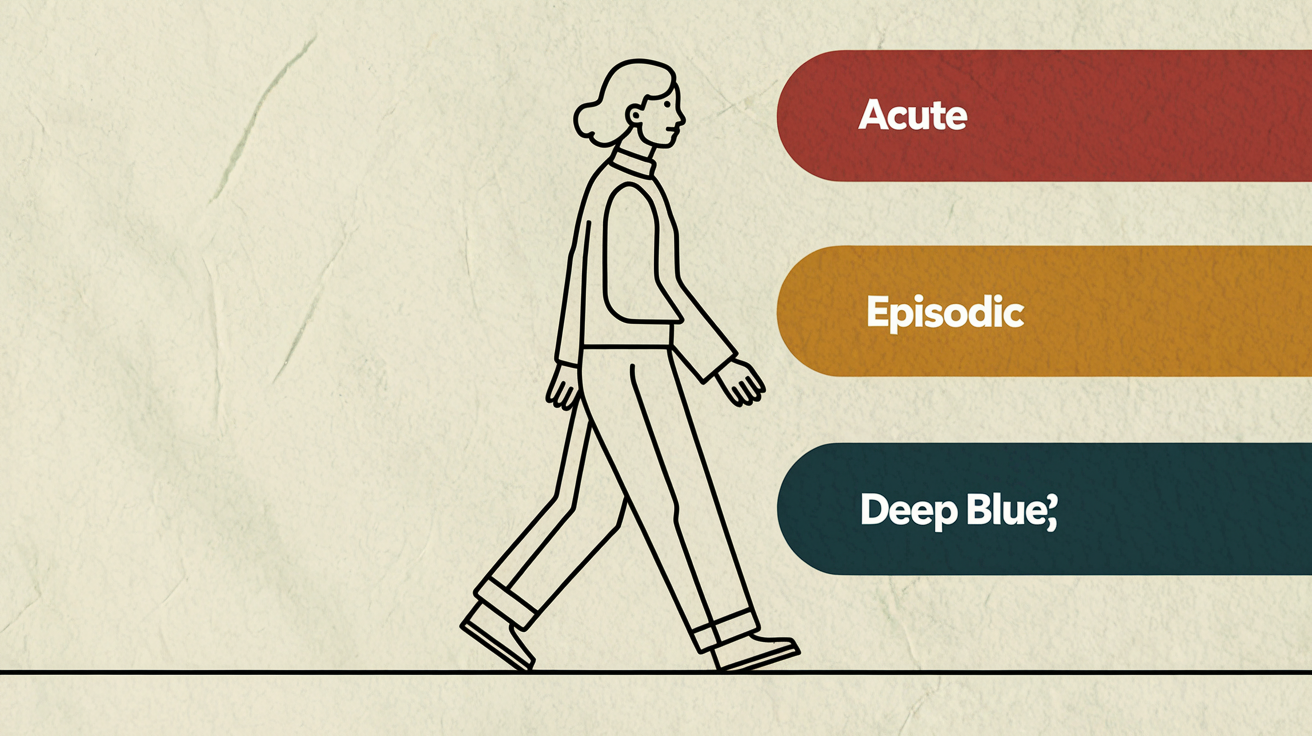
Not all stress lives on the same timeline or carries the same weight. Acute stress arrives suddenly and resolves relatively quickly. An unexpected work evaluation, a fender bender, or a surprise medical bill can spike your heart rate and flood you with feelings close to panic. The intensity’s high, but the duration’s short. Recognizing acute stress helps you understand why your body mobilized so fast and why simple grounding or problem solving often works to bring you back down.
Episodic stress is ongoing situational tension that doesn’t resolve cleanly. Workplace demands that shift weekly, a partner who cycles through silent withdrawal and intense confrontation, or a home repair dragging on for months all create a low hum of anxiety. You feel irritable without a clear reason, your sleep suffers, and body tension builds in your neck or jaw. Episodic triggers often blend together, making it hard to pinpoint what set you off today versus last week. Tracking context reveals the pattern: it’s not one event but a cluster of related stressors hitting you repeatedly.
Long term stress is everywhere and often beyond your immediate control. Past trauma, systemic racism, poverty, chronic illness, or caregiving for a family member with dementia all create a baseline of strain that colors every other experience. This type of stress can lead to guilt (Why can’t I just cope better?), self blame, hopelessness, and unhelpful coping like substance use or total avoidance. Long term triggers don’t always announce themselves with a clear event. Instead, they shape your emotional landscape so that smaller acute or episodic triggers feel unbearable. Identifying this category helps you see that the problem isn’t your resilience. It’s the cumulative load you’re carrying.
Somatic and Body Based Methods for Emotional Stress Trigger Recognition

Your body stores emotional information that your mind hasn’t processed yet. Tightness in your chest, a knot in your stomach, or chronic pain in your lower back can signal that a specific trigger’s active, even if you can’t name it consciously. Somatic methods help you tune into these signals before they escalate into full emotional reactions. Start by finding a quiet room where you won’t be interrupted. Turn off your phone or put it in another room. Sit comfortably and take several long, deep breaths. Inhale slowly through your nose, hold for a beat, and exhale through your mouth.
Once you feel settled, scan your body from head to toes. Notice where you feel tension, heaviness, heat, or numbness. Pick one area that stands out and imagine speaking directly to that part of your body. Ask it, “What do you need me to know?” or “What are you holding for me?” Then write freely in a journal without editing. Let the pain in your neck or the tightness in your jaw “speak.” You might write, “I’m tired of holding your head up when you’re scared,” or “I clench because I don’t trust anyone.” Have tissues nearby. This exercise can release emotion you didn’t know was there.
Track where emotions land physically over time. Some people always feel anger in their jaw, fear in their stomach, and sadness as a weight on their chest. Others experience stress as a headache, hip pain, or a sore lower back. Mapping these locations helps you recognize a trigger the moment it activates a familiar body signal, giving you a chance to respond before the emotional flood peaks.
Body Mapping for Trigger Detection
Draw a simple outline of your body on paper. Over the course of a week, mark the location of any physical sensation that arises during or after a stressful moment. Use different colors or symbols for different types of sensation: red for pain, blue for tightness, yellow for numbness, green for warmth. Rate the intensity on a scale of 1 to 10 next to each mark. At the end of the week, look for clusters. If your shoulders and neck light up every time you talk to your boss, that’s a body signature of a workplace trigger. If your stomach clenches before family dinners, that’s a relational trigger showing up in your gut.
Cognitive and Emotional Skills for Trigger Recognition

Automatic thoughts run beneath your emotional reactions, and spotting them is a core recognition skill. When a trigger fires, your mind generates a quick interpretation: They think I’m incompetent, I’m going to be abandoned, or I can’t handle this. These thoughts feel like facts, but they’re usually cognitive distortions (black and white thinking, catastrophizing, mind reading, personalizing). Learning to catch and name the thought in real time reveals the trigger’s cognitive fingerprint. Write the thought down as soon as you notice it, then ask: What evidence supports this? What evidence contradicts it? Is there another way to explain what just happened?
Reframing doesn’t mean pretending everything’s fine. It means testing whether your automatic thought is proportionate and accurate. If your partner doesn’t text back for two hours and you think, They’re done with me, reframe it: They might be in a meeting, or their phone died, or they’re focused on something else. I can wait before deciding what this means. If your boss gives critical feedback and you think, I’m about to be fired, reframe it: This is one piece of feedback on one project. I’ve received positive feedback before. I can ask clarifying questions instead of assuming the worst. This process reduces the emotional intensity tied to the trigger and gives you space to respond instead of react.
Affect labeling is the practice of naming your emotions out loud or in writing as soon as you notice them. Research shows that simply saying “I’m feeling angry right now” or “This is fear” reduces the emotional charge by activating language processing areas of your brain that help regulate the limbic system. Five cognitive recognition skills to practice daily:
- Fact check your automatic thoughts by listing evidence for and against each one.
- Identify distortions like catastrophizing (It’s going to be a disaster), overgeneralizing (This always happens), or personalizing (It’s all my fault).
- Reframe negative interpretations into balanced alternatives that account for uncertainty.
- Evaluate proportionality by asking whether the size of your emotional reaction matches the actual risk or harm.
- Label emotions precisely using a feelings wheel or list to move from “bad” or “stressed” to “disappointed,” “overwhelmed,” “ashamed,” or “scared.”
Trauma Linked and Childhood Based Trigger Recognition

Trauma triggers often hide in plain sight. A specific smell, a tone of voice, a type of touch, or a physical location can reactivate the nervous system response you had during the original traumatic event. You might walk past a hospital where you were admitted years ago and feel a wave of panic without understanding why. You might hear someone raise their voice in a meeting and feel small, frozen, or enraged. An echo of childhood moments when raised voices meant danger. Adverse childhood experiences (neglect, abuse, household chaos) wire your stress response to be hypersensitive to cues that your conscious mind’s long forgotten.
Childhood based triggers often center on relational patterns. Criticism from a supervisor can feel unbearable if you grew up with a parent who used shame as a control tool. A friend canceling plans might trigger intense abandonment fear if early caregivers were inconsistent or emotionally unavailable. These triggers don’t announce themselves with a clear memory. Instead, they show up as disproportionate emotional pain, physical tension, or a sudden urge to flee or fight. Recognizing them requires connecting current reactions to early relational themes: criticism, neglect, control, rejection, or unpredictability.
Memory and Anniversary Triggers
Certain dates, seasons, or times of year can activate stress memories even when you don’t consciously remember the original event. The anniversary of a loss, the month a trauma occurred, or the season when a relationship ended can all create a background hum of sadness, anxiety, or irritability. Your body remembers what your mind’s filed away. If you notice mood dips or physical symptoms that return predictably each year, check the calendar. Mark any significant dates (deaths, accidents, hospitalizations, breakups) and track whether your stress spikes in the weeks leading up to or following those dates. This awareness alone can reduce the confusion and self blame that often come with anniversary triggers.
Tools to Reduce Trigger Sensitivity and Improve Regulation
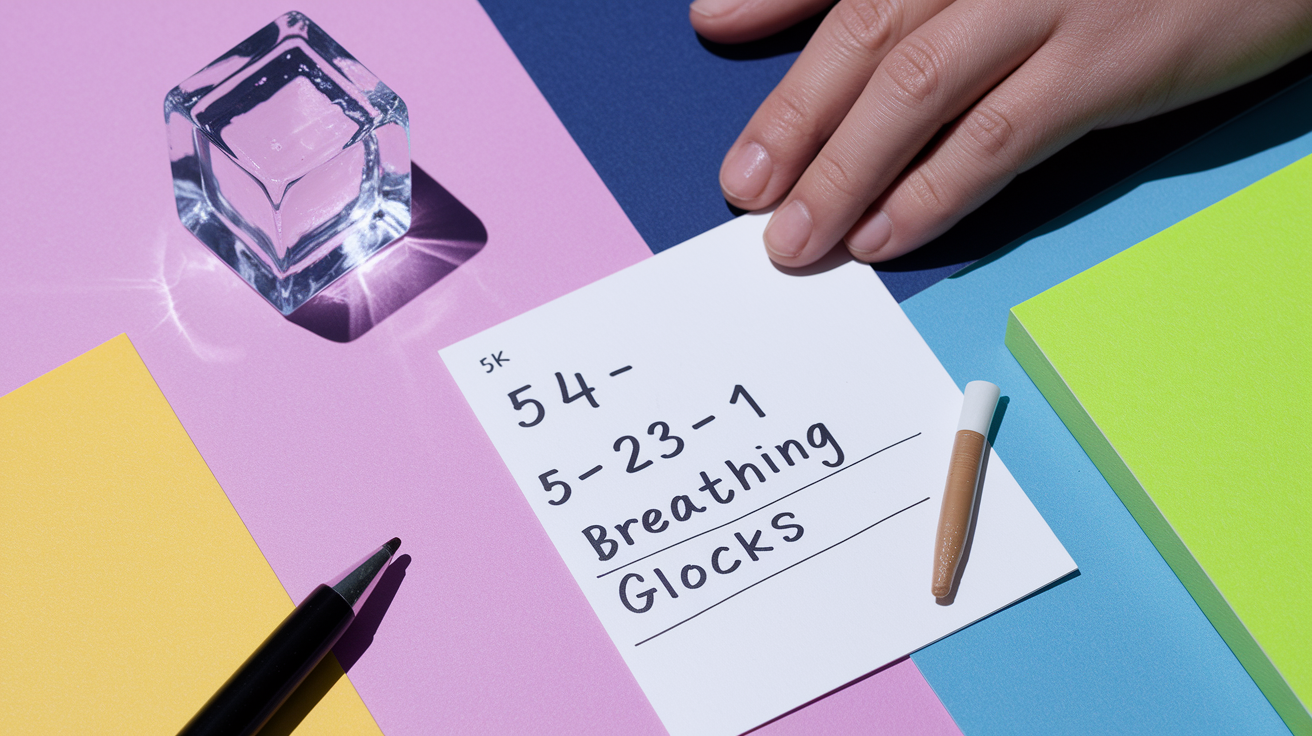
Grounding techniques interrupt the path between trigger and full reaction. When you notice early warning signs (racing heart, tight chest, looping thoughts), pause and engage your senses. Name five things you can see, four things you can touch, three things you can hear, two things you can smell, and one thing you can taste. This sensory exercise pulls your attention out of the trigger narrative and back into the present moment. Box breathing works the same way: inhale for four counts, hold for four, exhale for four, hold for four, and repeat for several cycles. The rhythm calms your nervous system and buys you time to choose a response instead of reacting automatically.
Dialectical behavior therapy (DBT) distress tolerance skills are designed for moments when you can’t remove the stressor but need to keep your reaction from making things worse. TIPP skills (Temperature, Intense exercise, Paced breathing, Paired muscle relaxation) are especially useful for acute triggers. Splash cold water on your face, hold an ice cube, or take a brief walk outside to shift your body state. Radical acceptance (acknowledging that a situation’s painful and unfair without demanding it be different right now) helps when long term stressors can’t be changed quickly.
Boundary setting is a proactive tool that limits future trigger exposure. If a coworker consistently makes comments that activate shame, you can calmly say, “I need you to stop commenting on my work style. Let’s keep our conversations focused on project tasks.” If a family member brings up a topic that reliably triggers conflict, you can set a boundary: “I’m not willing to discuss that subject anymore. If it comes up, I’ll leave the conversation.” Boundaries aren’t about controlling others. They’re about protecting your nervous system so you can stay regulated enough to recognize and manage the triggers that remain.
- Grounding (5 4 3 2 1 sensory exercise) to interrupt escalation and return attention to the present.
- DBT distress tolerance (TIPP skills) to regulate your body during acute activation.
- Box breathing (4 4 4 4 rhythm) to calm the nervous system and create space for choice.
- Boundary setting scripts to limit exposure to predictable interpersonal triggers.
Professional Support and Therapy Approaches for Trigger Work

Some triggers are too persistent, too intense, or too deeply rooted to manage alone. If you’ve tracked patterns, practiced grounding, and set boundaries but still find yourself overwhelmed or unable to function in key areas of life, it’s time to talk with a therapist. Cognitive behavioral therapy (CBT) teaches structured thought tracking, distortion identification, and reframing skills that make trigger recognition and response more predictable. A CBT therapist will often assign homework like daily thought records or behavioral experiments to test whether your automatic interpretations hold up under scrutiny.
Eye movement desensitization and reprocessing (EMDR) is effective for trauma linked triggers. EMDR uses bilateral stimulation (eye movements, tapping, or auditory tones) while you briefly recall a traumatic memory, helping your brain reprocess the memory so it no longer activates the same intense stress response. Exposure therapy gradually desensitizes you to triggers you’ve been avoiding (like driving after an accident or visiting places tied to trauma) by helping you face them in a controlled, supportive way. Group therapy and trauma focused support groups offer the added benefit of shared recognition: hearing others describe similar triggers can help you name patterns you hadn’t seen in yourself.
Telehealth has made therapy more accessible for people with demanding schedules or limited local options. Many clients report that simply scheduling an appointment reduces distress, even before the first session. When symptom triggers are involved (like sleep loss kicking off mood episodes), a therapist can coordinate with a prescriber to adjust medication or sleep interventions while you work on behavioral and cognitive skills. Professional support isn’t a sign that your self help efforts failed. It’s a tool that speeds up pattern recognition and gives you techniques tailored to your specific trigger profile.
Final Words
Notice the first small signals. Quick breathing changes, tight jaw, a flash of shame.
The post showed how to spot these physical and emotional cues, map common triggers, and use journaling, somatic checks, and simple thought checks to trace patterns.
Try a short experiment. Track one trigger for two weeks, note who, what, where, body signs, and your reaction. This kind of emotional stress trigger recognition turns guesswork into useful clues. You’ll learn what helps and feel more steady day to day.
FAQ
Q: How to recognize emotional triggers?
A: Recognizing emotional triggers means noticing signals like sudden intense reactions, body sensations, quick negative thoughts, and repeated situations, then tracking who, what, where, and when to find clear patterns over days or weeks.
Q: What are five emotional signs of stress?
A: Five emotional signs of stress are irritability, feeling overwhelmed, dread or fear, hopelessness, and intrusive or ruminating thoughts that change your mood and how you act day to day.
Q: What is the 3 3 3 rule for stress?
A: The 3‑3‑3 rule for stress is a quick grounding technique: name 3 things you can see, notice 3 sounds you hear, then move 3 body parts or take 3 deep breaths to calm your nervous system.
Q: What are the five stress levels?
A: The five stress levels are no or minimal, mild, moderate, high, and severe/overwhelmed, each differing by intensity, how long it lasts, and how much it disrupts daily functioning.