

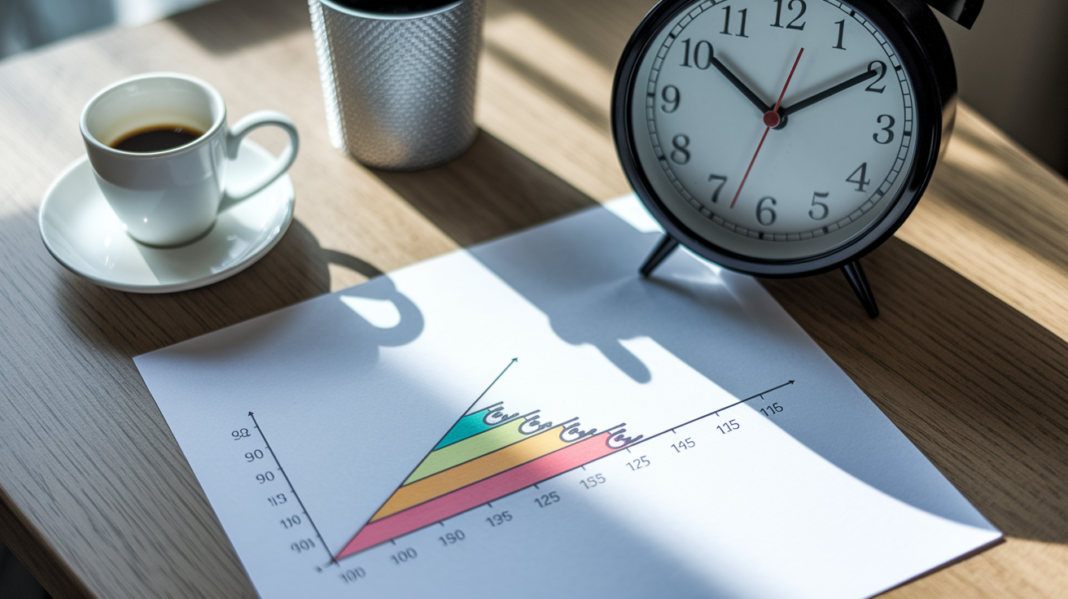

What if your afternoon slump isn’t laziness but proof your body follows a schedule?
Your circadian rhythm is the internal clock that times when you feel sharp, foggy, hungry, or wired.
Think of it like an orchestra conductor, with light, meals, sleep and movement nudging different parts of the body to play at the right time.
Learn your personal peaks and dips and you can match hard work, meals, and brief naps to actual energy, not the clock on the wall.
This post shows how to spot those patterns and test small changes that often make a real difference.
How Your Internal Clock Shapes Energy Throughout The Day
Your circadian rhythm and energy patterns are tied to an internal clock that runs on a roughly 24 hour cycle, syncing your body to the rhythm of day and night. This clock quietly controls when you feel sleepy, when you feel sharp, your body temperature, blood pressure, appetite, and the timing of key hormones. The dips and surges you feel throughout the day aren’t a battery running low and refilling. They’re signals from your biological clock, working alongside how long you’ve been awake.
If you wake up somewhere between 7 and 9 AM, you’ll likely notice stronger alertness around 9 to 11 AM and again around 7 to 9 PM, with a common low point in the 2 to 4 PM range. That’s the general shape of daily energy patterns for a lot of adults. But it’s worth saying clearly, this is a pattern, not a rule.
These windows are population averages, not a personal schedule carved in stone. Your actual peak performance times can shift earlier or later depending on your wake time, your chronotype, how much sleep debt you’re carrying, what and when you eat, your light exposure, your age, and your general health. Two people who both wake at 7 AM can still have noticeably different energy curves.
| Time Window | Typical Energy Level | Practical Task Match |
|---|---|---|
| Early morning (7-9 AM) | Rising, not yet peaked | Light planning, easing into the day |
| Mid-morning (9-11 AM) | High alertness peak | Demanding cognitive work, focused tasks |
| Early afternoon (2-4 PM) | Common circadian trough | Lower-stakes, routine tasks |
| Late afternoon (4-6 PM) | Gradual recovery | Meetings, collaborative work |
| Evening (7-9 PM) | Possible second peak | Varies widely by chronotype |
That 7 to 9 PM window deserves a caveat. For some people it’s a genuine second wind. For others, especially early chronotypes, energy is already winding down by then. Chronotype can reshape the evening part of this curve quite a bit.
So what’s actually driving these ups and downs? A few things layer on top of each other. Your circadian system sends out alerting signals on its own schedule, independent of anything you’ve done that day. At the same time, sleep pressure has been quietly building since you woke up, and it grows heavier the longer you’re awake. Add in when you last ate, how much daylight you’ve gotten, and how well you slept the night before, and you’ve got a fuller picture.
Here’s the tricky part with that afternoon dip. Part of it is circadian, built into your internal clock regardless of lunch. But part of it can also be a temporary, food related sluggishness, especially after a heavy meal. Both things can be happening at once, which is why the slump sometimes feels worse on days you eat a big lunch.
A few simple things tend to help during that mid-afternoon dip:
- Take a short walk, even five or ten minutes
- Get some daylight, ideally outside rather than through a window
- Choose a light, balanced snack instead of something heavy
- Use a brief nap when your schedule allows it
Naps and caffeine timing deserve their own deeper look later on, so we’ll keep it brief here.
Give yourself a week or two of simply noticing your own energy, without judging it. Jot down when you feel sharp and when you feel foggy. Then start shifting your demanding work toward your own recurring high points, rather than forcing your day to match the example timeline above. Your pattern is the one that matters.
How The Biological Clock Regulates Alertness
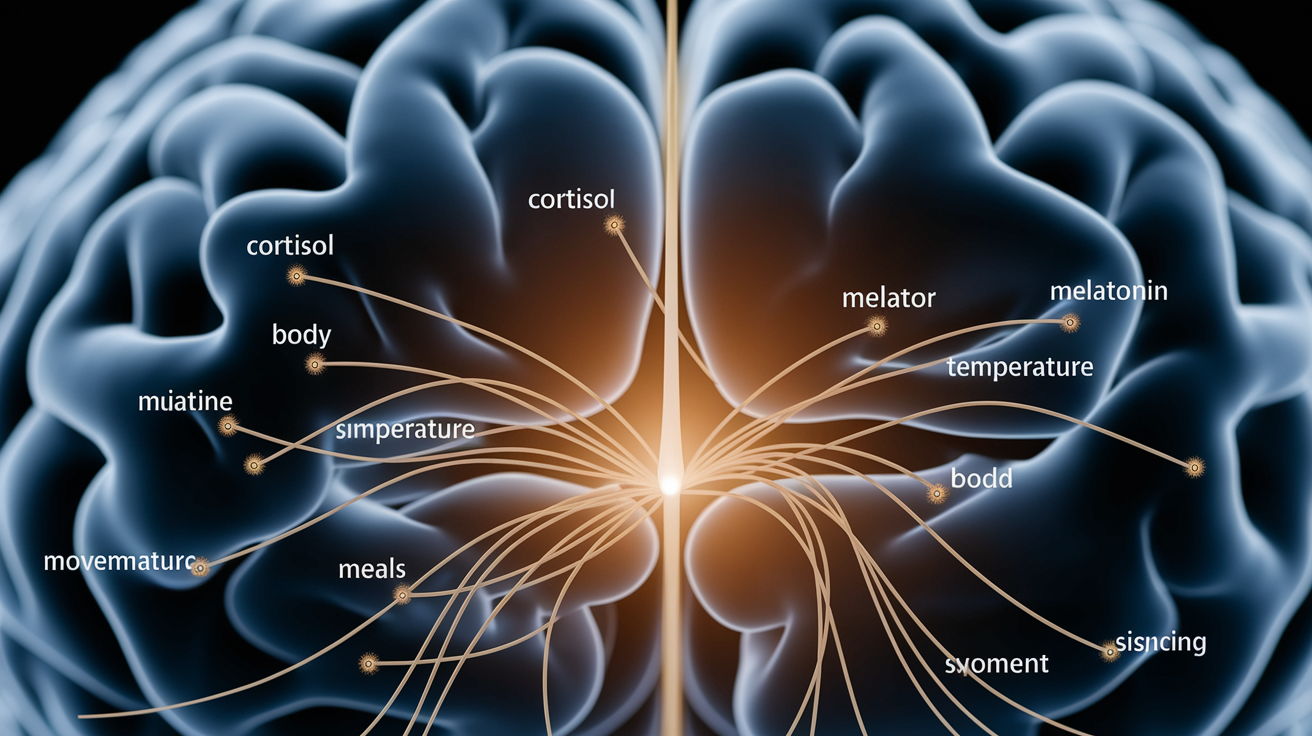
Your biological clock has a command center, and it lives in a tiny structure in your brain called the suprachiasmatic nucleus, or SCN for short. Think of the SCN as the conductor of an orchestra. It doesn’t play every instrument itself, but it keeps peripheral clocks in your liver, muscles, gut, and other organs playing in time with each other. Left on its own, this master clock actually runs a little long, averaging about 24.2 hours, which means it needs a small daily correction of roughly 12 to 18 minutes to stay matched with the actual 24 hour day.
Alertness isn’t governed by the SCN alone, though. There’s a second system running in parallel called homeostatic sleep pressure. This builds up steadily the longer you’re awake, kind of like sand filling an hourglass, and it drops back down once you sleep. Your circadian signals and your sleep pressure interact constantly. Sometimes they reinforce each other, and sometimes they pull in opposite directions, which is part of why energy can feel confusing or inconsistent from one day to the next.
A handful of physiological signals do most of the heavy lifting here:
- Cortisol, helps mobilise energy and support wakefulness, typically rising in the morning.
- Melatonin, signals biological night and prepares the body for sleep as evening sets in.
- Core body temperature, shifts with circadian phase, tracking closely with how alert you feel.
- Insulin sensitivity, varies across the biological day, shaping how your body handles food at different times.
- Homeostatic sleep pressure, builds during wakefulness, adding to your need for sleep the longer you’re up.
None of this happens in a vacuum. Your clock needs outside cues, called zeitgebers, a German word that basically means time givers. Light is the big one, especially morning sunlight, which acts as the strongest signal for keeping the SCN synced to the real world. Meals, exercise, and social routines all send their own timing cues too,
Final Words
In the action, you learned how a 24-hour internal clock shapes alertness and why daily highs and lows aren’t just about willpower.
We mapped common windows — mid-morning peak, 2 to 4 pm dip, possible evening rise — and gave quick slump fixes.
We explained the brain’s master clock, key signals like cortisol and melatonin, and how light and routines reset timing.
You got chronotype-friendly tips and simple experiments. Track your days for one to two weeks, spot your pattern, and use those circadian rhythm and energy patterns to schedule your toughest tasks. Small changes help.
FAQ
Q: What organ controls circadian rhythm?
A: The organ that controls circadian rhythm is the suprachiasmatic nucleus (SCN), a tiny brain cluster in the hypothalamus that coordinates body clocks and daily sleep, alertness, temperature, and hormone timing.
Q: What is the forbidden hour of sleep?
A: The “forbidden hour” of sleep usually refers to the early-morning circadian low around 2–4 a.m., when the body most strongly promotes uninterrupted sleep and waking feels unusually difficult.
Q: What are some signs that my circadian rhythm is off?
A: Signs that your circadian rhythm is off include inconsistent sleep times, daytime sleepiness or fatigue, trouble falling asleep or waking, foggy thinking, mood shifts, and regular energy dips at odd hours.
Q: What hormone wakes you up at 3am?
A: The hormone that can wake you around 3 a.m. is cortisol; a pre-dawn rise in cortisol, along with falling melatonin, often causes early-morning awakenings.