



Your sleep tracker isn’t the full answer—writing one clear line each morning often reveals what apps miss.
This free, printable sleep diary template gives a tiny, one-row-per-night form that makes spotting patterns fast.
It only asks for bedtime, wake time, how long you took to fall asleep, nighttime awakenings, and a quick 1–5 restfulness score.
Use the PDF to print and keep a pen by your pillow or the spreadsheet if you prefer typing and auto-calcs.
Track for a week or two and you’ll spot likely triggers and simple tests to try for better rest.
Downloadable Sleep Diary Templates
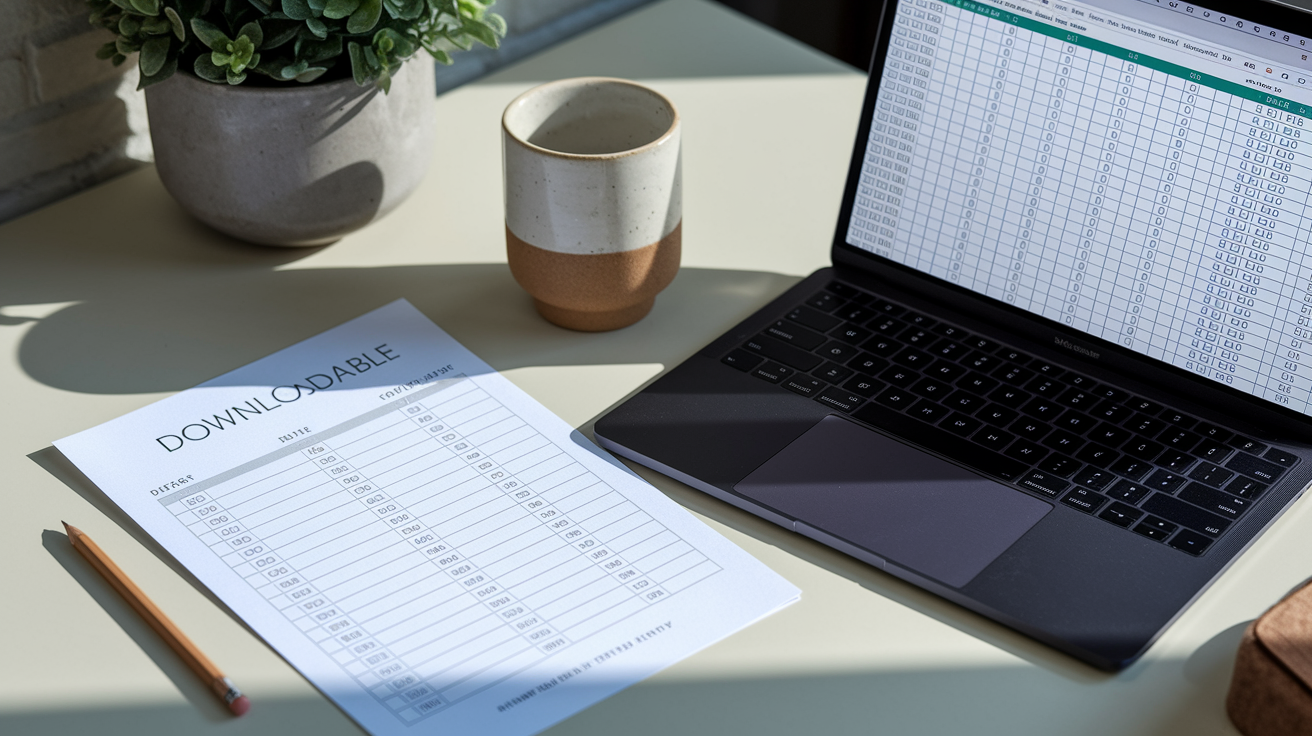
A basic sleep diary needs three things: when you went to bed, when you woke up, and how you felt. That’s it. The templates below are built as simple rows, one per night, so you can spot patterns without turning this into a second job. Grab the PDF if you want to print sheets and keep a pen next to your pillow. Use the Excel version if you’d rather type and let the spreadsheet do the math. Both capture the same core info and work just as well whether you’re preparing for a doctor’s appointment or running your own two week test.
Each template has columns for date, bedtime, wake time, and total hours in bed. You’ll also track how many times you woke up overnight, how long it took to fall asleep, and a quick 1 to 5 rating of how rested you felt when morning arrived. There’s space for notes where you can write down anything that might explain a bad night. Street noise, a late meal, three cups of coffee at 4 p.m.
Core information you’ll track each day:
- Bedtime, lights out time, and minutes it took to fall asleep
- Number of nighttime awakenings and their total duration
- Final wake time and when you actually got out of bed
- Naps (start time and length)
- Caffeine, alcohol, medications, and exercise (type, time, duration)
How to Fill Out the Sleep Diary Each Day

Complete the diary in two short sessions: once when you wake up and once before bed. Fill in the morning section as soon as you’re alert enough to remember the night. Usually within the first ten minutes. Record your bedtime, when you turned off the lights, how long you think it took to fall asleep, any awakenings you remember, your final wake time, and when you actually got out of bed. Add a quick sleep quality rating while the night’s still fresh. Morning logging takes about ninety seconds.
The evening part takes even less. Before you turn off the lights, write down anything from the day that might mess with tonight’s sleep. When you had your last coffee, whether you exercised, any naps, alcohol, medications, or something unusual like a stressful meeting or heavy dinner. Keep the diary and a pen within arm’s reach so you don’t have to hunt for it. If you’re using your phone, open the file or app before you brush your teeth so it’s already waiting.
Accuracy matters more than perfection. Estimate sleep latency to the nearest five or ten minutes. “Around fifteen minutes” beats staring at the ceiling trying to remember the exact second you dozed off. Count awakenings you actually remember. If you’re not sure whether you woke twice or three times, write “2–3” and move on. The goal is a reliable picture over a week or two, not a flawless reconstruction of every minute.
Daily steps to follow:
- Place the diary and pen on your nightstand before bed.
- Record evening details (caffeine cutoff, naps, exercise, medications) right before lights out.
- Fill in the morning section within ten minutes of waking, while the night’s clear.
- Use round numbers for sleep latency and awakenings. Nearest five to ten minutes is fine.
- Note anything unusual in the “Notes” column. Noise, temperature, or feeling wired.
- Repeat every day for at least one week. Two weeks reveals stronger patterns.
Example of a Completed Sleep Diary Entry

A filled in row shows exactly what to capture and how specific to be. The sample below reflects a typical weeknight for someone tracking moderate sleep interruptions, a reasonable bedtime, and an early wake for work. Notice the notes column flags a possible trigger, caffeine timing, that might explain the longer time to fall asleep.
| Date | Bedtime | Wake Time | Sleep Latency | Awakenings | Total Sleep | Quality (1–5) | Notes |
|---|---|---|---|---|---|---|---|
| March 12 | 11:00 PM | 6:30 AM | 25 min | 2 (10 min total) | 7 hr 5 min | 3 | Last coffee 3:30 PM; street noise at 2 AM |
| March 13 | 10:45 PM | 6:30 AM | 15 min | 1 (5 min) | 7 hr 25 min | 4 | No afternoon caffeine; felt more rested |
| March 14 | 11:30 PM | 6:45 AM | 30 min | 3 (20 min total) | 6 hr 35 min | 2 | Late dinner; two glasses wine; restless |
| March 15 | 11:00 PM | 6:30 AM | 20 min | 1 (5 min) | 7 hr 5 min | 4 | 20-min walk at 6 PM; no alcohol |
Track for a full week or longer to catch patterns. One rough night doesn’t tell you much. But four nights with long latency after 3 p.m. coffee starts to look like a clue. Use the notes column to flag anything that changed. Schedule shifts, missed workouts, an argument, or an extra glass of wine. Those details turn raw numbers into actionable experiments you can test the following week.
Different Versions of Sleep Diaries Based on Goals
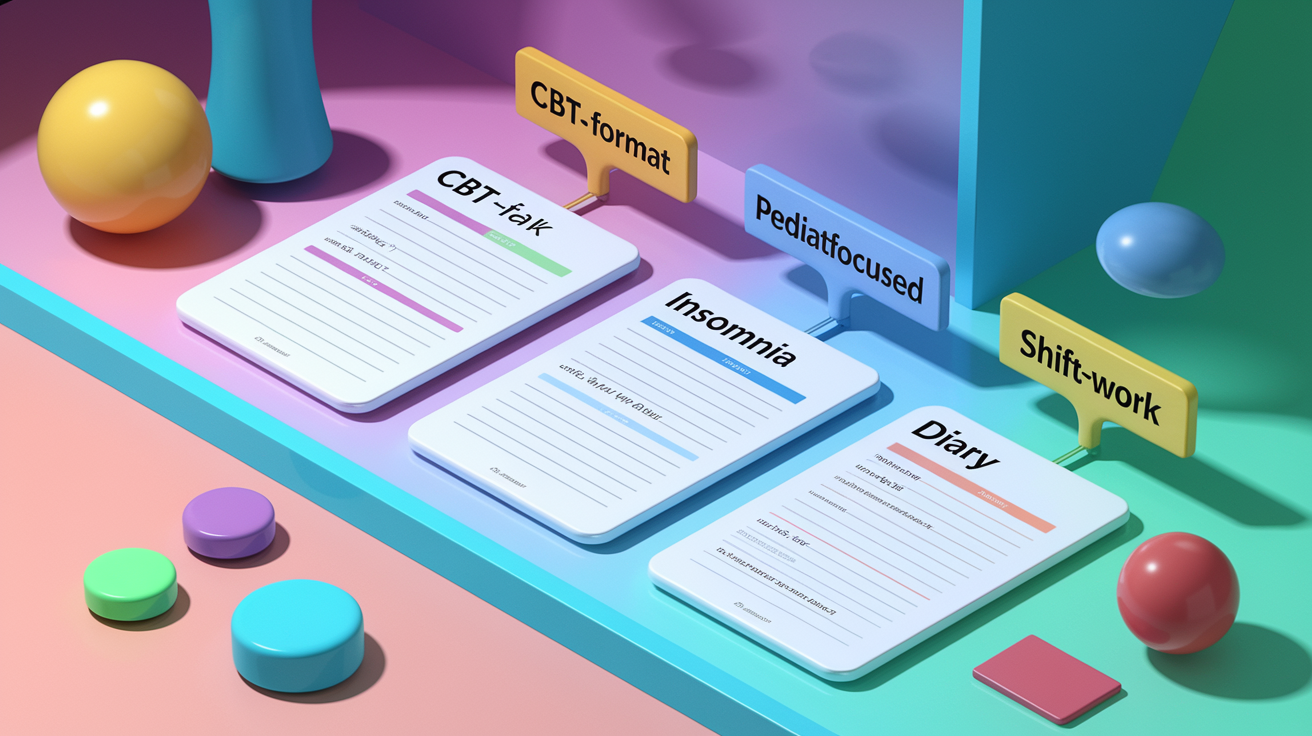
Clinicians who deliver cognitive behavioral therapy for insomnia (CBT-I) use a more structured diary that calculates sleep efficiency, the percentage of time in bed spent actually asleep. Sleep efficiency helps therapists fine tune a technique called sleep restriction, which temporarily limits time in bed to match actual sleep time and then gradually expands the window as efficiency improves. If you’re working with a therapist, use the diary they provide. It’ll include fields for time in bed, total sleep time, and the ratio between the two.
Pediatric sleep diaries simplify the format for parents tracking a child’s sleep. Instead of asking a six year old to estimate sleep latency, the diary focuses on bedtime routine completion (bath, story, lights out), number of times the child called out or left the room, and morning mood or behavior. Parents note naps, screen time before bed, and any night waking that required intervention. A week of data often reveals whether inconsistent bedtimes or late screen use clusters with harder mornings or more frequent wake ups.
Insomnia focused diaries emphasize wake after sleep onset, the total minutes awake during the night after initially falling asleep, and early morning awakenings that happen more than thirty minutes before the planned wake time. These diaries typically ask users to rate how long it felt like they were awake versus how long they think they actually slept, since people with insomnia often overestimate wake time. Tracking both perceived and estimated actual sleep helps therapists address anxiety around sleep and adjust behavioral interventions.
Diary variations by use case:
- CBT-I format – includes time in bed, total sleep time, sleep efficiency percentage, and fields for sleep restriction adjustments
- Pediatric version – simplified for parents; focuses on bedtime routine, night calls or exits, naps, and morning mood
- Insomnia specific – tracks wake after sleep onset, early awakenings, and perceived versus estimated sleep time
- Shift work diary – adds columns for work schedule, light exposure during waking hours, and planned sleep windows across varied times
Tips for Getting Accurate Sleep Tracking Results

Keep the diary within arm’s reach and fill it in immediately. Memory fades fast, especially if you wake groggy or your morning moves quickly. Recording details right when you wake, before checking your phone or starting coffee, captures the clearest picture of the night. If you wait until lunch to fill in bedtime and wake time, you’ll guess. And guesses smooth out the very patterns you’re trying to spot. Same goes for evening entries. Log caffeine, exercise, and medications before bed, not the next morning when you’re trying to remember whether yesterday’s last coffee was at 2 p.m. or 4 p.m.
Round your estimates to five or ten minute intervals instead of agonizing over exactness. If it took roughly fifteen to twenty minutes to fall asleep, write “15–20 min” or pick the midpoint. Precision that requires a stopwatch adds stress and often isn’t more accurate. Most people can’t pinpoint the moment sleep starts. Same applies to awakenings. If you woke twice and lay there each time for what felt like ten minutes, write “2 awakenings, ~10 min each.” Patterns emerge from averages over a week, not from perfect data on one night.
Five practical accuracy strategies:
- Place the diary and pen on your nightstand before bed so you never search for it
- Complete the morning section within ten minutes of waking, before doing anything else
- Estimate times to the nearest five or ten minutes instead of trying for exact seconds
- Track at least seven consecutive nights. Two weeks is better for reliable patterns.
- Log caffeine cutoff time, not just “had coffee.” “Last cup 2:30 PM” tells you more than “three cups today.”
Final Words
Grab the downloadable files and pick the version that fits your needs. You’ve got printable PDFs, an Excel tracker, and quick 3 to 10 day sheets ready to use.
Fill the diary twice daily, follow the sample entry to see what to note, and try the goal-specific versions for insomnia or kids. Use the accuracy tips so entries are honest and consistent.
Try a small experiment: use one sleep diary template for seven days, spot a pattern, and adjust. Small changes make a real difference.
FAQ
Q: What does a sleep diary template include?
A: The sleep diary template includes fields for bedtime, wake time, nighttime awakenings, naps, caffeine and medication intake, and a sleep-quality rating to help you spot patterns and next steps.
Q: Which format should I choose: printable PDF, Excel, or a tracker?
A: The best format depends on goals: choose printable PDF for quick pen-and-paper use, Excel for automatic totals and charts, and digital trackers for reminders and mobility.
Q: How often should I fill out a sleep diary each day?
A: You should fill out a sleep diary twice daily: once in the morning for night details, and once in the evening to log daytime habits that affect sleep.
Q: How long should I track sleep to see reliable patterns?
A: You should track sleep at least two weeks to spot patterns; four weeks gives a clearer picture, especially if your schedule or symptoms vary week to week.
Q: How do I record naps and caffeine in the diary?
A: You should record naps’ start and length, and note caffeine type and time; these details are key clues when checking how daytime choices affect nighttime sleep.
Q: Can a sleep diary help with insomnia or CBT‑I?
A: A sleep diary helps with insomnia and CBT‑I by measuring sleep timing and efficiency, guiding schedule changes, and providing data for clinicians to shape treatment.
Q: How do I calculate sleep efficiency from my diary?
A: You calculate sleep efficiency by dividing total sleep time by time spent in bed, then multiplying by 100; lower percentages often point to scheduling or wakefulness issues.
Q: How should I record multiple awakenings or uncertain times?
A: You should tally the number of awakenings and estimate total minutes awake; if unsure, use honest ranges instead of false precision to keep the data useful.
Q: Can I share my sleep diary with a clinician, and how?
A: You can share your sleep diary by printing it or exporting it from Excel or a tracker; clinicians find these notes helpful for diagnosis and personalized recommendations.
Q: What tips improve sleep diary accuracy?
A: To improve accuracy, record entries promptly, use simple consistent definitions (like “time in bed”), avoid guessing exact minutes, and track several days to confirm patterns.
Q: Are there different sleep diary versions for children or specific goals?
A: There are versions tailored to goals: pediatric diaries simplify fields and note routines, CBT‑I versions focus on latency and efficiency, and insomnia versions emphasize wake-after-sleep-onset details.