

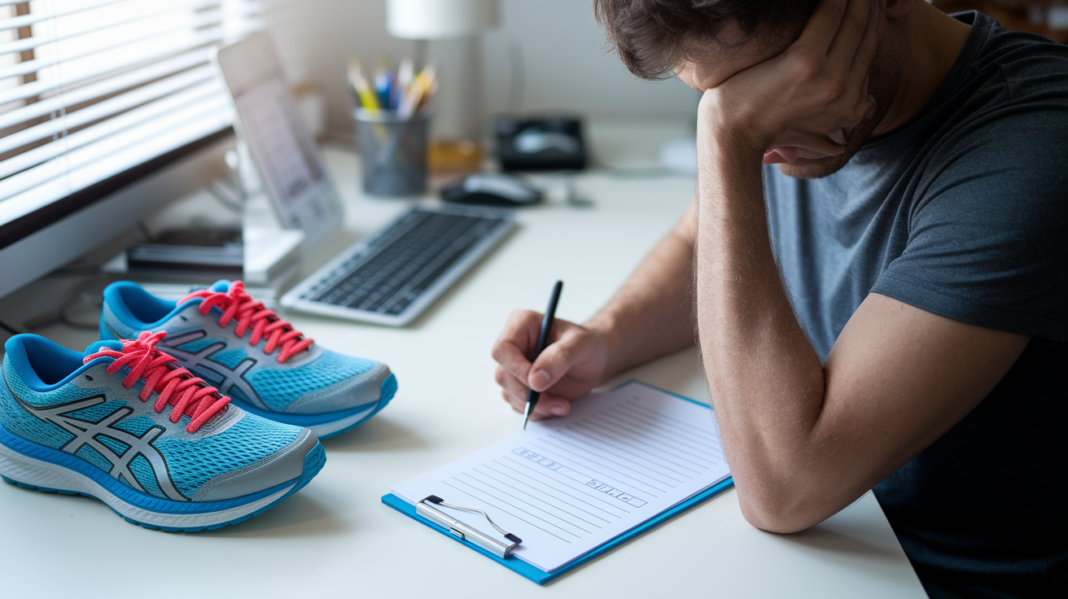

What if your sore legs aren’t the real problem?
Mixing up mental and physical fatigue is common, and it leads to the wrong fixes.
In this post you’ll learn simple signals to watch, quick tests to try, and easy tracking tools that actually separate brain-tired from body-tired.
You’ll get a handful of daily checks, like reaction time, sleep notes, soreness and strength markers, so you can spot patterns fast.
Use those patterns to pick the right recovery, like sleep and fewer decisions if your brain is fried, or rest and nutrition if your muscles need it.
Quick Verdict: Signs You’re Facing Mental Fatigue vs Physical Fatigue

Physical fatigue shows up in your body’s performance markers, soreness, strength, HRV (heart rate variability, a measure of how well your body handles stress), and resting heart rate. Mental fatigue lives in a different set of markers: reaction time, focus, mood, sleep debt. Most people actually need to watch both, since one tends to feed the other.
This matters most if you’re an athlete pushing training loads, a professional juggling deadlines, or just someone who’s noticed they’re running on empty more days than not. Here’s the tricky part. Mix up mental fatigue for physical (or the other way around) and you’ll end up chasing the wrong fix. Someone who’s mentally fried might force themselves through another hard workout, thinking rest days will solve it, when what they really need is sleep and fewer decisions to make. Someone who’s physically depleted might try to push through with caffeine and willpower, when their body just needs time to recover.
Mental fatigue usually comes from inadequate sleep, sleep debt, or a mismatched body clock, think night shifts. It shows up as reduced alertness, slower reaction time, foggy judgment, and a skewed sense of how hard something feels. Physical fatigue comes from exercise type, intensity, and volume. It shows up as weaker muscles, slower movement, and lower power output, but your brain usually stays sharp through it.
| Signal | Mental Fatigue | Physical Fatigue |
|---|---|---|
| Primary cause | Poor sleep, sleep debt, circadian misalignment | Exercise intensity, volume, and type |
| Recovers with | Sleep, naps, reduced decision load | Rest days, nutrition, active recovery |
| Key symptom | Slower reaction time, brain fog, low motivation | Muscle weakness, soreness, reduced power |
| Best tracked by | Reaction time tests, sleep logs, mood scales | HRV, resting heart rate, strength/power tests |
| Recovery focus | Sleep consistency, light exposure, cognitive breaks | Reduced training load, hydration, muscle repair |
Once you’ve got the general shape of each fatigue type down, the next step is building a routine that catches the early warning signs. The breakdown below walks through exactly which symptoms to watch, which tools to use, and how often to check in with yourself.
Observable Symptoms: Cognitive Fatigue Indicators vs Muscular Fatigue Signs
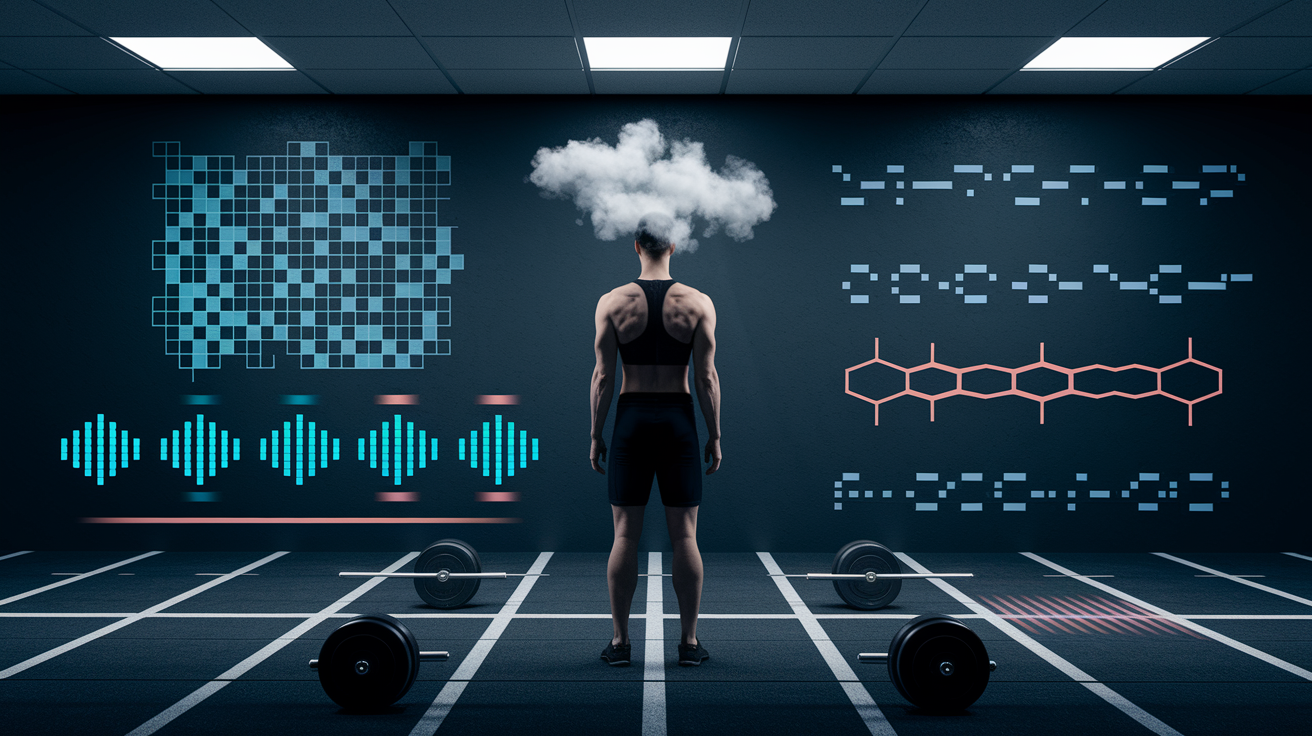
Before you touch a single app or wearable, the most useful thing you can do is just pay attention. Symptom spotting is free, takes no setup, and it’s usually the first real sign something’s off. Once you know what you’re looking for, everything else, journals, devices, scales, gets a lot easier to interpret.
Here’s what to watch for on the cognitive side:
- Reduced alertness or a sense of moving through fog
- Slower reaction time, like your brain needs an extra beat to respond
- Impaired judgement or trouble making even small decisions
- Memory slips, forgetting why you walked into a room
- Poor concentration or zoning out mid task
- Irritability or feeling on edge without a clear reason
- Procrastination that feels out of character
- Low motivation, even for things you usually enjoy
And here’s what shows up when the fatigue is more physical:
- Reduced strength, things feel heavier than they should
- Localized muscle weakness, often in whatever muscle group worked hardest
- Slower movement or a noticeable drop in coordination
- Decreased power output, whether that’s a slower run pace or a lighter lift
- Muscle tension or tightness that lingers
- Soreness that doesn’t ease with light movement
- Upset stomach or appetite changes
- Cravings for high sugar or high fat comfort foods
Some symptoms overlap. Sleep disruption, headaches, irritability, all of these can show up with either type. That’s exactly why tracking a few signals together matters more than fixating on just one. A headache alone doesn’t tell you much. Pair it with slower reaction time and low motivation, and it points toward mental fatigue. Pair it with sore legs and reduced power output, and you’re looking at something else entirely.
Subjective Tracking Methods: Journals, Questionnaires, and Fatigue Scales

Wearables and lab tests get a lot of attention, but self-report data is still one of the most reliable ways to catch fatigue early. Or put more simply: how you feel, tracked consistently, often predicts problems before your heart rate or sleep tracker does.
A handful of validated scales exist specifically for this. They’re quick, free, and backed by research:
- Karolinska Sleepiness Scale (KSS), a 9-point scale measuring how sleepy you feel right now
- Epworth Sleepiness Scale, a 24-point scale screening for daytime sleepiness patterns
- NASA-TLX, a workload checklist measuring how mentally demanding a task felt
- Multidimensional Fatigue Inventory (MFI), 20 items separating general, physical, mental, and motivation-related fatigue
For daily use, you don’t need anything that formal. A simple journal works just as well if you stick with it. Track your date, hours slept, sleep quality on a 1 to 10 scale, any naps, mental fatigue (0 to 10), physical fatigue (0 to 10), mood or stress level (0 to 10), key stressors, what recovery actions you tried, and
Final Words
Track both signals now: physical fatigue shows up as muscle soreness, lower strength, slower power, and shifts in HRV or resting heart rate. Mental fatigue shows up as slow reactions, poor focus, low motivation, and sleep debt. Most people need to monitor both because they affect each other.
This matters if you train hard or work long days, since mixing them up leads to the wrong recovery plan. Try the checklists and simple daily scales as a quick experiment in how to track mental vs physical fatigue, and you’ll find clearer, faster fixes.
FAQ
Q: How to tell if fatigue is mental or physical?
A: The way to tell if fatigue is mental or physical is to compare symptoms: mental shows poor focus, slow reactions, low motivation; physical shows muscle weakness, soreness, and lower power. Physical often eases with rest; mental may not.
Q: How to fix tired brain?
A: To fix a tired brain, prioritize sleep, take short breaks, hydrate, do light movement, limit nonstop screen time, try a 20-minute nap, and track results; if problems persist, talk with a healthcare professional.
Q: Can you be physically tired but not mentally?
A: Yes, you can be physically tired but not mentally: your body may feel sore or weak while attention and motivation stay sharp. Rest, sleep, or active recovery usually restores physical performance without major cognitive change.
Q: What are 9 warning signs that you are mentally and emotionally exhausted?
A: Nine warning signs of mental and emotional exhaustion are poor concentration, slow reactions, memory lapses, low motivation, irritability, anxiety, procrastination, sleep problems, and feeling numb or detached.