



Your body shows stress before your brain catches up.
Tight jaw, shallow breaths, a 3 a.m. wake-up. These are warning lights.
They tend to follow repeatable patterns across your neck, chest, gut, sleep, and skin.
This post shows how to spot those patterns early, use quick 60-second checks to confirm them, and run simple experiments you can test in days.
Notice two or three signals together, and you’ve found a stress pattern worth changing before it becomes chronic.
Core Physical Indicators for Recognizing Stress Patterns

Your body shows stress before your brain catches up. Shoulders inch toward your ears mid-meeting. Your jaw locks while you’re asleep. Your stomach knots before a tough conversation. These reactions happen fast, milliseconds to seconds, because your nervous system runs threat signals through your body first and loops them to your brain later.
Catching this stuff early matters. Your body speaks in escalation patterns. One shallow breath during a stressful email becomes shallow breathing all day. A stiff neck after one deadline becomes constant tension that spreads into headaches and limited movement. You’ve got a window to step in before your body rewires itself around stress, but only if you notice early, before acute reactions turn chronic.
Acute stress is short. Heart rate spikes for a minute. Your chest tightens briefly. You breathe shallow for a few minutes, then it passes. Chronic stress sticks around. Your neck stays tight even on calm days. You wake up grinding your teeth every morning. Your digestion’s unpredictable for weeks. Your skin keeps breaking out without an obvious food trigger.
Five physical patterns show up most consistently:
Muscle tension that won’t quit in your shoulders, neck, and jaw. Tight traps, limited range when you turn your head, grinding teeth at night, tension headaches starting at the base of your skull.
Sleep disruption and energy crashes. Can’t fall asleep or stay asleep. You’re up at 3 a.m. You feel tired despite eight hours in bed. Midday fatigue that coffee doesn’t touch.
Digestive trouble. Stomachaches before stressful stuff, bloating, appetite swings (either you’re not hungry or you’re craving everything), constipation flipping to loose stools.
Breathing and heart rate shifts. Shallow chest breathing, holding your breath during tasks, faster resting heart rate, occasional dizziness or lightheadedness.
Skin reactions. Acne flares, rashes, eczema or psoriasis getting worse, hives without a clear allergen.
Track these five early. They’re reliable, repeatable, measurable. When two or three pop up together, tight shoulders plus shallow breathing plus bad sleep, you’re looking at a stress pattern. Not just a random off day.
Mapping Where Stress Shows Up in the Body
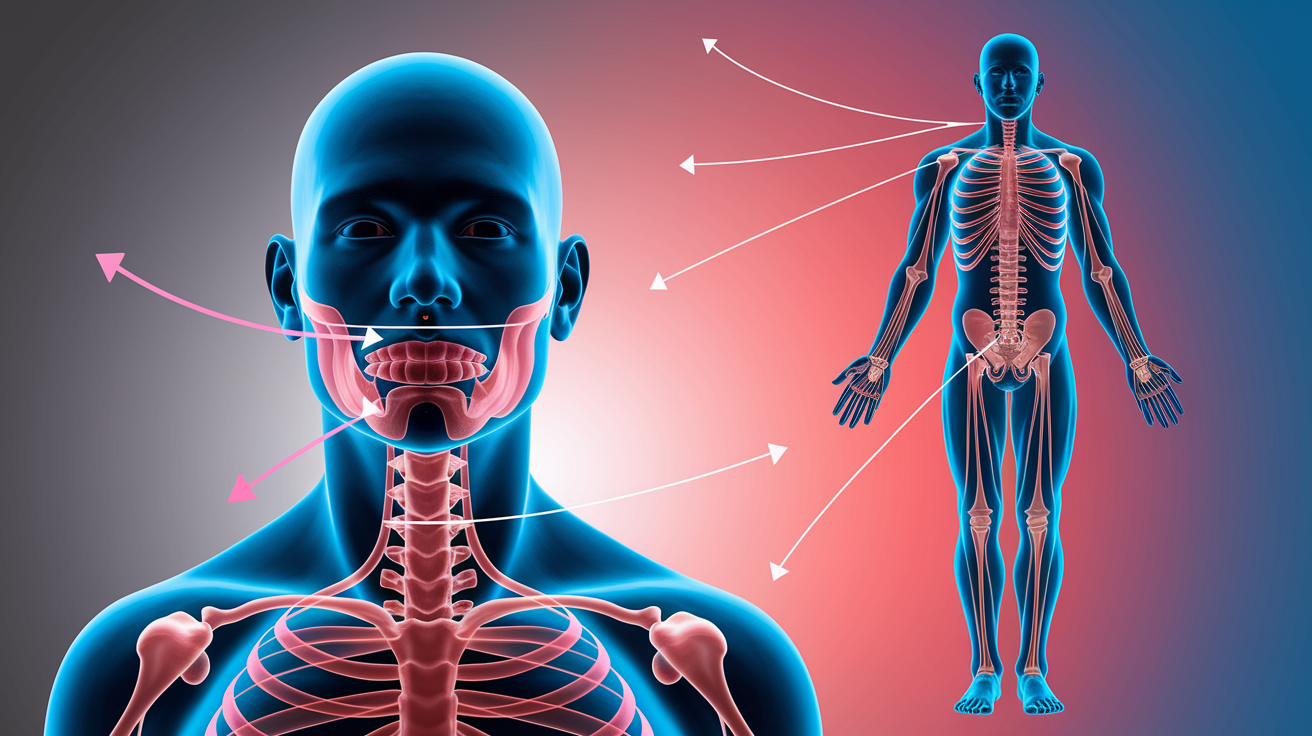
Stress doesn’t land randomly. It hits predictable zones where your nervous system tries to brace and guard. These areas tighten in a sequence: jaw and face first, then neck and shoulders, chest, abdomen, lower back, and finally hands and feet.
Head and jaw: Clenching teeth (bruxism), grinding at night, jaw pain when you wake up, tension headaches wrapping your forehead or temples, pressure behind your eyes, dizziness from breathing too shallow.
Neck and shoulders: Tight traps that feel like knots, shoulders pulled up even when you’re at rest, can’t turn your head all the way, pain radiating from the base of your skull down into your shoulder blades.
Chest and breathing: Shallow breathing high in your chest instead of deep in your belly, holding your breath during tasks, tightness or pressure across your chest, occasional heart palpitations or racing pulse.
Abdomen and gut: Stomach cramps, nausea before stressful events, bloating that gets worse through the day, irregular bowel movements (constipation or diarrhea), IBS flares with cramping and urgency.
Lower back and hips: Stiffness in your lower back, guarded hips that limit how you walk, sciatica-like tingling, less flexibility when you bend or twist, pain after sitting too long.
Hands and feet: Cold fingers or toes, tingling or numbness, restless legs, fidgeting hands, clenched fists you didn’t realize you were making.
Skin: Acne on your face, chest, or back. Eczema patches that flare and itch. Psoriasis plaques spreading. Hives showing up suddenly. Cuts or scrapes healing slower than usual.
Fascia (the connective tissue wrapping your muscles) holds tension in place. When you tighten your shoulders during stress repeatedly, the fascia around those muscles thickens and loses elasticity. That’s why a stiff neck from one bad day can become a stiff neck that never fully releases. Posture makes it worse. Hunching forward during stress compresses your chest, restricts your diaphragm, locks you into shallow breathing. Over time, your body starts assuming that posture by default.
When these zones stay tense for weeks or months, circulation drops, pain receptors get more sensitive, and your movement patterns shift to protect the tight areas. That’s when stress stops being a temporary reaction and becomes chronic pain. Persistent neck and shoulder pain, recurring tension migraines, ongoing lower back stiffness, generalized muscle soreness that doesn’t respond to rest.
Using Self-Assessment Techniques to Detect Stress Patterns
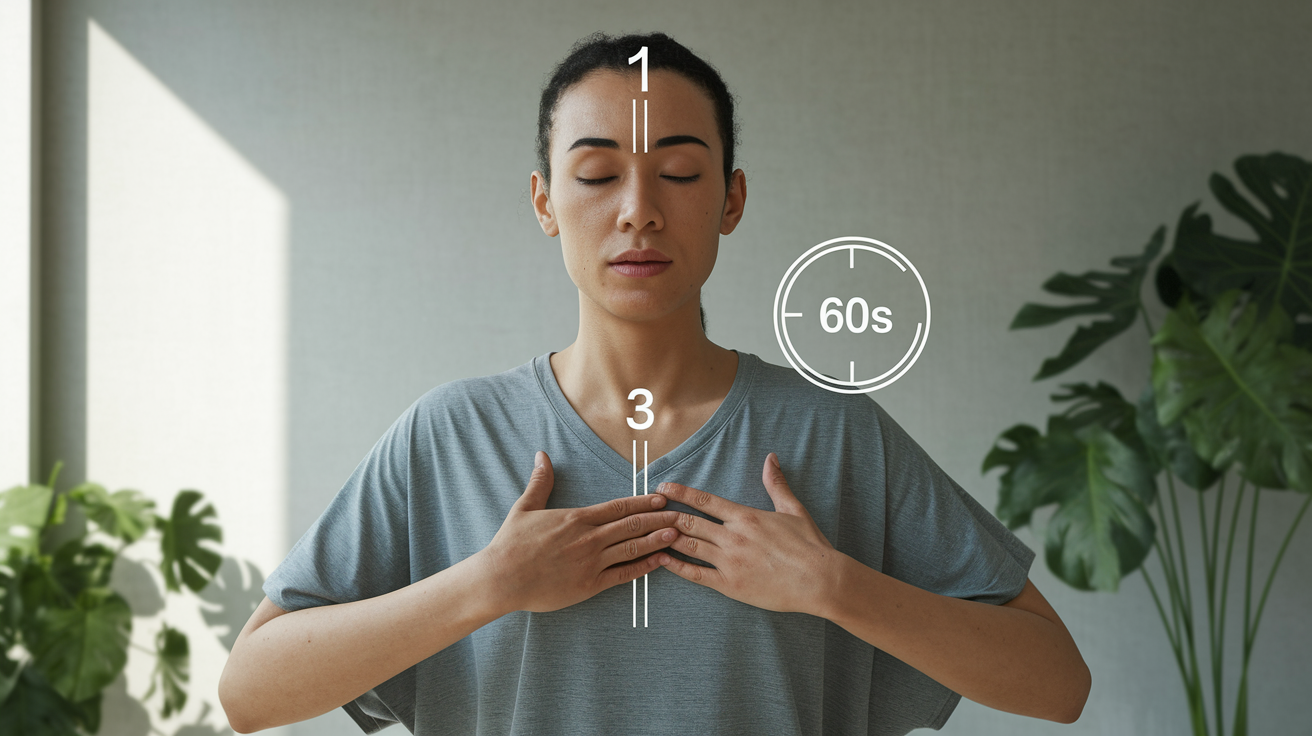
Your body shows stress within seconds, but most people don’t notice until symptoms get severe. Self-assessment works because it gives you a repeatable way to check in before stress piles up. A quick scan catches patterns early. Tight shoulders before they trigger a headache, shallow breathing before it becomes your default, jaw tension before it cracks a tooth.
The 60-second body scan is the fastest way to find hidden stress. Sit or stand comfortably. Close your eyes if it’s safe. Start at the top of your head and move down: notice your scalp, jaw, neck, shoulders, chest, belly, hips, legs, feet. Spend roughly 10 seconds per zone. Ask yourself, “Is this area tight, heavy, or uncomfortable?” Don’t try to fix anything yet. Just notice. Rate intensity on a 0 to 10 scale. Write down any area that registers a 3 or higher. Do this before meetings, after work, or right before sleep.
Quick Breathing & Heart Rate Checks
Breathing reveals stress faster than almost anything else. Watch your breath for 30 seconds without changing it. Is it shallow and high in your chest, or deep and low in your belly? Count how many breaths you take in 30 seconds, then double it to estimate breaths per minute. Resting breath rates above 16 to 18 breaths per minute often signal sympathetic dominance.
The 4-7-8 breathing pattern helps you test whether tension releases with one intentional breath. Inhale through your nose for a count of 4. Hold for 7. Exhale slowly through your mouth for 8. Repeat three times. If your shoulders drop, your jaw relaxes, or your chest feels less tight after just 30 seconds of this rhythm, you’ve confirmed stress was driving your baseline tension.
Check your pulse by placing two fingers on the inside of your wrist. Count beats for 15 seconds, then multiply by 4 to get your resting heart rate in beats per minute. Track this number each morning before you get out of bed. A resting heart rate that climbs 10 or more beats above your normal baseline (say, from 65 to 75) can indicate accumulated stress even when you feel fine.
Combine all three checks daily. Scan your body for tension zones. Observe your breathing pattern and rate. Measure your pulse. Log the results. Over two to four weeks, patterns emerge. Your jaw always tightens on meeting days, your breath stays shallow after poor sleep, your heart rate spikes the morning after conflict.
Differentiating Between Acute and Chronic Stress Manifestations

Acute stress is your body’s immediate response to a single threat or challenge. Your heart rate jumps. Your breathing quickens. Your muscles tense for a few minutes, then release when the stressor passes. These reactions are normal, temporary, and usually resolve within minutes to hours. Cortisol and adrenaline spike, then drop back to baseline.
| Pattern Type | Physical Indicators |
|---|---|
| Acute breathing shifts | Shallow chest breathing for 5 to 15 minutes; breath holding during a single task; breathing returns to normal once task ends |
| Acute heart rate spikes | Heart rate increases 10 to 20 bpm during one event; palpitations last seconds to minutes; rate drops within 10 to 20 minutes of stressor ending |
| Chronic muscle tension | Neck, shoulders, or jaw stay tight for days or weeks; stiffness present even on rest days; limited range of motion persists; tension headaches recur multiple times per week |
| Chronic digestion and skin changes | Bloating, cramping, or irregular bowel movements continue for weeks; IBS flares happen multiple times per month; skin breakouts or rashes reappear without dietary triggers |
Chronic stress patterns stick around. Your shoulders never fully drop. You wake up clenching your jaw every morning. Your digestion stays unpredictable for weeks. Your skin keeps breaking out. Sleep disruption becomes normal. You can’t fall asleep, you wake repeatedly, or you wake unrefreshed. These patterns signal your nervous system has shifted into sustained sympathetic dominance. Cortisol stays elevated. Neurotransmitters like serotonin and dopamine deplete. Low grade inflammation builds. Your body stops bouncing back.
Identifying chronic patterns early prevents escalation. When tight shoulders become daily instead of occasional, that’s your signal to step in before they turn into chronic neck pain, migraines, or restricted movement. When poor sleep happens three nights in a row, it’s time to track triggers and test changes before fatigue becomes unshakable and your immune system weakens.
Tracking Stress Signals Over Time for Pattern Recognition

Tracking reveals hidden patterns your memory can’t catch. You might think your headaches are random, but a two week log shows they always follow late nights and skipped meals. You assume your digestion is unpredictable, but tracking reveals it gets worse on high conflict days. Patterns emerge when you collect data consistently.
Your core checklist should include these six items, recorded daily:
Jaw tension and teeth grinding: Note if you wake with a sore jaw, catch yourself clenching during the day, or notice tooth wear. Rate intensity 0 to 10.
Digestive changes: Log bloating, cramping, appetite shifts, bowel irregularities (constipation or diarrhea), nausea. Mark yes or no for each. Rate severity 0 to 10.
Sleep interruptions: Record total sleep hours, number of times you woke, how long it took to fall asleep, and whether you woke feeling rested. Use a 0 to 10 scale for sleep quality.
Resting heart rate changes: Measure your pulse for 15 seconds right after waking, multiply by 4, and note the result. Track whether it’s climbing above your normal baseline.
Skin flares: Note new acne, rashes, eczema patches, hives, or slower healing. Mark yes or no and rate severity 0 to 10 if present.
Fatigue patterns: Rate your energy level at three points during the day (morning, midday, evening) on a 0 to 10 scale. Note if you hit a wall at a consistent time.
Weekly review is where tracking pays off. At the end of each week, scan your log and ask: Which symptoms appeared together? Did tension spike on the same days as poor sleep? Did digestive issues follow high caffeine days or conflict? Did your resting heart rate climb after a string of late nights? Patterns that repeat across two to four weeks are real signals. Not noise. Those are the patterns worth addressing first.
Visual Mapping and Diagram Use for Stress Pattern Identification
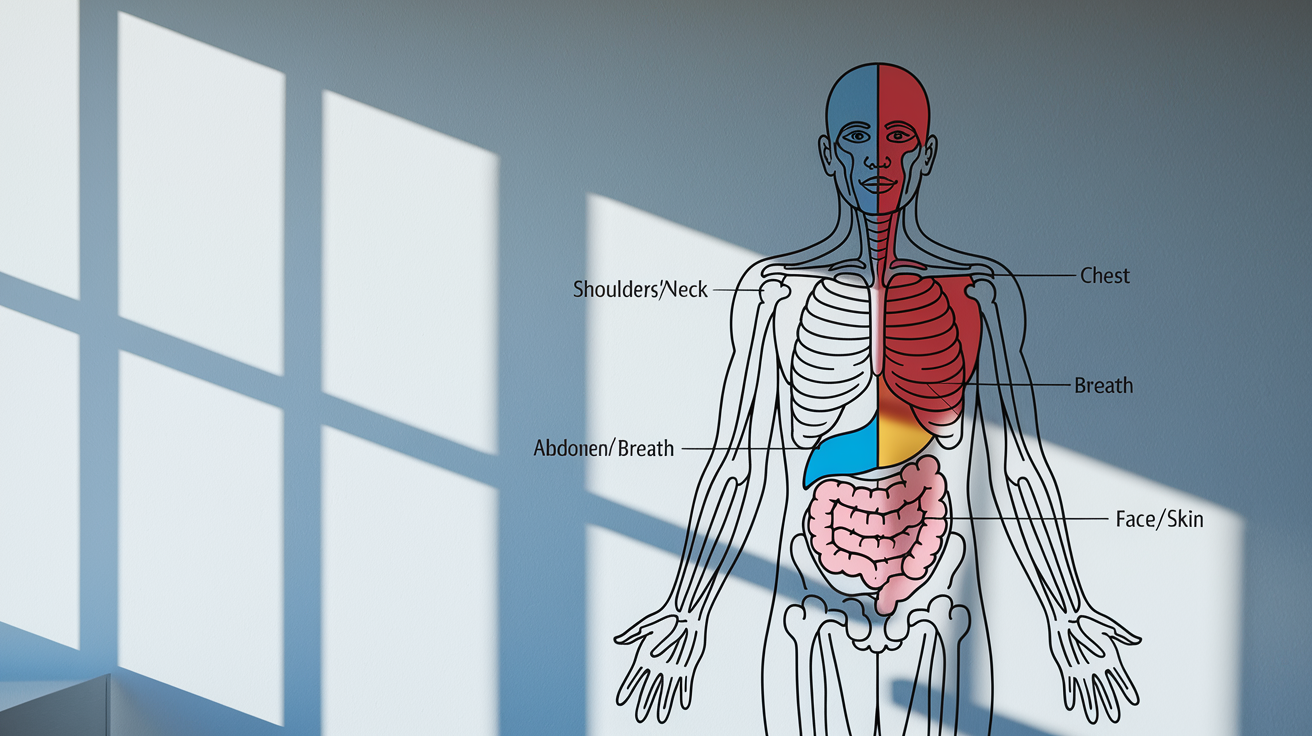
A stress zone map is a simple body outline where you mark the areas that consistently tighten, ache, or react under stress. You can sketch it on paper or print a generic body diagram. Each time you do a body scan or notice a symptom, shade or label the affected zone. Over a week or two, your personal stress map becomes clear.
Mark these four zones and what you notice in each:
Shoulders, neck, and jaw: Shade areas that feel tight, knotted, or painful. Note whether tension is one sided or both sides. Write “constant” or “intermittent.”
Chest and breathing: Mark the center of your chest if you feel tightness, pressure, or shallow breathing. Note whether it’s worse during certain tasks (meetings, emails, driving).
Abdomen and gut: Shade your stomach area if you experience cramping, bloating, or nausea. Mark the lower abdomen if you have bowel irregularities or urgency.
Face and skin: Circle areas where breakouts, rashes, or inflammation appear repeatedly. Forehead, jawline, chest, back. Note timing (morning vs evening, weekday vs weekend).
Posture photos help reveal stress patterns you can’t feel. Take a side view photo of yourself standing naturally. Look for forward head posture (your ear is ahead of your shoulder), rounded shoulders, or a compressed chest. Take a front view photo and check whether one shoulder is higher than the other or your hips are tilted. Compare photos every two weeks. If forward head posture gets worse or your shoulders stay elevated, your body is compensating for chronic tension.
Rapid Reset Techniques to Confirm Body Stress Patterns
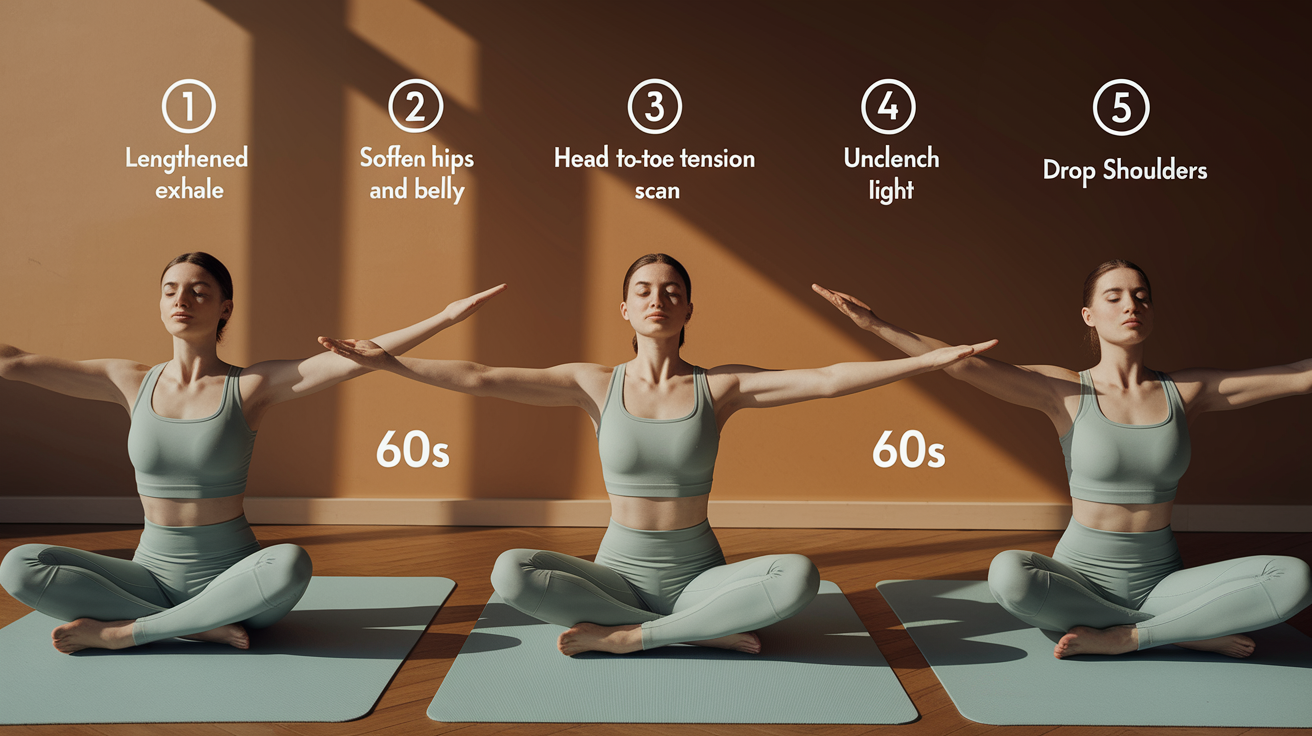
A reset technique does two things: it relieves immediate tension and reveals where stress was hiding. If your shoulders drop two inches during a 60 second reset, you just confirmed they were carrying tension you didn’t consciously feel. If your jaw releases and you can suddenly open your mouth wider, you were clenching without knowing it.
The 60 second stress reset sequence interrupts sympathetic activation and highlights problem zones:
-
Lengthen your exhale: Breathe in for a count of 4, then exhale slowly for a count of 6 to 8. Repeat three times. Notice if your chest feels less tight or your heart rate slows.
-
Relax your hips and belly: Consciously soften your lower abdomen and let your hips settle. A lot of people guard this area without realizing it.
-
Quick head to toe tension scan: Mentally scan from your scalp down to your feet. Name any area that feels tight (“jaw,” “left shoulder,” “lower back”), then breathe into it for 5 seconds.
-
Unclench your jaw: Let your tongue rest gently on the roof of your mouth, slightly behind your top teeth. Let your jaw hang loose. If you feel a release, your jaw was clenched.
-
Drop your shoulders: Actively lift your shoulders up toward your ears, hold for 3 seconds, then let them fall. Notice how far they drop. If the drop is big, they were elevated by stress.
Movement cues work the same way. Stand up and do slow shoulder rolls. Five forward, five backward. If you hear cracking or feel resistance, that’s accumulated tension. Walk for two to three minutes, focusing on your gait. Do your hips feel stiff? Is one leg tighter than the other? Do you naturally hunch forward? These micro observations reveal stress patterns that a static scan might miss.
Watch for micro moments throughout your day that expose hidden stress. Do you hold your breath while reading tense emails? Do you tighten your stomach during video calls? Do you hunch your shoulders while driving? Do you clench your fists when frustrated? These small, repeated actions are stress patterns in real time. Catching them once means you can start noticing them daily. And that’s when you can interrupt them before they become chronic.
Final Words
Start with a 60-second body scan, a quick breathing check, and note where tension or digestion shifts show up. These are things you can do right now.
Map those spots, track them morning and evening for 2 to 4 weeks, and try short resets like a longer exhale and dropped shoulders. See whether it’s a sharp spike or steady tension; that difference matters.
Use these simple steps to practice how to identify stress patterns in body, tweak small habits, and reassess. You’ll start seeing clearer signals soon.
FAQ
Q: What are five emotional signs of stress?
A: The five emotional signs of stress are feeling irritable or short-tempered, overwhelmed, anxious or on edge, low mood or tearfulness, and trouble concentrating; track when these flare to spot patterns.
Q: What are the 5 R’s of stress management?
A: The 5 R’s of stress management are Recognize (notice stress), Relax (breathing or short breaks), Reframe (shift unhelpful thoughts), Replace (swap habits for calmer ones), and Reach out (ask for support).
Q: What are signs of high stress?
A: Signs of high stress include persistent muscle tension, sleep disruption, digestive upset, faster heart rate or shallow breathing, frequent headaches, mood swings, and trouble concentrating; note how often and how intense each is.
Q: What exercises are good for stress?
A: Exercises good for stress include brisk walking, gentle yoga or stretching, deep-breathing routines, short interval workouts, and progressive muscle relaxation; try 10–20 minutes daily and track which eases tension and mood.