

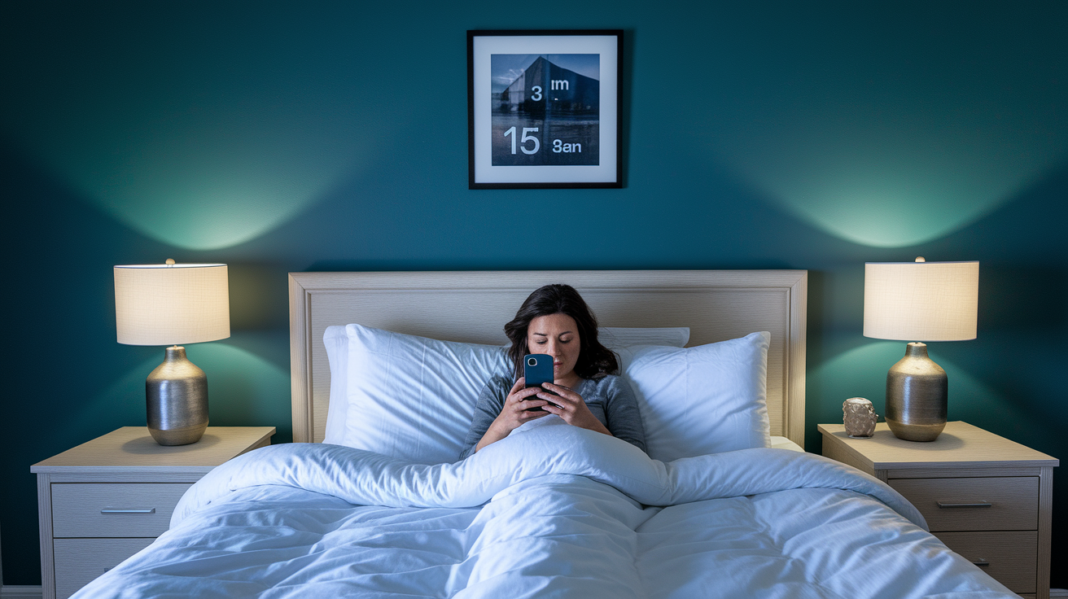

What if the secret to better days isn’t more hours in bed but how often you wake up during the night?
Wake after sleep onset, or WASO, is the minutes you spend awake after you first fall asleep and before morning.
It’s a clear signal of sleep fragmentation, small wakeups that quietly steal the deep, restorative parts of sleep.
Tracking WASO across nights shows patterns worth testing and points to small, realistic fixes you can try this week.
If your WASO stays high and you feel foggy or drained, bring your notes to a clinician for next steps.
Understanding Nighttime Awakenings
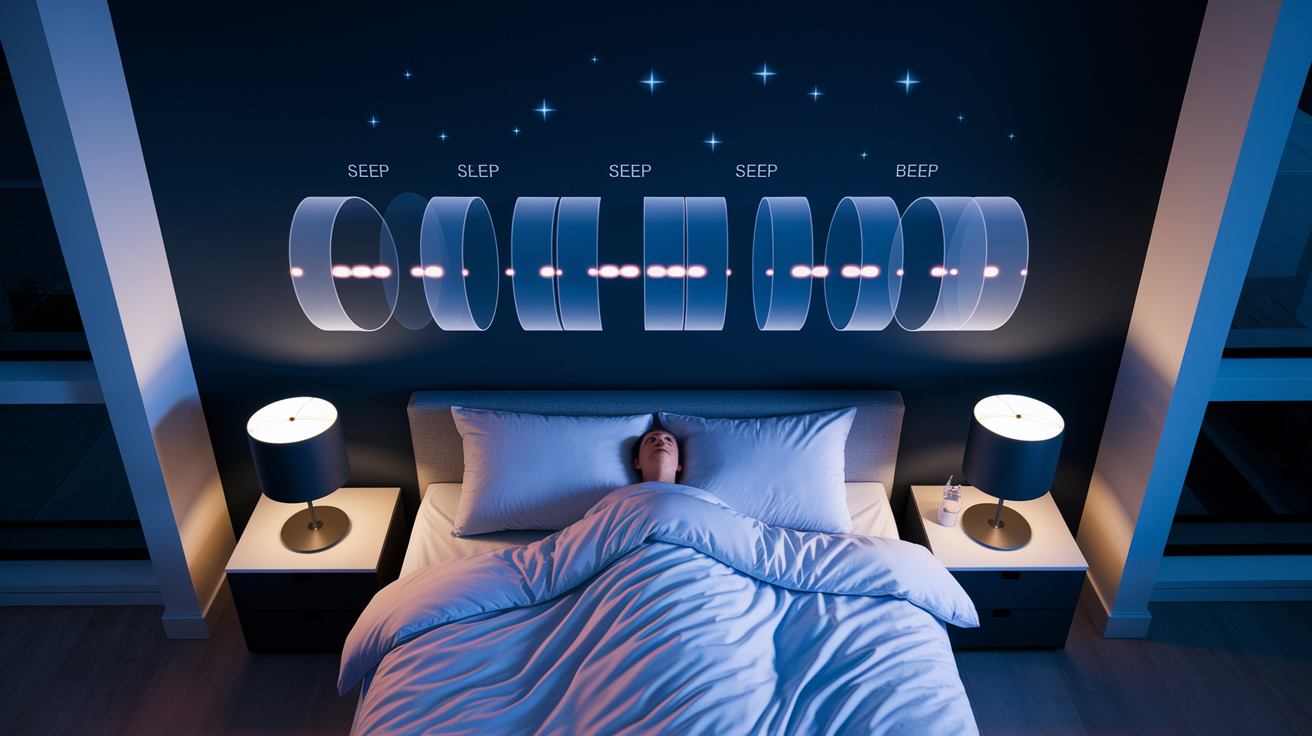
Wake after sleep onset, or WASO, is the total number of minutes you spend awake after you first fall asleep and before you’re up for good in the morning. It doesn’t count the time it takes to fall asleep at the start of the night. It only tracks what happens once you’ve drifted off and then popped back awake somewhere in the middle.
Here’s a quick example. Say you wake up once for 10 minutes and again for 5 minutes during the night. Add those together and your WASO is 15 minutes. That’s it, simple math, but it tells a bigger story about how your night actually went.
Lower WASO generally means your sleep stayed more connected, less broken up. This matters because sleep fragmentation, those repeated interruptions, chips away at the restorative parts of your sleep even if your total hours look fine on paper. WASO also feeds directly into sleep efficiency, since more time awake in bed pulls that percentage down.
You’ll sometimes see numbers like 20 to 30 minutes mentioned as reference points in sleep research. Worth noting though, there’s no universal cutoff that applies to everyone. Interpretation shifts depending on your age, your health background, and even which device or method measured it. A single rough night doesn’t mean much on its own. What tells you more is a repeated pattern, especially one that shows up alongside daytime sleepiness, a foggy head, or a sense that your days feel harder than they should.
How Wake After Sleep Onset Differs From Sleep Latency And Sleep Efficiency

Sleep latency measures how long it takes to fall asleep once you get into bed. WASO only kicks in after you’ve already fallen asleep. One happens at the start of the night, the other happens in the middle.
Sleep latency is also called sleep onset latency, or SOL for short. If you find yourself falling asleep unusually fast, like the second your head hits the pillow, that can sometimes be a clue you’re carrying accumulated sleep debt rather than a sign your sleep habits are perfect.
Sleep efficiency looks at the bigger picture. It’s calculated as total sleep time divided by total time in bed, multiplied by 100. So if you spend 8 hours in bed but only get 6 hours of actual sleep, your sleep efficiency comes out to 75 percent.
Generally speaking, sleep efficiency below 85 percent is considered poor, above 85 percent is considered normal, and 90 percent or higher is often viewed as very good. That said, context matters here too. Age, health conditions, and how the data was collected can all shift what counts as a meaningful number for you specifically.
Total sleep time and the number of awakenings round out the picture, giving a fuller sense of what’s happening across the night rather than relying on any single metric alone.
| Metric | What It Measures | Common Interpretation |
|---|---|---|
| Sleep Latency | Time it takes to fall asleep after getting into bed | Very short latency may suggest accumulated sleep debt |
| Sleep Efficiency | Total sleep time divided by total time in bed, as a percentage | Below 85% poor, above 85% normal, 90%+ very good, context dependent |
| Total Sleep Time | Total minutes or hours actually spent asleep | Compared against recommended sleep needs for age group |
| Number of Awakenings | Count of separate times a person wakes during the night | Higher counts often paired with more fragmented sleep |
How Wake After Sleep Onset Is Measured
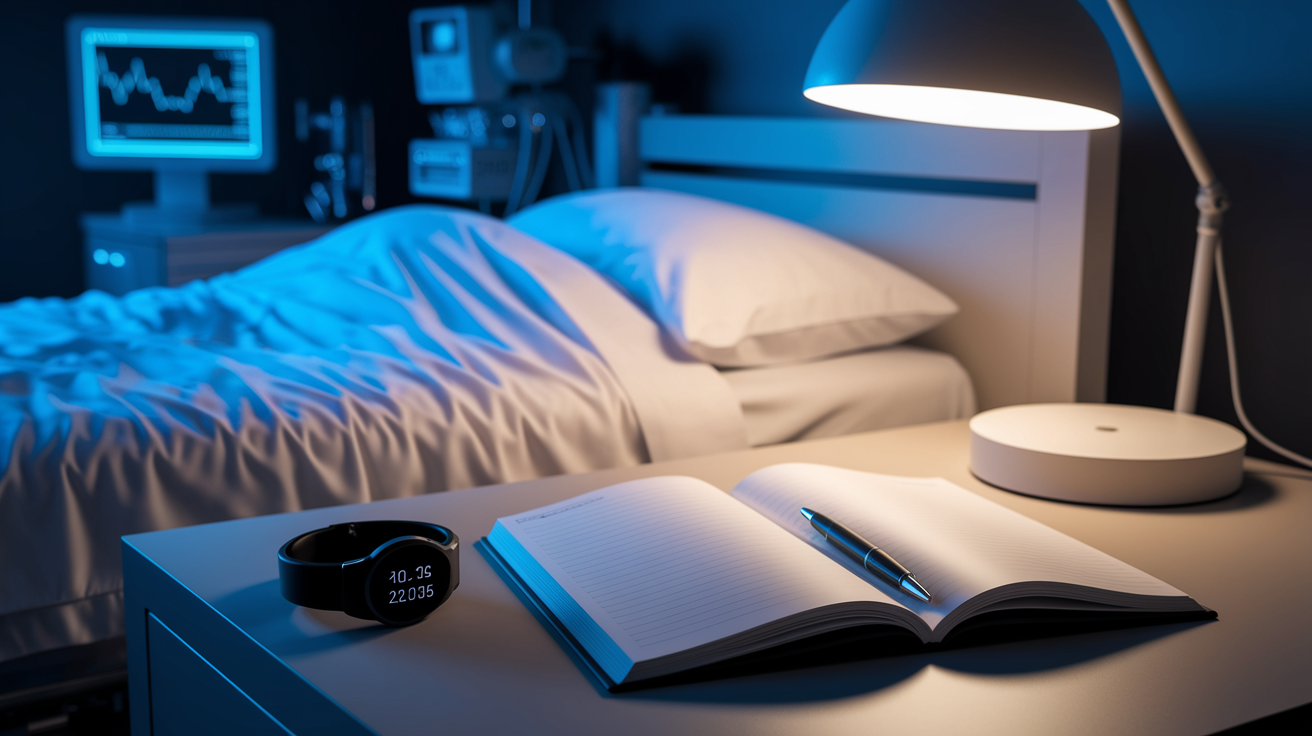
The method used to measure WASO can change the number you end up with. A lab test, a wearable, and a handwritten sleep diary won’t always agree with each other, so it helps to know how each one works before comparing results.
Polysomnography
Polysomnography is the clinic based test considered the gold standard for measuring awakenings, sleep stages, and sleep disorders. It records brain activity along with other physiological signals throughout the night. This lets it catch brief awakenings you might not even remember happening, plus it supports deeper analysis like arousal index tracking and formal AASM scoring used in sleep disorder diagnosis.
Actigraphy And Consumer Sleep Trackers
Actigraphy works by estimating sleep and wake periods based on movement, usually from a device worn on your wrist. It’s convenient, letting you track multiple nights at home without needing a sleep lab. The tradeoff is accuracy. Actigraphy tends to underestimate WASO compared with polysomnography, since lying still but awake can get mistaken for actual sleep.
General consumer sleep trackers use similar movement based methods, though some research grade devices go further, using headband EEG systems to capture brain activity more directly during home sleep testing.
Sleep Diaries
Sleep diaries rely on you writing down details like your bedtime, roughly when you think you fell asleep, any nighttime awakenings, and your final wake time. Over weeks, these logs can reveal patterns that a single night’s data might miss entirely. The catch is that diaries depend on memory and personal estimation, which makes them less precise than objective testing methods like polysomnography or actigraphy.
Final Words
We defined wake after sleep onset as the minutes you’re awake after falling asleep and before your final morning wake. The quick math (10 + 5 = 15 minutes) shows how it’s measured, and lower numbers tend to mean less fragmented sleep.
We contrasted WASO with sleep latency and sleep efficiency, and explained how polysomnography, actigraphy, and sleep diaries each measure awakenings differently.
Track for patterns, try one small test at a time, and bring notes to a clinician if daytime problems continue. Tracking wake after sleep onset gives a clear clue—and you can improve it step by step.
FAQ
Q: What is a normal wake after sleep onset?
A: A normal wake after sleep onset is often about 20 to 30 minutes total across the night, but interpretation varies by age, health, and measurement method; persistent awakenings with daytime problems matter more.
Q: What could be causing me to wake up after only 4 hours of sleep?
A: Waking after only 4 hours of sleep can be caused by stress or anxiety, late caffeine or alcohol, pain or bathroom needs, sleep apnea, medications, a shifted schedule, or emerging insomnia.
Q: What are the sleep-wake disorders recognized in the DSM-5?
A: The DSM-5 lists insomnia disorder, hypersomnolence disorder, narcolepsy, breathing-related sleep disorders (like sleep apnea), circadian rhythm sleep-wake disorders, parasomnias, and sleep-related movement disorders.
Q: What should I do if I wake up and can’t fall back asleep?
A: If you wake and can’t fall back asleep, try keeping lights low, leave bed after 20 minutes for a quiet activity, avoid screens and clock-watching, practice slow breathing, and track if it repeats.