

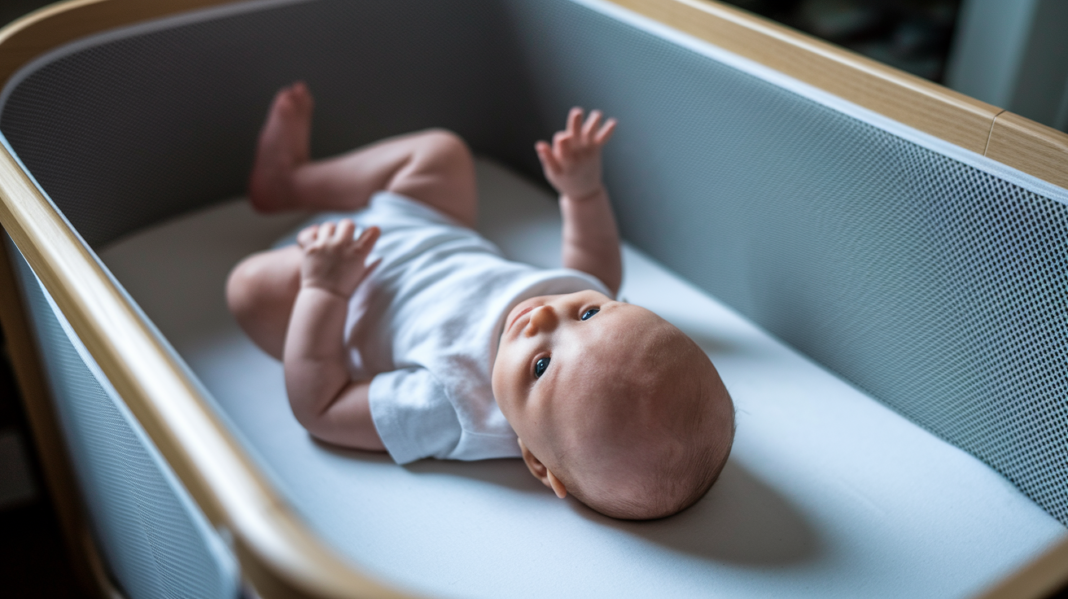

Want to sleep with your baby all night?
It feels natural, and many parents do when nights and feeds are hard.
Here’s the short, plain answer: room-sharing, with your baby on their own approved crib or bassinet in your room, is the safer choice.
Bed-sharing on an adult mattress raises risks that no gadget or careful setup can fully remove.
Read on for a clear, usable checklist you can use tonight to stay close while protecting your baby.
The Infant Sleep Safety Checklist for Tonight

Here’s the short answer, no hedging. The American Academy of Pediatrics recommends room-sharing, keeping your baby’s sleep area in your bedroom, but on their own separate, approved crib, bassinet, or play yard, for at least the first 6 months. Infant bed-sharing, letting your baby sleep on the adult mattress with you, is not recommended. And here’s the part parents often don’t want to hear: no precaution, no product, no careful setup can make bed-sharing fully safe. Knowing how to co sleep safely starts with understanding that room-sharing, not bed-sharing, is the safer path.
If you need a secure sleep area checklist you can act on tonight, here’s a step-by-step safe bedsharing setup that leans toward the safest possible version of closeness, room-sharing done right.
- Never bed-share if either caregiver smokes, has had alcohol or cannabis, takes sedating medicine, or is extremely fatigued.
- Never bed-share with a baby who was born premature, had a low birth weight, or is currently ill.
- Never sleep with your baby on a sofa, armchair, waterbed, or any soft or inclined surface.
- Place your baby on their back on a separate, approved crib, bassinet, or play yard.
- Use a firm, flat mattress with its correctly fitted sheet, nothing added, nothing swapped.
- Keep pillows, loose blankets, soft toys, pets, other kids, and gaps where baby could get stuck away from the sleep area.
- If you’re feeding in bed and there’s any chance you’ll doze off, clear pillows and blankets from around you first.
- As soon as the feed is done, put baby back on their own sleep surface, right away, even if you’re half-asleep.
That’s the emergency version. For the full picture, equipment choices, positioning, and how to make room-sharing actually work night after night, keep reading below.
Understanding the Risks Behind Co-Sleeping Recommendations
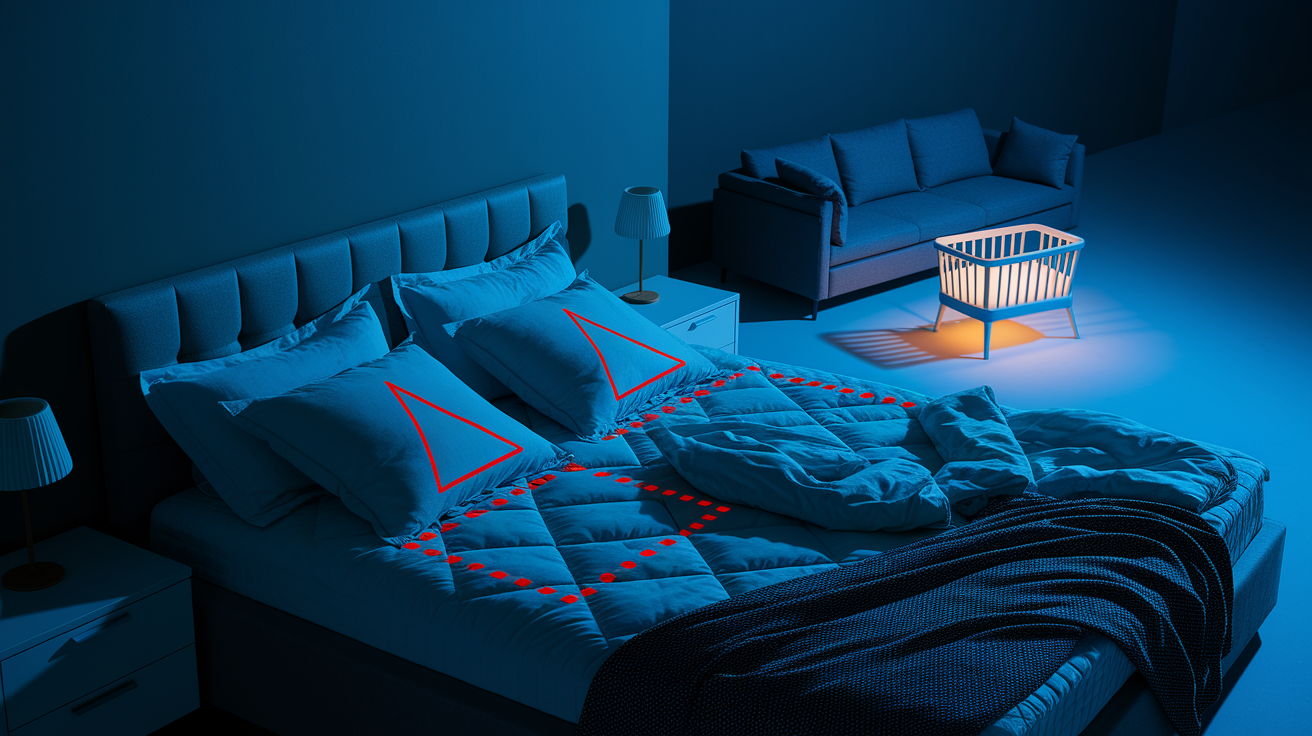
About 3,700 babies die every year in the US from sleep-related causes, SIDS, accidental suffocation, and accidental strangulation. These aren’t abstract numbers. They’re tied to specific, understandable mechanisms. A baby’s face can get pressed into soft bedding or an adult’s body, cutting off airflow. A blanket or arm can end up wrapped around a neck. A baby can slip into a gap between mattress and wall, or get trapped under a sleeping adult who rolls over without waking. Every one of these risk factors for sudden infant death syndrome shows up more often on adult sleep surfaces than on a firm, separate infant mattress.
Here’s where it gets interesting, and where co-sleeping myths and facts start to diverge. Standard questions like “does your baby sleep in your bed?” tend to get honest sounding answers, but only around 3% of parents admit to it that way. Reframe the question, ask about naps, tired mornings, or “in the moment” moments, and reported bed-sharing jumps to somewhere between 60 and 80% in some practices. In other words, a lot more families are bed-sharing than official numbers suggest, often without planning to. This is exactly why evidence-based research on bedsharing outcomes keeps pointing back to the same message. Some situations raise the danger even further, see the checklist above for those, but avoiding those extra risk factors doesn’t erase the baseline risk of sharing an adult sleep surface with an infant. There isn’t a “safe enough” version of it.
Official Room-Sharing Recommendations for Infant Sleep

Room-sharing means your baby sleeps close to you, same room, within arm’s reach, but on their own separate, approved sleep surface. Not your mattress. Their own crib, bassinet, or play yard. The AAP recommends this setup for at least the first 6 months, and it’s the arrangement most pediatric guidance points to when parents ask how to keep a newborn close without the risks that come with sharing a bed.
Bedside Bassinets and Sidecar Cribs
A bedside bassinet lets you reach over and check on, or lift, your baby without leaving your bed, while still giving them their own firm, flat surface. This is often the easiest version of closeness for exhausted new parents. Sidecar cribs, the kind that attach directly to your bed frame, can work similarly, but only if they meet current safety standards and are attached exactly the way the manufacturer says. No removing crib sides. No DIY straps or homemade attachments. No gaps between the sidecar and your mattress. A correctly installed sidecar crib reduces avoidable equipment hazards, but it still doesn’t turn your bed into a safe sleep surface for baby. The separation between surfaces is the whole point.
When to Transition Baby to Their Own Room
Six months is the minimum recommended room-sharing window, and plenty of families stretch that closer to 12 months. There’s no single right answer here. It often comes down to your baby’s development, how mobile they’re getting, whether the bassinet or crib still fits their age and weight limits, and what your pediatrician suggests at check-ups. Some parents move baby to their own room right at 6 months. Others wait longer. Both can align with current guidance, as long as the sleep surface itself stays separate and appropriate the whole time.
Choosing and Checking an Approved Infant Sleep Surface
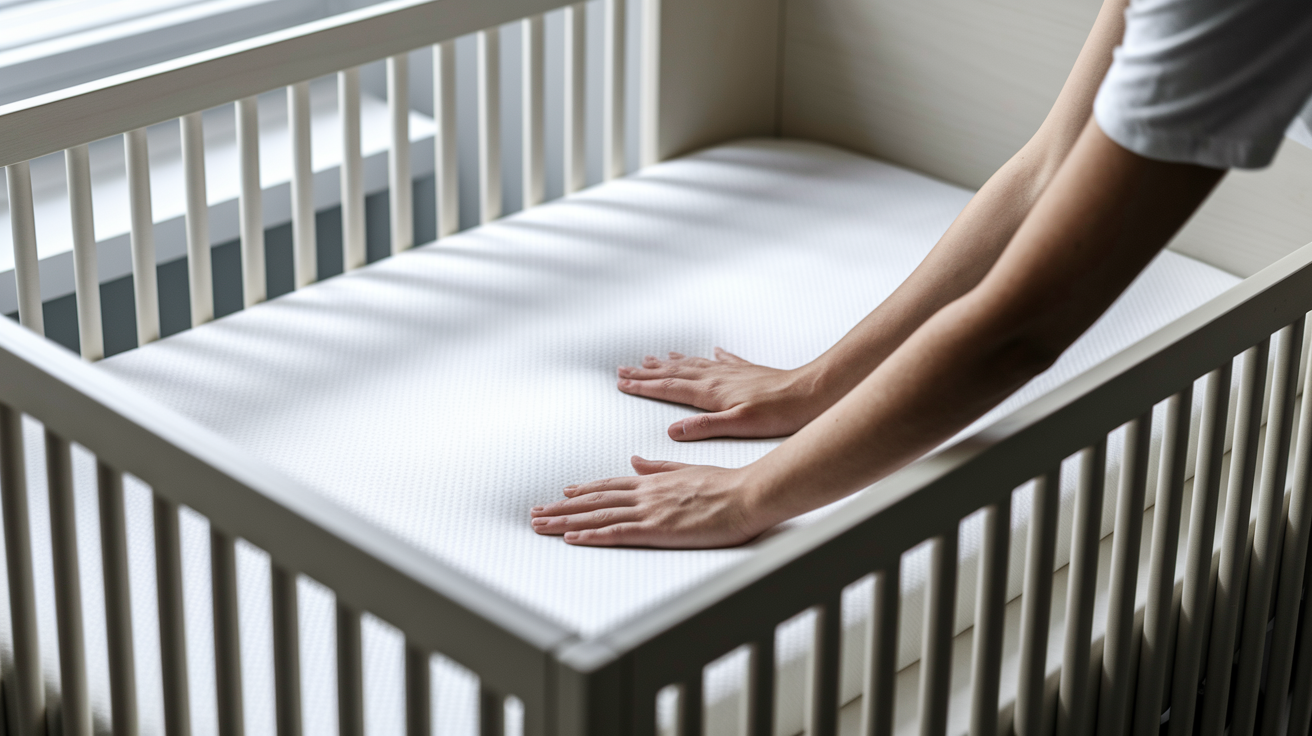
Start with the basics: a current, approved crib, bassinet, or play yard, paired with a firm, flat mattress made specifically for that product. This matters more than it sounds. A mattress that’s slightly too small, borrowed from another crib, or swapped in from a different brand can create gaps along the edges where a baby could shift or get stuck. Adult mattresses, waterbeds, sofa cushions, and armchairs were never designed with infant sleep in mind, no matter how soft and comfortable they seem in the moment.
Fit is everything. The fitted sheet needs to be made for that exact mattress, not stretched over from a different size. If you use a mattress protector, check that the manufacturer allows it, and make sure it doesn’t add softness or change how the sheet fits. This is one spot where more padding is not better. Mattress to
Final Words
Room-share: keep your baby nearby on a separate, approved crib or bassinet for at least six months. The AAP doesn’t recommend infant bed-sharing. No precaution makes sleeping on an adult mattress truly safe.
Use the checklist tonight: never bed-share if a caregiver smokes, uses alcohol or cannabis, is sedated, or is extremely tired. Put the baby on their back on a firm, fitted sleep surface, remove loose bedding, and return the baby to their separate sleep area after feeds.
For step-by-step setup and clothing tips, read the equipment, positioning, and room-sharing sections. If you want clear, practical advice on how to co sleep safely, try one small change tonight — it helps.
FAQ
Q: At what age can you co-sleep safely?
A: The age you can co-sleep safely is effectively none for bed-sharing; the AAP advises room-sharing with a separate, approved crib, bassinet, or play yard for at least the first 6 months.
Q: What are the 7 rules of cosleeping?
A: The 7 rules of cosleeping begin with never bed-sharing if a caregiver smokes, uses alcohol, cannabis, sedatives, or is extremely fatigued; avoid soft surfaces, premature or ill infants, and remove pillows, blankets, pets, and gaps.
Q: How common is SIDS from co-sleeping?
A: How common SIDS from co-sleeping is: about 3,700 U.S. infants die yearly from SIDS and other sleep-related causes; bed-sharing raises risks like suffocation and overlay, though exact shares vary by study.
Q: Are babies who cosleep happier?
A: Whether babies who cosleep are happier: cosleeping may feel calming and ease feeds for some families, but research doesn’t show lasting happiness benefits and safety risks make room-sharing on a separate surface the safer choice.