

What if sleep isn’t a passive switch but your brain’s busiest night shift?
It times things, clears out waste, repairs the body, and rehearses memories while you lie still.
In short, sleep runs on two forces, an internal 24-hour clock and a growing sleep pressure, and then cycles through NREM and REM stages about every 90 minutes.
This piece explains those forces, what each stage does, and simple pattern-based steps you can test tonight to feel clearer and less wired but tired in the morning.
The Short Answer: What Happens When You Sleep
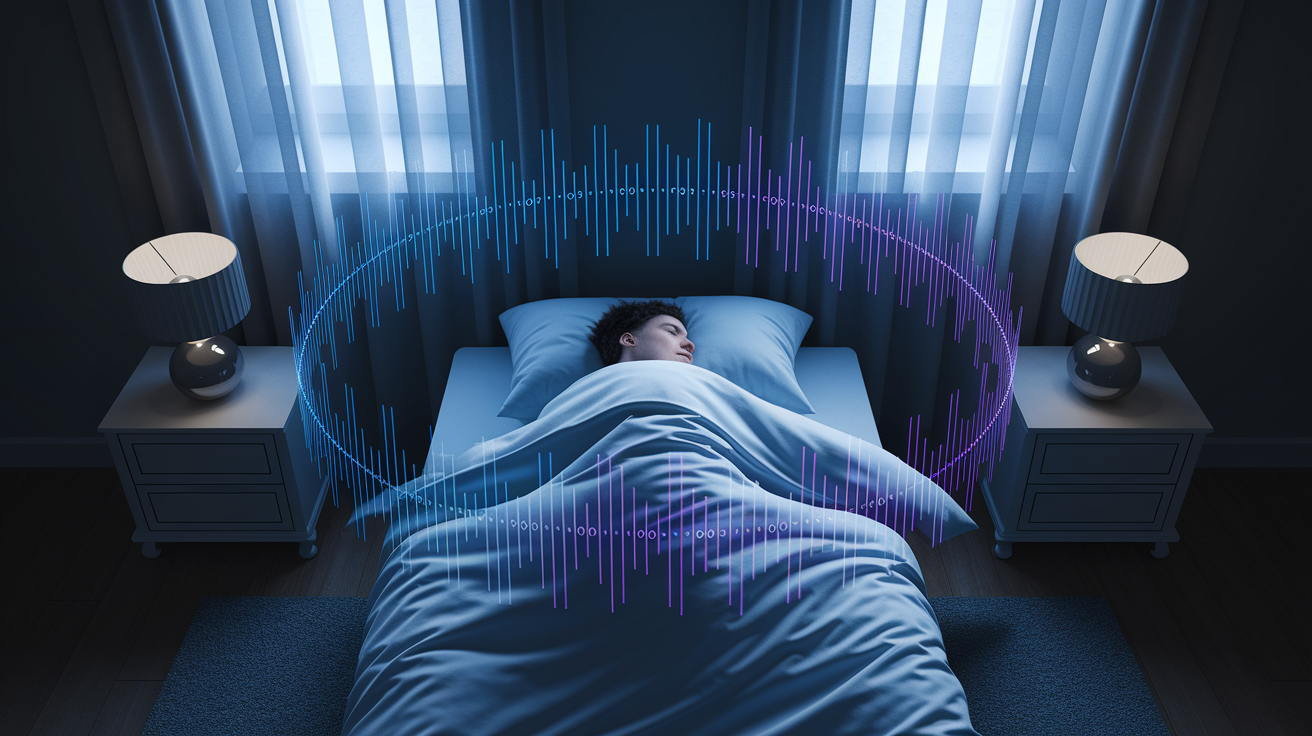
Sleep runs on two forces working together. Your circadian rhythm, your internal 24-hour clock, tells you it’s nighttime, and a building pressure to sleep grows the longer you’ve been awake. Once those two line up, your brain doesn’t just switch off. It moves through repeating cycles of NREM and REM sleep, each one lasting roughly 90 minutes, with most adults cycling through several rounds a night.
During this process your brain waves slow down and speed up in patterns, your muscles relax (and in REM, go almost fully limp), your breathing and heart rate shift, and your body uses the downtime for physical repair. We’ll get into why each of those changes happens later on.
Here’s the sleep cycle at a glance.
Awake, then N1, then N2, then N3, then N2, then REM, then the cycle repeats.
One thing worth knowing upfront: sleep stages aren’t spread evenly across the night. Early cycles lean heavier on deep N3 sleep, while REM stretches get longer as morning approaches. So how does sleep actually work? It’s timing plus pressure, then a nightly rotation through stages that shift in emphasis as the hours pass.
Why Sleep Happens: The Two-Process Model
Scientists explain sleep timing using something called the two-process model, and it’s genuinely useful for understanding why you feel sleepy when you do. Think of it as a clock and a countdown timer working side by side.
The first piece is Process C, your circadian rhythm. It’s run by the suprachiasmatic nucleus (SCN), a tiny cluster of cells in the hypothalamus sitting close to the optic nerve. The SCN acts like your body’s timekeeper. It reads light hitting your eyes, and to a lesser extent temperature and other cues known as zeitgebers, to stay synced to a 24-hour day. Based on that timing it signals melatonin production to ramp up in the evening, nudging you toward sleep, and times cortisol release for the morning, helping you feel alert and ready to move.
The second piece is Process S, your homeostatic sleep drive. This one’s simpler. The longer you’re awake, the more a molecule called adenosine builds up in your brain, and the stronger that sleep pressure gets. By the time you’ve been up for 16 or so hours, that pressure is pretty intense. Sleep clears it out, and that’s part of why caffeine feels like it works. It doesn’t add energy, it just blocks adenosine receptors so your brain can’t fully register how tired it actually is.
Here’s the tricky part. These two processes need to line up for sleep to feel easy and restorative. When they’re out of sync, like during jet lag or overnight shift work, your circadian rhythm might say stay awake while your sleep pressure says you’re exhausted, or the reverse happens. That mismatch is exactly why jet lag feels so disorienting, and why shift workers often struggle with sleep quality even when they log enough hours.
Sleep Architecture: Breaking Down the Stages of Sleep

Sleep architecture is just the term for how NREM and REM stages get arranged and repeated across a night of sleep. Each stage has its own signature, visible on an EEG (a recording of brain wave activity), and its own role in keeping you functional the next day.
NREM Stage 1 and Stage 2: Transition and Light Sleep
N1 is the doorway into sleep. It’s brief, usually just a few minutes, marked by slowing brain activity and a fading awareness of what’s going on around you. You might still feel half awake here, and it’s easy to get jolted back out of it.
N2 is where things settle. It’s the largest chunk of your total sleep time, and on an EEG it shows up as sleep spindles, short bursts of brain wave activity, along with other characteristic patterns. Your body temperature drops slightly and your heart rate slows. It’s stable, unremarkable sleep, but it makes up the bulk of your night for a reason. It’s doing a lot of quiet, steady work.
NREM Stage 3: Delta Activity and Physiological Restoration
N3 is deep sleep, also called slow-wave sleep, and it’s the stage where you’re hardest to wake up. On an EEG it shows high-amplitude delta waves, slow, rolling brain activity that looks nothing like the quick patterns of wakefulness.
This is also the stage most tied to physical restoration. Growth hormone release peaks here, tissue repair ramps up, and your body uses this window to handle a lot of its physical maintenance. It’s a big reason people describe feeling wrecked after a night with little deep sleep, even if their total hours looked fine on paper.
REM Sleep: Desynchronised Activity, Dreaming, and Atonia
REM sleep looks strange on paper. Fast, desynchronised brain activity that resembles wakefulness, paired with rapid eye movements and a body that’s essentially paralyzed. That paralysis, called muscle atonia, keeps you from acting out dreams, and it’s one of REM’s defining physical signatures.
This is also when most vivid dreaming happens. Beyond the dream content itself, REM ties into aspects of memory consolidation, helping sort and stabilize what you learned or experienced during the day. That said, memory processing isn’t exclusive to REM. It’s simply one of the functions linked to this stage.
Across the whole night, sleep also handles metabolic waste clearance and ongoing memory processing, and these functions don’t stay neatly boxed into a single stage. They’re spread across the cycle, with different stages contributing in different ways.
| Sleep Stage | Defining Brain or Body Characteristics | Associated Functions |
|---|---|---|
| N1 | Slowing brain activity, transition from wakefulness, reduced awareness | Eases the shift from wake to sleep |
| N2 | Sleep spindles, dropping body temperature
Final WordsCircadian timing and homeostatic sleep pressure kick off sleep, and the brain moves through repeating NREM and REM cycles each night. We covered the short answer, the two-process model that times sleep, the sleep architecture from N1 to REM, and the neurochemistry that flips brain states. The balance of stages shifts across the night, with more deep sleep early and longer REM later, and that pattern matters for restoration and memory. If you’re wondering how does sleep work for you, try one small tracking experiment this week and watch for patterns. You might sleep a bit better soon. FAQQ: What exactly happens during sleep?A: Exactly what happens during sleep is that circadian timing and homeostatic sleep pressure trigger recurring NREM and REM cycles, shifting brain activity, muscle tone, breathing, heart rate, and stages of bodily restoration. Q: Does a 2 hour nap count as sleep?A: A 2 hour nap counts as sleep and usually includes lighter NREM stages and sometimes deep or REM sleep, so it can offer meaningful restoration though timing may affect nighttime sleep and sleep pressure. Q: Is 40 minutes of deep sleep per night enough?A: Forty minutes of deep sleep per night is lower than many adults get and may be borderline; adequacy depends on total sleep and daytime recovery—track how you feel and consult a clinician if tired or foggy. Q: What is the 3-3-3 rule for sleep?A: The 3-3-3 rule for sleep is an informal guideline with variable definitions; people use it for baby sleep, nap timing, or wind-down routines—check the original source to see which version applies.  Subscribe for exclusive contentOn Sleep Health Wellness and More, Copyright - All Rights Reserved - 2026 |