


Think one trick will finally fix your sleep? That’s a myth.
Most adults need 7 to 9 hours to feel and function well, and real improvement usually comes from stacking small habits.
This post gives five natural ways you can try tonight, like fixed wake time, no late caffeine, dimming screens, a cooler bedroom, and a simple wind-down routine.
Try them together as a short experiment, and notice whether your sleep shifts by morning.
A Five-Step Plan For Tonight
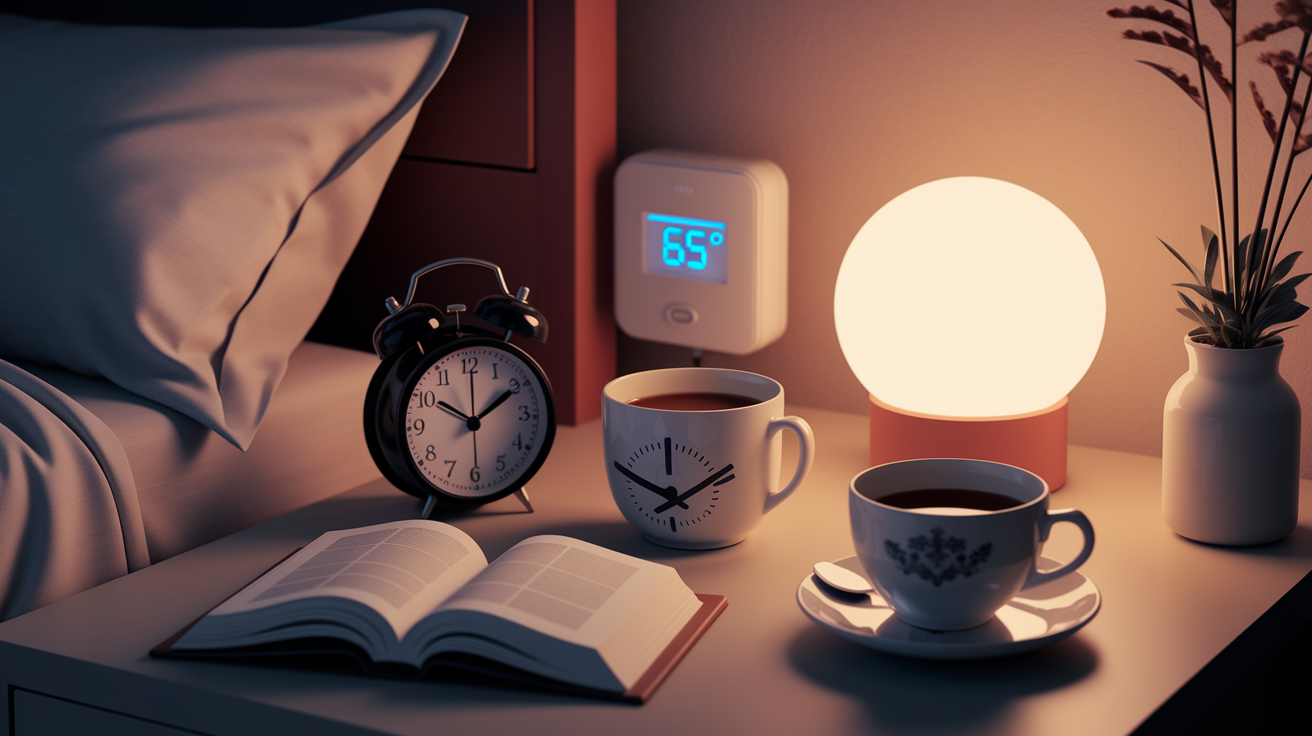
Most adults need 7 to 9 hours of sleep to feel and function their best, but hitting that number isn’t just about when you close your eyes. It’s about stacking a few proven habits together instead of betting everything on one trick. If you’re looking for ways to get better sleep starting tonight, here’s a solid place to start.
-
Keep tomorrow’s wake time fixed, even after a difficult night. It’s tempting to sleep in after a rough one, but waking at your usual time keeps your body clock steady and makes falling asleep tonight easier.
-
Stop consuming caffeine at least 8 hours before bed. This one matters more than people think. A 2023 review found that late caffeine intake reduced total sleep time by 45 minutes and cut sleep efficiency by 7 percent. That’s a big hit for one afternoon coffee.
-
Dim the lights and avoid screens for 1 to 2 hours before bed. Evening blue light can suppress melatonin, the hormone that signals to your brain that it’s time to wind down.
-
Cool the bedroom to 60-67°F (15-19°C). This range tends to support deeper, less interrupted sleep for most people.
-
Follow a calming, predictable wind-down routine for 30 to 60 minutes. Whatever you choose, keep it low-key and repeat it nightly so your brain starts linking it with sleep.
None of these tips work as well on their own. Try all five together tonight, and make sure you’re giving yourself enough time in bed to actually reach that 7 to 9 hour window. Better sleep tends to show up when small changes are layered, not used one at a time.
Build A Consistent Sleep Schedule
Your body runs on an internal clock, and that clock loves routine. Keeping the same sleep and wake times daily, even on weekends, helps align your circadian rhythm so falling asleep and waking up both feel less like a struggle. A 2020 review of 41 studies found a link between irregular or late bedtimes and poorer sleep quality overall. This isn’t just a nice idea, it’s backed by real data.
Here’s how to actually build that consistent bedtime routine:
- Set a fixed wake time and follow it every day, weekends included.
- Limit weekend schedule shifts to 30 to 60 minutes so your rhythm doesn’t reset.
- Begin a 30 to 60 minute wind-down routine at the same time each night.
- Follow a predictable sequence, like washing up, dimming the lights, then reading for a bit.
- Get out of bed when the alarm sounds instead of hitting snooze again and again.
- Reserve the bed for sleep and sex only, so your brain doesn’t associate it with work, scrolling, or lying awake stressing about tomorrow.
That last one is bigger than it sounds. If you regularly answer emails or watch shows in bed, your brain starts treating that space as “awake time,” which makes it harder to relax once the lights go off.
Give this schedule at least two weeks before judging whether it’s working. Wake-up time consistency is one of those things that feels small on day one and pays off by day ten. It’s not instant, but it’s one of the more reliable sleep hygiene shifts you can make.
Optimize Your Bedroom For Better Sleep

Temperature, light, noise, air quality, electronics, and clutter all quietly shape how easily you fall asleep and whether you stay asleep through the night. Evening blue light exposure, in particular, can suppress melatonin production, which is exactly why keeping devices out of the bedroom keeps coming up as a priority.
Here’s a quick reference for sleep environment optimization:
| Environment Factor | Target/Fix |
|---|---|
| Temperature | Maintain 60-67°F (15-19°C) |
| Light | Use blackout curtains and dim light sources 1-2 hours before bed |
| Noise | Try earplugs, a white-noise machine, or basic soundproofing |
| Air Quality | Improve ventilation and address stale or irritating indoor air |
| Electronics | Keep phones, tablets, laptops, and televisions out of the bedroom |
| Clutter | Clear visible work materials and unnecessary items from the sleep area |
You don’t have to fix all six at once. Pick one, test it for a week or so, and watch what happens to how fast you fall asleep or how often you wake up. Tackle noise first if you live somewhere loud, or focus on temperature if you tend to wake up sweaty or too cold at 3 a.m.
Your bedroom should feel like a signal for rest, not a second office or a place you catch up on shows. The fewer competing cues in that room, the easier sleep tends to come.
Upgrade Your Mattress, Pillow, And Bedding

Even with a perfect schedule and a cool, dark room, a worn-out mattress or the wrong pillow can quietly undo your progress. Your sleep surface needs to support a comfortable, neutral posture, one that doesn’t leave you with pressure points or a stiff back come morning.
Run through these comfort and replacement checks:
- Look for mattress sagging, permanent body impressions, or uneven support when you lie down.
- Notice whether stiffness, numbness, or back pain improves when you sleep somewhere else, like a hotel or a guest bed.
- Consider a medium-firm mattress, especially if back support has been an issue. A 2021 review found medium-firm options tend to offer
Final Words
In the action, start tonight with the five-step quick-start: set a fixed wake time, stop caffeine eight hours before bed, dim screens an hour or two before sleep, cool the room to 60–67°F, and follow a 30–60 minute wind-down.
Then build a repeatable bedtime routine, tune the sleep environment, check your mattress and pillow, and track what changes.
Try these steps together for at least two weeks and note patterns. Small, steady tests are how most people find real ways to get better sleep — and you’ll likely feel the payoff.
FAQ
Q: How do I improve my sleep naturally?
A: Improving your sleep naturally means combining small habits: keep a fixed wake time, stop caffeine eight hours before bed, dim screens 1–2 hours before sleep, cool the room to 60–67°F, and use a 30–60 minute wind-down.
Q: What is the 3-3-3 rule for sleep?
A: The 3-3-3 rule for sleep is a simple breathing technique: inhale for 3 seconds, hold for 3 seconds, then exhale for 3 seconds to calm your body and make falling asleep easier.
Q: Why is my sleep quality so poor?
A: Poor sleep quality is often due to an irregular schedule, late caffeine or screen use, an uncomfortable bedroom (too hot, bright, or noisy), stress, certain medications, or an undiagnosed sleep condition.
Q: What are 5 ways to sleep better?
A: Five ways to sleep better are: set a fixed wake time daily, avoid caffeine eight hours before bed, dim lights and stop screens 1–2 hours pre-bed, cool the bedroom to 60–67°F, and follow a 30–60 minute wind-down routine.