


Think being tired is a sign of weak willpower? Think again, it’s a chemical countdown.
Sleep pressure builds as your brain burns energy and a byproduct called adenosine piles up around neurons.
That adenosine then binds to receptors and literally turns up the volume on sleepiness.
In this post we’ll walk the full chain, explain how naps and caffeine change the signal, and offer simple tracking steps to test what works for you.
Understanding this turns vague tiredness into a pattern you can actually change.
What Sleep Pressure Is and How It Builds and Fades
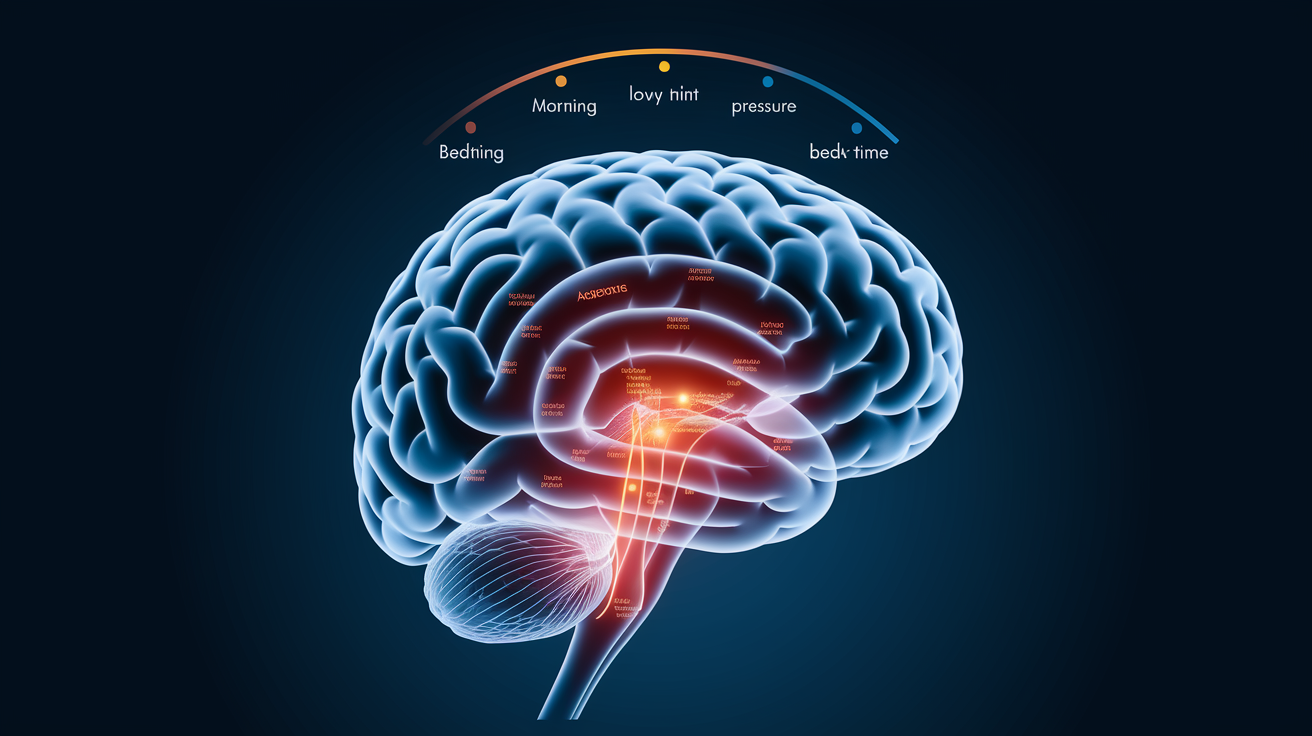
Sleep pressure, also called the homeostatic sleep drive, is the unconscious biological signal that grows stronger the longer you stay awake. You don’t choose this feeling. It’s a chemical countdown running quietly in the background of your day, whether you notice it or not.
Here’s the chain, start to finish. While your brain is active and awake, it burns through ATP (the energy your cells run on, sourced from glycogen stores). As that ATP gets used up, a byproduct called adenosine builds up in the spaces around your neurons. This adenosine binds to receptors, mainly two types called A1 and A2A, and that binding turns up the volume on sleepiness. Then, once you actually fall asleep, especially during deep slow wave sleep, your brain clears out that backlog of adenosine and restores your ATP supply. Pressure resets. You wake up lighter, at least when things work the way they’re supposed to.
Think about your day as a simple arc. Right after a full night’s sleep, pressure is low. You feel clear. As the day goes on and your brain stays active, pressure climbs steadily, hour by hour. By the time you hit your usual bedtime, pressure is at its peak, which is exactly why you start yawning around the same time most nights. Then, through the night, sleep does its quiet work and pressure drops back down again.
A simple way to picture it:
- Low: right after waking from a full night’s sleep
- Rising: steadily throughout the day as wakefulness continues
- Peak: around your habitual bedtime
- Falling: gradually across the night as sleep clears the backlog
This is also why 11 hours of sleep doesn’t always feel like enough. If your body hasn’t fully cleared that adenosine load, maybe from fragmented sleep or a late night before, you can wake up groggy even after a long stretch in bed.
Sleep pressure alone doesn’t decide when you get sleepy though. Your internal clock, known as circadian alerting, also has a say, independent of how many hours you’ve been awake. That interaction is worth its own closer look, which we’ll get into next.
What the Evidence Shows

There are four known types of adenosine receptors, but only two, A1 and A2A, are the main drivers behind sleepiness. A1 receptors act on the basal forebrain, quieting down the neurons responsible for keeping you alert. A2A receptors work in the preoptic area of the hypothalamus, switching on the neurons that push you toward sleep.
This isn’t just theory. In animal studies, researchers have injected adenosine directly into the brain and watched sleep behavior shift in response. Neuronal activity slows, and sleep-promoting circuits switch on. Human sleep deprivation studies back this up too, showing adenosine levels rising specifically in the brain regions tied to wake control, right where you’d expect if adenosine really is the molecule behind that heavy, foggy feeling.
Astrocytes, a type of support cell in the brain, also play a role in releasing adenosine into the mix. All of this rising adenosine load is what you’re actually feeling when tiredness creeps in across the day. It’s not just in your head. It’s a measurable chemical shift happening in real time.
((alt-img1))
The Two Process Model of Sleep Regulation
Sleep pressure doesn’t work alone. It’s one half of what scientists call the two process model of sleep regulation. Process S is the homeostatic sleep pressure we just walked through, rising steadily the longer you’re awake. Process C is your circadian rhythm, an independent internal clock that runs on roughly a 24 hour cycle, separate from how tired your body chemically is. If Process S ran the show by itself, you’d probably nap every few hours as pressure built up, similar to how infants sleep in scattered chunks throughout the day.
Here’s where it gets interesting. Process C actually pushes back against Process S during the day. Your circadian rhythm sends out alerting signals that help you stay awake even as sleep pressure climbs, which is part of why you can power through an afternoon despite feeling worn down. Then, as evening arrives, that circadian alerting signal drops off. With less resistance from Process C, the sleep pressure that’s been building all day finally takes over, and that’s usually when true sleepiness sets in.
This tug of war also explains a couple of common experiences. The midafternoon slump many people feel, that heavy eyed dip after lunch, happens when circadian alerting briefly softens while sleep pressure keeps climbing. And the strong wave of sleepiness at night comes from Process C stepping back just as Process S hits its peak.
Understanding this interaction matters beyond just explaining a daily slump. It’s also the reason shift work and jet lag feel so rough. Your circadian rhythm and your sleep pressure end up out of sync, pulling in different directions instead of working together. We’ll dig into that more shortly.
((alt-img2))
Caffeine, Naps, and Other Ways People Interact With Sleep Pressure
Caffeine doesn’t lower your sleep pressure. It just blocks the signal. Caffeine works as an adenosine antagonist, meaning it occupies the same A1 and A2A receptors adenosine would normally bind to. With those receptors blocked, your brain can’t fully register how tired you actually are. The pressure is still building underneath, it’s just muted for a while. Once caffeine wears off, all that backed up adenosine floods the receptors at once, which is often what causes that rough, sudden caffeine crash later in the day.
Napping works differently. A nap can genuinely discharge some of your accumulated sleep pressure, not just mask it. That’s helpful when you’re running low midday, but it comes with a tradeoff. A nap timed too late in the day, or one that runs too long, can eat into the sleep pressure you need for a strong night’s sleep, leaving you lying awake later than you’d like.
Keeping a consistent bedtime helps all of this line up the way it should. When you go to bed around the same time each night, your rising sleep pressure ends up matching the natural dip in circadian alertness, so the two processes work together instead of fighting each other.
And when sleep gets cut short night after night, that
Final Words
You saw how sleep pressure is the homeostatic drive that grows the longer you stay awake and eases with slow-wave sleep.
We followed the chain: brain activity uses ATP, adenosine builds up, it signals through A1 and A2A receptors, and deep sleep clears the load.
You also saw how Process S teams with your circadian clock, and how caffeine and naps shift the balance.
This sleep pressure buildup explanation links the biology to everyday signals. Try one small tracking tweak tonight and watch the pattern.
FAQ
Q: Why do I wake up after 5 hours of sleep?
A: Waking after 5 hours of sleep often means your sleep timing or cycles are off — common causes are stress, late caffeine, bathroom trips, or a sleep problem. Track patterns, tweak bedtime, and see a clinician if persistent.
Q: What is the 3-3-3 rule for sleep?
A: The 3-3-3 rule for sleep is an informal parenting guideline many use to guide newborn routines: about 3 hours awake, roughly 3-hour feeding intervals, and around three daytime naps. Adapt it and ask your pediatrician if unsure.
Q: Is it normal for a 5-year-old to experience sleep regression?
A: A 5-year-old can experience sleep regression, often linked to development, stress, illness, or nightmares. Try steady bedtime routines, calming wind-downs, and limit screens. Talk with a pediatrician if it lasts or hurts daytime functioning.
Q: Is 6 hours of sleep enough?
A: Six hours of sleep is usually less than recommended for most adults; it might work short-term for some, but many notice worse mood, focus, and health. Aim for 7–9 hours and watch daytime alertness.