

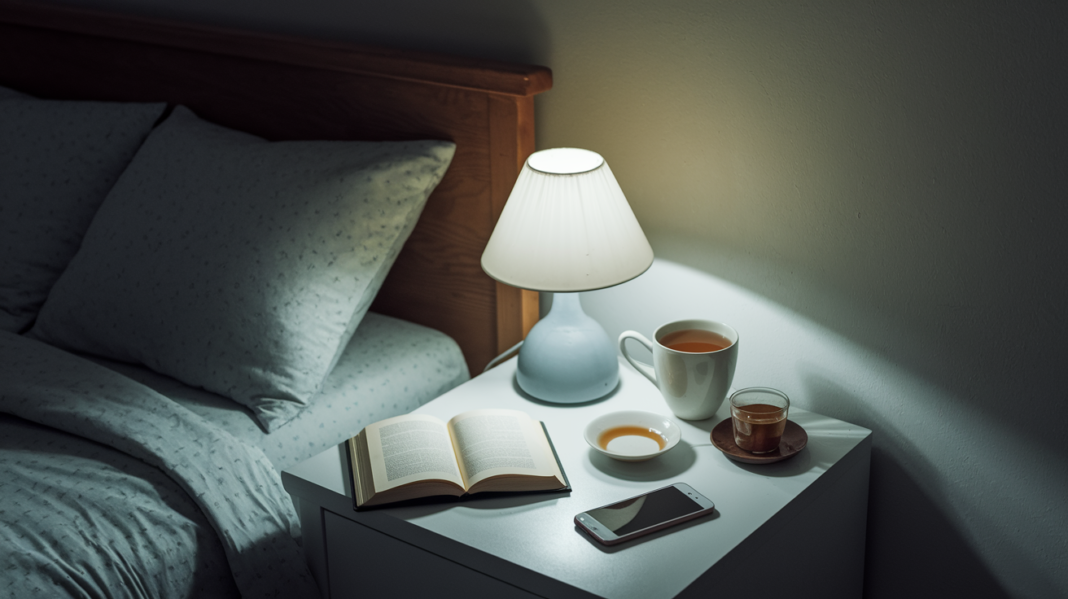

What if 30 minutes of the right routine could help you fall asleep 10 to 30 minutes faster and wake up clearer?
It sounds small, but studies show a steady pre-sleep ritual really shifts how fast you fall asleep and how good your sleep feels.
Here’s the short version: stop bright screens, dim the lights, and pick one calming activity 30 to 60 minutes before bed.
That simple repetition tells your body to lower arousal, sync your internal clock, and unlock deeper, faster sleep.
Faster Sleep Onset and Better Morning Alertness
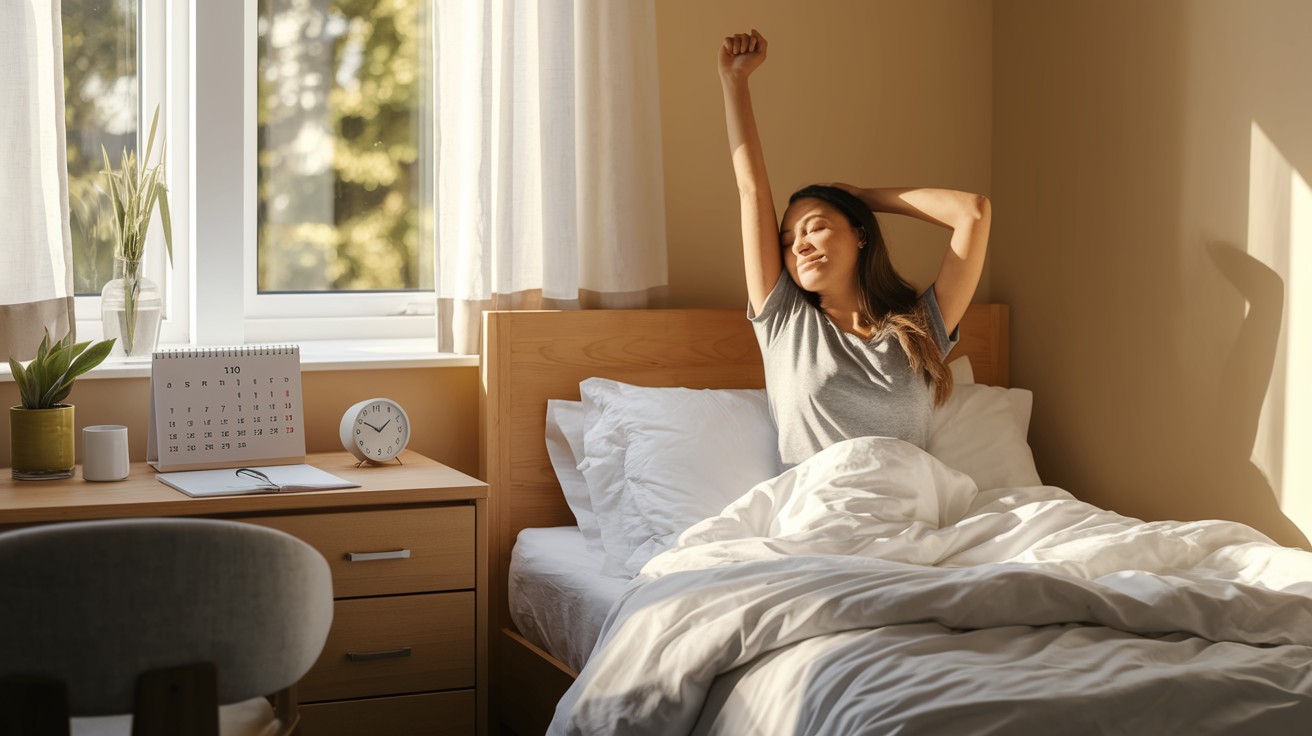
A consistent bedtime routine can meaningfully improve your sleep quality, and the research backs this up with real numbers. Building a steady, repeatable wind-down period doesn’t just feel nice. It actually changes how fast you fall asleep and how good that sleep is once you’re in it.
Routines work because they lower your body’s arousal levels and reinforce the circadian and temperature cues your body already relies on to know when it’s time to rest.
Here’s the simple version. Start winding down 30 to 60 minutes before your target bedtime. Stop using bright screens during that window. Dim the lights around your home. Then pick one calming activity, just one, and repeat it every night. That repetition is what turns a random habit into a real sleep hygiene practice your body starts to recognize and trust.
The payoff shows up in a few measurable ways.
| Metric | What Changes |
|---|---|
| Sleep onset | Falling asleep 10 to 30 minutes faster than without a routine |
| Sleep efficiency | An increase of 5 to 15 percentage points, meaning more of your time in bed is actually spent asleep |
| Total sleep time | An extra 10 to 45 minutes per night, depending on where you’re starting from |
| Morning alertness | Waking up noticeably more rested and clear headed, with better alertness carrying into your morning |
How Does Consistent Timing Regulate the Body Clock?

Your body runs on an internal clock located in the hypothalamus, and this clock doesn’t work in isolation. It listens to outside signals called zeitgebers, a German word that basically means “time givers.” Light, physical activity, meal timing, and even room temperature all act as cues that tell your body whether it’s day or night. When these signals repeat at the same time day after day, your body starts to anticipate sleep and wake times before you even feel tired or alert.
Melatonin plays a role here too, though it’s often misunderstood. It’s not a sedative that knocks you out. Think of it more like a signal flare marking the start of your biological night. Dim lighting in the evening supports melatonin release right when your body expects it. Bright light at night, especially from screens, can push that signal later, delaying the whole process and making falling asleep harder even when you’re exhausted.
A study involving 39 college students puts real weight behind this idea. Researchers had one group fix their bed and wake times to allow a consistent 7.5 hours of sleep opportunity every night for four weeks. A comparison group was only told to aim for 7.5 hours of sleep, without any fixed schedule. After the four weeks, and again at a follow-up five weeks later, the fixed-schedule group showed lower daytime sleepiness, quicker sleep onset, and better sleep quality overall. What’s notable is that these benefits held up over time, not just during the initial push.
So how does this play out day to day? Morning sunlight exposure, about 20 to 30 minutes at 2,500 to 10,000 lux (roughly the brightness of being outside versus a dim indoor room), helps align your circadian phase early in the day. Combine that with evening darkness, and you’re sending your body clear, consistent signals from both ends of the day. Try to keep your bed and wake times within a 30 to 60 minute window daily. Weekend schedule drift beyond 2 hours can undo a lot of this progress, essentially giving your body conflicting instructions. Your ideal schedule will depend somewhat on your chronotype, whether you naturally lean toward early mornings or late nights, so build consistency around what’s actually realistic for you, not an arbitrary bedtime that fights your natural rhythm.
Which Pre-Sleep Activities Improve Sleep the Most?
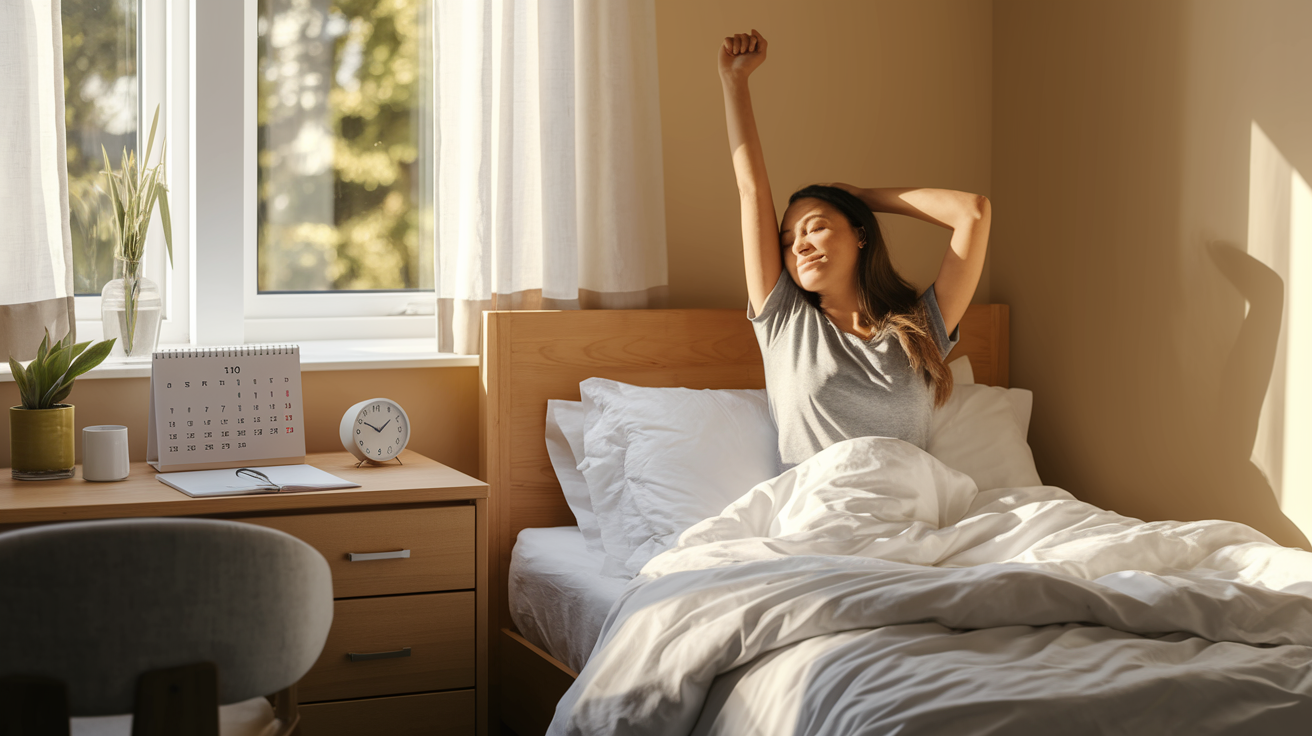
Some pre-sleep activities work by quieting a busy mind. Others work by physically relaxing the body. Knowing the difference helps you pick the right tool for what’s actually keeping you up.
To-do-list journaling means spending 5 minutes writing down tomorrow’s tasks before bed. A study of 57 participants ages 18 to 50 found that people who wrote a to-do list, rather than a list of things they’d already completed, fell asleep significantly faster based on polysomnography (a sleep study that tracks brain waves and body function overnight). The effect was even stronger for people who wrote longer lists, suggesting the act of offloading worries onto paper genuinely clears mental space.
A warm bath or shower for 10 to 30 minutes, timed roughly 60 to 90 minutes before bed, works differently. Warming your skin pulls blood flow toward your hands and feet, and the drop in core body temperature that follows afterward mimics the natural temperature dip your body needs to fall asleep. Done right, this can shave 10 to 30 minutes off your sleep onset.
Progressive muscle relaxation involves spending 10 to 20 minutes tensing and releasing muscle groups one at a time. This lowers physical tension and dials down overall arousal, making it easier to settle in.
Diaphragmatic breathing or mindfulness, practiced as slow, belly based breathing or a short guided meditation for 10 to 20 minutes, can reduce sleep onset latency (the time it takes to fall asleep) by 10 to 20 minutes and often improves how rested you feel the next morning.
Dim light reading, something printed or at least low brightness, for 15 to 30 minutes gives your mind a gentle off ramp without the stimulating blue light of a phone or tablet.
And if hunger is what’s keeping you up, reach for something small and calming rather than a heavy meal. Warm milk, herbal tea, or a bit of low fat yogurt with granola tends to work better than anything rich or sugary
Final Words
A regular 30–60 minute wind-down can help you fall asleep faster and wake up more alert. Stopping bright screens, dimming lights, and doing one calming activity nightly tends to lower arousal and strengthen sleep cues.
Begin winding down 30–60 minutes before bed: stop bright screens, dim the lights, and pick one calming activity you can repeat most nights.
Try this as a one-week experiment and track how you feel. Small tests show the pre-sleep routine impact on sleep, and often lead to clearer mornings and steadier energy.
FAQ
Q: What is the 10 5 3 2 1 rule for sleep?
A: The 10-5-3-2-1 rule for sleep is a stepwise pre-bed checklist: 10 hours avoid heavy alcohol, 5 hours cut caffeine, 3 hours finish big meals, 2 hours stop hard exercise, 1 hour begin a calm wind-down.
Q: What is the Japanese trick to sleep?
A: The Japanese trick to sleep is a simple relaxation approach using slow diaphragmatic breathing and a brief body scan, often paired with a steady bedtime routine to lower arousal and help you fall asleep.
Q: What is the 30-60-90 rule for sleep?
A: The 30-60-90 rule for sleep means start winding down 30-60 minutes before bed and, if you use a warm bath or shower, take it about 60-90 minutes earlier to warm skin, then cool, and speed sleep onset.
Q: What is the 5-3-3 rule for sleep training?
A: The 5-3-3 rule for sleep training is a gentle graduated-checking plan: wait 5 minutes, then 3, then 3 between brief checks so infants practice self-soothing while parents slowly extend reassurance intervals.