


What if your bedroom is the reason you wake up tired, even after a full night?
Most people blame stress or schedules, but small bedroom cues do a lot of the heavy lifting.
Temperature, light, noise, air quality, and bedding each nudge your body toward or away from real rest.
In this post we’ll show how those five things affect sleep latency and fragmentation, and give quick tests you can try tonight.
Think of your room as a signal, not just a place to lie down.
The Five Bedroom Factors That Matter Most
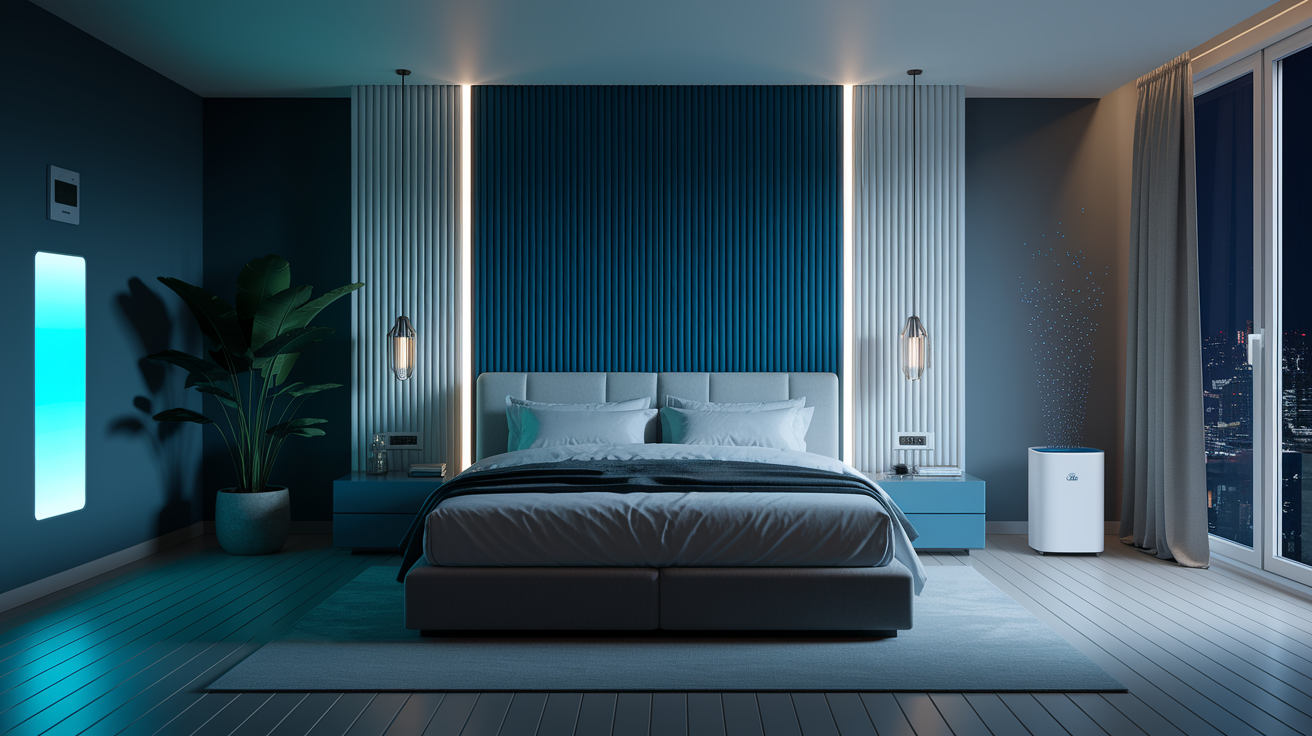
Temperature, light, noise, air quality, and bedding. These five things shape how well you sleep every single night. Every part of your sleep environment falls under one of these categories, and each one can either help your body settle down or keep it slightly on edge. This is where sleep latency, how long it takes you to actually fall asleep, starts to build or shrink. It’s also where sleep fragmentation, those small breaks in continuous rest, tends to creep in.
Get these five conditions lined up well and falling asleep gets easier. Nighttime disruptions drop. Your body gets more uninterrupted deep and REM sleep.
| Factor | Evidence-Based Target | One Action |
|---|---|---|
| Temperature | 60–67°F (15.6–19.4°C) | Set a cooler overnight thermostat schedule |
| Light | Below 10 lux at bed level, ideally below 1 lux | Install blackout curtains or use a sleep mask |
| Noise | Below 30 dB continuously, below 45 dB for isolated peaks | Block or mask disruptive sounds |
| Air quality | Roughly 30–50% relative humidity with fresh air exchange | Measure humidity and improve air exchange when needed |
| Bedding | Supportive, breathable, free from sagging or heat retention | Adjust or replace the component causing discomfort |
Why Bedroom Conditions Change Sleep Patterns
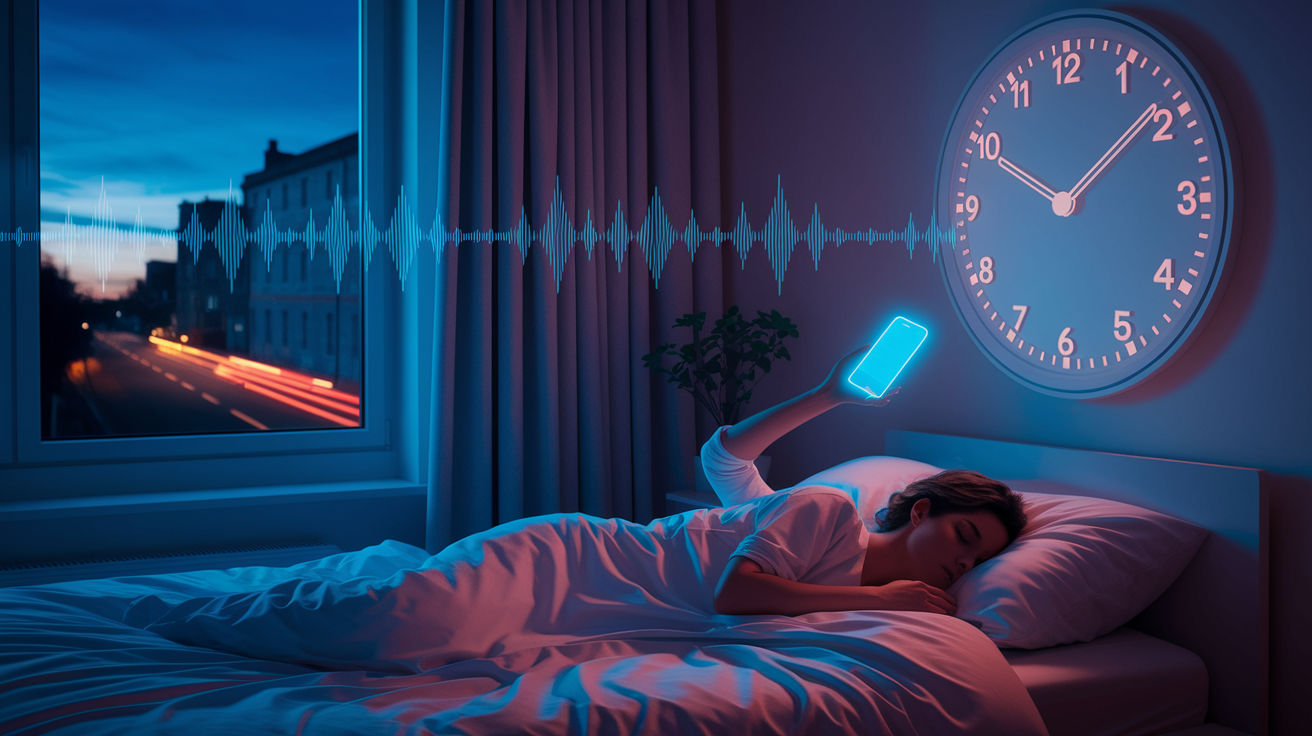
Evening light does more than just let you see where you’re going. It sends a direct signal to your internal clock, telling your brain whether it’s still daytime or time to wind down. Melatonin release, the hormone that cues sleepiness, is highly sensitive to this signal. Biologically meaningful suppression can start with exposure to just tens of lux, and blue-white wavelengths (the kind common in phone screens and overhead LEDs) hit especially hard. Sit under bright bulbs too late into the evening and your circadian rhythm can shift later, pushing back your natural window for sleep.
Your body also relies on a drop in core temperature to fall asleep, typically around 0.5 to 1.0°C during sleep onset. Think of it like your body dimming its own internal furnace as a cue that it’s time to rest. When the room’s too warm, that drop gets harder to achieve, and sleep continuity often suffers. Too cold, and the body may stay in a mild state of alert trying to regulate warmth. Both extremes have been linked to disrupted REM sleep and reduced slow-wave sleep (the deep, restorative stage), since your body prioritizes temperature regulation over staying in those more vulnerable stages.
Sound works differently, but the effect is just as real. Unpredictable or intermittent noises, a car door, a creaky floor, a distant siren, can trigger a small stress response even if you never consciously wake up. Cortisol and other stress hormones spike briefly, and this creates what’s known as a micro-arousal. String enough of these together across a night and sleep fragmentation adds up, even if you’d swear you slept straight through.
Air quality plays a quieter but still meaningful role. CO2 buildup in a poorly ventilated room, allergens drifting in from bedding or open windows, and humidity that’s too high or too low can all contribute to congestion, dry throat, or general restlessness. Bedding that traps heat or fails to support your body properly adds another layer, often showing up as tossing, turning, or waking with soreness. Most people notice subjective improvements within 1 to 2 weeks of fixing these conditions, while measurable changes like fewer arousals may take 2 to 4 weeks of consistent tracking to show up clearly.
Different sleep stages respond to these disruptions in different ways:
- Sleep onset. Most sensitive to delayed circadian signals and difficulty releasing body heat.
- Light sleep. Especially vulnerable to brief sensory disturbances and respiratory discomfort.
- Deep sleep. Vulnerable to thermal discomfort, repeated arousals, and pressure related movement.
- REM sleep. Vulnerable to temperature extremes and fragmented breathing or repeated disturbance.
Setting And Maintaining The Right Bedroom Temperature
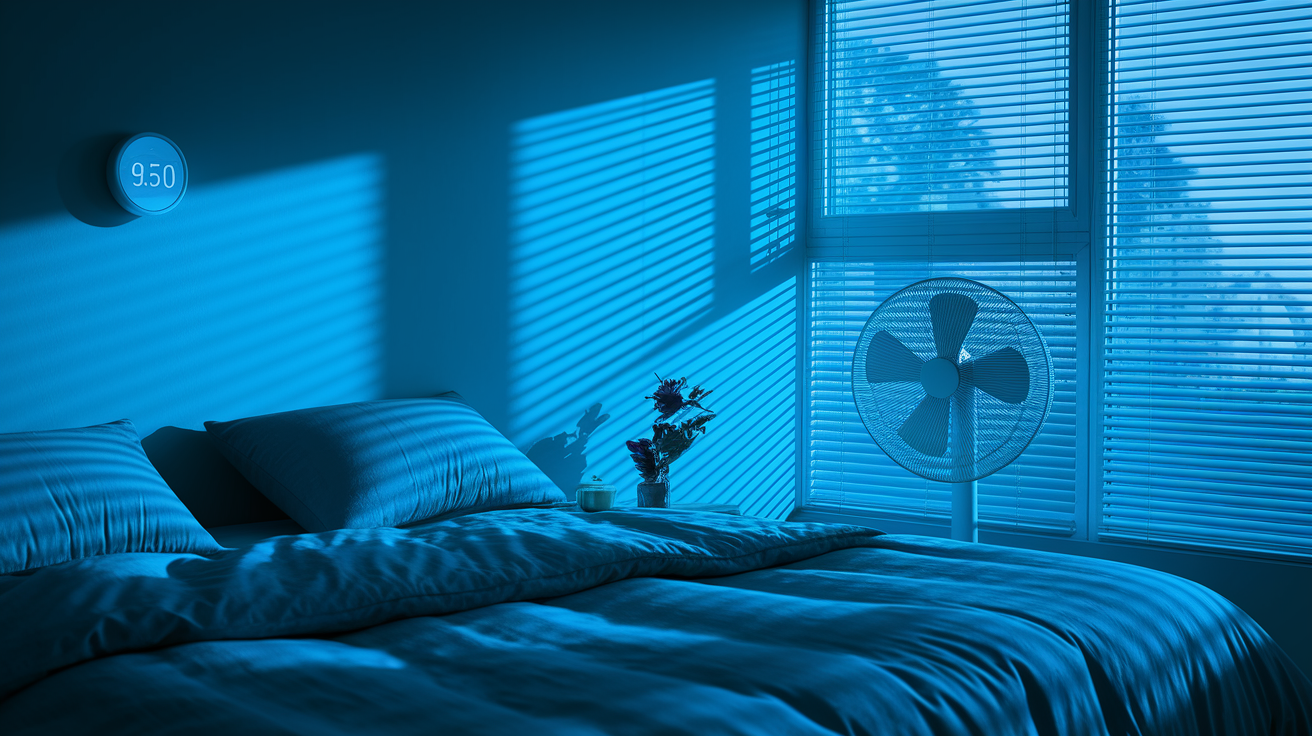
The general target for a sleep-friendly bedroom is 60–67°F (15.6–19.4°C). That said, the exact number that feels best can shift depending on your body, your bedding, and even the time of year.
Ideal Range And Seasonal Adjustments
A simple way to find your ideal setting is to test different points within the 60–67°F range over a few nights and notice how you feel, both falling asleep and staying asleep. In warmer months, fans, air conditioning, closed blinds during the day to block heat buildup, and ventilation that pulls in cooler evening air can all help bring the room down into range. In colder months, better insulation, a programmable heating schedule, and avoiding an overly warm bedroom late at night tend to work better than cranking the heat all night long. Ventilation is worth using here specifically to clear out built up heat when outdoor air is cool enough to help, not as a general air quality fix.
Cooling And Heating Products
Smart thermostats make this whole process easier by automating a cooler schedule overnight, so you’re not stuck adjusting a dial before bed. Fans offer a low cost way to move air and feel cooler without changing the actual temperature. Cooling mattress pads and cooling gel toppers, typically priced around $50 to $300, are good options for people who consistently wake up overheated.
Final Words
Temperature, light, noise, air quality, and bedding each shape how your night goes. Small, measurable changes—like cooling the room, blocking light, and reducing noise—can make it easier to fall asleep and stay asleep.
The article gave clear targets and practical actions so you can test what helps and track results; that’s exactly how sleep environment affects sleep quality in everyday life. Try one small change for a week, watch the pattern, and build from there.
FAQ
Q: What is the 3-3-3 rule for sleep?
A: The 3-3-3 rule for sleep is a simple wind-down guideline: stop heavy meals, intense exercise, and bright screens about three hours before bedtime to help you fall asleep more easily.
Q: What is the Japanese trick to sleep?
A: The Japanese trick to sleep is creating a calm bedtime ritual—try a warm foot bath, dim lighting, a light evening snack, and quiet to signal your body it’s time to wind down.
Q: What did Einstein say about sleep?
A: Einstein said sleep helped his thinking and creativity, noting rest often clarified problems and allowed deeper focus during waking hours.
Q: What organ is most affected by lack of sleep?
A: The organ most affected by lack of sleep is the brain; sleep loss impairs attention, memory, emotional control, reaction speed, and problem-solving, showing up as foggy thinking and poor focus.