



Most sleep advice treats insomnia like one problem, and that’s misleading.
Some people lie awake for an hour before sleep (onset insomnia), while others fall asleep fine but wake up later and can’t get back under (maintenance insomnia).
They show up at different times of the night and usually need different fixes.
This post will help you spot which pattern matches your nights, notice likely triggers, and try one small test tonight to see if things shift.
How The Two Insomnia Patterns Differ
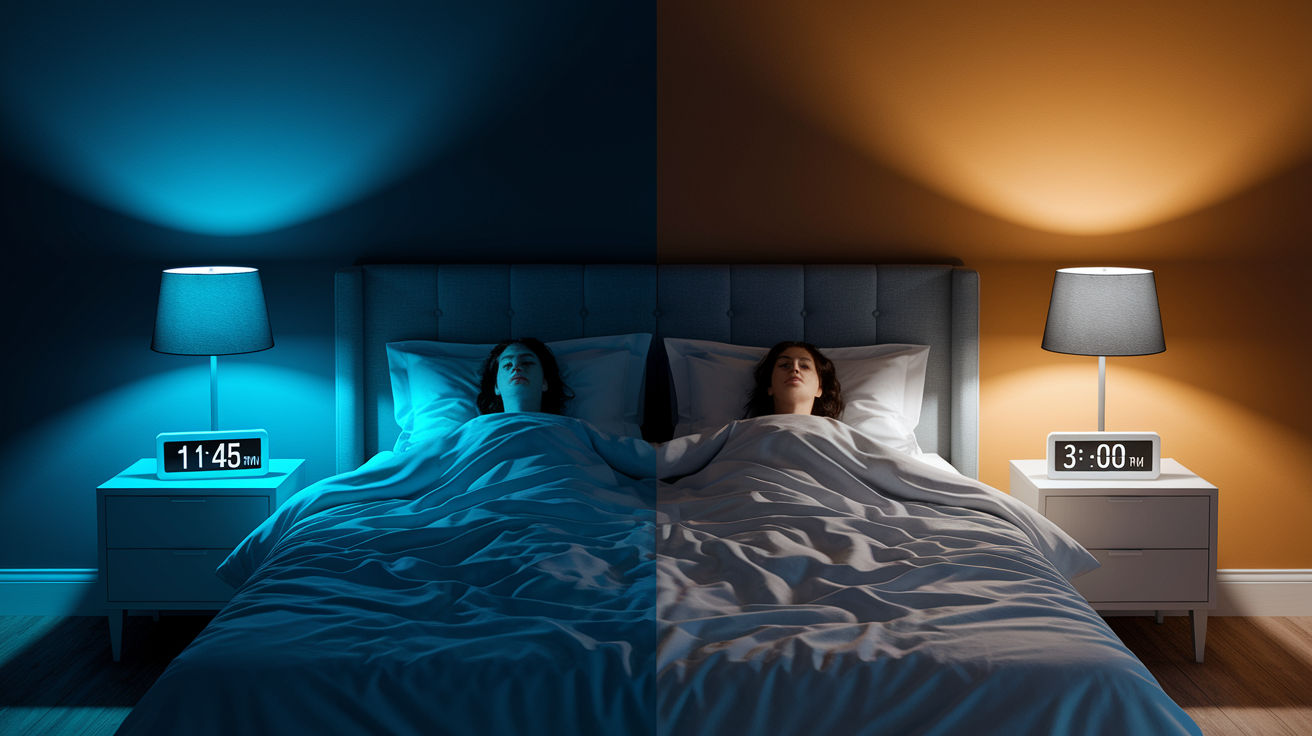
Sleep onset insomnia means having trouble falling asleep in the first place, like lying awake for 45 minutes even though you’re tired and ready for bed. Sleep maintenance insomnia is different. It means falling asleep okay but then waking up during the night and struggling to drift off again, sometimes for a long stretch of time. Both fall under the broader insomnia types overview, but they show up in your night at very different points.
Getting clear on the onset vs maintenance insomnia difference matters because the fixes often aren’t the same. Someone who can’t quiet their mind at 11 p.m. needs a different approach than someone who’s wide awake at 3 a.m. staring at the ceiling.
| Feature | Sleep Onset Insomnia | Sleep Maintenance Insomnia |
|---|---|---|
| Definition | Difficulty falling asleep at the start of the night | Difficulty staying asleep or returning to sleep after waking |
| Presentation-Level Indicator | Taking longer than approximately 30 minutes to fall asleep may point to this pattern. This is a practical indicator, not a formal diagnostic criterion. | Staying awake for approximately 20 to 30 minutes after a nighttime awakening may point to this pattern. This is a practical indicator, not a formal diagnostic criterion. |
| Typical Example | Lying awake for 45 minutes with racing thoughts before finally drifting off | Waking at 2 a.m. and lying there for an hour, unable to fall back asleep |
| Typical Pattern | Long delay before sleep, but fairly steady sleep once it starts | Sleep starts fine but gets broken up later in the night |
| Initial Treatment Focus | Reducing bedtime arousal and correcting schedule or circadian issues | Consolidating sleep and investigating causes of repeated awakenings |
| Usual Duration Or Frequency | Varies, from occasional to nightly, depending on the underlying trigger | Varies, from occasional to nightly, depending on the underlying trigger |
| Potential For Overlap | Can occur alongside maintenance insomnia or shift into it over time | Can occur alongside onset insomnia or shift into it over time |
These diagnostic indicators are useful starting points, not a checklist for a disorder. A rough night here and there, especially during a stressful week, doesn’t automatically mean something’s wrong. But if the pattern sticks around, causes real daytime fatigue, or doesn’t budge despite healthy sleep habits, it’s worth bringing to a medical professional.
Measuring The Defining Symptoms

Sleep latency measurement is simply the time between turning off the lights and actually falling asleep. You can track it by noting roughly when you tried to sleep and roughly when you think you drifted off. It’s not exact, and that’s fine. Racing thoughts or a mind that won’t quiet down tend to stretch this number out, sometimes to 45 or even 90 minutes, which is a hallmark of onset insomnia.
Wake after sleep onset, or WASO, tracks something different. It’s the total time you spend awake after you’ve already fallen asleep once. A common pattern here is falling asleep within 15 to 30 minutes, no problem, but then waking two or three times and racking up 60 to 120 minutes of WASO by morning. That’s the shape of maintenance insomnia, and it’s a big part of what causes sleep fragmentation, when your night gets chopped into pieces instead of flowing as one block.
Sleep efficiency ties this together. It’s the percentage of time in bed that you’re actually asleep, and it drops fast when WASO climbs. Early morning awakening is its own variant, where you wake up well before your alarm and just can’t get back under. Here’s the thing though, the number of times you wake up matters less than how long you’re awake for, whether you can fall back asleep, and how you feel the next day. Waking briefly three times and not remembering it is very different from waking once and staring at the ceiling for an hour.
A quick self-check can help you spot your pattern:
- About how long does it take you to fall asleep most nights.
- How many times do you wake up, and for roughly how long each time.
- Can you usually fall back asleep, or does it take a while.
- Is your final wake time close to when you actually want to get up.
Part of why the second half of the night is trickier for many people comes down to sleep architecture. Deep sleep tends to cluster earlier in the night. Later on, sleep gets lighter and cortisol starts rising, which makes it easier to surface and harder to stay under. This doesn’t diagnose anything on its own, but it explains why maintenance issues often feel like they sneak up in the early morning hours.
Causes, Prevalence, And Risk Factors
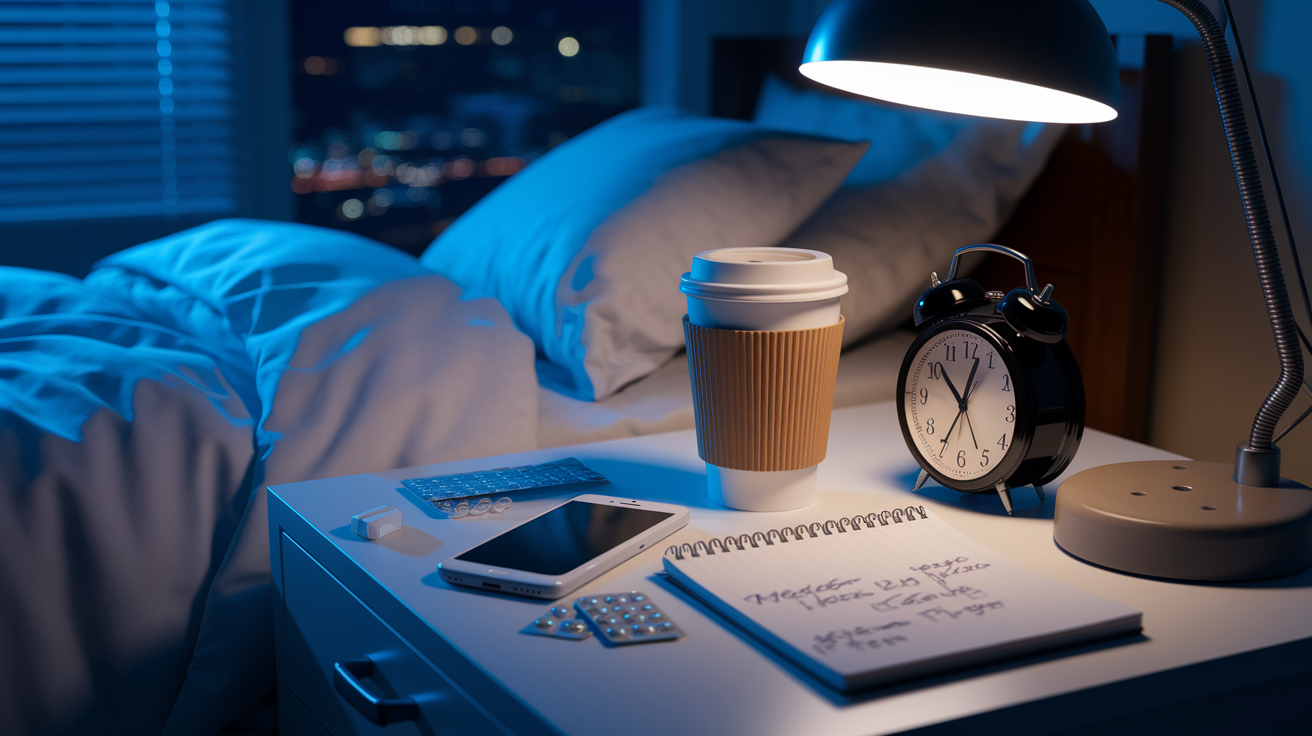
Insomnia rarely comes from just one thing. It’s usually a mix of behavioral habits, psychological state, circadian timing, medical conditions, and the environment you’re sleeping in. Untangling which of these applies to you is often the first real step toward doing something about it.
Causes of sleep onset insomnia tend to cluster around a few themes:
- Stress, anxiety, and a mind that won’t switch off, also known as cognitive arousal.
- A circadian clock that’s running late, or shift work throwing off your schedule.
- Caffeine, other stimulants, or medications taken too close to bedtime.
Final Words
You can now spot whether your sleep trouble is mainly about lying awake at the start (sleep onset) or about waking later and staying up (sleep maintenance).
We walked through how to measure sleep latency and WASO, common causes and age patterns, and treatment priorities like CBT-I, circadian fixes, or investigating medical causes. Try a short sleep diary and one small test for a week.
Track timing and total awake time, try one practical change, and share your notes with a clinician if it’s affecting your days — that will help clarify sleep maintenance insomnia vs onset insomnia. You’ve got useful clues to act on.
FAQ
Q: Does sleep maintenance insomnia go away?
A: Sleep maintenance insomnia can go away when underlying causes are treated or with targeted therapies like CBT-I, but it often persists without change; seek medical evaluation if symptoms continue or impair daytime function.
Q: What is considered sleep onset insomnia?
A: Sleep onset insomnia is difficulty falling asleep, typically taking longer than about 30 minutes despite the chance to sleep, for example lying awake 45 minutes because of racing thoughts or bedtime arousal.
Q: How to get rid of onset insomnia?
A: To get rid of onset insomnia, reduce bedtime arousal, use stimulus control, keep a consistent wake time, try CBT-I, and for delayed circadian timing use morning light or clinician-guided melatonin.
Q: What is the root cause of sleep maintenance insomnia?
A: The root cause of sleep maintenance insomnia often involves medical or behavioral factors, such as chronic pain, nocturia, sleep apnea, restless legs, depression, alcohol or medications, hormonal shifts, or environmental disturbances; multiple causes are common.