



Think visual tracking is just for athletes and therapists? It isn’t.
Visual tracking activities are simple games that train your eyes to follow moving things, jump between points, and hold steady on a target.
These are the same skills behind smooth pursuit and saccades, what helps you read without losing your place, catch a ball, or recover after a head injury.
This post shows easy, everyday activities you can try, why each one builds a specific eye skill, and how to pick small tests you can track and repeat.
Visual Tracking Activities Defined With Everyday Examples
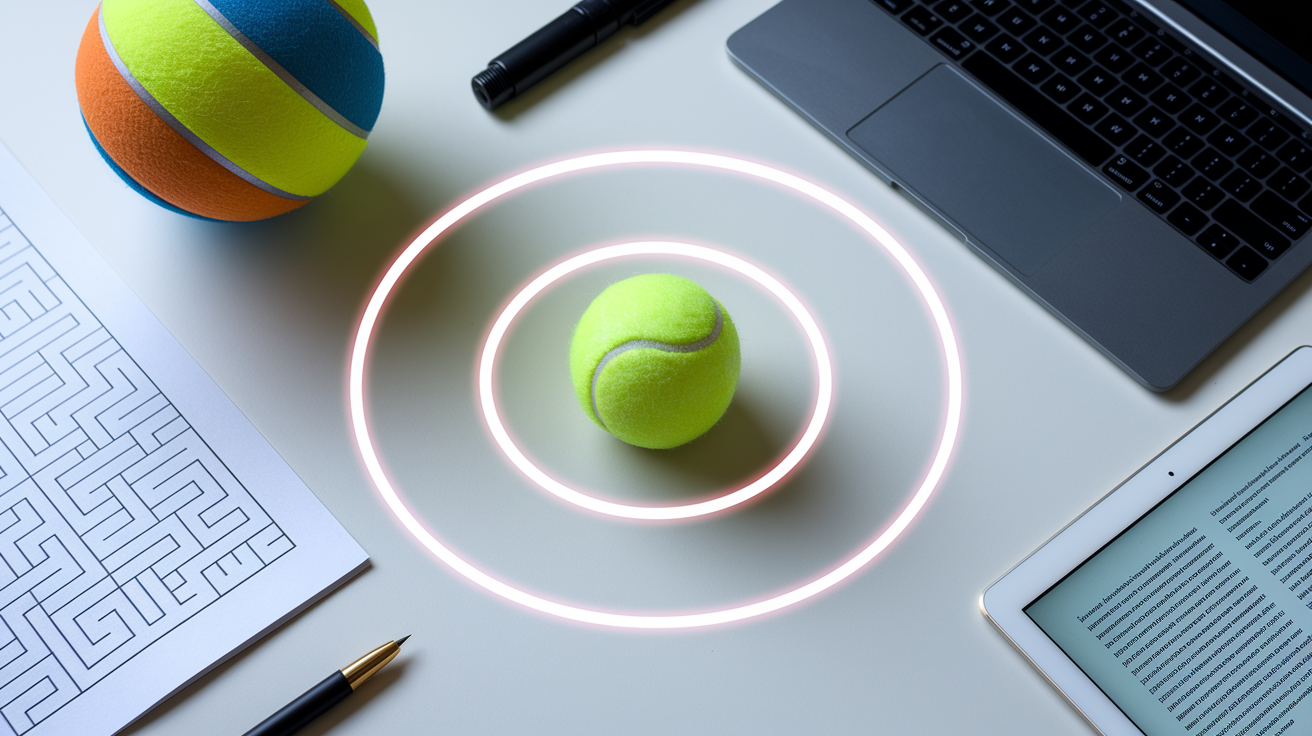
Visual tracking activities are purposeful tasks that train your eyes and brain to hold a steady gaze, follow moving objects, and shift accurately from one target to the next. They work by giving your eye muscles something concrete to practice, whether that’s chasing a bouncing ball or scanning a line of text without losing your place.
Two core skills show up in almost every visual tracking activity: smooth pursuit and saccadic tracking. Smooth pursuit is what happens when your eyes follow a continuously moving target, like watching a car drive down the street. Saccades work differently. They’re the quick, jumpy movements your eyes make between separate, stationary points, like hopping from word to word across a page. What is visual tracking? explains this distinction well, and it’s worth understanding because these two skills often need different kinds of practice.
These activities show up in all kinds of settings. A toddler chasing bubbles in the backyard is doing developmental play. A second grader scanning for the letter “b” on a worksheet is getting classroom practice. A tennis player tracking a serve is running a sports drill. And a patient recovering from a concussion, following a penlight in a clinic, is going through guided rehabilitation. Same underlying skill, very different contexts.
One common mix-up is worth clearing up here. Visual tracking exercises aren’t the same thing as eye-tracking hardware. Exercises are activities you do to build a skill. Hardware, like infrared sensors or eye-tracker cameras, gets used to measure and record eye movement for assessment or research. One’s training. The other’s measurement.
Here are six everyday examples of visual tracking activities:
- Following a moving finger or toy with just the eyes
- Chasing bubbles or a flashlight beam across a room
- Tossing and catching balloons or soft balls
- Completing mazes and connect-the-dot pages
- Scanning a page of text for a specific letter or word
- Following highlighted words in a reading app
The right activity really depends on who’s doing it and why. Age, current symptoms, physical ability, and the actual goal, whether that’s early development, academic support, sports performance, or recovery after an injury, all shape which exercise makes the most sense to try first.
How Visual Tracking Activities Train Eye Movements
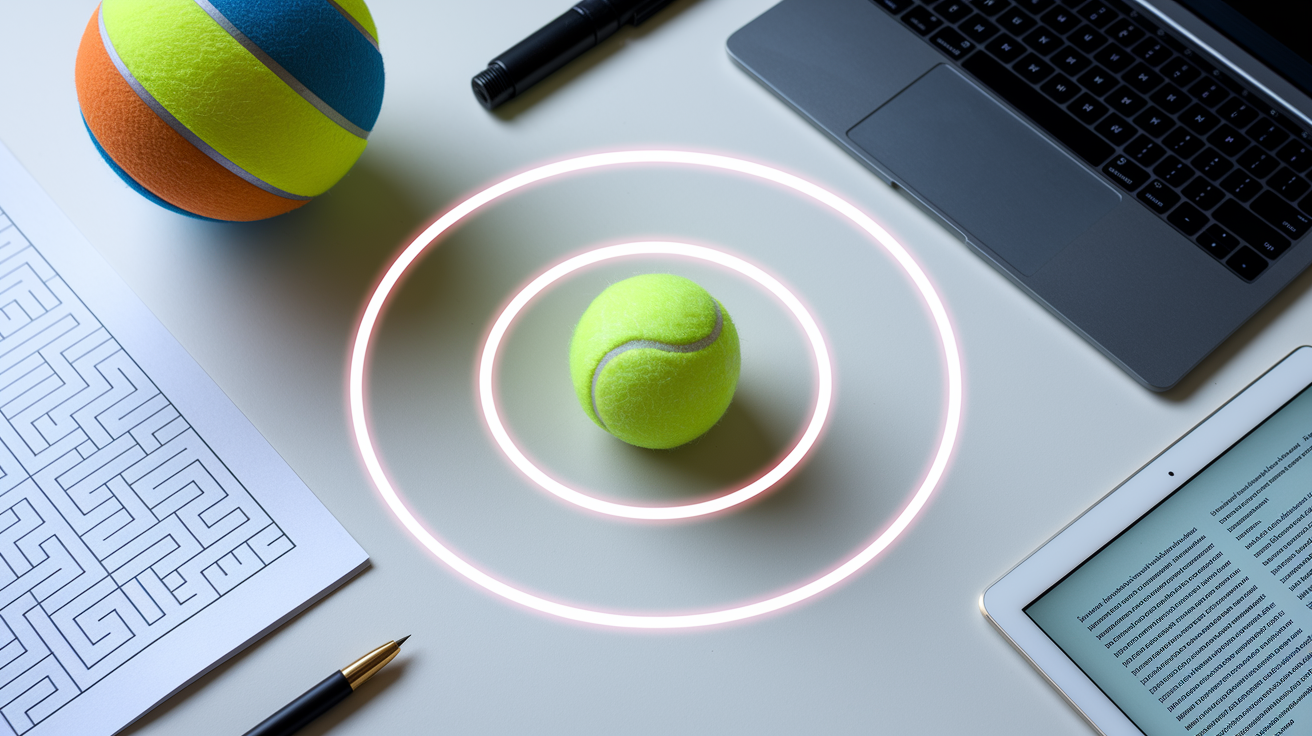
Different activities train different parts of the visual system, and that’s by design. A drill that builds smooth pursuit won’t necessarily help someone who struggles with saccades, and vice versa. Understanding the mechanism behind each type helps you pick activities that actually match the problem you’re trying to solve.
Tracking doesn’t happen in isolation either. It depends on attention, how visible the target is, how fast the brain processes what it sees, and how well the eyes and head move together. Training paths can run horizontal, vertical, diagonal, circular, or out toward the edges of vision, and each direction adds its own layer of challenge.
Fixation
Fixation is the ability to hold your gaze steady on one spot long enough to actually take in the information there, whether that’s a letter, a dot on a page, or a friend’s face across the room. It’s stationary by nature. Tracking, on the other hand, is about maintaining or changing your gaze in response to what’s happening around you. Think of fixation as the pause and tracking as the movement.
Smooth Pursuit
Smooth pursuit is what your eyes do when they follow something that’s continuously moving, like a rolling ball, a swinging pendulum, a floating bubble, or a flashlight beam sweeping across a wall. The difficulty shifts depending on how fast the target moves, which direction it travels, and how predictable its path is. A slow, straight-line pendulum swing is easy. A bubble drifting erratically in the wind isn’t.
Saccades
Saccades are the quick, almost involuntary jumps your eyes make between separate targets. This is what happens when you move from one word to the next while reading, when you glance back to the start of a new line, when you copy notes from a whiteboard, or when you flick your eyes between two flashcards placed apart from each other. These fast shifts are essential for reading fluency and classroom tasks.
Convergence And Eye Teaming
Convergence is the inward turn both eyes make as an object gets closer, like when you bring a finger toward your nose and watch your eyes cross slightly. Eye teaming refers to both eyes working together to produce one clear image instead of two. These are related to tracking, and problems in one area can affect the other, but they’re not the same thing as tracking itself. It’s worth keeping these terms separate so you know exactly what’s being trained.
Good practice tends to follow a natural progression. Start with slow, predictable movement, something like a pendulum swinging gently back and forth. Then gradually add speed, unpredictability, and more directions, while making sure accuracy doesn’t fall apart along the way. Rushing this progression tends to build frustration rather than skill.
Main Types Of Visual Tracking Activities
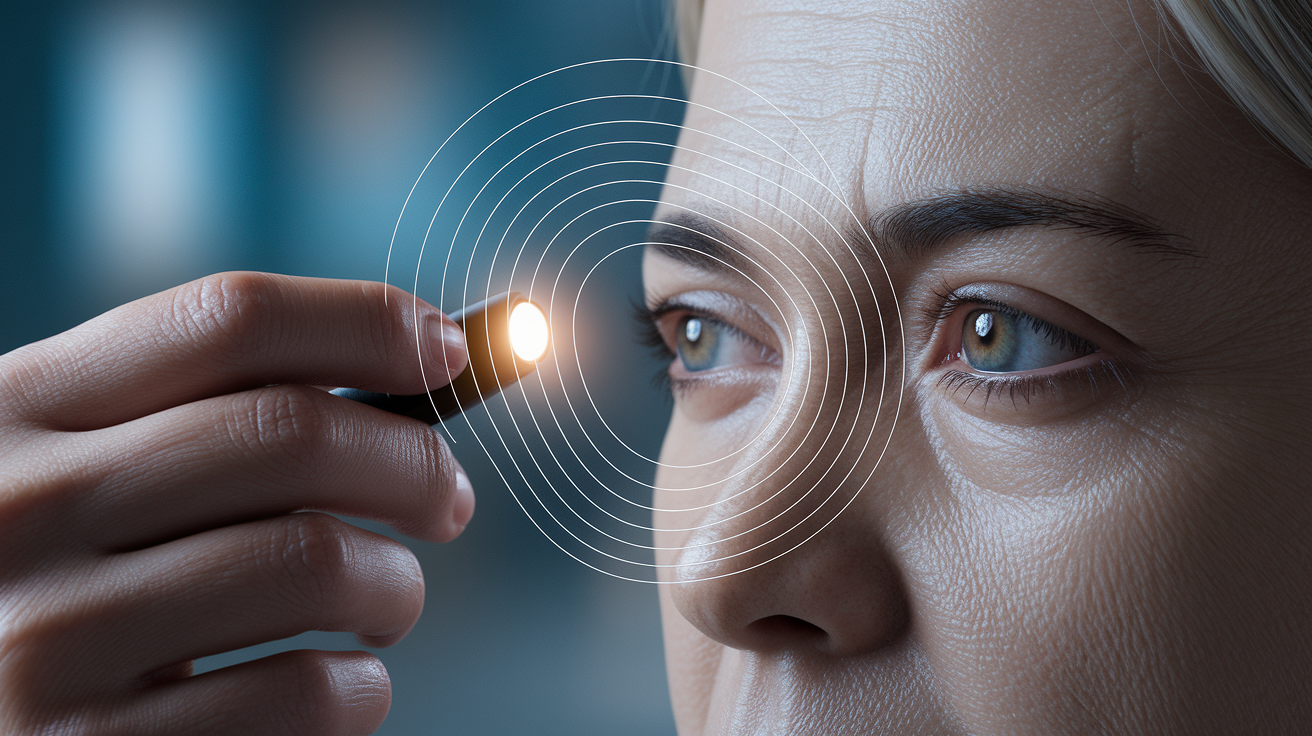
Visual tracking activities generally fall into a handful of broad categories, and knowing these groups helps you understand why an exercise works the way it does before diving into age-specific examples.
Gross Motor Ball And Racket Games
These use fast, unpredictable, real-world movement, think badminton, catch, or scoop ball, to build smooth pursuit and peripheral awareness at the same time. The whole body gets involved, which also strengthens hand-eye coordination alongside eye movement itself.
Light-Based Pursuit Games
Flashlight beams, glow toys, and light-up balls give the eyes a bright, easy-to-follow target, often in a dimmed room. These work especially well for pursuit training since the moving light naturally pulls the gaze along with it.
Paper-And-Pencil Scanning Tasks
Mazes, connect-the-dot pages, and word searches ask the eyes to jump between fixed points in a controlled, repeatable way. These lean heavily on saccadic movement and sequential scanning, since the target never moves. Only the gaze does
Final Words
In the action, you saw what visual tracking activities are: purposeful tasks that train the eyes and brain to follow moving targets, shift between points, and hold steady on details, with quick examples like chasing bubbles and scanning text.
We also covered pursuit versus saccades, fixation and eye teaming, and how practice should move from slow, predictable motion to faster, multi-directional drills.
If you still wonder what are visual tracking activities, pick one simple game this week, track how it feels, and use that small data point to guide the next step. You’ll likely notice small wins quickly.
FAQ
Q: What causes poor visual tracking?
A: Poor visual tracking is caused by weak eye-muscle coordination, slow visual attention, untrained smooth pursuits or saccades, tiredness, uncorrected vision, or underlying developmental or brain differences, so check with a clinician.
Q: What are some good games for visual tracking? / What are some examples of visual tracking activities for children?
A: Good games and activities for children’s visual tracking include following a moving toy or finger, chasing bubbles or a flashlight beam, tossing balloons, doing mazes, scanning for letters, and following highlighted words in reading apps.
Q: Is there a connection between ADHD and eye tracking?
A: There is a connection: people with ADHD often show erratic saccades, trouble sustaining smooth pursuit, and reduced visual attention, which can affect reading and tasks. Eye tracking is a clue, not a diagnosis.