



What if your stress isn’t random but follows clear, fixable patterns?
Situational stress trigger analysis finds the exact moments, like a 9 a.m. call, a tight deadline, or a money surprise, that flip your body into high alert.
Instead of saying “I’m stressed,” you learn to spot the event, record it, and test small changes.
Read on to learn a simple five-step method to map your pressure points, run quick experiments, and actually reduce those sudden spikes, without overhauling your whole life.
What Is Situational Stress Trigger Analysis?

Situational stress trigger analysis is a systematic process for identifying, categorizing, and examining the specific events or circumstances that set off acute stress responses in your body and mind. Instead of treating stress as one big foggy cloud, this approach breaks it down into traceable moments. The meeting. The deadline. The phone call. The bill. Patterns become visible once you stop lumping everything together. It’s less about labeling yourself “stressed” and more about pinpointing what, exactly, flips the switch.
Here’s the part that trips people up: not all stress works the same way. Situational stressors are discrete, short-window events, think minutes to a few days, that cause a sharp, acute reaction. Chronic stressors are the slow-burn background conditions that stretch across months or years, like an unhappy job you’ve tolerated for ages. And here’s the tricky part: the same workload can hit two people completely differently. One coworker sees a tight deadline as a burden that wrecks their week. Another sees the exact same deadline as a challenge worth rising to. Perception shapes whether an event becomes a stressor at all, which is exactly why generic stress advice so often falls flat.
Clinicians use this kind of analysis to map a client’s triggers before therapy starts. HR professionals lean on it to understand why turnover spikes in certain departments. And plenty of regular people just want to stop guessing why their stomach tightens every Sunday night. The goal in all three cases is the same, trade vague stress talk for a clear, targeted plan.
How Situational Stress Trigger Analysis Works

At the core of this method is a repeatable 5-step workflow. It’s not complicated, but it does need to be followed in order, skipping steps tends to produce shaky, unreliable conclusions. Think of it as a loop you can run again and again as your situation changes.
- Detect – screen for stress patterns and establish a baseline before you try to change anything.
- Record – capture episodes as they happen using diaries, ecological momentary assessment (EMA) prompts, or physiological sensors.
- Classify – sort recorded episodes into a taxonomy, tagging each one by type and context.
- Analyze – look for patterns, run basic statistics, and dig toward root causes rather than surface symptoms.
- Intervene & monitor – apply a targeted strategy, then keep tracking to see if it actually worked.
So why start with a baseline instead of jumping straight to fixes? Because a couple of bad days don’t tell you much. Most protocols recommend a 7 to 14 day baseline period before drawing conclusions, with a minimum of 21 diary entries, roughly three a day for a week, to get a dataset you can actually trust. One rough Tuesday might just be a rough Tuesday, not a pattern. But three Tuesdays in a row with the same spike after the same 9 a.m. call? That’s a clue. The baseline period is what turns “I think this is stressful” into “I can see this is stressful, and here’s when it happens.” That shift from guessing to knowing is the whole point of the workflow.
Categorizing Situational Stress Triggers: A Taxonomy Approach
You can’t manage what you can’t name. That’s the practical reason categorization matters here. Once a trigger gets sorted into a clear category, it becomes something you can track, compare, and eventually act on, instead of a vague feeling you can’t quite pin down.
In practice, most situational triggers fall into recognizable buckets:
- Workplace demands – heavy assignments, piling tasks, tight deadlines, poor compensation, demanding bosses or coworkers, fear of losing the job
- Financial strain – not being able to cover expenses, money arguments at home, surprise bills
- Family conflict – unresolved arguments, divorce, tension between relatives
- Health-related events – a family member’s illness, a personal health scare
- Major life changes – relocation, a new job, a breakup, any big shift in routine
- Personal thought patterns – procrastination, a negative outlook, self-criticism that amplifies pressure
- Interpersonal friction – conflict with partners, friends, or colleagues that lingers after the conversation ends
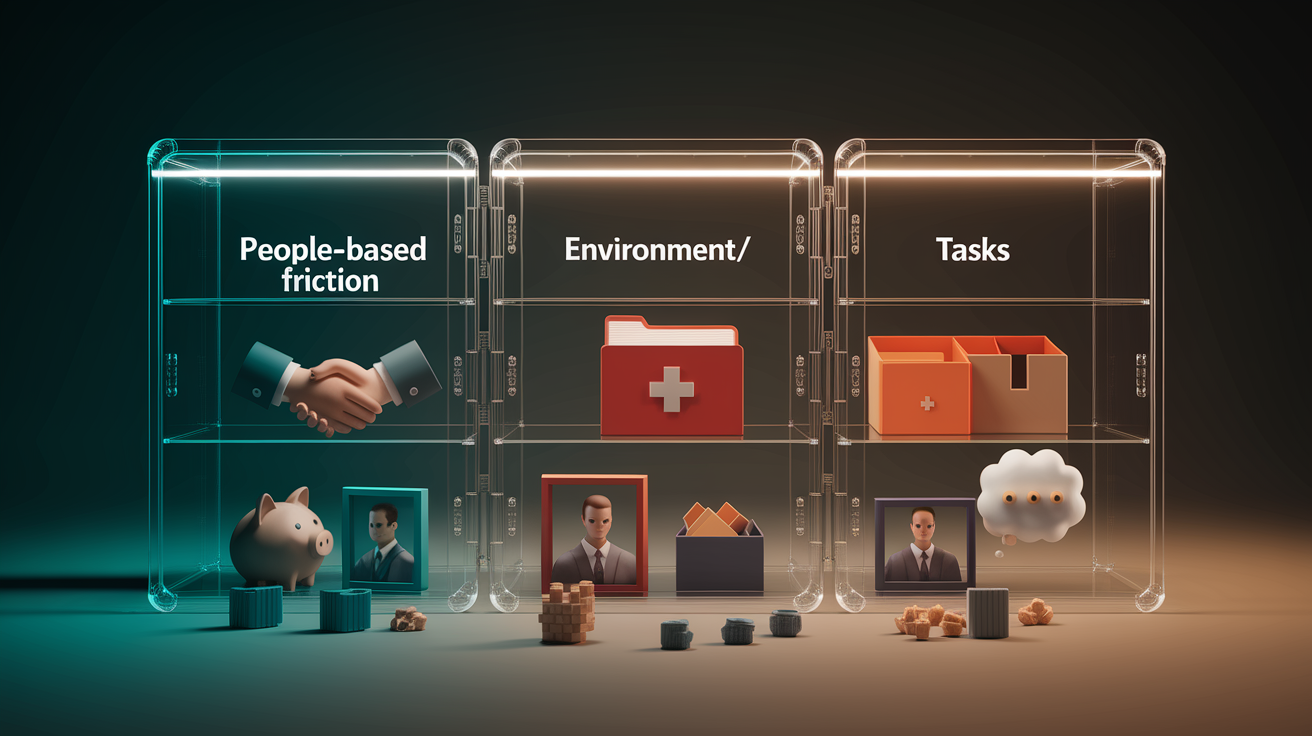
Most frameworks end up folding these everyday categories into three primary domains, interpersonal (people-based friction), environmental/contextual (the setting or circumstances around you), and task-related (the work or responsibility itself). Within those three, it’s common to code 8 to 12 subcategories, things like “demanding supervisor” under interpersonal, or “approaching deadline, under 50% complete” under task-related. This level of granularity keeps the coding consistent, whether you’re tracking one person’s patterns over a month or comparing triggers across a whole team.
Tools and Methods for Situational Stress Trigger Analysis

Relying on memory alone gives you a fuzzy picture. Combining what you notice (self-report) with what your body actually does (physiological data) gives you a much more reliable read on what’s really happening and when.
Self-Report and Diary-Based Measures
The simplest starting point is a 0 to 10 severity scale, where anything scoring 7 or higher counts as a “peak,” a moment worth flagging for closer attention. For routine tracking, a 20-item checklist covering interpersonal, environmental, and task-related cues works well, while a shorter 5-item screener is handy when you just need a quick triage.
Diaries and EMA (ecological momentary assessment) prompts add the timing piece. A typical window runs 7 to 14 days, with 3 to 6 prompts sent per day, ideally landing you somewhere between 100 and 300 total responses over two weeks. That volume sounds like a lot, but it’s what gives you enough data points to actually trust the patterns that show up.
Physiological and Wearable Sensor Measures
Self-report tells you what you noticed. Physiological data tells you what your body did, sometimes before you noticed anything at all. Heart-rate variability (HRV) monitoring, electrodermal activity (a measure of skin conductance tied to sweat gland activity), and actigraphy (movement and sleep tracking)
Final Words
In the action, we’ve defined situational stress trigger analysis as a step-by-step way to spot short-term events that spark acute stress, then walked through the 5-step workflow, a practical taxonomy of common triggers, and the tools you can use, like diaries, EMA and wearables.
Try one small test. Pick a trigger category, track it for a week with a simple diary or a short EMA, then compare peaks.
Situational stress trigger analysis gives you a clear pattern to act on. Keep tracking. Small changes add up.
FAQ
Q: What is situational stress trigger analysis?
A: Situational stress trigger analysis is a systematic process for identifying, categorizing, and examining specific events or circumstances that provoke short-term (acute) stress responses to guide targeted actions.
Q: How is situational stress trigger analysis different from chronic stress assessment?
A: The difference is that situational analysis focuses on discrete, short-term events (minutes–days), while chronic assessment tracks long-term background pressures (months–years); personal perception often determines what becomes stressful.
Q: How does situational stress trigger analysis work?
A: Situational stress trigger analysis works through five steps—Detect (screen/baseline), Record (diaries/EMA/physiology), Classify (taxonomy), Analyze (patterns/root causes), and Intervene & Monitor—to turn data into focused strategies.
Q: How long should baseline tracking run and how many diary entries are needed?
A: Baseline tracking should run 7–14 days with a minimum of 21 diary entries (about 3 per day for 7 days); more sampling improves confidence in identified patterns.
Q: What are the main categories in a stressor taxonomy?
A: The main categories include workplace demands, financial strain, family conflict, health events, major life changes, personal thought patterns, and interpersonal friction, usually grouped into interpersonal, environmental, and task-related domains.
Q: What tools and methods are used for trigger analysis?
A: Trigger analysis uses self-report scales, checklists, diaries/EMA (3–6 prompts/day), and wearables for HRV, electrodermal activity, and actigraphy; combining subjective and objective data boosts reliability.
Q: What counts as a “peak” on severity scales and how long are checklists?
A: A “peak” on severity scales is typically a score of 7 or higher; routine checklists are around 20 items, with a 5-item screener for quick triage.
Q: How can an individual start using situational stress trigger analysis?
A: To start, begin a simple diary or EMA for a week, note context and intensity, optionally add one wearable metric, then look for repeating triggers to test small changes.
Q: When should I seek help from a clinician or HR professional?
A: You should seek help when triggers are severe, sudden, not improving, or significantly disrupt work, safety, or daily life; bring your tracking notes to improve the conversation.