


What if a little stress could make you stronger?
It sounds strange, but tiny, well-timed challenges often push the body to adapt and become more resilient.
This idea, called hormesis, means short, manageable stressors like brief workouts, cold dips, or intermittent fasting can boost repair, balance hormones, sharpen immune responses, and improve how your cells use energy.
In this post we explain the science in plain terms, show the likely benefits, and give simple ways to test small doses and recover well.
Think of it as strength training for your biology.
How Controlled Stress Can Support The Body
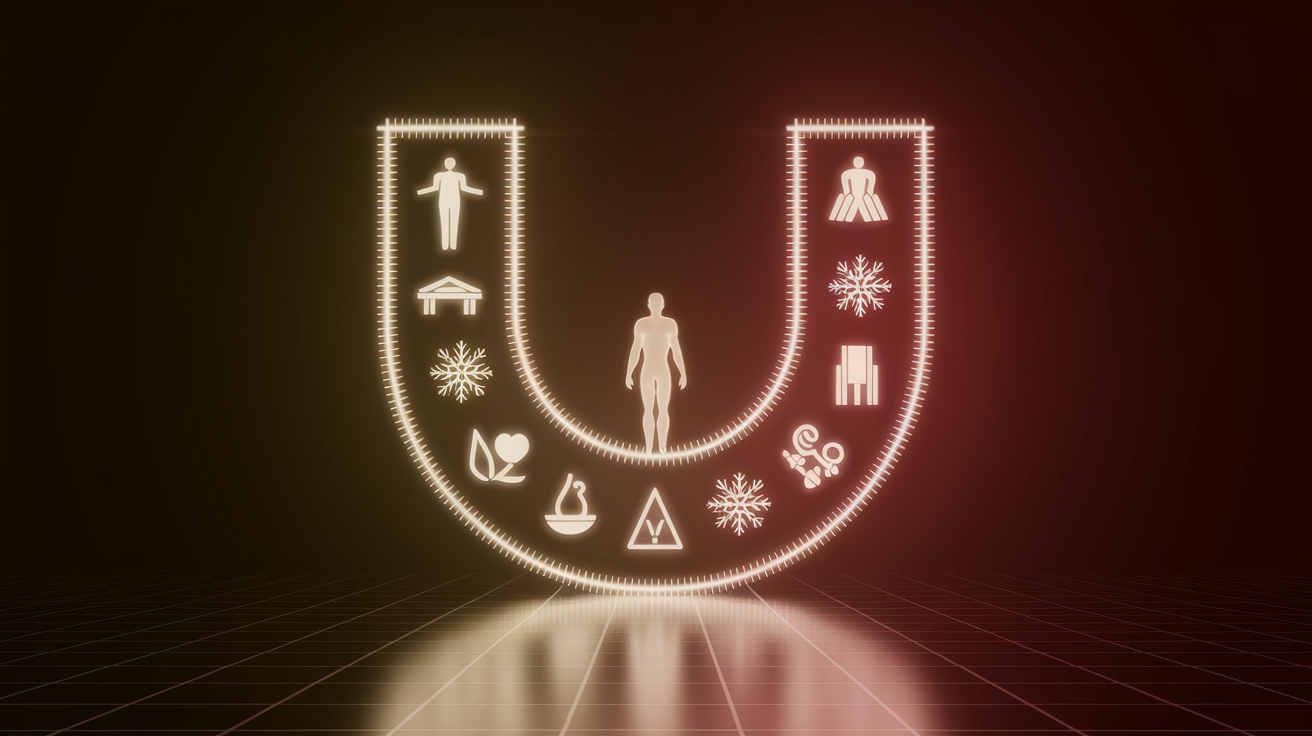
Hormesis is what happens when a small, manageable dose of stress makes your body stronger instead of weaker. It’s the biological version of “what doesn’t break you makes you more capable.” A brief, controlled challenge pushes your system just enough to trigger adaptation, while too much of that same stressor tips into harm. That’s hormesis in a nutshell, and it’s built on an old toxicology idea: the dose makes the poison.
That relationship between dose and effect isn’t a straight line. It follows a J or U shaped curve. At low doses, the stressor stimulates beneficial changes. As the dose climbs, those benefits plateau, then reverse, and higher doses start to inhibit function or cause damage. Somewhere in the middle sits your own sweet spot, the amount of stress that’s enough to prompt adaptation but not so much that it overwhelms your body’s ability to recover. That sweet spot isn’t fixed, either. It shifts depending on your health status, your recovery capacity, and even what day it is.
So what does a well dosed stressor actually do for you? Research and clinical observation point to several categories of benefit, though these outcomes depend heavily on the stressor, the dose, your current health, and how well you recover afterward.
- Stronger cellular resilience, helping cells tolerate future challenges with less disruption
- Activation of repair mechanisms that clean up and restore damaged cellular components
- Hormone regulation that supports more stable energy and stress responses over time
- Immune support, potentially sharpening the body’s ability to respond to threats
- Metabolic improvements, including better handling of blood sugar and energy use
- Improved physical conditioning, from cardiovascular capacity to muscular endurance
None of these are guarantees. They’re potential outcomes that show up more reliably when the dose is appropriate and recovery is solid.
In everyday life, this plays out through a handful of familiar practices. Exercise, intermittent fasting, sauna use, and cold exposure are the most commonly discussed hormetic stressors. Each one works through a slightly different mechanism, and each comes with its own dosing considerations, which we’ll get into later.
From Temporary Stress To Adaptive Recovery
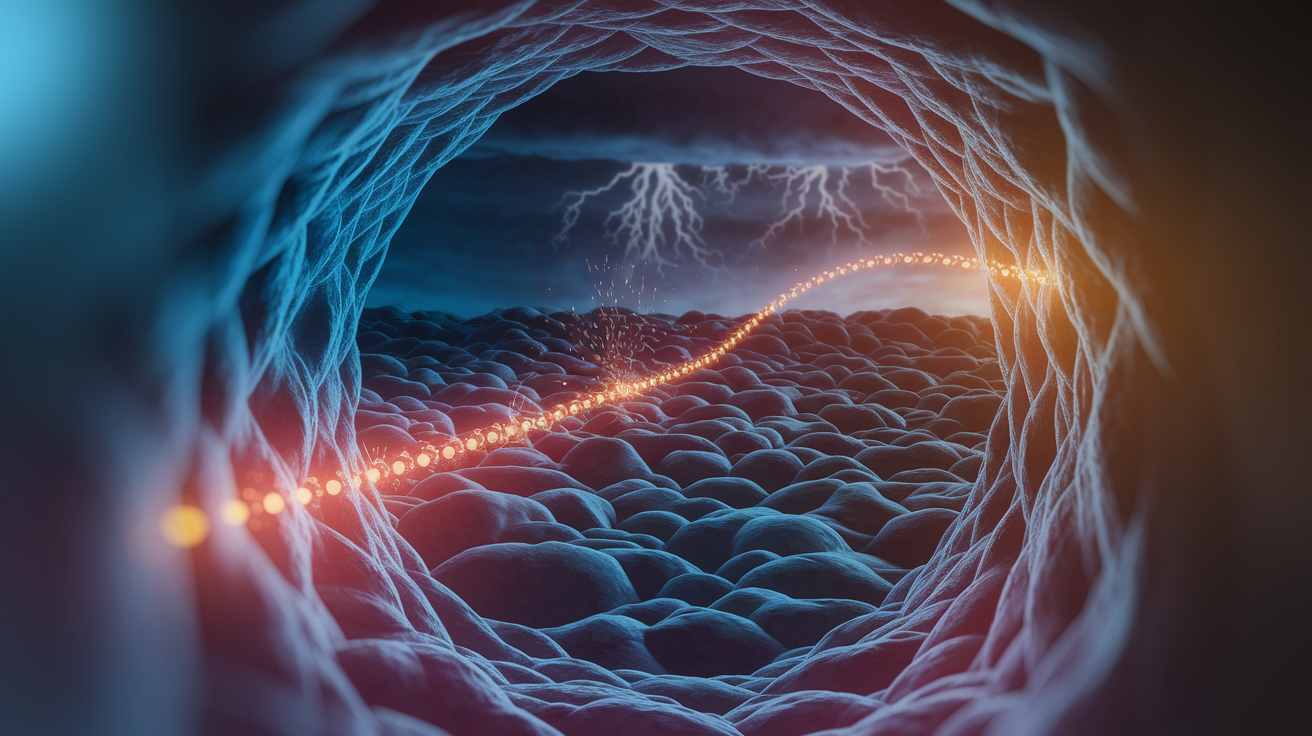
Hormesis follows a pretty simple sequence, even though what’s happening inside your cells is complex. First, a manageable stressor creates a temporary disturbance in your body’s normal balance. Second, that disturbance generates a biological signal. Third, your body responds to that signal by initiating an adaptive response. Fourth, and this part matters as much as the stress itself, sufficient recovery time allows that adaptation to actually stick. Skip the recovery step and the whole sequence falls apart.
Here’s the part that surprises people: a small, temporary rise in reactive oxygen species isn’t automatically a bad thing. Reactive oxygen species get a bad reputation because, in large or constant amounts, they can damage cells. But at low, short lived levels, they act more like messengers than vandals. This is called redox signaling. Think of it like a smoke detector that goes off briefly during cooking rather than a full house fire. The brief signal tells your body something happened, and your body listens.
That signal doesn’t just fade away quietly. It can shift gene expression, flipping switches that tell cells to ramp up their defenses. This can mean strengthening antioxidant capacity so future stress does less damage, or kicking off broader maintenance work inside the cell to clear out and repair what’s been affected. The exact machinery behind this gets covered next, but the big picture is this: a small signal can lead to a disproportionately useful response, assuming the dose stays in that manageable range.
And that’s really the dividing line that matters here. Brief, recoverable stress is fundamentally different from stress that’s repeated too often or allowed to become chronic. When stress keeps showing up before the body fully recovers, it stops being a helpful nudge and starts overwhelming protective systems. Inflammation can linger longer than it should. Resilience, instead of building up, starts eroding. The same stressor that helps in short, well spaced doses can hurt when it never lets up.
Key Molecular Pathways In The Hormetic Response
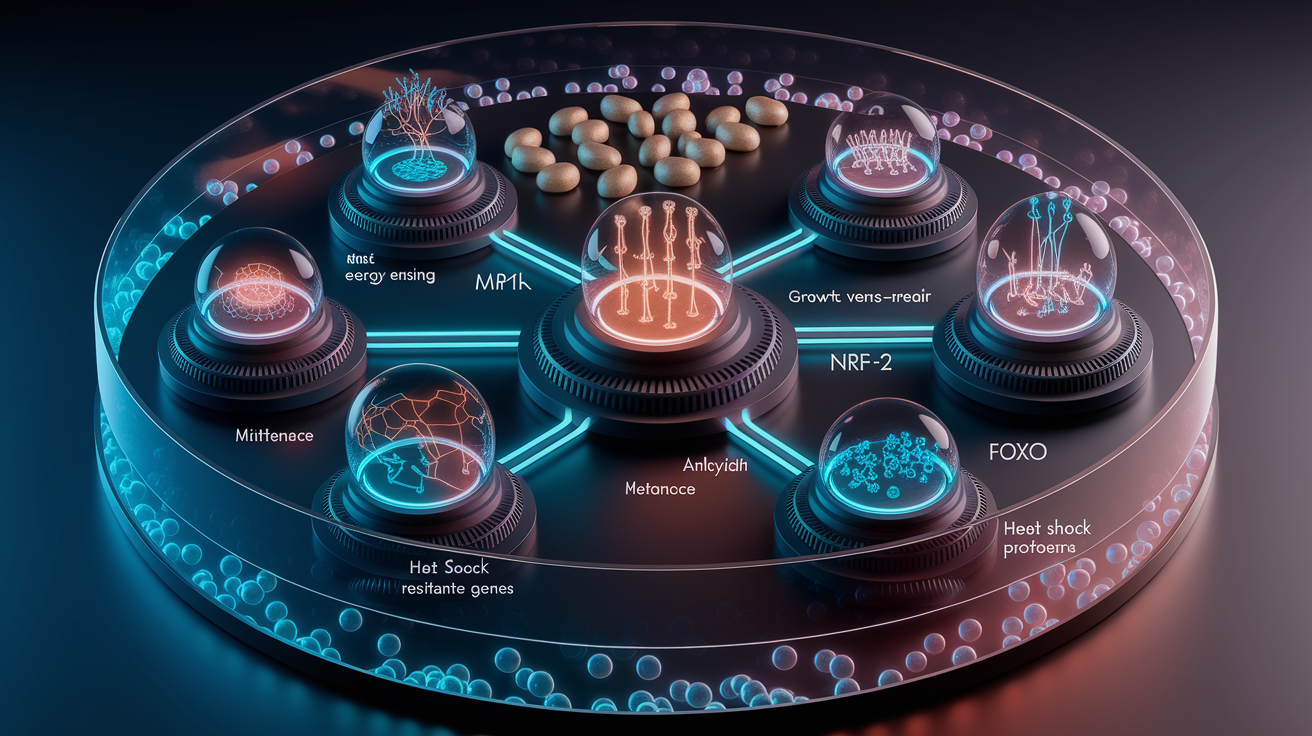
A stress signal alone doesn’t make you stronger. It’s what your body does with that signal that counts, and that comes down to a handful of molecular pathways controlling how cells use energy, repair themselves, and manage long term maintenance. Understanding these pathways, even at a basic level, helps explain why dosing and recovery matter so much.
Two of the most talked about players here are AMPK and sirtuins, along with a third regulator called mTOR. AMPK acts like an energy sensor. When cellular energy runs low, say during fasting or a hard workout, AMPK gets activated and nudges the body toward energy conserving, repair focused processes. Sirtuins work alongside this, helping regulate stress responses and supporting cellular maintenance over time. mTOR, meanwhile, acts as a kind of traffic coordinator, balancing the push toward growth against the need for repair and cleanup. When mTOR activity shifts down temporarily, it tends to favor maintenance over growth, which fits well with the rest periods that follow hormetic stress.
Another key piece of this puzzle is NRF2, which regulates the body’s own antioxidant and detoxification enzymes. This is worth sitting with for a second: NRF2 isn’t about swallowing antioxidant supplements. It’s about triggering your body to make its own, internally, in response to a manageable challenge. Alongside NRF2, FOXO transcription factors control genes tied to stress resistance, repair, and cell survival. Together, these two systems represent the body building its own defenses from the inside rather than relying on something external.
Finally, two more mechanisms round out the picture: heat shock proteins and mitochondrial biogenesis. Heat shock proteins act like quality control inspectors, identifying proteins that have become misfolded or damaged, then either helping stabilize them or marking them for removal. Mitochondrial biogenesis, often triggered by exercise, increases the number and capacity of mitochondria, the structures that help produce cellular energy. Together, these pathways show the same pattern again and again:
Final Words
We showed that manageable, short stress can nudge your body to adapt, while bigger or chronic stress can harm. You saw the J- or U-shaped dose-response, the personal “sweet spot,” and common hormetic tools like exercise, sauna, cold, and short fasts.
You also read how a stressor sparks signals, how cells shift gene activity, and why recovery matters: adaptation needs stress then rest.
Try one small, trackable test this week and watch sleep, energy, or resting heart rate. These hormetic stress benefits are often subtle but real when you dose them right. Small experiments add up.
FAQ
Q: What hormone gets rid of stress?
A: No single hormone “gets rid” of stress. Oxytocin and endorphins often lower stress and promote calm, while cortisol rises during stress. Nervous-system balance and recovery also matter for reducing stress.
Q: How to relieve chronic stress and anxiety?
A: To relieve chronic stress and anxiety, track triggers and test small changes: consistent sleep, regular moderate exercise, focused breathing, short recovery-focused stressors, social connection, and seek professional help if severe.
Q: Is fasting a form of hormesis and how do you trigger hormesis?
A: Fasting can be a hormetic stressor, and you trigger hormesis with brief, manageable challenges—intermittent fasting, moderate exercise, short heat or cold exposures—followed by adequate recovery so adaptation can occur.