



Is your low energy just normal tiredness or a deeper fatigue that won’t quit?
People often shrug it off and miss a treatable problem.
This short guide points out the key clues—how tiredness lifts with rest while fatigue lingers despite sleep—so you can spot patterns fast.
You’ll get clear symptoms to watch for, simple self-check steps, and a practical rule for when to talk with a clinician.
Think of it as a quick test to decide whether rest will help or you need to get checked.
Key Differences Between Feeling Tired and Experiencing Fatigue

Tiredness is that temporary energy dip almost everyone knows. You get drowsy, your focus slips, and your body’s basically asking for a break. Here’s the pattern: a solid night of sleep or even a quick nap usually brings you back. Tiredness makes sense when you look at what you’ve been doing. Late night? Long workout? Busy week? Your body’s giving you a natural signal to rest, and when you actually rest, the signal fades.
Fatigue’s different. It’s persistent and runs deeper. You can sleep eight hours and still wake up feeling completely drained. You lie there wishing for energy that just never shows up, and you start noticing that your motivation, focus, and physical strength all feel reduced at once. Fatigue doesn’t line up with your activity level in any logical way. It hangs on, day after day, messing with your work, relationships, and the basic stuff you need to do. Rest doesn’t fix it.
Why does this distinction matter? Because tiredness is normal and reversible, while fatigue often points to something chronic, medical, or systemic that actually needs attention.
Core differences at a glance:
Duration: Tiredness clears in hours or one good night. Fatigue lingers for weeks or months.
Response to rest: Tiredness improves when you sleep or take downtime. Fatigue sticks around despite adequate rest.
Impact on function: Tiredness slows you down temporarily. Fatigue impairs your ability to handle normal daily activities.
Motivation and cognition: Tiredness makes you sleepy. Fatigue brings low motivation, brain fog, and trouble concentrating even when you’re not necessarily sleepy.
Common Symptoms That Distinguish Tiredness From Fatigue
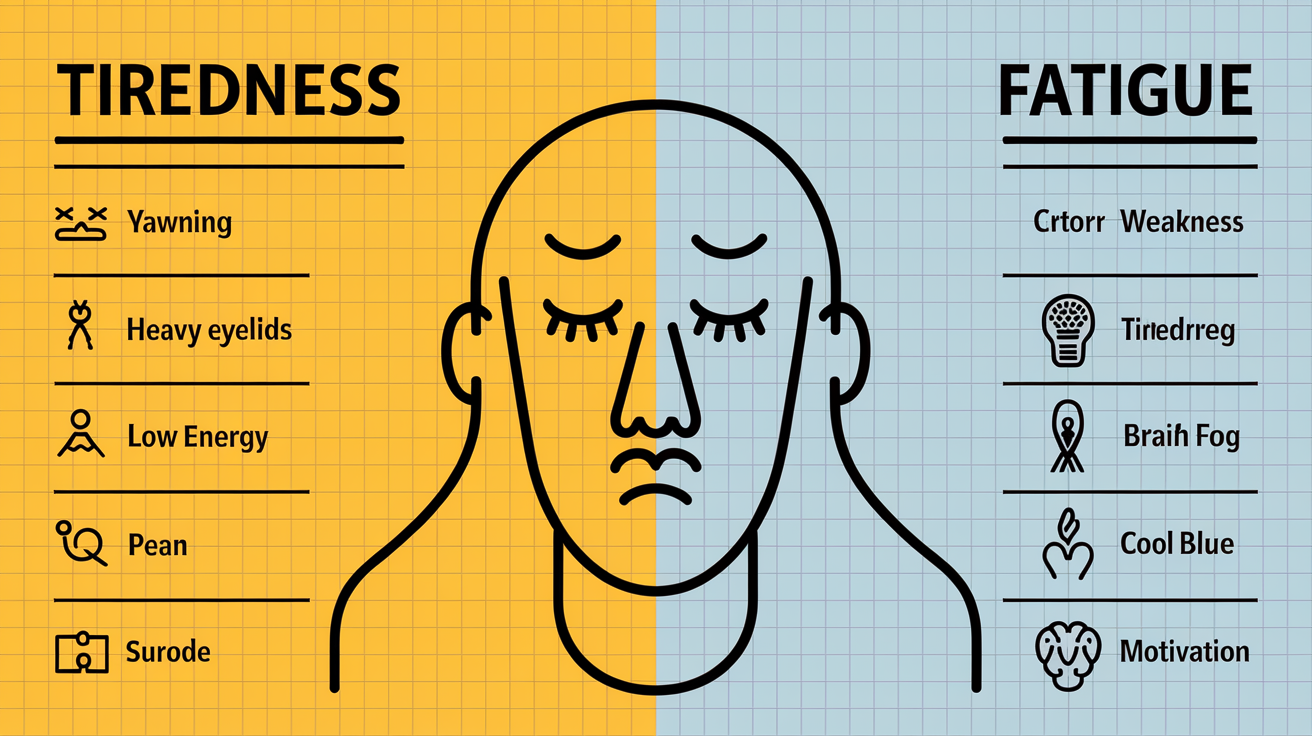
When you’re tired, the main complaint’s usually sleepiness. You yawn a lot, your eyelids feel heavy, and if you sit still long enough you might doze off. Your alertness drops, especially in the afternoon or late evening, but your body still feels capable. Someone asks you to get up and walk around? You can. You might not want to, but physically you’re able.
Fatigue presents differently. Your muscles feel weak or heavy, like you’re moving through water. Concentration becomes a real struggle. Reading a paragraph or following a conversation takes effort. Tasks that used to be automatic (making breakfast, answering emails, getting dressed) feel exhausting. You’re not necessarily sleepy in the “I could fall asleep right now” sense, but your entire system feels drained of fuel.
The frequency and persistence also differ. Tiredness comes and goes based on your recent sleep and activity. Fatigue is a constant undercurrent, present most days, often from the moment you wake up. It’s the difference between “I’m dragging today” and “I haven’t felt like myself in weeks.”
| Symptom | More Common In |
|---|---|
| Sleepiness, yawning, droopy eyelids | Tiredness |
| Muscle weakness, heavy limbs | Fatigue |
| Occasional sluggishness, low alertness | Tiredness |
| Persistent low energy, even after rest | Fatigue |
| Brain fog, difficulty concentrating | Fatigue |
| Reduced motivation to start tasks | Fatigue |
Duration and Recovery: How Long Each Feeling Typically Lasts

Tiredness operates on a short clock. Miss a few hours of sleep one night? You feel it the next day. But catch up that evening, and by morning you’re back to baseline. The timeline’s usually measured in hours. A 20 minute nap, an early bedtime, or a lazy Sunday can reset your system.
Fatigue runs on a much longer timeline. It might start subtly. Maybe you notice you’re dragging for a week, then two weeks, then a month. Instead of improving, it stays or gets worse. Even when you sleep well, you wake up unrefreshed. Recovery isn’t a matter of one good night. It requires identifying and addressing an underlying cause, which can take weeks or months.
Tracking duration helps you tell the difference. Here’s how:
Keep a simple daily log. Rate your energy each morning (1 to 10 scale) and note how many hours you slept the night before. Do this for two weeks.
Watch for the pattern. If your energy bounces back on days when you sleep longer, you’re likely tired. If energy stays low even after consistent, adequate sleep, that’s fatigue.
Note interference with daily life. If you’re regularly missing work, canceling plans, or struggling with basic self care for more than two weeks, move past “I’m just tired” and consider that you might be fatigued.
Underlying Causes of Tiredness vs Causes of Fatigue

Tiredness usually has a clear story. You stayed up late finishing a project, traveled across time zones, had a restless night with a sick child, or pushed hard at the gym. Your body used up energy, and now it’s asking for replenishment. Short sleep, physical exertion, mental stress, or temporary disruptions to your routine are typical culprits. When you remove the trigger (catch up on sleep, take a rest day), the tiredness lifts.
Fatigue rarely has such a neat explanation. Instead of “I stayed up late,” the story’s more like “I’ve been sleeping eight hours a night for months and still feel wiped out.” Fatigue often traces back to chronic or medical conditions that quietly interfere with your body’s ability to produce, deliver, or use energy. These include anemia, where your blood doesn’t carry enough oxygen. Thyroid disorders, which disrupt your metabolic engine. And diabetes, where blood sugar swings leave you drained.
Chronic infections or post infectious syndromes are another common thread. You might have recovered from the acute phase of an illness (fever gone, symptoms resolved), but weeks later the fatigue remains. This is the hallmark of conditions like chronic fatigue syndrome (ME), often triggered by viral infections.
Autoimmune disorders, sleep apnea that fragments your rest without you knowing it, depression that saps both energy and motivation, and nutritional deficiencies (especially low iron) all sit on the fatigue side of the equation. These aren’t one night problems. They’re systemic, and they need investigation.
Medical conditions frequently linked to persistent fatigue:
Anemia (low iron or other causes)
Hypothyroidism (underactive thyroid)
Diabetes (type 1 or type 2)
Sleep apnea
Chronic fatigue syndrome (ME) or post infectious fatigue
When Tiredness May Be Normal vs When Fatigue May Signal a Health Issue

Feeling tired after a demanding week, a late night, or a hard workout is completely normal. Your body’s responding appropriately to a temporary challenge, and the solution’s straightforward: rest, sleep, and recovery time. If you know the reason you’re tired and a night or two of good sleep brings you back, you’re in normal territory. Tiredness is your body communicating clearly, and you can trust that response.
Fatigue that persists for more than two to four weeks without a clear cause is a different signal. When adequate sleep, rest, and reduced workload don’t restore your energy, your body’s telling you something deeper is going on. This is especially true if the fatigue’s severe enough to interfere with work, social life, or basic self care. Red flags include fatigue accompanied by other unexplained symptoms: significant weight loss or gain, shortness of breath, persistent muscle weakness, or cognitive changes that worry you.
Urgent medical evaluation is warranted when fatigue arrives alongside chest pain, fainting, a high fever that won’t break, sudden confusion, or any rapid functional decline. These combinations can point to acute illness or emergencies that need immediate attention. But even without dramatic symptoms, persistent fatigue deserves a careful workup. Early detection of conditions like anemia, thyroid disease, or diabetes can prevent complications and significantly improve your quality of life.
Red flag symptoms that indicate you should see a clinician:
Fatigue lasting longer than two to four weeks despite improved sleep and reduced activity.
Unexplained weight loss or gain (more than a few pounds without trying).
Shortness of breath, chest discomfort, or heart palpitations.
Persistent muscle weakness that makes routine tasks difficult.
Severe brain fog, memory problems, or confusion that interferes with work or safety.
Simple Self Assessment Steps to Determine What You’re Feeling
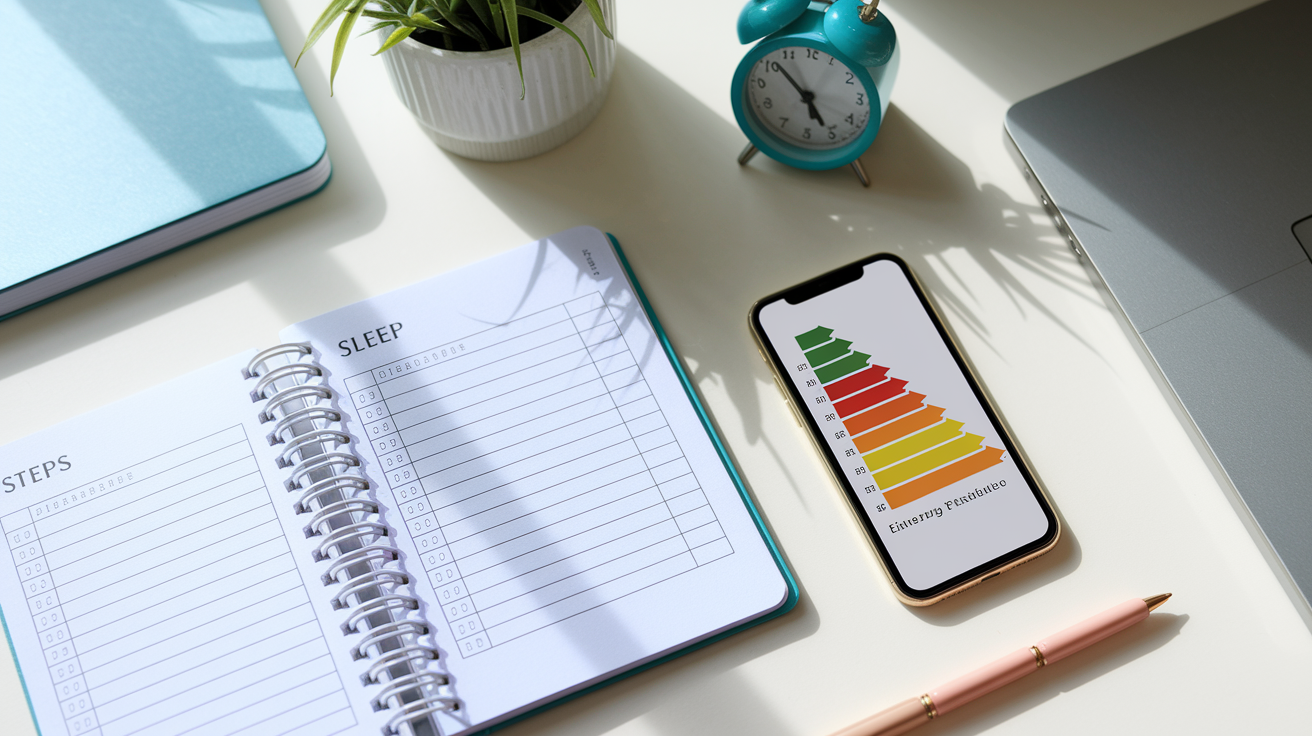
Start by paying attention to the relationship between rest and recovery. Ask yourself: Does a full night of sleep actually make a difference? If you go to bed exhausted and wake up feeling refreshed most of the time, you’re likely dealing with normal tiredness. If you sleep eight hours and still wake up feeling like you haven’t slept at all, or if you need to nap during the day just to get through, that’s a fatigue pattern.
Track the timeline and your daily function. Write down your energy level each morning and evening for one to two weeks, along with how many hours you slept, any major stressors, and whether you were able to complete your usual tasks without significant difficulty. Patterns will emerge. Either your energy rebounds with rest (tiredness), or it stays flat no matter what you do (fatigue).
Four steps to evaluate what you’re experiencing:
Log your sleep. Record bedtime, wake time, and sleep quality (restful, restless, or fragmented) for seven to fourteen days.
Rate your daily energy. Use a simple 1 to 10 scale each morning. Note whether weekends or rest days restore your score.
Identify triggers. Write down anything that might explain low energy that day: late night, skipped meals, high stress, intense exercise, or illness.
Assess functional impact. Can you work, drive, care for others, and manage daily life without struggle? If the answer’s often “no,” and symptoms persist beyond two weeks, consider that you may be fatigued and should consult a healthcare professional.
Final Words
Start by tracking sleep, daily energy, mood, and how rest affects you. Note how long low energy lasts and whether concentration or motivation are slipping.
Tiredness often clears after rest or a good night’s sleep. Fatigue tends to stick around, makes tasks harder, and may point to a medical issue. Use the red flags and simple tests in the article.
Using the self-checks here will clarify the difference between tired and fatigued feeling and point to one small step to try. Keep testing for a week and celebrate any improvement.
FAQ
Q: How do you tell if you are fatigued or just tired?
A: You can tell if you are fatigued or just tired by seeing if low energy lasts despite rest, saps motivation and focus, and limits daily tasks. Tiredness usually improves after sleep.
Q: What does Wegovy fatigue feel like?
A: Wegovy fatigue feels like persistent low energy, brain fog, and heavier-than-usual muscles that make daily tasks harder. It often shows up soon after starting the medication. Talk with your prescriber if it’s severe.
Q: What are four warning signs of fatigue?
A: Four warning signs of fatigue are: energy that won’t improve with rest, trouble concentrating or remembering, reduced ability to do normal tasks or work, and persistent muscle weakness or excessive daytime sleepiness.
Q: What vitamins help with fatigue?
A: Vitamins that help with fatigue include vitamin B12 and vitamin D, and folate when low. These may ease tiredness if you’re deficient—get blood tests and talk with your clinician before starting supplements.