

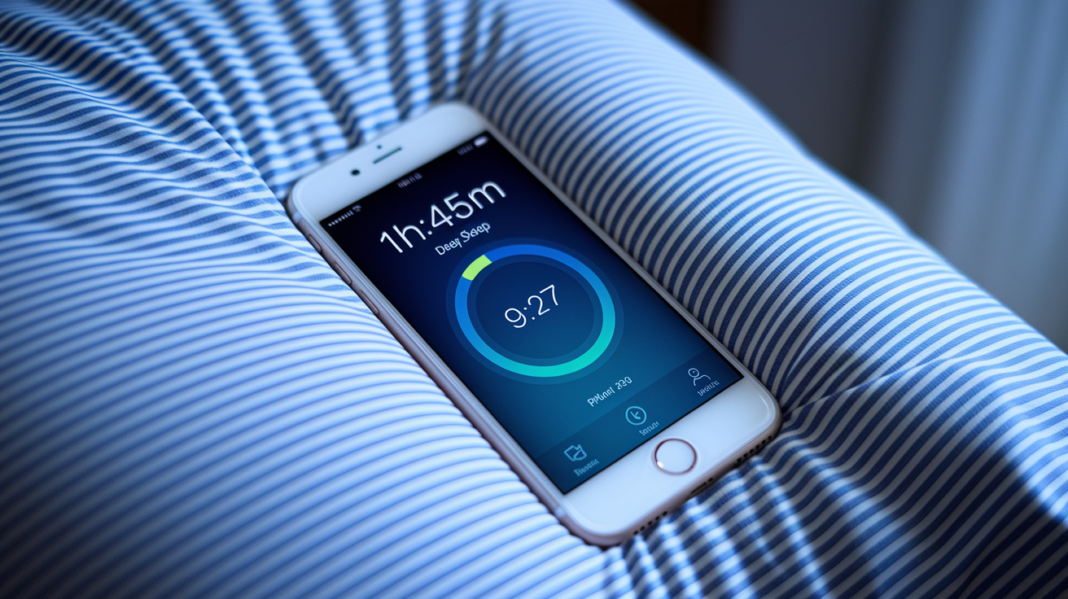

Think you need hours of deep sleep every night to feel recharged? Not quite.
Most healthy adults get about 1 to 2 hours of deep sleep — roughly 15 to 25% of total sleep time.
A practical midpoint is 20%, and what matters more is your two- to four-week trend and how you feel during the day.
In this post we’ll reveal healthy ranges by total sleep and age, show how to calculate your percentage from a tracker, and offer simple experiments to test and improve your deep-sleep average.
How Much Deep Sleep Is Normal for an Adult?

Most healthy adults land somewhere around 1 to 2 hours of deep sleep per night, roughly 15 to 25% of total sleep time. That range shows up again and again in sleep research, and it’s a useful anchor if you’re staring at a tracker app trying to figure out what your numbers actually mean.
A practical midpoint to keep in mind is 20%. It’s not a pass or fail line, though. According to “How Much Deep Sleep Do You Need, Really?”, which draws on guidance from major health bodies and clinical research, most adults should aim for 7 to 9 total hours of sleep, while adults over 64 generally do fine with 7 to 8. Deep sleep is just one slice of a bigger picture. How you feel during the day, sharp, steady, not dragging by 2 p.m., often tells you more than a single percentage ever will.
| Total Nightly Sleep | 15% Deep Sleep | 20% Deep Sleep | 25% Deep Sleep |
|---|---|---|---|
| 7 hours | 63 minutes | 84 minutes | 105 minutes |
| 8 hours | 72 minutes | 96 minutes | 120 minutes |
| 9 hours | 81 minutes | 108 minutes | 135 minutes |
Want to check your own numbers? Take your tracker’s estimated deep-sleep minutes, divide by your total sleep minutes, then multiply by 100. That’s your personal percentage.
One low night isn’t really worth chasing. What matters more is the trend across two to four weeks. If your average sits consistently within these ranges, and you’re functioning well during the day, that’s a good sign your sleep is doing its job.
What Is Deep Sleep, and Where Does It Fit in the Sleep Cycle?

Deep sleep is stage N3 of non-REM sleep, the deepest part of your night. This is the stage where waking someone up feels like dragging them up from underwater, groggy, disoriented, needing a minute just to remember where they are. Brain activity during N3 slows way down and gets dominated by big, slow delta waves, which is why researchers often call it slow-wave sleep.
| Sleep Stage | Common Description | Typical Duration per Cycle | Main Characteristics |
|---|---|---|---|
| N1 | Light, transitional sleep | 1 to 7 minutes | Drifting off, easily woken, muscles relax |
| N2 | Light sleep, larger share of the night | 10 to 25 minutes early, longer later | Heart rate and body temperature drop, brief sleep spindles |
| N3 | Deep, slow-wave sleep | 20 to 40 minutes | Delta waves, hard to wake, physical restoration |
| REM | Dream-heavy sleep | 10 to 60 minutes, lengthening overnight | Vivid dreams, fast brain activity, memory processing |
Here’s something worth knowing. Not every tracker uses the same language as sleep clinics do. Some devices lump things together or label N2 in ways that sound “deeper” than it clinically is. So if your app’s numbers don’t quite match what a sleep lab would report, that’s usually just a labeling difference, not a red flag.
N3 and REM do very different jobs. N3 leans hard into physical restoration, tissue repair, and that slow, steady delta-wave rhythm. REM is where dreaming gets vivid and your brain works through memory and emotional processing, with brain-wave patterns that look almost like being awake.
You don’t stay in deep sleep for hours straight. Your night is built from four to six cycles, each about 90 to 110 minutes long, and your total deep sleep adds up across all of them. Most of your N3 time tends to cluster in the earlier cycles, with REM taking over more of the later ones as the night goes on.
How Does Normal Deep Sleep Change by Age?

A healthy deep sleep number doesn’t mean the same thing at every age. Deep sleep is typically at its highest in childhood, then gradually declines as we get older. That’s expected, not alarming.
| Age Group | Recommended Total Sleep | Typical Deep-Sleep Pattern | Interpretation |
|---|---|---|---|
| Infants | Up to about 17 hours/day | Substantial deep sleep during rapid growth | High deep-sleep need supports early development |
| Children | Varies by age, generally 9 to 12+ hours | Deeper, higher-amplitude delta waves than adults | More absolute N3 time, tied to growth |
Final Words
Aim for 1 to 2 hours of deep sleep, roughly 15 to 25% of sleep. Think of 20% as a midpoint, not a pass/fail—total sleep and daytime function matter most.
Wearables give estimates. Use them to spot multiweek patterns, and remember age, health, medications, and lifestyle all shape deep sleep. Try one small, trackable change for two to four weeks.
Track averages, especially the average deep sleep per night, and note how rested you feel. If symptoms persist, see a clinician. Small tests often produce clearer sleep and better days.
FAQ
Q: Is 25 or 40 minutes of deep sleep enough?
A: Twenty-five or forty minutes of deep sleep is generally low for a healthy adult. Most adults get about 1–2 hours (15–25% of total sleep). Focus on multiweek trends and daytime energy for context.
Q: Why is my deep sleep so low?
A: Your deep sleep may be low because you’re not getting enough total sleep, have an irregular schedule, late caffeine or alcohol, stress or pain, a sleep disorder, certain medications, aging, or an uncomfortable bedroom.
Q: How do I increase my deep sleep?
A: You can increase deep sleep by allowing enough time in bed, keeping consistent bed and wake times, getting morning daylight, avoiding late caffeine or alcohol, exercising earlier, cooling and darkening the room, and using a repeatable wind-down.