


Is your stress a blaring alarm or a slow-burning fire that never quits?
Acute stress is the alarm, quick, intense, and usually over when the event ends.
Chronic stress is the slow burn, it keeps you on edge day after day and wears your body down.
This post explains the key differences, how long each lasts, what to watch for in your body and day, and simple, trackable steps to test so you can spot patterns and start to feel better.
Key Differences at a Glance
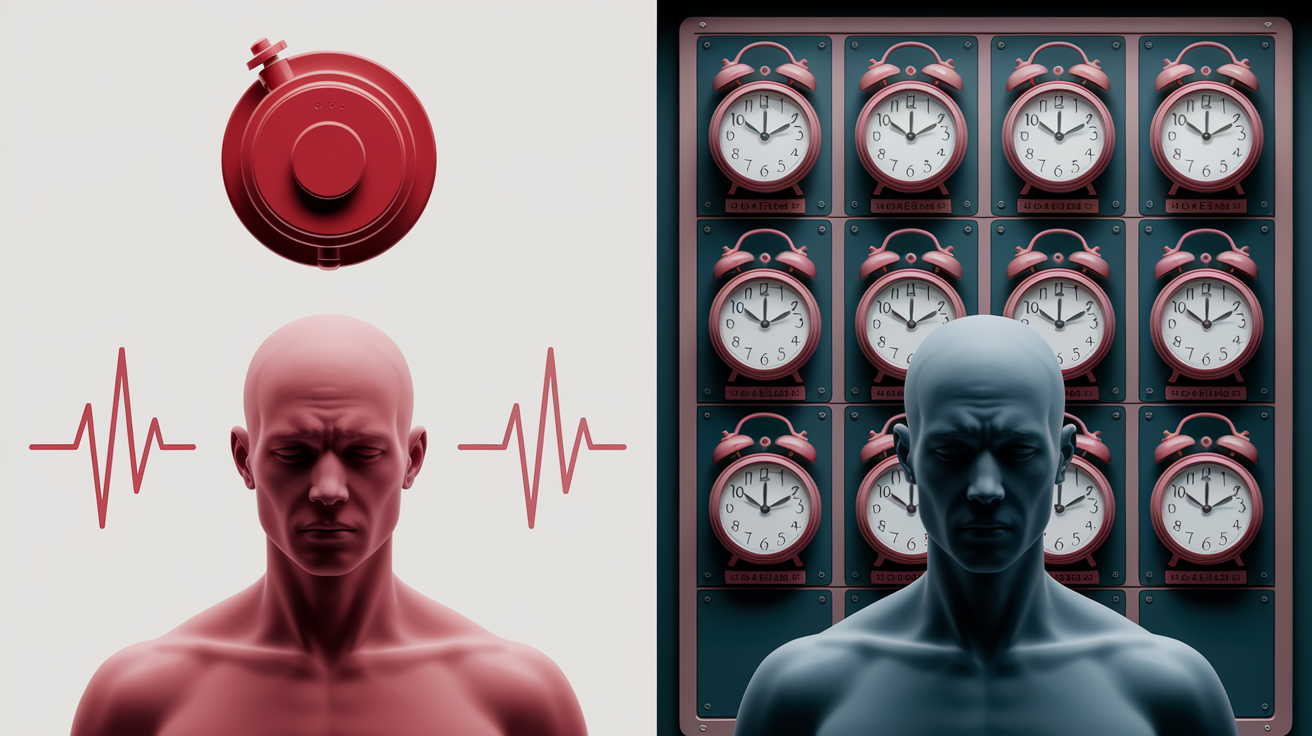
Acute stress is your body’s rapid, temporary response to a specific demand or threat right in front of you. Think of it like a smoke alarm going off: loud, sudden, and meant to fade once the danger passes.
Chronic stress works differently. It’s persistent or repeatedly triggered stress that doesn’t let your body settle back to baseline. Instead of one alarm, it’s more like a system that keeps re-triggering before you’ve had a chance to reset. The real difference isn’t how intense things feel in the moment. It’s duration, recovery, and how much the stress starts bleeding into your daily life and long-term health.
| Stress Type | Typical Duration | Common Causes | Symptom Pattern | Recovery Pattern | Likely Health Effect |
|---|---|---|---|---|---|
| Acute Stress | Minutes to hours, occasionally days | Deadlines, interviews, public speaking, difficult conversations, near-miss accidents | Brief, event-linked physical and emotional changes | Usually resolves after the event ends | Generally adaptive, may briefly disrupt functioning |
| Chronic Stress | Weeks to years | Job pressure, caregiving, financial strain, relationship conflict, chronic illness, unresolved trauma | Persistent or recurring symptoms across daily life | Limited recovery between demands | Associated with broader physical and mental health risks |
Occasional acute stress is a normal, even useful, part of being human. It’s what happens when something unexpected shows up and your body responds. But when symptoms stick around after the trigger is gone, start getting in the way of your day, or you never quite feel like you’ve recovered, that’s leaning more toward chronic stress. Either way, this comparison is meant as a starting point for noticing patterns, not a tool for diagnosing yourself with a specific condition.
Acute and Chronic Stress Triggers and Real Life Examples

The easiest way to figure out what kind of stress you’re dealing with isn’t by rating how bad it feels. It’s by looking at what triggered it and whether you actually got a chance to recover afterward.
Common Acute Stress Scenarios
Acute stress tends to show up around specific, time-limited events. A near miss on the highway. Standing up to give a speech. An unexpected hard conversation with your partner. An exam you didn’t study enough for. A deadline that’s suddenly tomorrow instead of next week. Researchers sometimes use the N.U.T.S. framework to explain why these moments hit so hard: Novelty (something unfamiliar), Unpredictability (you didn’t see it coming), Threat to the ego (your competence or image feels on the line), and poor Sense of control (you can’t fully steer the outcome). A job interview often checks all four boxes at once, which is part of why it can feel so intense even though it only lasts twenty minutes.
Common Sources of Chronic Stress
Chronic stress usually doesn’t trace back to one single moment. It builds from ongoing pressure that doesn’t have a clear end date. Prolonged financial strain, a workload that never lightens, long-term caregiving for a parent or child, relationship conflict that keeps resurfacing, chronic illness, unsafe housing, or unresolved trauma can all fall into this category. Sometimes it’s one dominant issue. Often it’s several overlapping demands stacking on top of each other.
Where Episodic Acute Stress Fits
There’s a middle ground worth naming: episodic acute stress. This is when short term stress spikes happen again and again, usually tied to an overloaded or chaotic routine. The difference from chronic stress comes down to recovery. Episodic acute stress involves real dips between the spikes, even if those dips are brief. Chronic stress leaves little meaningful recovery at all. Watch for patterns like recurring irritability, anxiety, impatience, or stress headaches that show up in clusters.
So ask yourself: does the trigger have a clear endpoint? Do your symptoms actually settle once it’s over? And do you feel genuinely restored between episodes, or just running on empty until the next one hits?
Physiological Differences Between Acute and Chronic Stress
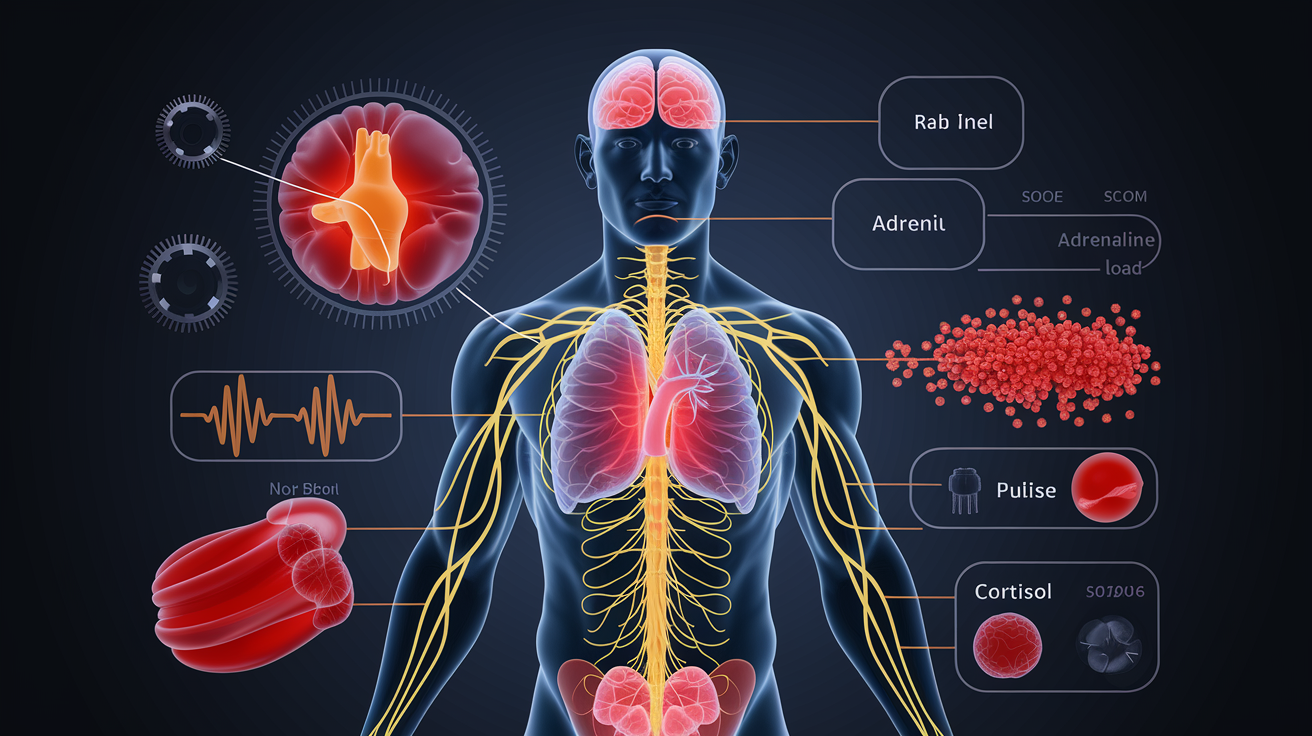
Acute and chronic stress often feel similar at first because they’re running through the same internal wiring. What changes is what happens when that wiring gets triggered over and over without a break.
The Acute Fight or Flight Response
Here’s the basic sequence. Your brain perceives a threat, real or not. The hypothalamus sends a signal that fires up the sympathetic nervous system, and your adrenal glands release adrenaline and noradrenaline almost instantly. Heart rate climbs. Breathing quickens. Blood pressure rises. Blood sugar increases to fuel your muscles. At the same time, the HPA axis (hypothalamic pituitary adrenal axis) kicks in, prompting cortisol release to help manage and sustain the response. In short bursts, this can actually work in your favor, sharpening focus, strengthening memory formation, and improving problem solving under pressure. Push it too far though, and performance starts to slip instead of improve.
Prolonged Activation and Allostatic Load
Chronic stress repeatedly fires up these same systems, but without the recovery window your body needs. Over time, this creates what’s called allostatic load, essentially cumulative wear from constantly adapting to demand. Cortisol regulation can become disrupted. Your cardiovascular system stays under more sustained strain. Inflammatory signaling increases. Immune activity can become suppressed or oddly dysregulated. Metabolic processes start to drift off course too.
Infographic concept: Perceived threat → h
Final Words
Spot the pattern: a sharp stress spike tied to a clear event that settles is acute; stress that keeps coming, disrupts sleep and energy, and allows little recovery is chronic. This post defined both, gave common triggers and examples, explained short-term fight-or-flight versus long-term wear, and outlined symptom patterns, health risks, and practical coping steps.
Track stress and recovery for 1–2 weeks, note triggers and sleep, and try one small change. It’ll help you place yourself on the chronic stress vs acute stress spectrum and choose a doable next step.
FAQ
Q: What is the DSM-5 definition of acute stress reaction, and what is acute stress?
A: The DSM-5 defines acute stress reaction (acute stress disorder) as a clinical response to trauma occurring within days and lasting up to one month; acute stress more broadly is a rapid, temporary reaction to a specific threat.
Q: What are the four types of stress?
A: The four types of stress are acute (short-term event), episodic acute (frequent short spikes), chronic (long-lasting, ongoing pressure), and traumatic (severe response tied to a single traumatic event).
Q: What are the 5 warning signs that someone is chronically stressed?
A: Five warning signs of chronic stress are persistent fatigue, ongoing sleep problems, lasting low mood or anxiety, trouble concentrating or meeting daily responsibilities, and increased substance use or neglected self-care.