


Think eight hours in bed means you recovered?
Not necessarily. You can spend the night asleep and still wake up wired but tired.
Restorative sleep is the kind that actually repairs your body and clears your head, and you can spot it by patterns, not a single number.
This post lays out clear signs to watch for, like morning refreshment, steady daytime energy, and better workout recovery, plus simple tests you can try for a week to see if your nights actually help you recover.
How to Tell Whether Your Sleep Is Truly Restorative

Restorative sleep is deep and continuous enough to let your body actually repair itself. Not just clock hours in bed. It supports tissue repair, immune function, hormone regulation, memory consolidation, and a kind of nervous system reset that happens while you’re out cold. Here’s the tricky part though: no single number or app score proves you got it. It’s really a pattern you piece together from a few different clues. As restorative vs. nonrestorative sleep shows, spending eight hours in bed doesn’t guarantee you’ll wake up feeling recovered.
That said, there’s a useful quantitative snapshot worth keeping in mind. Most adults need somewhere between 7 and 9 hours a night. Sleep efficiency, the percentage of time in bed actually spent asleep, should sit at 85% or higher. Awakenings should be few and short. Morning alertness plus steady daytime energy should show up consistently, not just once in a while. Your best read on sleep quality comes from combining nighttime continuity, adequate duration, how you feel in the morning, how you function during the day, and how well your body bounces back physically.
So what does that actually look like? Here are eight signs worth watching for:
- Waking up feeling refreshed, not like you got hit by a truck.
- Becoming alert fairly quickly, without dragging through an hour of grogginess.
- Sustained daytime energy that doesn’t crash hard by midafternoon.
- Clear concentration, not that foggy headed feeling.
- Stable mood, without unexplained irritability or emotional swings.
- Minimal daytime sleepiness, meaning you’re not fighting to stay awake in meetings.
- Normal physical recovery after workouts or a physically demanding day.
- Few or brief nighttime awakenings, uninterrupted rest that doesn’t leave you tossing for long stretches.
One great night doesn’t tell you much on its own. What matters more is noticing these signs repeat across a week or two. That’s when you can trust the pattern instead of a single lucky, or unlucky, night.
How Sleep Stages Produce Restorative Rest

Sleep isn’t one steady state. It moves through a repeating cycle of stages, each doing different work. A full cycle runs about 90 minutes, though it can range from 80 to 120 minutes depending on the person and the night. Over a 7 to 9 hour window, you’ll typically pass through 4 to 6 of these cycles, and what happens in each one shifts as the night goes on.
N1: Transition Into Sleep
N1 is the brief, light doorway between wakefulness and sleep. It doesn’t last long, maybe a few minutes, and it’s easy to interrupt. A noise, a twitch, a partner shifting in bed, any of it can pull you right back out.
N2: Stable Light Sleep
N2 is where your body settles in more. Awareness of your surroundings drops, muscles relax further, and your brain starts producing short bursts of activity called sleep spindles. Consumer trackers often flag this stage, but they’re estimating based on movement and heart rate, not directly reading brain waves the way a lab would.
N3: Deep Slow Wave Sleep
N3, often just called deep sleep, is marked by slow, rolling delta waves. This is the stage most tied to physical repair, tissue regeneration, immune recovery, and growth hormone release. Your body does a lot of its rebuilding here, which is part of why deep sleep tends to dominate the earlier cycles of the night.
REM: Cognitive and Emotional Restoration
REM sleep is when dreaming ramps up and your brain gets busy with memory consolidation, learning, and emotional processing. REM usually kicks in about 1 to 1.5 hours after you fall asleep, with that first period lasting around 10 minutes.
As the night goes on, the balance shifts. Deep sleep periods shorten while REM periods stretch longer, especially in the last couple of cycles. This is exactly why cutting a night short doesn’t just mean less sleep overall. It disproportionately steals from those later REM heavy cycles, and fragmented sleep with frequent wake ups can prevent you from completing full cycles at all.
Healthy Ranges for Measurable Sleep Indicators
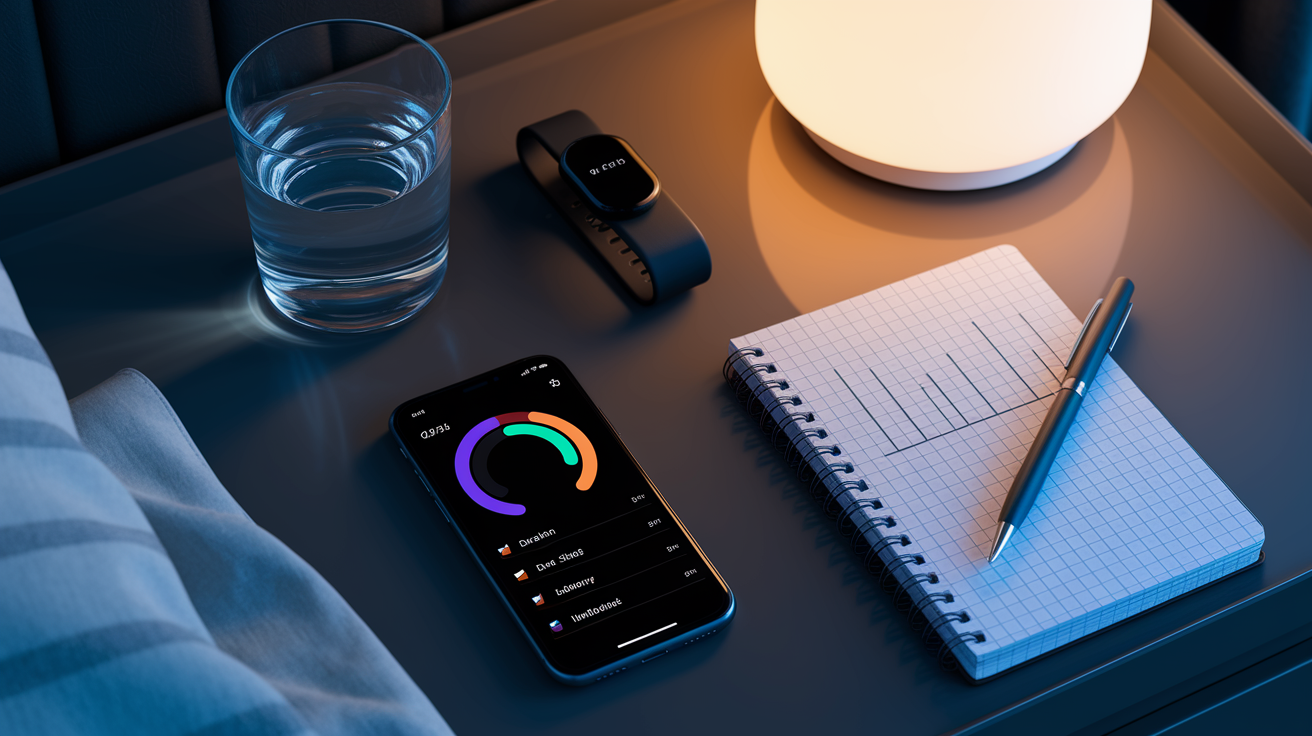
Beyond how you feel, there are measurable numbers that can back up, or question, your sense of how well you slept. These ranges are guides, not hard diagnostic lines, but they give you something concrete to track over time.
| Indicator | Useful Reference Range | What It May Suggest |
|---|---|---|
| Total sleep time | 7 to 9 hours | Adequate opportunity for full sleep cycles |
| Deep sleep | 13 to 23% of total sleep (about 60 to 110 minutes on an 8 hour night) | Physical repair and immune recovery are occurring |
| REM sleep | 20 to 25% of total sleep (about 90 to 120 minutes) | Memory consolidation and emotional processing are happening |
| Sleep efficiency | 85% or higher | Time in bed is mostly spent asleep, not awake |
| Sleep latency | Under 20 to 30 minutes | Falling asleep without excessive delay |
| Wake after sleep onset (WASO) | Under 20 to 30 minutes total | Few disruptions once you’re actually asleep |
Final Words
Start by checking the core signs — waking refreshed, steady daytime energy, clear thinking, and normal workout recovery — together with your sleep numbers.
We covered how sleep stages support repair and memory, healthy measurement ranges, tracking options, common disruptors, when to get checked, and a simple plan to test small changes.
Watch restorative sleep indicators across one to two weeks, tweak one or two habits at a time, and bring notes to a clinician if needed. Small, steady changes tend to add up.
FAQ
Q: How do I know if my sleep is restorative?
A: Knowing whether your sleep is restorative means waking refreshed and alert, keeping steady daytime energy, thinking clearly, recovering after exercise, and having only a few brief awakenings across several days.
Q: What is the 3-3-3 rule for sleep?
A: The 3-3-3 rule for sleep commonly describes a simple timing guideline: avoid caffeine, heavy meals, and alcohol about three hours before bed, and use a three-step wind-down to signal sleep time.
Q: Is 4 hours of restorative sleep a night good?
A: Four hours of restorative sleep a night is usually not enough for most adults; it often leaves you with reduced alertness, poorer recovery, and slower thinking. Aim for a consistent 7–9 hours.
Q: How to track restorative sleep?
A: Tracking restorative sleep means combining a one- to two-week sleep diary with wearable trends, noting total sleep, awakenings, morning alertness, daytime energy, and recovery, then reviewing weekly patterns.