

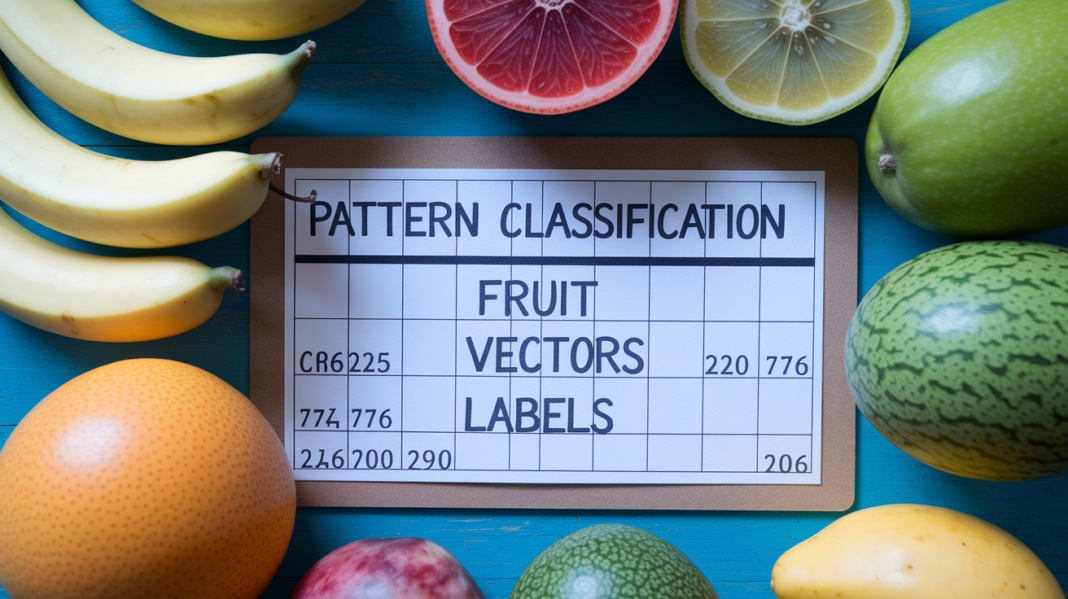

What if most guides on pattern classification are only telling half the story?
Pattern classification often means supervised learning, where models learn from labeled examples.
But it also covers unsupervised methods that spot natural groups when no answer key exists.
This post breaks down that difference, shows when each approach helps, and gives simple experiments you can try to spot patterns in your own data.
You’ll walk away able to pick a method and run a quick test.
How Do Supervised and Unsupervised Pattern Classification Differ?
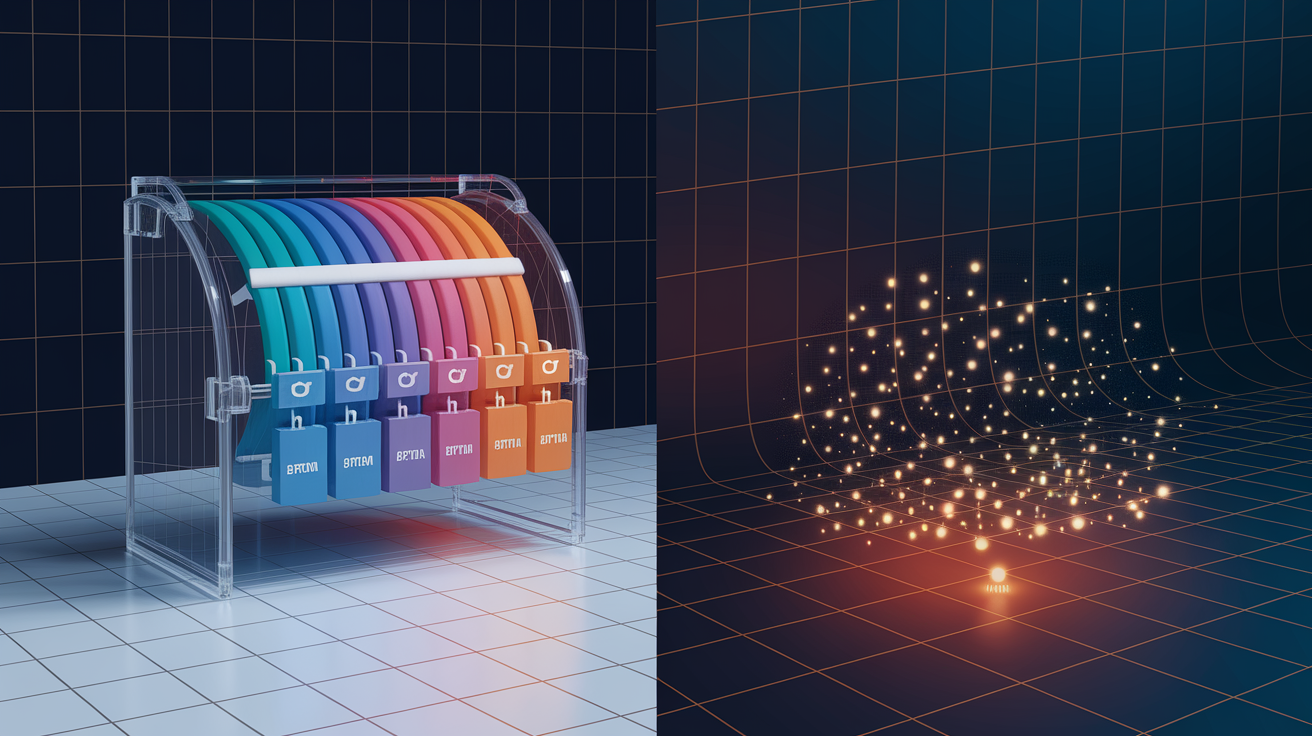
Pattern classification usually refers to supervised learning, but it sits inside a wider pattern recognition definition that also covers unsupervised methods. Getting this distinction straight matters. The two approaches solve different problems, and they need different kinds of data just to get off the ground.
Supervised learning is the classic setup for what is pattern classification in practice. You give the model labelled examples, things already tagged as apple or orange, spam or not spam, and it learns a rule connecting the input features to the correct label. Once trained, it applies that rule to new, unseen inputs. This is how most classifiers work, and it leans hard on having enough good labels to learn from.
Unsupervised learning skips the labels entirely. Instead of learning predefined categories, the algorithm looks at feature vectors and tries to find natural groupings on its own. Clustering methods like k-means group similar items together based on distance or density, without ever being told what the groups should represent. Sometimes the output looks like classification. But nobody handed the model an answer key first.
There’s a middle ground worth knowing too. Semi-supervised learning uses a small set of labelled examples alongside a much larger pool of unlabelled data, which helps when labelling everything by hand just isn’t realistic. Probabilistic modelling often plays a role here, estimating how likely an input belongs to a class rather than forcing a hard yes or no.
Anomaly detection deserves a mention as well. It sometimes borrows from both worlds, using unsupervised pattern discovery to flag inputs that don’t fit any known group. And that can be just as useful as sorting things into categories that already exist.
| Approach | Needs Labels? | Typical Goal | Example |
|---|---|---|---|
| Supervised classification | Yes | Assign predefined categories | Spam vs. not spam |
| Unsupervised clustering | No | Discover natural groupings | Customer segments |
| Semi-supervised learning | Partially | Learn from limited labels plus unlabelled data | Medical imaging with few annotated scans |
Final Words
You saw pattern classification find useful features, turn them into feature vectors, and assign inputs to known classes with trained models like decision trees and neural networks.
The article walked the pipeline step by step—collect and label, clean and prep, extract and select features, then train a classifier—and compared supervised and unsupervised approaches.
Quick next step: pick one small problem, build a tiny feature vector, and test a simple model to see what is pattern classification in practice. You’ll likely spot helpful patterns after a few tries.
FAQ
Q: What type of people have high pattern recognition?
A: People with high pattern recognition are often those who notice recurring details, enjoy puzzles, and work with data or experience—researchers, programmers, clinicians, or hobbyists who practice spotting regularities.
Q: Why am I so good at pattern recognition and how do I know if I have good pattern recognition?
A: Being good at pattern recognition often comes from practice, curiosity, and attention to detail; you likely have it if you spot trends quickly, predict outcomes, and solve puzzles or problems faster than peers.
Q: What are the four types of classification?
A: The four common types of classification are binary (two classes), multi-class (choose one of many), multi-label (assign several labels at once), and hierarchical (nested class relationships).