



Is pushing through a bad day a sign of grit, or a sign your recovery is stuck?
Think of recovery like a slow tide, not a single wave.
If your energy, sleep, movement, and mood are drifting back toward what’s normal for you over several days, you’re probably recovering properly.
In this post we’ll list the key signals to watch, show how to compare them to your personal baseline, and give quick, practical checks you can run over 3 to 7 days.
Small tests. Clear trends. Less guessing.
Clear Signs You’re Recovering Properly

Here’s the thing about recovery, whether you’re bouncing back from a hard workout, a nasty cold, or an injury: the direction matters more than any single day. You’re looking for a gradual easing of symptoms while your energy, sleep, movement, mood, and daily function drift back toward what’s normal for you. That’s it. That’s the core idea behind knowing if you’re recovering properly.
Signs you’re recovering well tend to show up together, not in isolation. Here’s what to look for:
- Energy is becoming steadier during the day.
- Pain or soreness is decreasing rather than intensifying.
- Sleep lasts about 7 to 9 hours and feels restorative.
- Mobility, strength, or everyday function is improving.
- Performance is stable or rising without an unusually high effort.
- Appetite, hydration, concentration, and mood are returning to normal.
- No new fever, swelling, redness, weakness, or other concerning symptoms are showing up.
These signs work as a group. Sleep and healing go hand in hand, so if you’re sleeping well but your soreness keeps climbing, that’s worth a second look. Mood and focus often shift before your body catches up physically, so pay attention there too.
One rough day doesn’t mean your recovery has gone sideways. Maybe you slept badly because of a loud neighbor, or your energy dipped because lunch got skipped. Normal versus abnormal recovery becomes a lot clearer once you zoom out.
Look at trends over 3 to 7 days instead of judging any single morning. Compare what you’re seeing against your own baseline, any medical guidance you’ve been given, and whatever recovery timeline fits your situation. If the trend line is heading the right way, you’re probably fine.
Measuring Recovery Against Your Personal Baseline
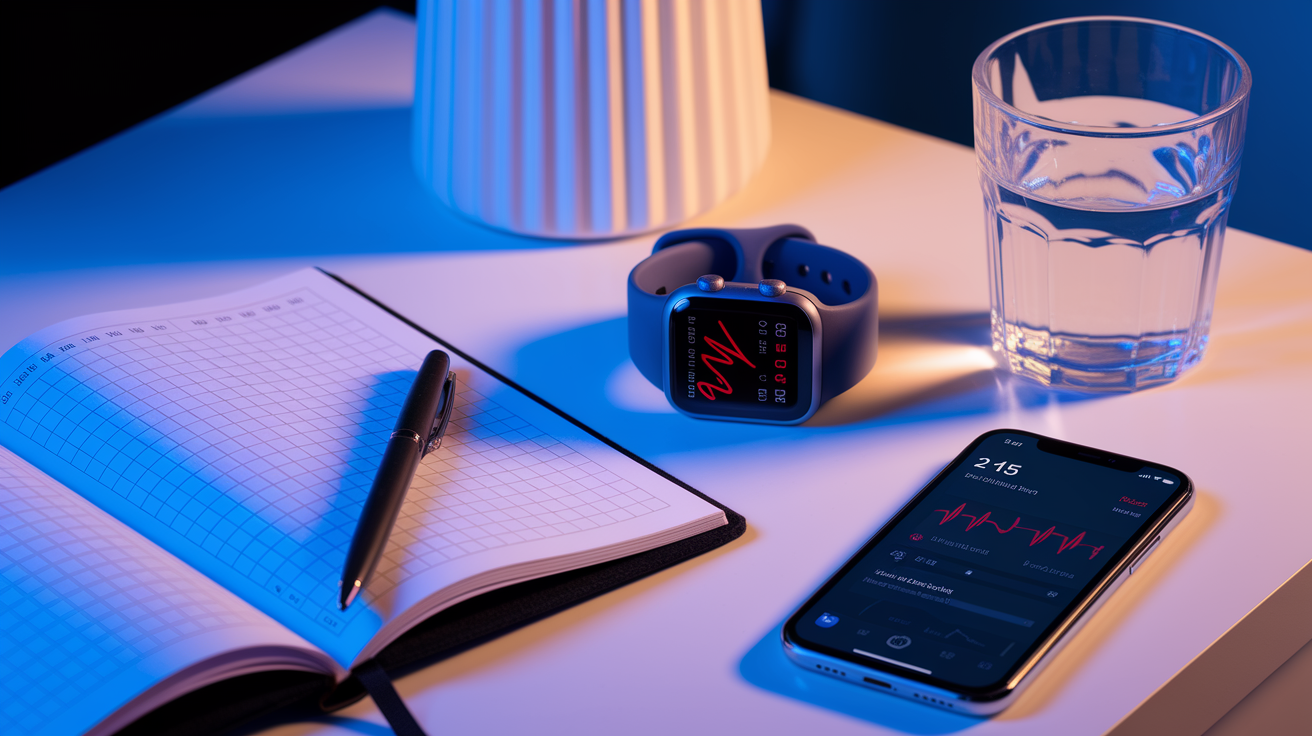
Signs are useful, but numbers give you something to compare against. Tracking symptoms day by day only works if you know what your normal looks like first. That means building a personal recovery baseline before you try to interpret anything.
Start by recording measurements for 7 consecutive mornings during a stretch when you’re feeling relatively stable, not mid-illness or the day after your hardest workout of the year. Take your readings at about the same time each morning, ideally before coffee or any real activity. Use the same device, same body position, same rating scales every time. Consistency matters more than precision here.
Once you’ve got a week of data, you’ll have something real to measure future mornings against. That’s when tracking with journals or an app actually starts paying off. A single number means almost nothing without context.
| Recovery Measure | Recording Method | Baseline Calculation | Deviation Threshold |
|---|---|---|---|
| Resting heart rate | Measure on waking, before getting up | Average of 7 mornings | More than 5 to 10 bpm above average |
| Heart rate variability (HRV) | Same device, same time, each morning | 7 day average | 10 to 20% drop lasting 2+ days |
| Sleep duration | Track nightly hours slept | Average nightly hours | Multiple nights below 6 hours |
| Energy rating | Rate 1 to 10 each morning | Average score | Score of 4/10 or lower |
| Soreness or pain rating | Rate 0 to 10 each morning | Average score | Score above 6/10 |
| Functional performance | Repeat one task (reps, time, load) | Baseline result from repeated task | Decline from baseline performance |
| Hydration or urine colour | Check at the same point each morning | Usual colour on a consistent scale | Noticeably darker than usual |
A paper journal or a quick app check-in, something under 2 minutes, is all this takes. The goal isn’t to obsess over one bad reading. It’s to look at your 3 to 7 day averages and notice when they drift away from your baseline, while keeping those raw entries around so you can compare them to how you’re doing weeks or months from now.
Workout Recovery Through Soreness and Performance

Some soreness after a tough session is completely normal, even expected. It only becomes a flag when it strays from the usual pattern or starts messing with how you actually move. Workout recovery is mostly about timing and trajectory, not the mere presence of discomfort.
Normal DOMS and Exercise Recovery Windows
Delayed onset muscle soreness, or DOMS, typically kicks in 12 to 24 hours after a demanding or unfamiliar workout. It usually peaks somewhere between 24 and 72 hours, then eases up within 3 to 7 days. If that’s the pattern you’re seeing, your body is doing exactly what it’s supposed to do.
Sharp, highly localized pain, or soreness that gets worse under load instead of easing with light movement, tells a different story. We’ll get into what to do about that in the warning signs section further down. For now, just know the general windows: 24 to 48 hours after low intensity exercise, 48 to 72 hours after moderate sessions, at least 72 hours after high intensity or eccentric heavy training, and sometimes 3 to 7 days following an especially brutal session.
Workout Specific Readiness and Performance Tests
An exerc
Final Words
In the action, direction of change matters most: symptoms should ease while energy, sleep, movement, mood, and function move toward your normal baseline.
This post walked through clear recovery signs, how to set a 7-day personal baseline, DOMS timing and workout readiness tests, illness and injury milestones, practical sleep/nutrition/hydration tips, warning signs, and when to tweak your plan.
Use your notes over 3–7 days to answer how to know if you’re recovering properly. Treat setbacks as data, change one thing at a time, and expect steady, testable progress.
FAQ
Q: What are some signs that I’m under-recovering or that I overdid it?
A: Signs you’re under-recovering or that you overdid it include persistent fatigue, worsening soreness or pain, rising resting heart rate, lower HRV, falling performance, poor sleep, or new fever or swelling, tracked over 3–7 days.
Q: How to tell if your muscles are fully recovered?
A: You can tell your muscles are fully recovered when soreness fades, movement and range of motion feel normal, strength and performance return to your baseline (often within 48–72 hours), and expected effort feels usual.
Q: Is 2 rest days in a week too much?
A: Two rest days a week is not too much; it’s often appropriate based on training intensity, fitness level, and goals. Use rest to recover, track how you feel, and adjust if performance or energy drops.