


What if tiny rings in your gut are doing most of the heavy lifting that keeps you comfortable every day?
These rings are sphincters, circular muscles that open and close to let food, fluids, bile, and waste move the right way.
They work quietly, usually without you thinking, but when one misbehaves you notice it fast.
In this post we’ll show what each digestive sphincter does, how they’re controlled, and simple clues you can track to spot trouble early.
What A Sphincter In The Digestive System Actually Means
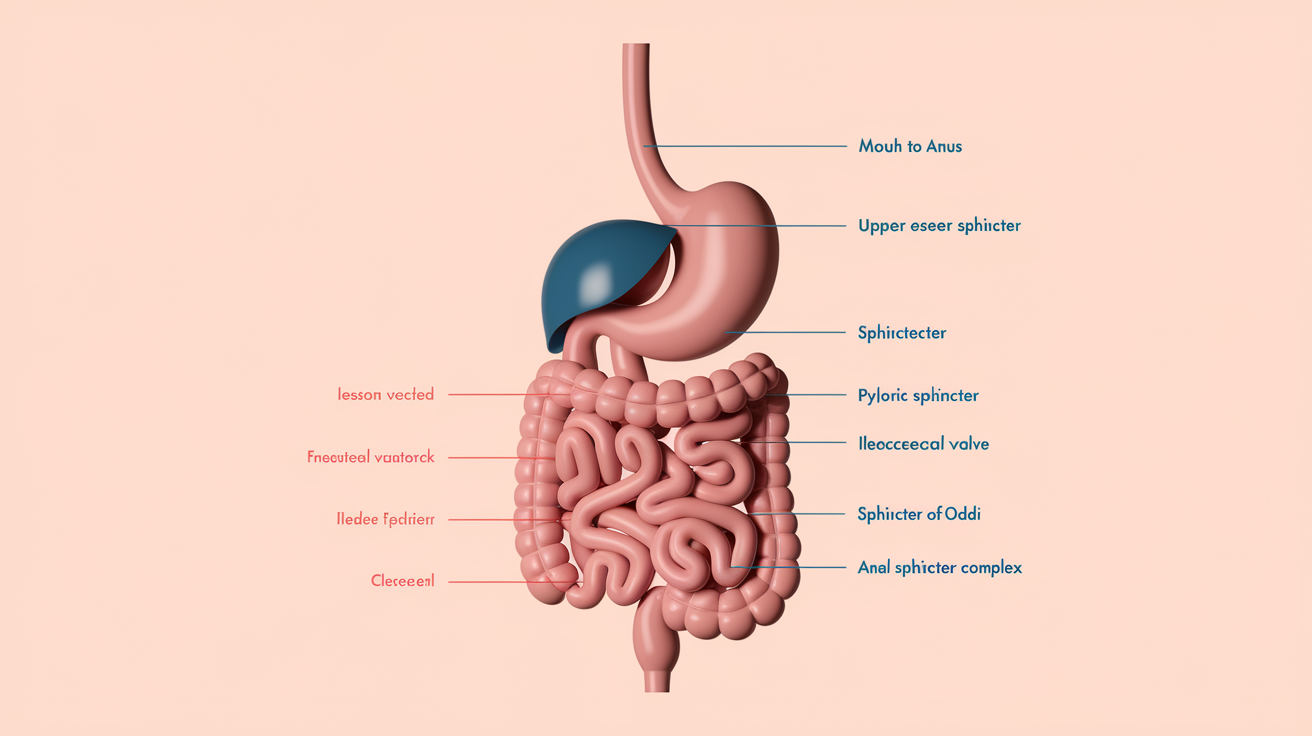
A sphincter in the digestive system is a ring like circular muscle that opens and closes to control the movement of food, liquid, bile, and waste through your gut. Think of it as a series of doorways placed along a long hallway, each one deciding what gets through and when.
Not all sphincters work the same way. Some are made of smooth muscle, which works automatically without you thinking about it. Others are striated (skeletal) muscle, meaning you actually have some conscious control over them. This mix of voluntary and involuntary muscle is part of why your gut can handle digestion on autopilot most of the time, while still letting you decide when it’s time to use the bathroom.
[Image placeholder: A labeled diagram showing the full mouth to anus digestive pathway, with markers indicating the position of each sphincter along the route.]
At its core, a sphincter in the digestive system really only does one job. It keeps things moving forward while blocking backflow into the section that came before it.
Here are the four sphincters most commonly emphasized when people talk about the types of digestive sphincters:
- Lower esophageal sphincter (LES), located where the esophagus meets the stomach
- Pyloric sphincter, located where the stomach meets the small intestine
- Ileocecal valve, located where the small intestine meets the large intestine
- Anal sphincter, located at the very end of the digestive tract
Two more digestive sphincters, the upper esophageal sphincter and the sphincter of Oddi, are covered in more detail in the types section below.
How Sphincters In The Digestive System Work
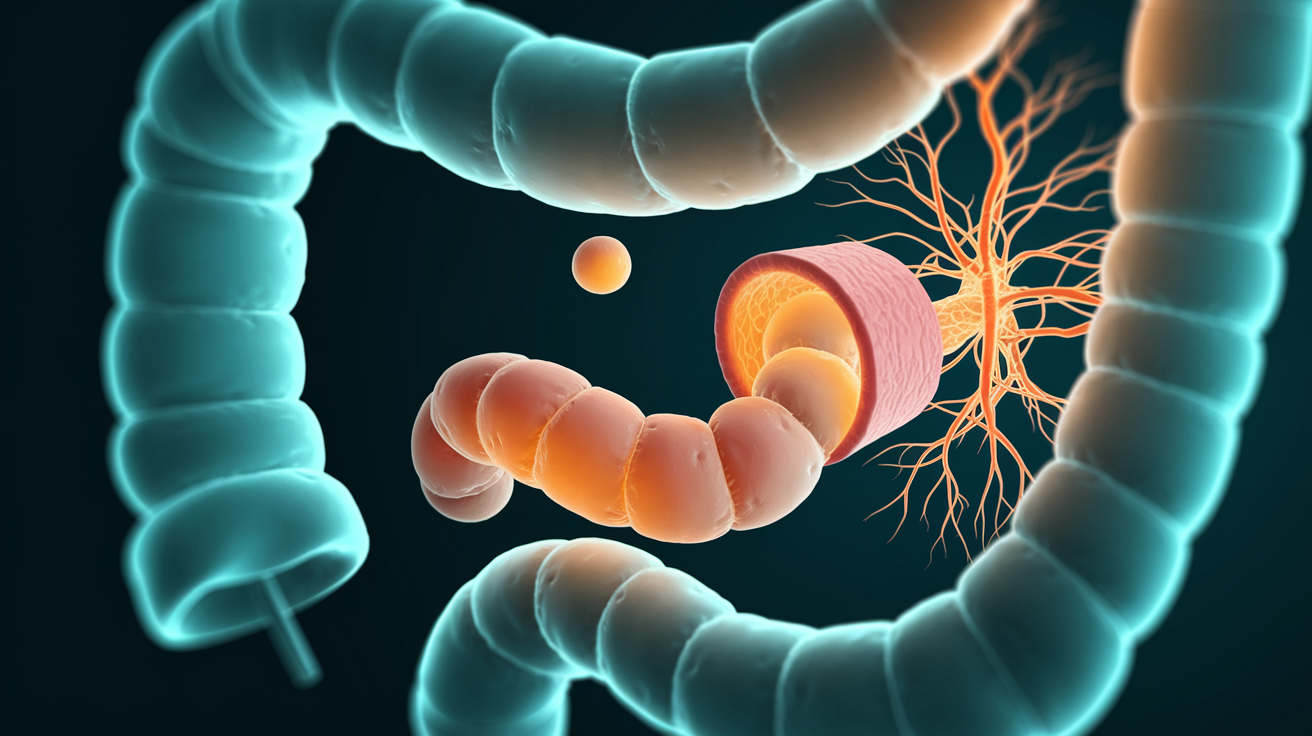
Sphincters don’t operate on their own. They’re controlled by something called the enteric nervous system, basically a local network of nerves built right into the wall of your gut. Some people call it the “second brain” of your digestive tract. This system handles most of the moment to moment decisions about when a sphincter should open or stay shut, and it gets extra input from the vagus nerve, which connects the gut back to the brain.
Here’s the general pattern. Peristalsis, the wave like squeezing motion that pushes food along, moves a bolus of food or liquid forward. Sphincters stay closed by default. They only relax and open briefly when the right signal arrives, letting contents pass through, then they close again right away. This closing part matters just as much as the opening part, since it’s what stops material from sliding backward into the section it just left.
To put some real numbers on this, gastric emptying, or how long it takes your stomach to move a typical meal into the small intestine, usually takes about 2 to 4 hours. Whole gut transit, meaning the entire trip from mouth to the other end, tends to run anywhere from 24 to 72 hours depending on the person, the meal, and general gut health.
Here’s the part that surprises a lot of people. Almost all of this sphincter action happens without you ever noticing or deciding anything. The one exception is the external anal sphincter, which gives you conscious control over defecation. Every other sphincter along the tract works automatically, though they can weaken or malfunction due to various health issues, something we’ll get into in the disorders section.
Types Of Sphincters In The Digestive System
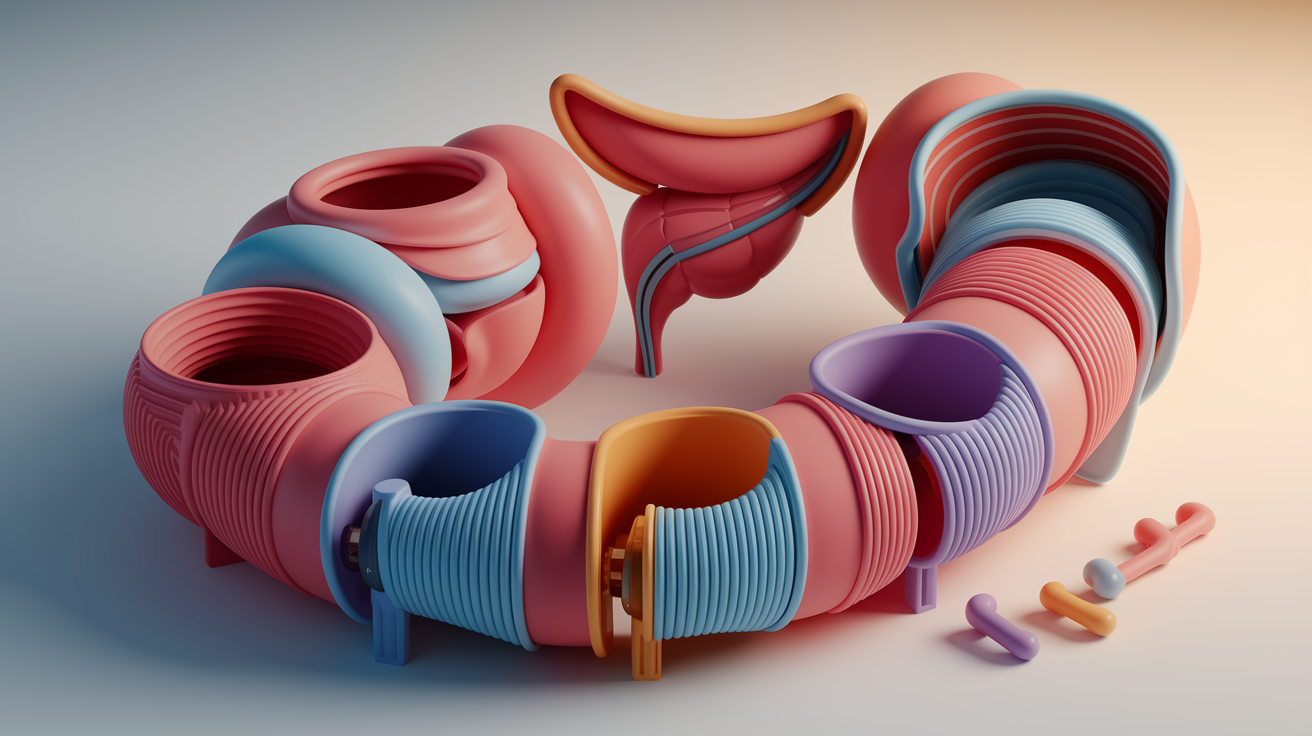
There are several key sphincters positioned along the digestive tract, and each one has its own anatomy, muscle type, and job to do. Some are built from smooth muscle and work entirely on their own. Others involve striated muscle and give you at least some voluntary control. Here’s a closer look at each one.
Upper Esophageal Sphincter
The upper esophageal sphincter (UES) sits at the very top of the esophagus, right at the back of your throat. It’s made of striated muscle, so it has some voluntary appearing qualities, though most of its action happens automatically. It stays closed most of the time, opening only briefly during swallowing. Its main job is keeping air from entering the esophagus while you breathe and blocking material from refluxing back up into the throat.
Lower Esophageal Sphincter
The lower esophageal sphincter (LES) sits at the gastroesophageal junction, right where the esophagus (about 25 cm long in adults) connects to the stomach. Unlike the UES, it’s made of smooth muscle and works involuntarily. It opens to let swallowed food enter the stomach, then closes to prevent stomach acid and contents from splashing back up into the esophagus.
Pyloric Sphincter
The pyloric sphincter is a ring of smooth muscle at the end of the pyloric canal, forming the connection between the stomach and the duodenum (the first part of the small intestine). It regulates gastric emptying, allowing partially digested food, called chyme, to pass into the small intestine only once it’s broken down enough. This prevents undigested food from moving on too early and stops material from backing up into the stomach. You can read more about the pyloric sphincter function and its gatekeeping role in digestion.
Ileocecal Valve
The ileocecal valve sits between the terminal ileum (the end of the small intestine) and the cecum (the beginning of the large intestine). Its main role is limiting backward flow, keeping colonic contents, including bacteria, from moving back into the small intestine where they don’t belong.
Sphincter of Oddi
The sphincter of Oddi controls the flow of bile and pancreatic juice into the duodenum. It coordinates the release of these digestive fluids at the right time, helping with fat digestion and enzyme delivery while preventing unwanted backflow into the bile and pancreatic ducts.
Anal Sphincter Complex
The anal sphincter complex actually has two parts. The internal anal sphincter is smooth muscle and works involuntarily, while the external anal sphincter is striated muscle and works voluntarily. Together, they give you both automatic control over rectal function and the conscious ability to decide when to have a bowel movement.
Final Words
You just learned a sphincter is a circular muscle gate that keeps food, liquid, bile, and waste moving forward.
We walked through the main ones, including upper and lower esophageal, pyloric, ileocecal, sphincter of Oddi, and the anal complex, and how smooth versus striated muscle changes control.
Peristalsis pushes, sphincters open on cue, and most action is automatic. Track symptoms and look for patterns.
If you remember one thing, a sphincter in digestive system is your body’s local gatekeeper, and noticing when those gates work or don’t gives you a clear next step toward better digestion.
FAQ
Q: How can you tell if your sphincter is damaged?
A: You can tell a sphincter is damaged if you notice leaking, backflow, pain, or trouble moving food. For the stomach sphincter, watch for frequent heartburn, regurgitation, and difficulty swallowing.
Q: Do humans have two sphincters?
A: Humans have many sphincters, not just two. The anal area has two (internal involuntary and external voluntary), and other digestive sphincters include the upper and lower esophageal, pyloric, ileocecal, and Oddi.
Q: Can a stomach sphincter be repaired?
A: A stomach sphincter can often be treated or repaired with medication, endoscopic procedures, or surgery (for example, fundoplication). Talk with a clinician to pick the right test-and-treat option for your symptoms.