



Good recovery isn’t about being symptom-free.
It’s about steady, real improvements you can repeat.
Think of it like rebuilding a house, where you fix the foundation, wiring, and paint so the gains last.
We’ll map the concrete signs across physical, emotional, behavioral, and social function, plus week-by-week checkpoints you can track.
If you watch patterns over time, you get a clearer sense of progress, when to push, and when to ask for professional input.
Core Signs Across Recovery Domains

Good recovery generally means your symptoms are becoming more manageable, your everyday function is improving, and those gains tend to stick around without falling apart the moment life gets stressful. It’s not about hitting zero symptoms or feeling perfect every day. The signs of good recovery show up gradually, across more than one area of your life, and the overall trend matters way more than any single good or rough day.
Signs of effective recovery tend to show up as a pattern, not a straight line. Physical signs of healing might show up alongside mental recovery indicators, or behavior changes that support both. Here’s a simple way to think about what to watch for across the main areas.
| Recovery Domain | Representative Signs | When Professional Review Is Warranted |
|---|---|---|
| Physical | Improving comfort, growing capacity for daily movement | Worsening symptoms, stalled progress over time |
| Mental and Emotional | Greater emotional steadiness, improved ability to manage distress | Persistent decline or inability to cope with daily stress |
| Behavioral | Healthier choices, consistent use of coping strategies | Unsafe behavior or repeated return to harmful patterns |
| Social or Functional | Renewed participation in work, relationships, or daily life | Continued inability to manage essential activities |
Recovery is best read as a pattern across these domains over time, not as a verdict based on one measure or one day.
Recovery Timeline Expectations Week by Week
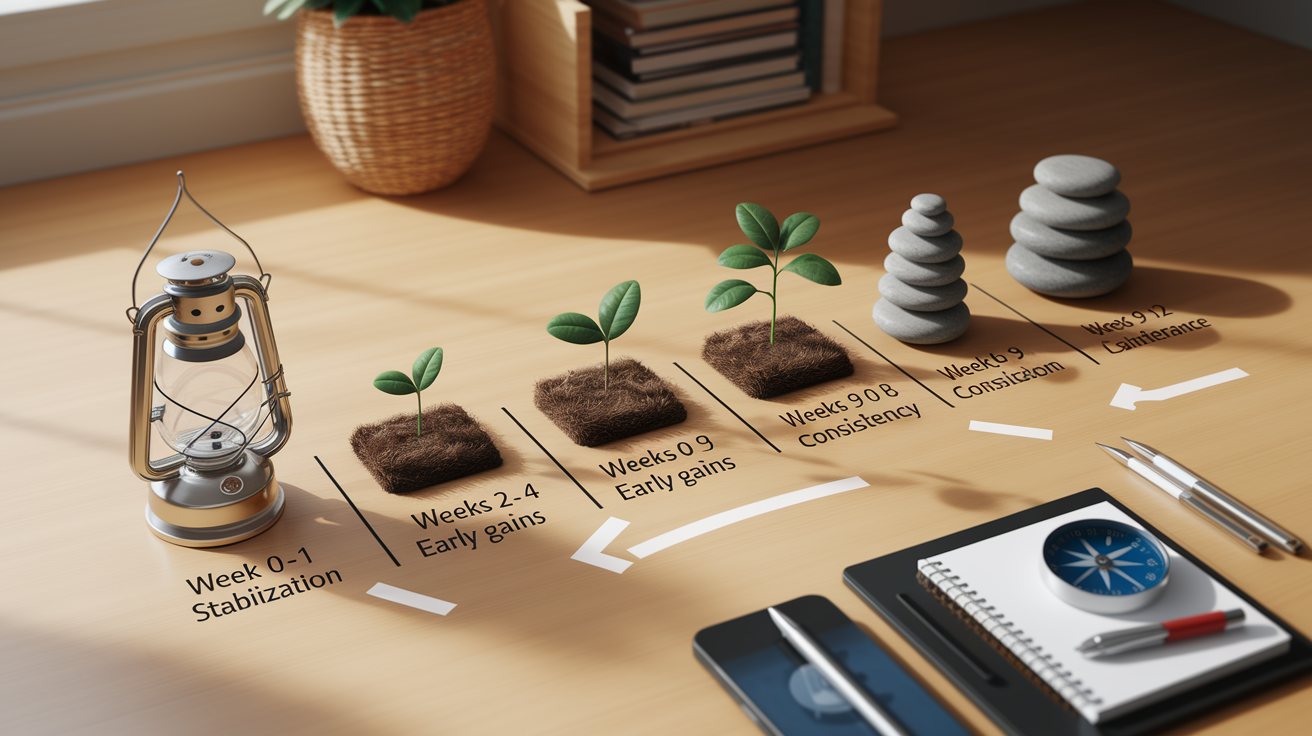
The pace and sequence of recovery depend on a lot of moving parts. The condition itself, the treatment plan, your baseline health going in, the support you have around you, whether complications pop up, and the everyday demands you’re juggling. It’s worth saying clearly, recovery timelines for addiction look different than for surgery, which look different again from mental health treatment or a slow healing illness. These aren’t interchangeable, even if the general shape (early stabilization, then gradual gains) feels familiar across all of them.
During week 0 to 1, the focus is usually stabilization. This is about safety first, whether that means managing acute pain, starting a treatment plan, or simply getting through the hardest early stretch without added complications. Nobody expects big functional leaps yet. The goal is just steady footing.
Weeks 2 to 4 tend to bring the first real signs of movement. This is when early gains often show up. Things start feeling a little less overwhelming, engagement with treatment deepens, and small wins become noticeable. It’s not dramatic, but it’s real.
By weeks 5 to 8, many people notice increasing consistency. Functional milestones after injury or illness often cluster here, as daily tasks become more manageable and routines start to feel sustainable rather than forced. This stage is less about big breakthroughs and more about things clicking into a rhythm.
Weeks 9 to 12 are typically about consolidation. Gains made earlier get reinforced through repetition, confidence builds, and recovery shifts from rebuilding to maintaining. This is often when people start trusting their progress instead of bracing for it to disappear.
After 3 months, recovery tends to move into longer term maintenance. The emphasis shifts toward preventing setbacks, sustaining habits, and planning for the months ahead rather than tracking week to week change.
Whether someone is ready for light or full return to work or return to sport shouldn’t come down to the calendar alone. It should reflect whether tasks can be done safely, whether stability has held up over time, how well a person tolerates graded increases in demand, and professional clearance where that applies. Light duties within 2 to 6 weeks and full duties around 8 to 12 weeks are commonly cited examples, but they’re just that, examples. They may not fit every injury, every job, or every person’s recovery path.
Physical Recovery Benchmarks: Pain, Mobility, and Strength

Tracking physical recovery is a lot more useful when you look at repeated measurements over time instead of judging progress by a single day’s results. A rough morning doesn’t erase two weeks of steady improvement. All the figures below are illustrative examples, not universal targets. The right numbers for you should come from whoever’s treating you.
Pain, Inflammation, and Healing Trends
Pain reduction patterns often show up clearly when you track pain on a simple 0 to 10 scale over time. Take a surgical knee as an example: pain might sit at 8/10 on day 0, drop to 5/10 by day 7, and settle around 3/10 by week 4. That’s a meaningful downward trend, even with some day to day bounce.
Swelling often starts easing within 1 to 2 weeks post injury or post surgery, and wound healing signs, like a wound closing cleanly and skin tone normalizing, tend to follow a similar gradual curve. If you notice increasing redness, drainage, heat, swelling, or pain instead of a decline, that’s worth flagging to a professional rather than waiting it out.
Mobility and Range of Motion
Range of motion improvements are usually tracked in degrees and compared against your own baseline and the goals set with your treating professional. Using the knee example again, motion might start around 0 to 45 degrees in week 1, climb to 0 to 90 degrees by week 4, and surpass 120 degrees by week 12.
These numbers shift quite a bit depending on which joint is involved, the specific procedure, any movement restrictions in place, and whether complications show up along the way. Restored mobility is genuinely individual, so comparing your timeline to someone else’s case isn’t usually helpful.
Strength and Functional Testing
Strength progression often shows something like 30 to 50% of target strength restored by weeks 4 to 6, which can feel slow
Final Words
In the action: this post laid out core signs across recovery domains, a week-by-week timeline, physical benchmarks for pain, mobility and strength, mental and emotional milestones, behavioral and social cues, and how to tell a brief setback from real trouble.
Think of recovery as a series of small, repeated wins, like more comfort, steadier mood, healthier choices, and returning to daily roles.
If you’re asking what does good recovery look like, it’s steady, sustainable progress you can track and protect. Keep testing small changes and celebrate the pattern.
FAQ
Q: Do you really need 48 hours to recover?
A: Needing 48 hours to recover depends on the workout, your fitness, and how sore or fatigued you are; many people benefit from 24–48 hours, but lighter sessions or active recovery can shorten that.
Q: What are some good exercises to do on my recovery day?
A: Good exercises on a recovery day include easy walking or cycling, gentle mobility drills, light bodyweight strength, and breathing or relaxation work; keep intensity low and focus on movement that feels restorative.
Q: How can I tell if I’m overtraining?
A: You can tell you’re overtraining if you have persistent fatigue, falling performance, poor sleep, mood changes, higher resting heart rate, recurring soreness or injury, and reduced motivation despite rest.
Q: What does recovery mean to me?
A: Recovery for you means symptoms becoming more manageable, daily functioning improving, and gains you can maintain without big setbacks — judged by patterns across physical, emotional, behavioral, and social areas.