


What if your brain is mostly a prediction machine, matching patterns instead of solving puzzles?
Pattern recognition is the quick mental trick that finds order in sights, sounds, and even thoughts.
It turns messy input into useful shortcuts so you can recognize faces, finish sentences, or pick the right tool without a second thought.
In this post you’ll learn how that shortcut works in the brain, why it shapes learning and decisions, and what small tests you can use to spot your own pattern habits.
Pattern Recognition In Humans: A Clear Definition

Pattern recognition in humans is the mental process of spotting regularities, similarities, and structure in the information around you, whether that information comes through your eyes, ears, or your own thoughts.
It’s not just a visual thing. Your brain applies this same basic skill to sound, touch, language, and even abstract ideas like numbers or logic. Think about walking up to a door you’ve never seen before. You don’t need instructions. You spot the handle, maybe a hinge, and you instinctively know it opens. That’s human pattern perception at work, and it happens in a split second, often before you’re even aware you’re doing it.
This kind of cognitive pattern detection shows up constantly, in ways you probably don’t notice until you stop and look for them. A few everyday domains where it operates include:
- Faces, where you recognize someone in a crowd from a quick glance
- Language, where you predict the next word in a sentence before it’s spoken
- Numbers, where you spot a sequence or a repeating structure in data
- Social cues, where you read tone of voice or body language to sense a mood
- Physical objects, where you know how to grip a new tool without being shown
So what is pattern recognition in humans, really, beyond a dictionary definition? It’s the shortcut your brain takes to make sense of a messy, overwhelming world. Without it, every new door, every new face, every new sentence would need to be figured out from scratch. Instead, your brain leans on stored patterns to fill in the gaps fast.
This matters more than it might seem. It’s the foundation for learning new skills, making quick decisions, and functioning smoothly through an ordinary day. The rest of this article digs into how your brain actually pulls this off.
How Pattern Recognition Works In The Brain
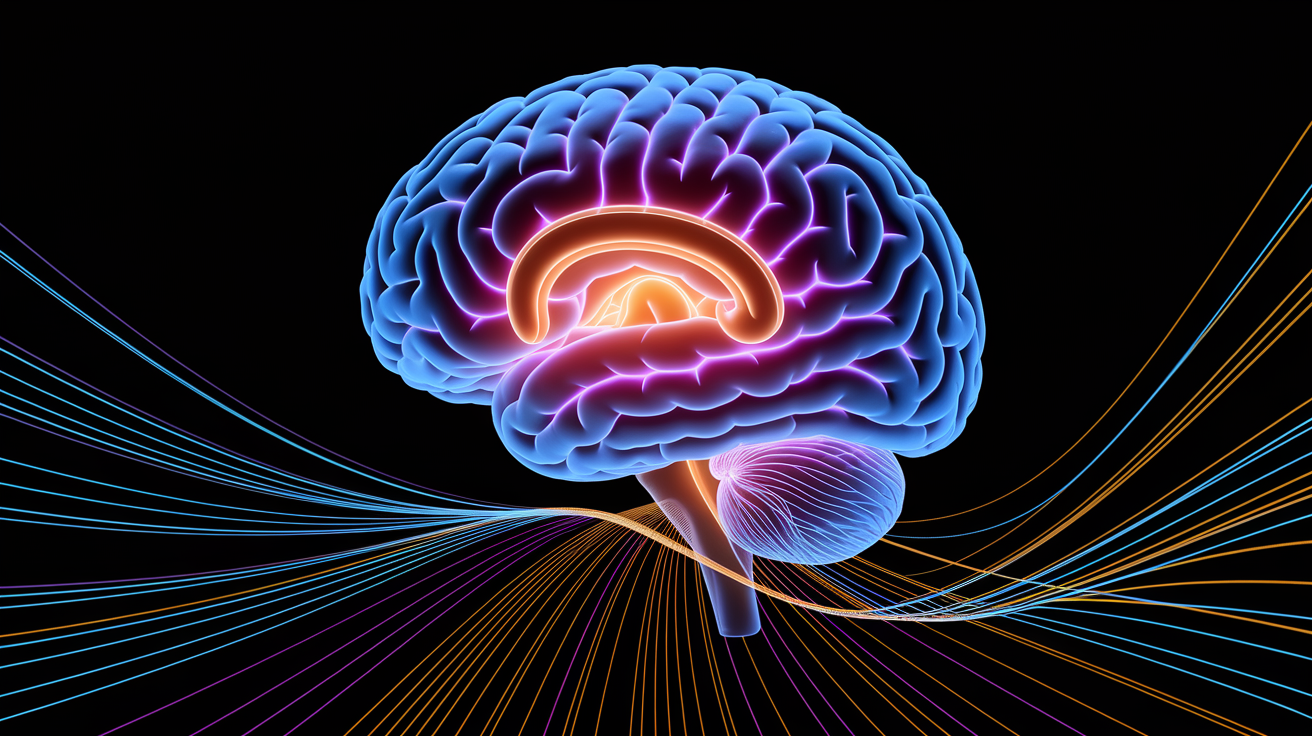
The neocortex, the folded outer layer of your brain, does a lot of the heavy lifting here. It makes up about 80 percent of your brain’s total weight, and inside it sit an estimated 300 million basic pattern recognizer neuronal groups. Each one acts like a tiny detector, tuned to notice a specific bit of structure. Maybe that’s a line at a certain angle, a sound frequency, or a familiar sequence of words.
Here’s the encouraging part. These neuronal groups aren’t fixed at birth. They rewire across your entire lifetime, which is how you keep picking up new visual, numeric, linguistic, and social patterns well into old age. Learning a new language at 50 or picking up a new hobby at 70 still works because of this plasticity.
Pattern recognition also works like a compression tool. Instead of storing every single detail you encounter, your brain turns many data points into one simple rule. That’s why an expert can glance at a situation and just know what’s happening. It’s not magic, it’s years of data compressed into a fast pattern match.
There are two directions this processing runs. Bottom-up processing, sometimes called feature detection, starts with raw sensory input (edges, sounds, textures) and builds upward into recognition. Top-down processing works the other way, where your brain’s existing expectations shape what you perceive before the input even fully arrives. This is the core idea behind the Bayesian brain hypothesis, which suggests your brain is constantly predicting what it expects to sense, then adjusting based on what actually shows up.
Several brain regions handle specific pieces of this puzzle:
- Occipital cortex, processes basic visual patterns like edges and shapes
- Temporal lobes and the fusiform face area, handle faces and other complex visual stimuli
- Anterior insula and anterior cingulate cortex, decide what information deserves attention
- Dorsolateral prefrontal cortex and posterior parietal cortex, manage working memory and planning
- Amygdala, tags patterns with emotional weight
- Hippocampus, stores the context around a pattern so it can be recalled later
None of these regions work alone. They form networks, sensory networks for raw input, a salience network for importance, an executive network for reasoning, and a default mode network for internal reflection. All of it fires together so recognition feels instant and effortless.
The Building Blocks: Gestalt Principles And Perceptual Organization
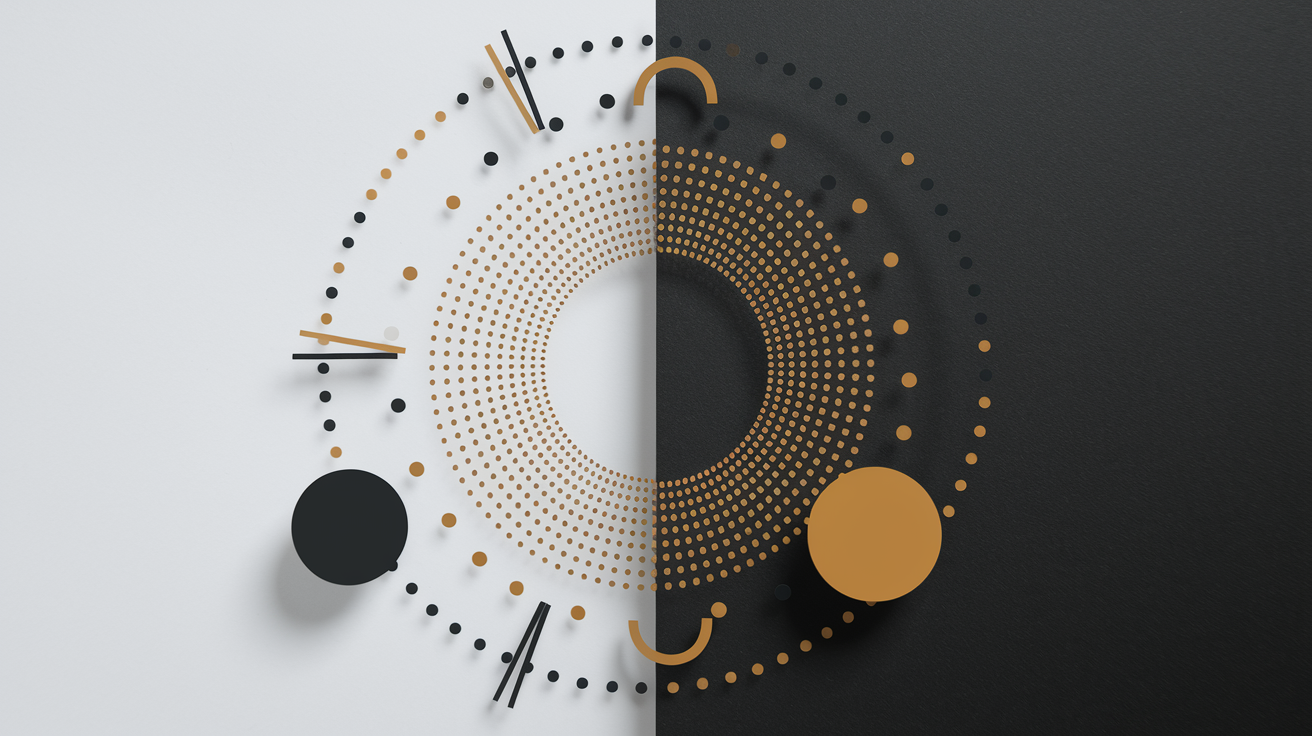
Before your brain can recognize a full pattern, it has to first organize raw visual bits into something coherent. That’s where Gestalt psychology comes in. It’s the study of how humans naturally group scattered lines, edges, and shapes into whole objects rather than a jumble of disconnected parts.
This grouping isn’t random. Researchers have identified several consistent laws that describe how your visual system organizes the world:
- Proximity, objects placed close together are seen as a group
- Similarity, items sharing color, shape, or size are grouped as related
- Closure, your brain fills in gaps to complete an incomplete shape
- Continuity, the eye follows a smooth path even when a line is broken
- Figure-ground, your brain separates an object from its background automatically
These laws explain why you can glance at a scattered pile of puzzle pieces and still mentally group the ones that seem to belong together, well before you’ve matched a single edge.
Once your brain groups these elements, it still has to solve what’s known as the binding problem. How do separate features like color, shape, and motion, each processed in different parts of the brain, come together into one single, unified object? Feature integration theory offers an answer, suggesting that attention acts like glue, binding these scattered features into one coherent percept. Without this binding, you’d see color in one place, motion in another, and shape somewhere else entirely, never as one object. It’s this quiet, constant stitching together that makes visual pattern recognition in humans feel seamless, even though a huge amount of separate processing is happening behind the scenes.
Pattern Recognition Across The Other Senses
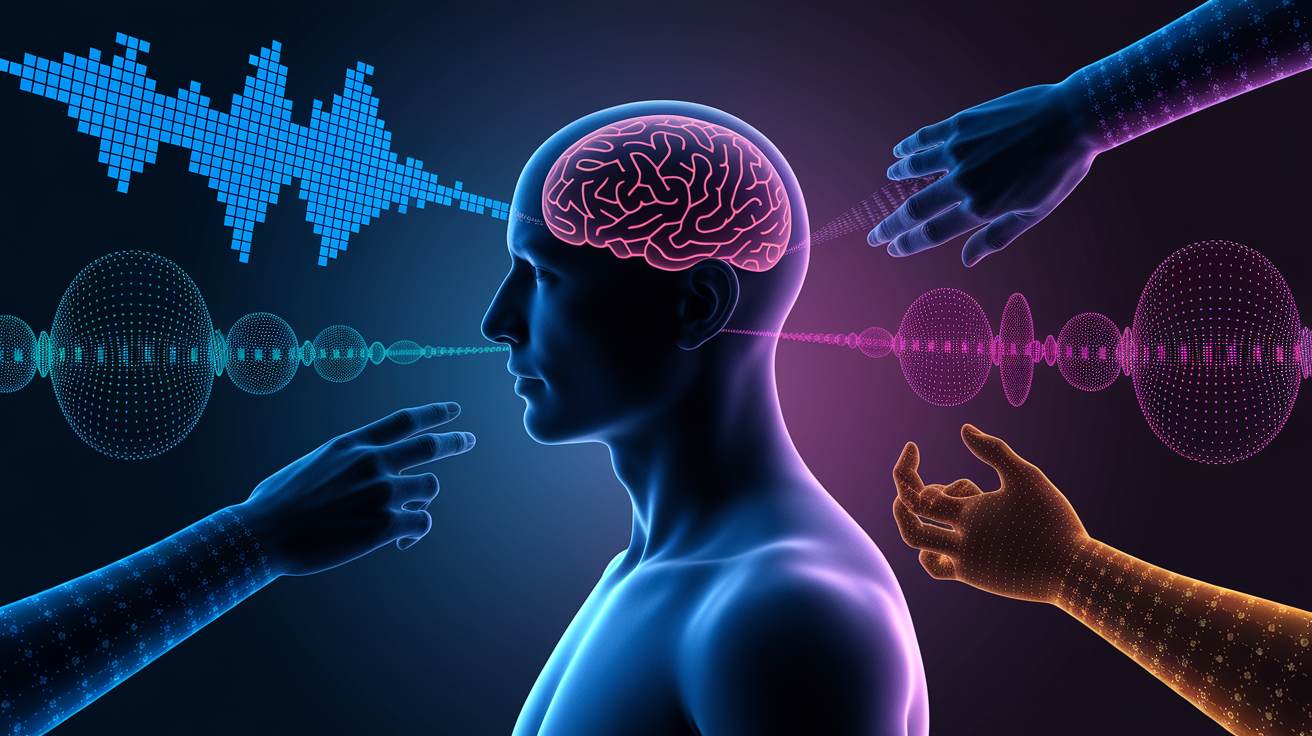
Visual pattern recognition gets most of the attention, but it’s really just one piece of a much bigger system. Your brain runs the same basic pattern matching process through every sense you have, often at the same time, without you noticing the handoff between them.
Take speech. When someone talks to you, your brain isn’t processing random noise. It’s matching sound waves against stored phoneme patterns, the small units of sound that make up words. This happens so fast that you can understand a sentence before the speaker even finishes it, your brain is already predicting the
Final Words
We started with a clear definition: pattern recognition is the brain’s fast way of spotting regularities across sights, sounds, touch, and abstract ideas.
Next we explained the brain machinery, neocortex pattern groups, prediction vs feature-driven processing, and Gestalt rules that bind features into objects and faces.
We broadened the view to other senses, speech, rhythm, smell, and touch, and showed how multisensory signals speed decisions.
If you’re still wondering what is pattern recognition in humans, think of it as your everyday shortcut for making sense of noisy inputs. Track one pattern this week and see what it tells you.
FAQ
Q: What kind of people have good pattern recognition?
A: People who have good pattern recognition tend to be attentive, curious, and experienced in a field. They often have solid working memory, practice spotting regularities, and notice small sensory or behavioral details.
Q: Does pattern recognition mean high IQ and is intelligence about recognizing patterns?
A: Pattern recognition doesn’t automatically mean high IQ, and intelligence isn’t only pattern spotting. It’s a key skill that often links with reasoning and memory, while knowledge, creativity, and attention also matter.
Q: What is a real life example of pattern recognition?
A: A real-life example of pattern recognition is seeing an unfamiliar door and instantly knowing how to open it. Your brain matches its features to past doors, speeding decision-making in daily tasks.