



What if your energy swings aren’t random?
They’re your thyroid sending mixed signals.
Thyroid hormones set your body’s speed: too little slows you down, too much revs you up, and problems converting T4 to T3 can leave your cells starved for fuel even when labs look normal.
You might wake groggy, hit a 2 p.m. wall, or feel wired then crash.
This post will show how thyroid imbalance makes energy swing, what patterns to watch, and small tracking and test steps you can try next.
The Direct Link Between Thyroid Function And Energy Level Fluctuations
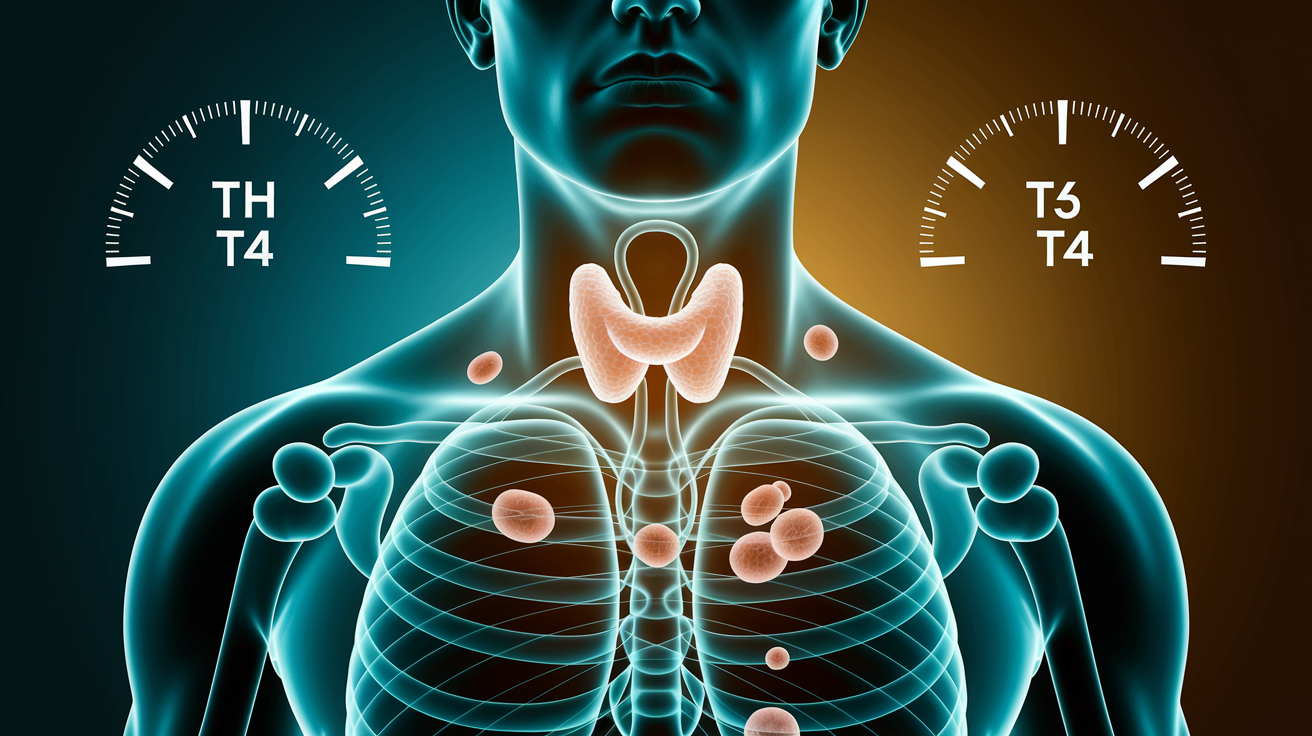
Thyroid hormones control your metabolic rate, basically the speed at which your body turns food into usable energy. When your thyroid makes too little or too much of these hormones, your energy stops being steady. It starts swinging, sometimes hard, in either direction.
Here’s how it works. Your pituitary gland releases TSH (thyroid stimulating hormone) to tell your thyroid how much hormone to produce. Your thyroid responds by releasing T4, which then converts into T3, the more active form your cells actually use for energy. This conversion step matters a lot. Some people convert T4 to T3 poorly, or produce too much reverse T3 (an inactive form that blocks energy production at the cellular level), even when their TSH looks perfectly normal on paper. That’s the tricky part. You can have “normal” labs and still feel like your energy tank has a slow leak.
For a lot of people, these fluctuations don’t feel like regular tiredness. They show up as specific patterns: waking up groggy no matter how much you slept, hitting a wall around 2 p.m., or getting a burst of wired energy that crashes hard a few hours later. Hypothyroidism tends to feel like a steady, heavy slowdown. Hyperthyroidism often feels like running a race you didn’t sign up for, followed by a crash from poor sleep and an overworked nervous system.
Once you start noticing these patterns repeat, you’re already halfway to figuring out what’s driving them.
What Are The Symptom Patterns Of Hypothyroidism And Hyperthyroidism?

Hypothyroidism and hyperthyroidism sit on opposite ends of the spectrum, but both throw your energy way off balance. One slows your whole system down. The other revs it up until it burns out. Learning to spot which pattern matches your day to day is a useful first clue.
- Hypothyroidism: persistent fatigue that doesn’t lift even after a full night’s sleep
- Hyperthyroidism: sudden bursts of nervous, jittery energy followed by afternoon crashes
- Hypothyroidism: cold intolerance, feeling chilled when others are comfortable
- Hyperthyroidism: heat intolerance and unexplained sweating
- Hypothyroidism: weight gain, dry skin, hair loss, and brain fog that makes focusing hard
- Hyperthyroidism: sudden weight loss despite eating normally, plus a racing heartbeat
- Hypothyroidism: constipation, muscle aches, headaches, and low mood
- Hyperthyroidism: insomnia and anxiety that drain daytime energy through poor sleep
Overt hypothyroidism affects roughly 3 to 5 percent of adults, and subclinical hypothyroidism (a milder, early stage version) may affect another 4 to 10 percent. Hashimoto’s thyroiditis, an autoimmune condition where the immune system slowly attacks the thyroid, is the most common cause of hypothyroidism in areas where iodine intake is adequate.
Things get murkier with subclinical thyroid disease or conversion problems. You might feel like you’re bouncing between both patterns, tired and wired in the same week, or worse, the same day. That in between fog is often a sign that labs need a closer look. Not just a TSH check, but a fuller picture of free T4 and free T3 too.
How Are Thyroid Related Energy Problems Diagnosed?
Diagnosing thyroid driven fatigue starts with a blood panel that looks at how your thyroid is functioning, not just whether it’s technically “working.” Most clinicians start with TSH and free T4, then add free T3 if your symptoms don’t match what the first two numbers suggest.
| Lab Test | What It Measures | General Target Range |
|---|---|---|
| TSH | Pituitary signal controlling thyroid hormone output | 0.4 to 4.0 mIU/L (often 0.5 to 2.5 mIU/L for symptomatic patients) |
| Free T4 | Main hormone produced by the thyroid, before conversion | 0.8 to 1.8 ng/dL |
| Free T3 | Active hormone used directly by cells for energy | 2.3 to 4.1 pg/mL |
| Anti-TPO / Anti-thyroglobulin | Antibodies signaling autoimmune activity (Hashimoto’s or Graves’ disease) | Low or negative |
| Ferritin / Vitamin D / B12 | Nutrient levels that mimic or worsen thyroid fatigue | Ferritin above 50 ng/mL, Vitamin D above 30 ng/mL, B12 within normal range |
Fatigue overlaps with a lot of other conditions, so ruling out the usual suspects matters. Low iron, undiagnosed anemia, and vitamin B12 deficiency can all produce the exact same heavy, foggy feeling as a thyroid imbalance. Testing for these alongside thyroid labs helps you avoid chasing the wrong cause for weeks.
Timing matters too. TSH naturally shifts throughout the day, so a morning blood draw gives the most reliable reading. If you’re already on thyroid medication, testing before your daily dose (not after) keeps results accurate. And if your dose recently changed, most clinicians will want to recheck TSH again in 6 to 12 weeks, since it takes time for levels to fully settle.
Final Words
In the action: thyroid hormones set your body’s energy pace. Too little hormone drags you down, too much gives spikes and crashes.
We covered how the TSH-T4-T3 loop and peripheral conversion shape energy, the key signs that point to hypo versus hyper, the labs to check, and timing tips to reduce daytime dips.
Track symptoms and labs, try one small experiment like shifting medication timing or correcting low iron, then reassess. With steady tracking, thyroid and energy level fluctuations often become more predictable, and you’ll get clearer, steadier days.
FAQ
Q: How can I heal adrenals and thyroid and increase T3 and T4 naturally?
A: Healing the adrenals and thyroid and raising T3/T4 naturally involves improving sleep, reducing chronic stress, eating regular protein-rich meals, fixing nutrient gaps (iron, selenium, iodine, vitamin D, B12), and checking with your clinician.
Q: What are the emotional symptoms of hypothyroidism?
A: The emotional symptoms of hypothyroidism include low mood or depression, slowed thinking and memory, apathy, irritability, increased anxiety in some people, and reduced motivation or emotional flatness.
Q: How to increase T3 and T4 levels naturally?
A: Increasing T3 and T4 naturally focuses on correcting nutrient shortages (iodine, selenium, iron, B12, vitamin D), improving sleep and blood sugar balance, reducing chronic stress, and reviewing meds or supplements with your clinician.
Q: What is the best type of exercise for thyroid patients?
A: The best exercise for thyroid patients is a mix of gentle aerobic activity (walking, cycling), regular strength training to support metabolism, and avoiding high-intensity overtraining until symptoms and labs stabilize.