



Think one good night’s sleep means you’re fully recovered? Not usually.
Before your next workout, your body is already dropping hints about whether it’s ready to go hard again.
The trick is reading a few signals together—how the muscle feels, your sleep and energy, and a quick performance check—and comparing them to your own normal.
This post lays out a simple six-point morning checklist you can run in under five minutes so you can decide to push, dial back, or rest with clearer confidence.
Muscle Recovery Tracking at a Glance

Before your next workout, your body’s already dropping hints about whether it’s ready to go hard again. The trick is knowing what to look for, and comparing today’s numbers against your own normal, not somebody else’s.
Muscle recovery doesn’t run on a fixed clock. It usually falls somewhere in a 24 to 96 hour window, and where you land depends on the muscle group, how much volume and intensity you threw at it, the exercises you picked, your sleep, your food, and just how your particular body responds. No single number tells the whole story. That’s why the best approach pulls together local signs (how the muscle itself feels and moves), systemic signs (your energy, your sleep), and performance signs (can you grip like normal, can you hit your usual warm-up weight).
Here’s a simple, 6-point check you can run through most mornings in under five minutes:
- Muscle soreness on a 0 to 10 scale
- Energy and motivation on a 1 to 5 scale
- Sleep duration and how rested you actually feel
- Morning resting heart rate or heart rate variability
- Range of motion and whether movement is pain-free
- Warm-up performance, grip strength, or your usual working-set numbers
It helps to know the difference between regular muscle soreness and something more serious. Ordinary post-workout soreness tends to be dull, spread across the muscle, and fades a bit more each day. Sharp, worsening, or highly localized pain is a different animal. That’s a signal to back off rather than push through.
A handy way to make sense of all this is a simple green, yellow, red system. Green means your soreness sits around 0 to 3 out of 10 and your performance looks normal, so go ahead with your planned session. Yellow shows up when soreness climbs to 4 to 6, or one of your key metrics has slipped a bit, suggesting a lighter approach might serve you better. Red means soreness is 7 or higher, there’s real pain, or your performance has dropped more than 10 percent. That’s your body asking for rest. The key here is judging recovery from the pattern across several signals together, not just by counting hours since your last session.
Pros, Cons, and Comparison of Muscle Recovery Tracking Methods
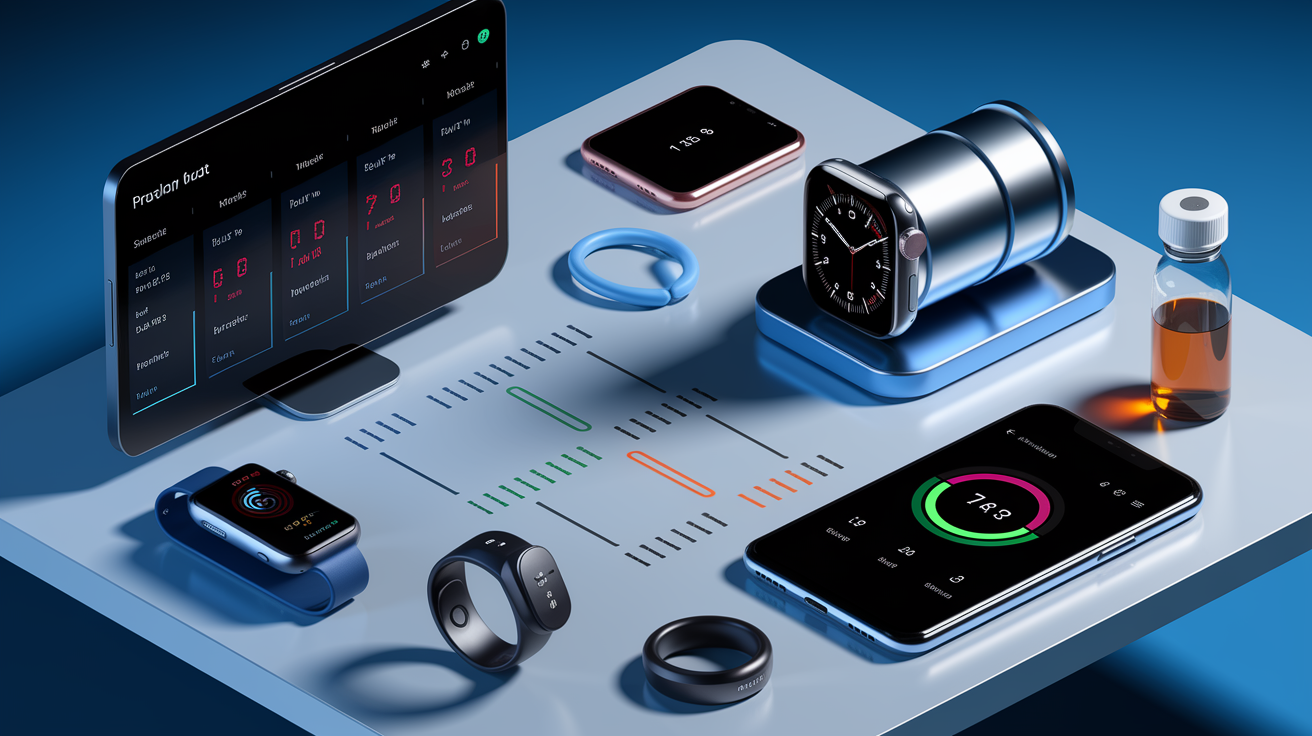
Every recovery tracking method looks at a different slice of the puzzle. A soreness scale tells you something a heart rate monitor never will, and a grip strength test picks up on things a sleep tracker misses entirely. More data isn’t automatically better though. What matters is picking methods that actually answer the question you’re asking, and using them the same way every time so you can trust the comparison.
It’s worth knowing the tradeoffs up front. Subjective tools are fast and free but can be swayed by mood or expectation. Objective tests take more setup but can catch things you wouldn’t notice on your own. Here’s how the main options stack up.
| Method | Example Metrics | Cost | Time Required | Best Use | Key Limitation |
|---|---|---|---|---|---|
| Subjective check in | Soreness, energy, mood | Free | Under 2 minutes | Daily tracking, spotting trends | Influenced by expectations and mood |
| Movement and strength tests | Range of motion, grip strength, warm-up weight | Free to low | 5 to 10 minutes | Catching neuromuscular fatigue | Needs standardized technique to be useful |
| HRV and resting heart rate monitoring | Overnight HRV, morning RHR | Moderate (wearable cost) | Passive overnight | Systemic fatigue context | Doesn’t directly reflect muscle or tendon repair |
| Workout and muscle recovery apps | Sets, reps, load, estimated strain | Free to paid | Logged during training | Organizing per muscle history | Depends on accurate, consistent logging |
| Clinical or laboratory assessment | Creatine kinase, cortisol, blood markers | High | Appointment required | Investigating unusual or persistent issues | Invasive, costly, hard to interpret day to day |
Tracking consistently, with the same method and timing, can show you when you’ve drifted from your own baseline. That’s far more useful than relying on how you feel in the moment alone.
Pros
- More informed training choices
- Earlier recognition of accumulating fatigue
- Better management of training load
- Improved identification of personal recovery patterns
- Clearer data for conversations with a coach or clinician
Cons
- Normal day to day measurement variation
- Inconsistent consumer wearable estimates
- Time and effort required for regular logging
- Expectations or anxiety influenced by readiness scores
- Inability of general recovery scores to diagnose tissue injury
For most people at home, a simple combination works well: one subjective measure, one systemic measure, and one local performance test. Something like a soreness score, morning resting heart rate, and a quick grip strength or pain-free range-of-motion check covers the bases without overcomplicating your morning.
Whatever you choose, compare like with like. Use the same device, same exercise, same testing technique, same warm-up, and roughly the same time of day every time you measure. And resist the urge to combine unrelated numbers into one tidy looking recovery score.
Final Words
Start your next session with a quick checklist: soreness 0–10, energy 1–5, sleep quality, morning RHR/HRV, range of motion, and a warm-up or grip test.
The post covered simple subjective checks, objective tests, wearables, and a repeatable logging plan so you can compare today’s readings to your own baseline.
One clear rule for how to track muscle recovery: pick three measures, test the same way each morning, and follow trends rather than single readings. Try it for a few weeks and you’ll make calmer, smarter choices about training and rest.
FAQ
Q: What is the 3-3-3 rule gym?
A: The 3-3-3 rule in the gym is a simple strength template often meaning three sets of three reps for core compound lifts, used to build strength with heavier load and low total volume.
Q: What are signs of poor muscle recovery and what are the signs that a muscle is healing?
A: Signs of poor muscle recovery include persistent or worsening soreness, falling performance, low energy, poor sleep, and rising resting heart rate. Signs a muscle is healing include easing soreness, better range of motion, and returning strength.
Q: How long is too long for muscle recovery?
A: Muscle recovery typically falls within 24–96 hours; recovery taking longer than about a week after a normal workout may be too long and worth checking training load, sleep, nutrition, or a professional assessment.