

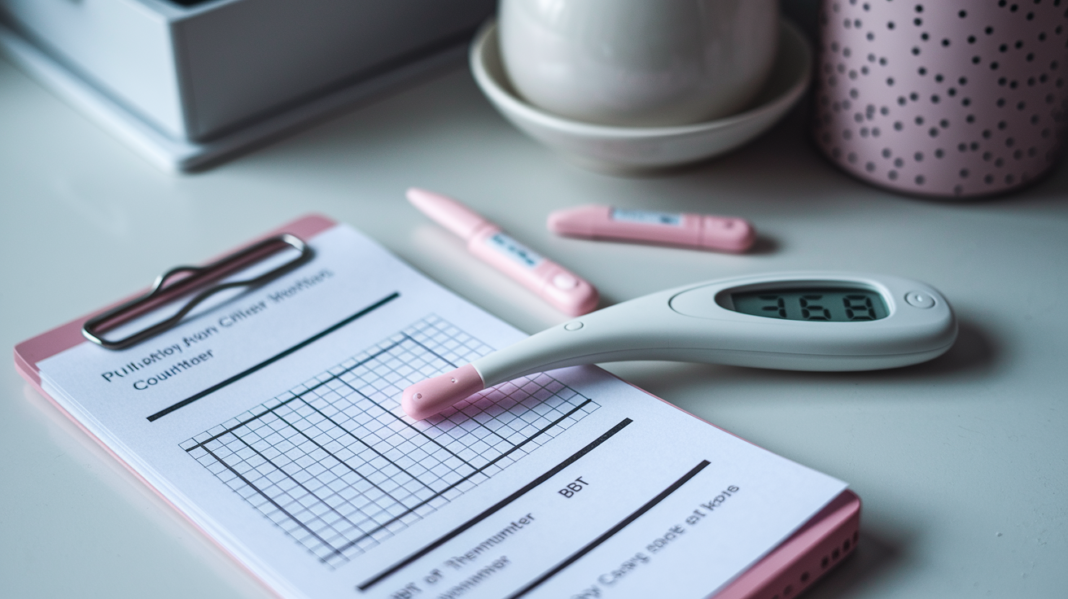

Relying on “day 14” to time ovulation is more misleading than helpful.
There’s a six-day fertile window and you can learn its pattern using a few simple daily signals.
In this post we’ll show practical ways to track cervical mucus, use ovulation tests, and record basal body temperature, then combine those signals into a clear pattern you can act on.
You’ll get a quick-start plan to try for three cycles so you stop guessing and start timing with more confidence.
Fertile Window Basics And Quick-Start Tracking Plan
The fertile window is roughly six days in your cycle when the timing lines up best for conception. It covers the five days before ovulation plus the day itself. That’s not an arbitrary number either. Sperm can hang around inside the reproductive tract for up to five days, waiting for an egg to show up. But once that egg gets released, it’s only good for 12 to 24 hours. Put those two facts together and you’ve got your window.
Here’s a mix-up worth clearing up early. People love saying ovulation happens on day 14 of a 28-day cycle. In reality, it tends to land somewhere between 12 and 16 days before your next period, not some fixed number counted from day one. If your cycles run shorter or longer than 28 days, day 14 probably doesn’t apply to you at all. Your own fertility signs and cycle history tell you more than a generic rule ever could.
One thing that trips people up: cervical mucus and ovulation predictor kits (OPKs) help you predict the fertile window before it shows up. Basal body temperature (BBT) only confirms ovulation after it’s already happened. You need both, just at different moments.
If you’re trying to conceive and want somewhere to start, here’s a quick plan.
- Mark cycle day one as the first day of full menstrual flow.
- Look back at your last few cycles to estimate your six-day fertile window based on typical ovulation timing.
- Check and record cervical mucus daily, ideally after using the bathroom.
- Take your BBT the second you wake up, before getting up or talking.
- Start LH testing with an OPK two to three days before your expected ovulation.
- Review all three signals together across at least three cycles until a pattern starts repeating.
Basal Body Temperature As A Fertile Window Signal
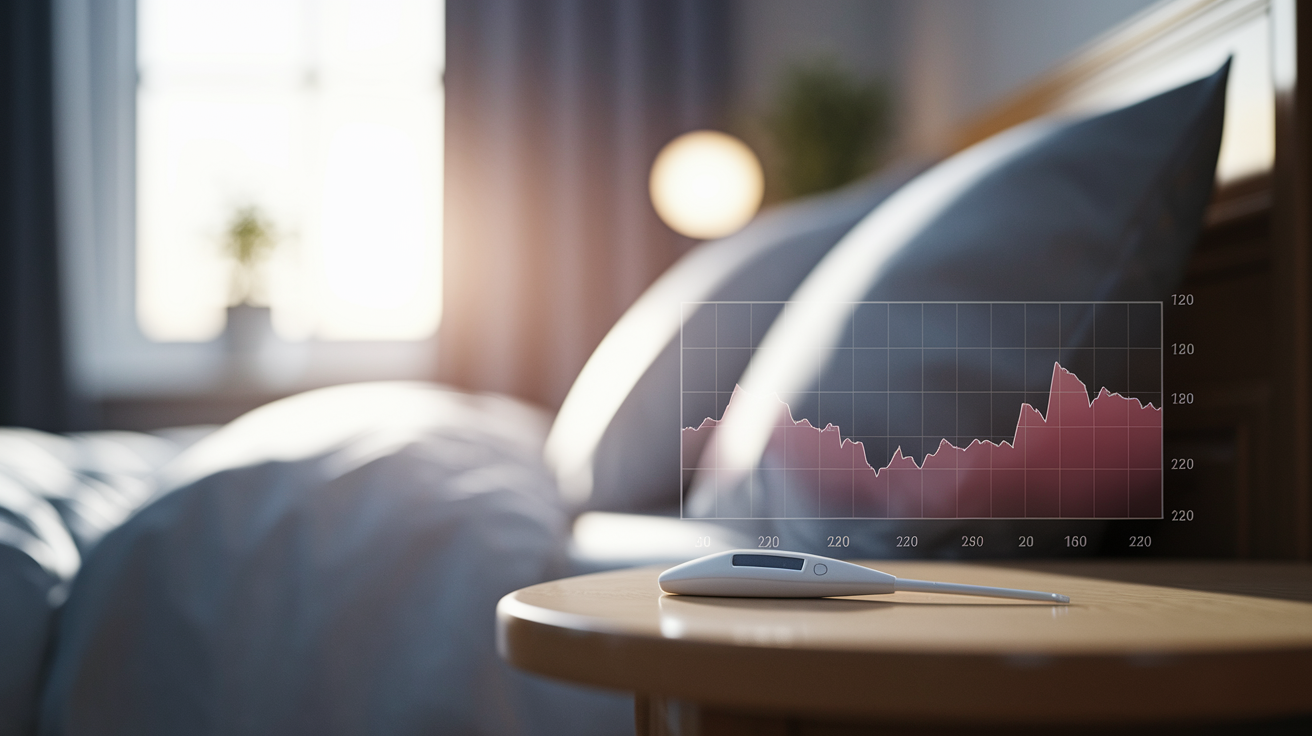
Basal body temperature tracking works by catching a small, predictable shift in your resting temperature right after ovulation happens. You’ll need a basal thermometer, one that reads to 0.01 degrees, because the change you’re hunting for is tiny and a regular thermometer will miss it. Take your temperature the moment you wake up, before getting out of bed, talking, or even glancing at your phone. Any movement can throw the number off.
Over a full cycle, you’ll usually see a biphasic pattern on the chart. Temperatures sit lower through the first half, then climb by about 0.3 to 0.6 degrees Celsius (0.5 to 1.0 degrees Fahrenheit) once ovulation happens. And that’s the part to remember: BBT tells you ovulation already occurred. It doesn’t predict what’s coming. So if you’re leaning on BBT alone to time intercourse, you’re always chasing something that’s already passed.
Still, once that temperature rise sticks around for three or more days, you know ovulation happened. Track it across a few cycles and your own ovulation timeline starts to take shape. That’s worth something even in hindsight, since it sharpens your calendar estimates and shows whether ovulation is happening consistently at all.
Cervical Mucus As A Fertile Window Signal

Checking cervical mucus daily, ideally right after using the bathroom, gives you a real-time read on where you stand in your cycle. Unlike BBT, this signal shifts before ovulation, which is exactly what makes it useful for timing. As estrogen rises, your body changes the texture and amount of mucus, and that change follows a pattern most people pick up on fairly fast.
Here’s what the progression usually looks like:
- Dry or absent right after your period ends
- Sticky and thick as the cycle moves along
- Creamy and a bit more noticeable a few days later
- Watery and thinner as ovulation gets closer
- Egg-white, meaning clear, stretchy, and slippery, usually two to three days before ovulation
That egg-white stage deserves your full attention. People often compare it to raw egg whites, and it’s the clearest sign your body is heading into peak fertility. Notice mittelschmerz too, that mild one-sided twinge some people feel around ovulation, or a jump in libido, and you’ve got even more confidence ovulation is close.
Ovulation Predictor Kits As A Fertile Window Signal

Ovulation predictor kits detect the luteinizing hormone (LH) surge, the hormonal trigger that hits roughly 12 to 36 hours before ovulation. That makes OPKs one of the sharper tools for timing conception, since a positive result narrows your window considerably. Once the test turns positive, ovulation is likely within the next 24 to 48 hours, which is your cue to time intercourse or insemination.
Most people start testing two to three days before their expected ovulation date, based on average cycle length. Test once a day at roughly the same time, and skip your first morning urine since it can be too diluted. If your cycles run irregular or your fertile window feels hard to pin down, twice-daily testing can help you catch the surge before it slips by. Pair OPK results with cervical mucus observations and your prediction gets even sharper.
Sample Chart Combining Fertility Signals
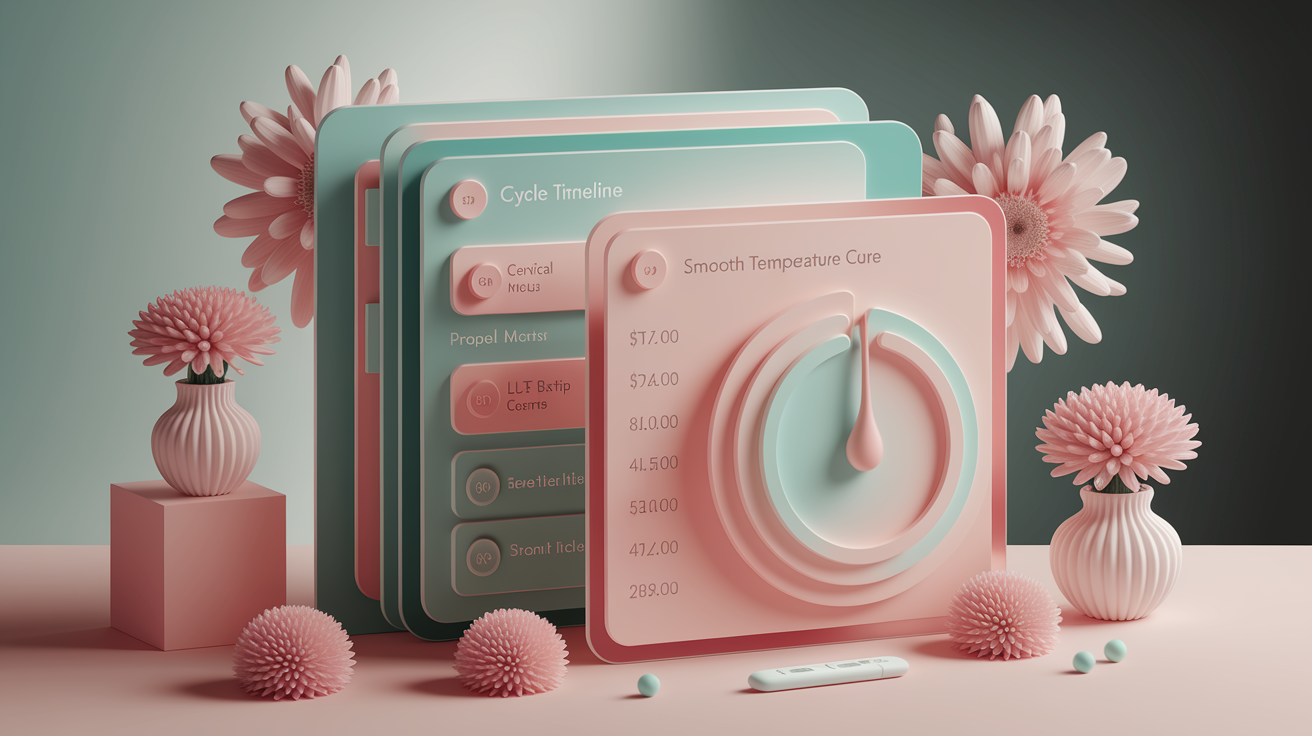
Seeing cycle day, cervical mucus, LH results, and BBT side by side is where it all clicks. Mucus and OPKs point forward, signaling fertility is on its way, while the BBT rise looks backward, confirming ovulation already happened. Together, they turn a handful of daily notes into a fertility chart you can actually read at a glance.
| Cycle Day | Cervical Mucus | OPK Result | BBT (°F) | Fertility Status |
|---|---|---|---|---|
| 10 | Creamy | Negative |
Final Words
Mark cycle day one, watch cervical mucus each day, start OPKs before expected ovulation, and take BBT right when you wake—this is the quick-start plan we walked through.
Putting mucus notes, LH results, and morning temps on one chart helps you see prediction versus confirmation across the cycle.
Try this as a short experiment for three cycles and review what repeats. Learning how to track fertile window patterns often turns guesswork into clear timing and more confidence.
FAQ
Q: What time of day is LH highest?
A: The LH hormone is often highest in the morning, but urine LH usually shows up later; test mid-morning to early afternoon daily, or twice daily if your cycles are irregular.
Q: How many days after your period do you normally ovulate?
A: Ovulation after your period depends on cycle length: it typically happens about 12–16 days before your next period, so on a 28-day cycle it’s around day 12–16 — roughly 10 days after a 4-day bleed.
Q: Am I fertile 2-3 days before my period?
A: Being fertile 2–3 days before your period is uncommon because ovulation usually passed earlier; with very short or irregular cycles exceptions occur, so check cervical mucus and OPKs to confirm.
Q: How to track fertile window with irregular period?
A: To track a fertile window with an irregular period, combine daily cervical mucus checks, start OPKs earlier and test twice daily, take morning BBT for confirmation, and chart results across three cycles to spot a pattern.