



What if training more is the reason you’re getting worse?
One rough session doesn’t mean you’re overtrained.
The problem starts when a few signals—sleep, mood, numbers, or performance—stack up and stick around.
This post shows how to spot those early signs before burnout hits.
You’ll get a simple morning check, the key signals to watch, and easy experiments to try for a week or two.
Compare changes to your own baseline, act when multiple categories drift, and save both progress and energy.
The Early Warning Signs of Overtraining to Check First
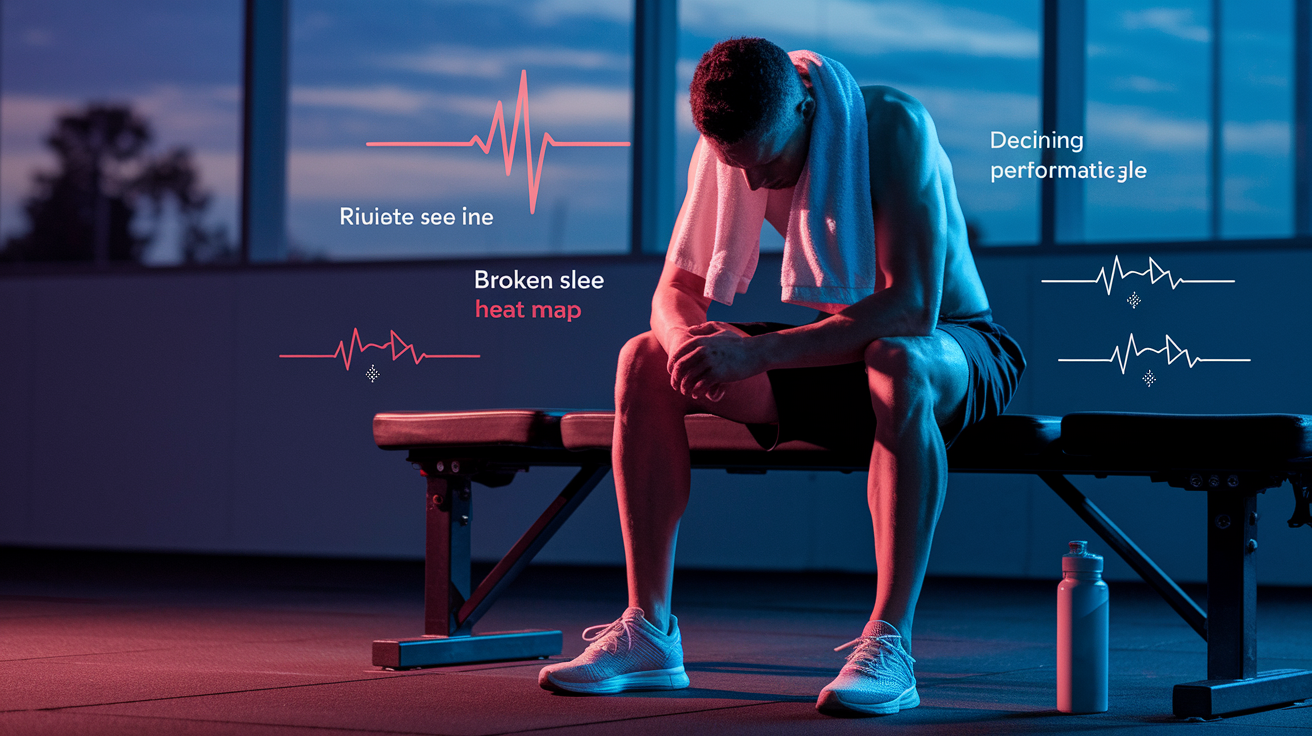
One tough workout doesn’t mean you’re overtraining. Everyone has a session where the weights feel heavier or the pace feels slower than usual. The real concern shows up when several changes stack together and stick around, even after you’ve rested the way you normally would.
Here’s what to watch for:
- Declining pace, power, strength, repetitions, or endurance at a workload that used to feel manageable
- Workouts feeling noticeably harder even though the demand hasn’t changed
- Fatigue that’s still there after a rest day, not just during hard training blocks
- Soreness lasting beyond the usual 24 to 72 hours, especially past 5 days
- Heavy legs, stiffness, or a warm up that suddenly takes twice as long to feel normal
- Resting heart rate sitting above your personal baseline for several mornings in a row
- Trouble falling asleep, staying asleep, or waking up still feeling tired
- Irritability, low motivation, less enjoyment of training, or trouble focusing
- Appetite, weight, libido, or menstrual cycle changes that don’t have another clear explanation
- More colds than usual, nagging pain that won’t settle, or repeat overuse injuries
For a broader look at how these show up in performance, physical, sleep, and mood categories, signs of overtraining is a solid supporting read.
The most useful rule here isn’t about any single symptom. It’s about comparing your current signals with your own baseline, not some generic standard. What’s normal fatigue for you might look nothing like what’s normal for a training partner.
Act when at least 2 to 3 of these categories are off for several days in a row, especially if your actual performance, your pace, your numbers, your output, is also slipping. One rough night of sleep plus a slightly higher resting heart rate isn’t a crisis. That same pattern for a week and a half, paired with declining reps and a short temper, is worth paying attention to.
Normal Training Fatigue Versus Early Overtraining
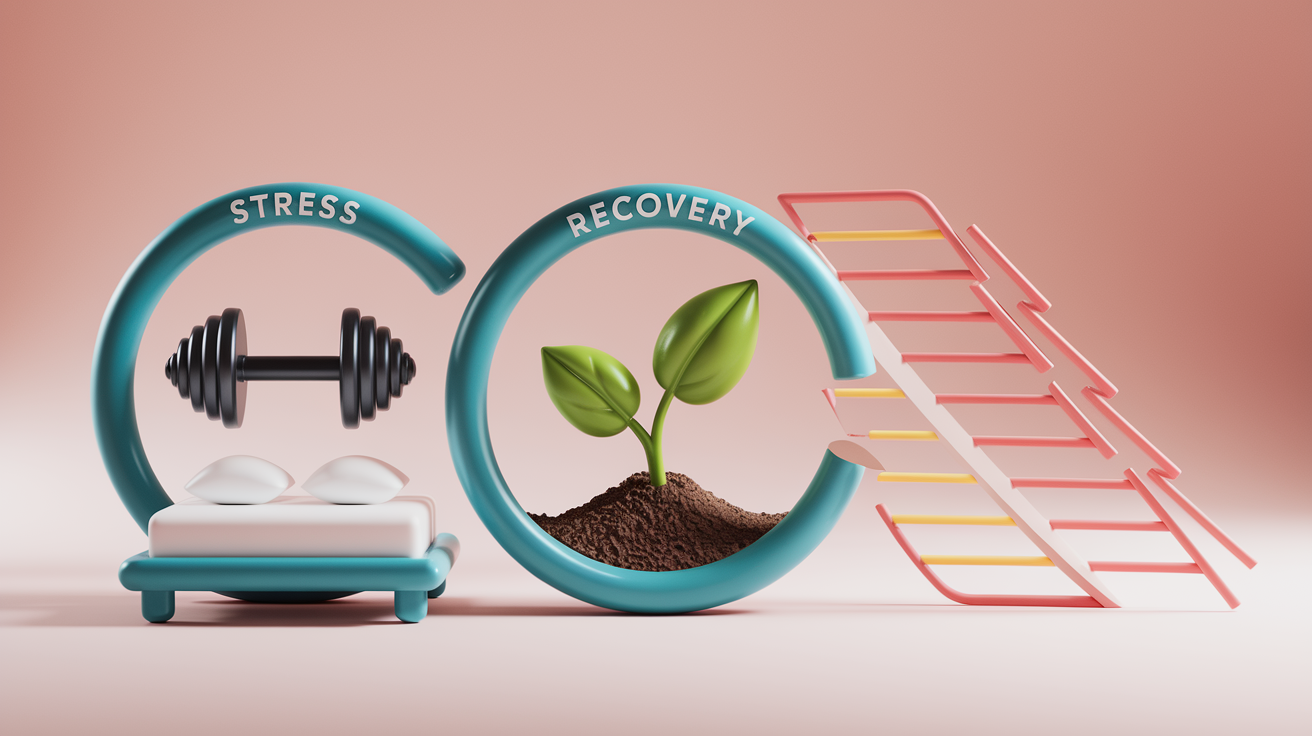
Training works through a simple cycle: stress, then recovery, then adaptation. You push your body, you rest, and it comes back a little stronger. When that cycle gets interrupted long enough, it can drift along a spectrum, starting with functional overreaching (a planned, short term push), moving into non functional overreaching, and eventually reaching overtraining syndrome if nothing changes. What overtraining actually is breaks down that spectrum in more detail if you want the fuller picture.
| Feature | Normal Training Fatigue | Possible Early Overtraining |
|---|---|---|
| Duration | Improves within 24 to 72 hours | Persists for several days or longer |
| Response to rest | Clear improvement after one standard recovery day | Little or no improvement even after rest |
| Clustering | One expected training response, like sore legs after leg day | Deterioration across 2 to 3 or more categories at once |
| Performance trend | Stable or improving once recovered | Stalled or declining output at a familiar effort |
Persistence, clustering, and a real drop in performance tell you more than any single time cutoff ever could. A day of heavy legs after squats is expected. Heavy legs, poor sleep, and a short fuse all showing up together for a week and a half is a different story.
It’s worth separating burnout from overtraining here too, since people mix them up. Burnout is mostly emotional. Exhaustion, disengagement, losing interest in something you used to care about. Overtraining includes that mental piece but also brings physical and performance changes along with it. The two often overlap, which is part of why early tracking matters so much.
Tracking Body Signals That Reveal Overtraining Trends
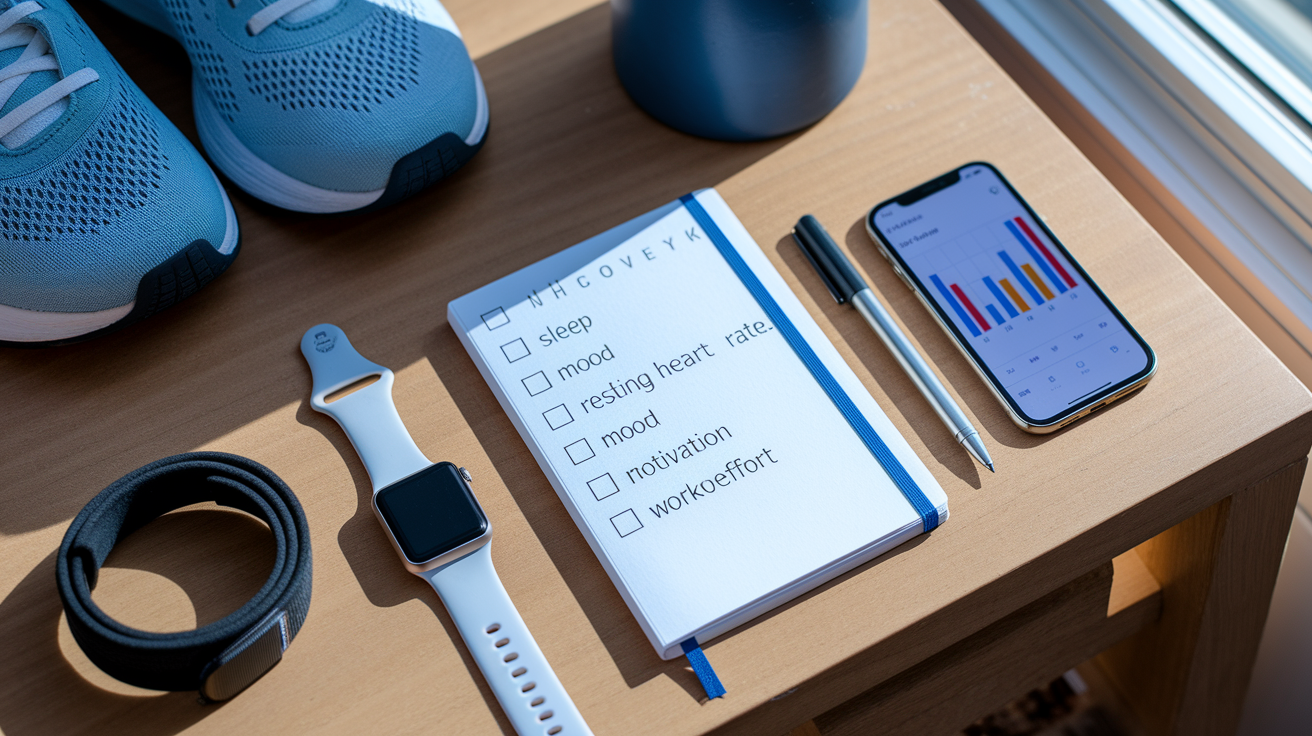
Feelings and numbers work better together than either one alone. You might feel fine on a morning when your resting heart rate is quietly climbing. Or your numbers might look okay while your motivation has quietly tanked. Neither view tells the whole story by itself.
That’s why a repeatable system beats guesswork. The goal is simple, a quick morning check, a note after training, a weekly review, and a plan for what to do next. This builds directly on the warning signs from earlier, so there’s no need to relearn what to look for, just how to record it consistently.
A Two Minute Morning Check
Before your day gets going, jot down your sleep duration and quality, your resting heart rate under similar conditions each time (same position, same time of day), your perceived fatigue, soreness, mood, motivation, and any early signs of getting sick.
Use the same 1 to 5 scale every day for the subjective stuff. It doesn’t need to be fancy, just consistent. And compare your numbers to your own history, not to what some app or friend says is normal. Your baseline is the only one that matters here.
A Post Workout Load Check
Right after training, log the session duration, your session RPE (rating of perceived exertion) on a 1 to 10 scale, reps in reserve if you’re lifting, and your actual output, pace, power, weight, or repetitions.
If your RPE feels unusually high for a workout that’s normally easy, flag it. That doesn’t mean anything’s wrong yet. It just means it’s worth watching over the coming days rather than brushing off.
Reviewing Seven Day Trends and Reassess
Once a week, pull back and look at the bigger pic
Final Words
in the action we gave a short checklist, a two-minute morning check, and a staged 7-14 day response to catch early warning signs before they deepen.
Track simple signals and compare them to your own baseline. If 2-3 areas worsen together and performance drops, reduce load, prioritize sleep and fuel, and reassess over a week.
For a quick takeaway on how to spot overtraining early signs: watch for clustered, persistent changes and treat recovery like a short experiment. Small, tracked steps often get you back stronger.
FAQ
Q: How do you know if you overdid it?
A: You know you overdid it when several signs cluster and persist: performance stalls, fatigue stays after rest, soreness lasts 5+ days, resting heart rate rises, sleep or mood worsen, or illness recurs.
Q: How do you fix overtraining?
A: You fix overtraining by sharply reducing training load, avoiding hard sessions for days 1–3, using easy active recovery, reassessing 7–14 days, and gradually reintroducing low-intensity work; see a clinician if no improvement.
Q: What are the symptoms of Stage 1 overtraining syndrome?
A: The symptoms of Stage 1 overtraining syndrome include stalled or declining strength or endurance, persistent fatigue, excessive soreness, poor sleep, elevated resting heart rate, irritability, low motivation, appetite changes, and more frequent minor illness.
Q: How long does it take to fix overtraining?
A: Fixing overtraining typically takes days to weeks for mild to moderate cases, but true overtraining can need months; reassess with tracked measures and seek medical help if symptoms don’t improve after a staged 7–14 day response.