

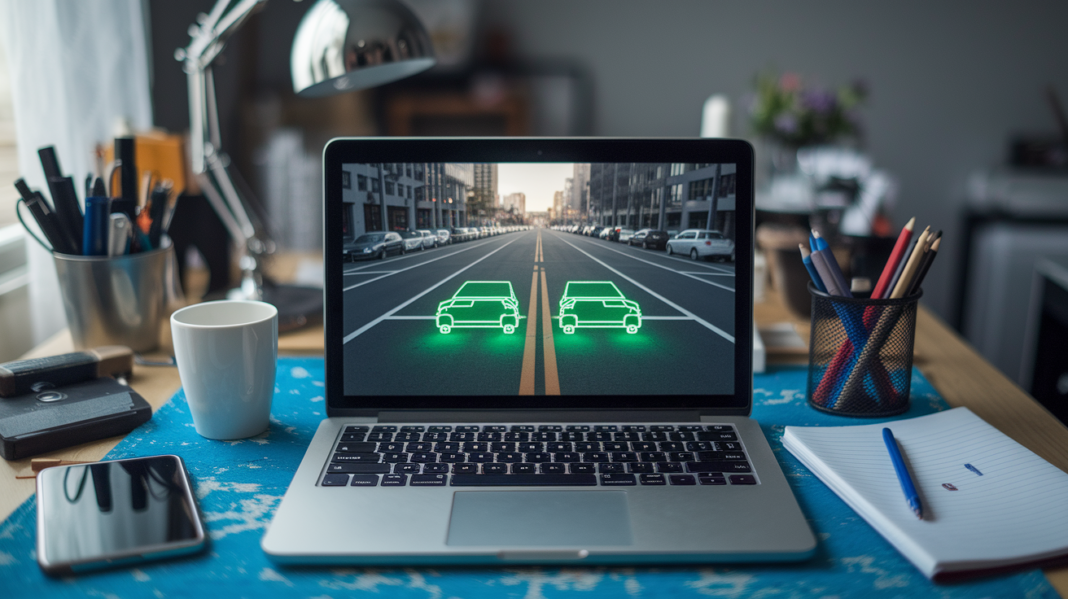

What if a machine could read someone’s last few footsteps and guess where they’ll step next?
That’s what tracking algorithms do.
They give an object a persistent identity across time so we can follow the same thing from frame to frame or ping to ping.
In this article we’ll explain the simple predict-then-confirm loop, how trackers match new detections to existing tracks, and common types like Kalman and particle filters.
You’ll leave knowing where tracking shows up in everyday apps and one small test you can try.
Tracking Algorithm Basics And Core Purpose
Tracking algorithms are computational methods that follow the same object, data point, or behavior across time. They give it a persistent identity instead of treating every new frame or reading as a fresh mystery.
That’s really what tracking algorithms boil down to. In video, this means locating the same object across successive frames rather than just spotting objects one frame at a time with no memory of what came before. But tracking algorithms don’t just mark where something is. They also build up attributes like speed, how long the object’s been visible, whether it’s currently hidden behind something, and where it’s likely headed next.
These algorithms take sequential data, whether that’s video frames, GPS pings, sensor readings, or click streams, and use the pattern of past values to predict what comes next or how something’s changing. Think of it like reading someone’s last few footsteps to guess where they’ll step next, instead of staring at the whole room hoping to spot them again from scratch.
You’ve probably used tracking algorithms today without thinking about it. Your phone’s GPS follows your route as you drive, updating your position based on where you just were and how fast you were moving. A video call app keeps a box locked onto your face even as you shift around. A fitness app watches your daily step count and quietly tracks the trend, not just today’s number.
Object tracking and computer vision tracking show up constantly, but the idea stretches well beyond cameras. Here’s where you’ll typically find tracking algorithms at work.
- Computer vision (following faces, bodies, or objects in video)
- GPS and navigation (following your position and route over time)
- User behavior analytics (following how someone moves through an app or website)
- Target and sensor tracking (radar and lidar systems following moving objects)
Why Tracking Algorithms Are Needed
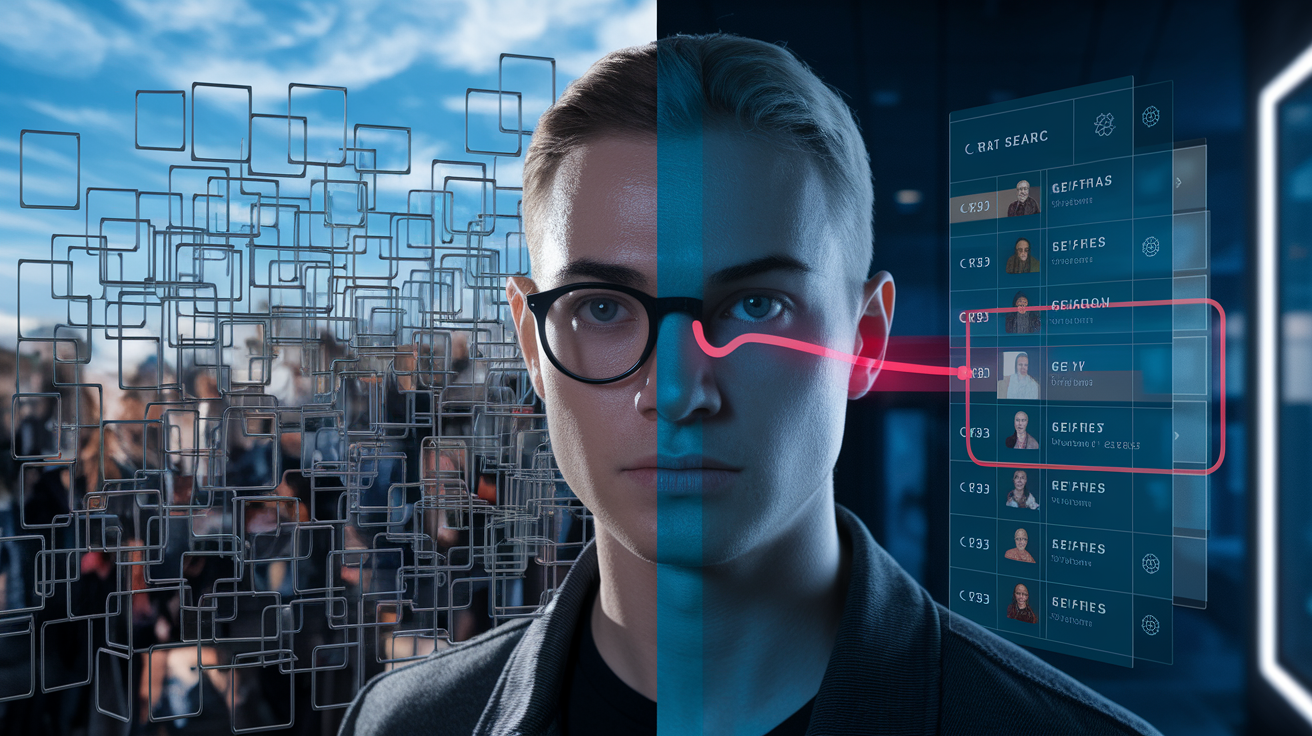
Here’s the problem tracking algorithms actually solve. If you tried to detect an object fresh in every single frame of a video, you’d technically know where the object is each time. But you’d have no idea if the box you found in frame 50 is the same person as the box you found in frame 49. Detection alone gives you a pile of unordered boxes per frame. It doesn’t preserve identity, and running a full detector on every single frame is computationally expensive, especially at higher resolutions or frame rates.
This is the core object detection vs tracking distinction, and it matters more than it sounds like at first.
Tracking solves this by using what it already knows. Once an algorithm has a previous location, a sense of motion direction and speed, and maybe some appearance details, it can predict roughly where the object should be next. Instead of scanning the entire frame again, it just checks a small area around that prediction. This is faster, and it’s also more forgiving. If the object briefly disappears behind something or a detector misses it for a frame or two, the tracker can often keep going based on its prediction until the object reappears.
This predict then confirm pattern isn’t unique to video. The same logic drives real-time tracking of GPS coordinates (predict the next point on a route) and even user click sequences (predict the next likely action based on recent behavior). Tracking algorithm complexity often comes down to how good that prediction step is, and how well the system handles it when the prediction turns out to be wrong.
Sequential Data Processing: How Tracking Algorithms Predict Movement

At its heart, a tracking algorithm runs the same loop over and over, frame after frame or reading after reading. It predicts where the object should be next, based on appearance and motion clues gathered from prior frames. Then it searches a small area near that prediction rather than the whole scene. Once it finds a match, it updates its internal model with the new information. Then the cycle repeats.
Broken down simply, the loop looks like this.
- Predict the object’s next likely position using its recent motion and appearance
- Search a small local window around that predicted position, not the entire frame
- Compare candidates in that window to confirm the actual match
- Update the tracker’s internal state with the new confirmed position, then move to the next frame
That’s the basic engine behind most tracking algorithms, whether they’re tracking one object or fifty.
When there are multiple objects in a scene, there’s an extra wrinkle. The algorithm has to figure out which new detection belongs to which existing track, a step called data association. One common way to handle this is building what’s called a bipartite graph, basically a grid comparing every existing tracked object at the previous moment to every new detection at the current moment. Each pairing gets a cost score based on things like the distance between box centers, how much two boxes overlap (measured using something called IOU, or Intersection over Union), or how similar the objects look using learned appearance features. The pairings with the lowest combined cost usually get matched together, which is how the tracker keeps identities straight even when several objects are moving around at once.
Common Types Of Tracking Algorithms

Tracking algorithms generally fall into a handful of recognizable families, depending on whether they mainly model motion, appearance, or some blend of both. Some of these date back decades and were built for physics and statistics problems long before computer vision existed. Others are newer, built on deep learning and trained on massive datasets of labeled video.
| Algorithm Type | What It Does | Example Use |
|---|---|---|
| Kalman Filter | Predicts position and velocity from noisy measurements using a predict-measure-update cycle | Missile guidance, lunar descent guidance, modern object tracking (e.g., SORT) |
| Particle Filter | Tracks probability using a set of weighted samples, good for non-Gaussian or unpredictable motion | Tracking erratic or nonlinear movement patterns |
| Optical Flow (KLT) | Follows a small set of distinctive feature points frame to frame (sparse), or computes motion for every pixel (dense) | Video stabilization, motion analysis |
Final Words
You learned a plain definition of tracking algorithms, why we use them instead of frame-by-frame detection, and the step-by-step predict → search → update loop that keeps tracks stable.
We also ran through common types — Kalman, particle, optical flow, correlation filters, and deep learning — plus how single-object and multi-object trackers handle identity and brief occlusion.
If you still wonder what are tracking algorithms, think of them as tools that follow things over time and predict where they’ll be next. Spotting them in apps you use is an easy, useful next step.
FAQ
Q: What are the 7 types of algorithms?
A: The seven types of algorithms commonly named are: sorting, searching, divide and conquer, dynamic programming, greedy, backtracking, and randomized algorithms, each solving different problem patterns and trade-offs.
Q: Is Yolo a CNN algorithm?
A: YOLO (You Only Look Once) is a CNN-based real-time object detection algorithm that uses convolutional layers to predict bounding boxes and class labels in a single pass over the image.
Q: What are the different types of tracking methods?
A: Different types of tracking methods include Kalman filters, particle filters, optical flow (dense or KLT), meanshift/Camshift, correlation-filter trackers, and deep learning (Siamese) or detection-based multi-object trackers.
Q: Can you give me an example of a tracking system?
A: An example of a tracking system is a smartphone navigation app that uses GPS pings and map matching to follow your route, estimate speed, and predict your next position in real time.