

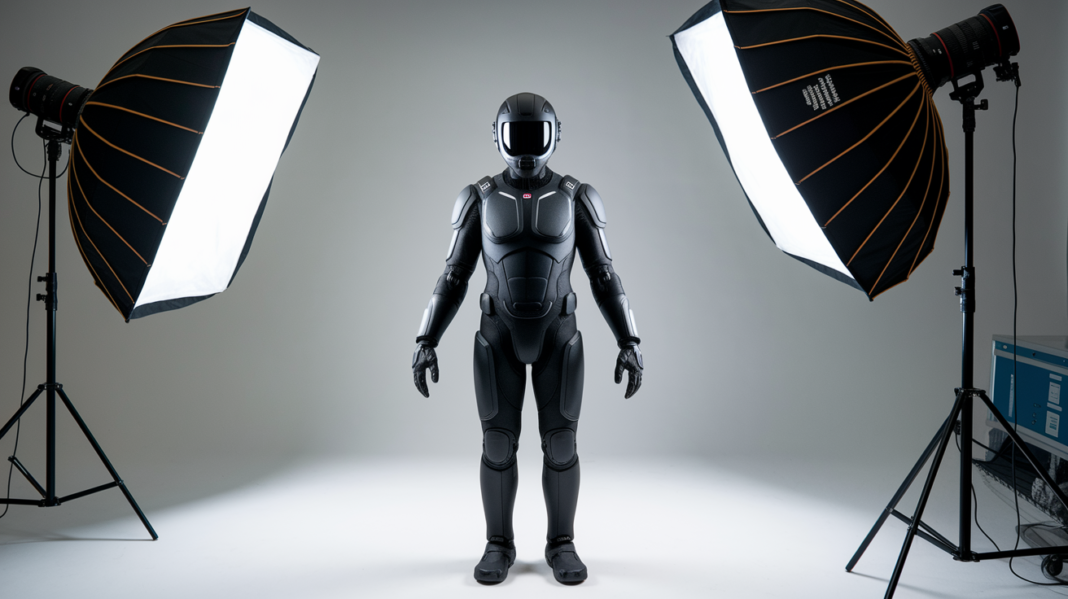

Think motion tracking is just cameras following you? Not close.
It’s a system that captures motion with sensors or cameras, turns raw readings into precise 3D positions, and sends that data to a game, headset, or analytics dashboard.
In this post we’ll pull back the curtain on those three steps, capture, processing, and output, and show how different methods like camera rigs, body-worn sensors, markerless video, and magnetic setups trade accuracy, cost, and portability.
By the end you’ll know what really happens when your movement becomes digital and what to try next.
What Motion Tracking Means And How It Works In Practice
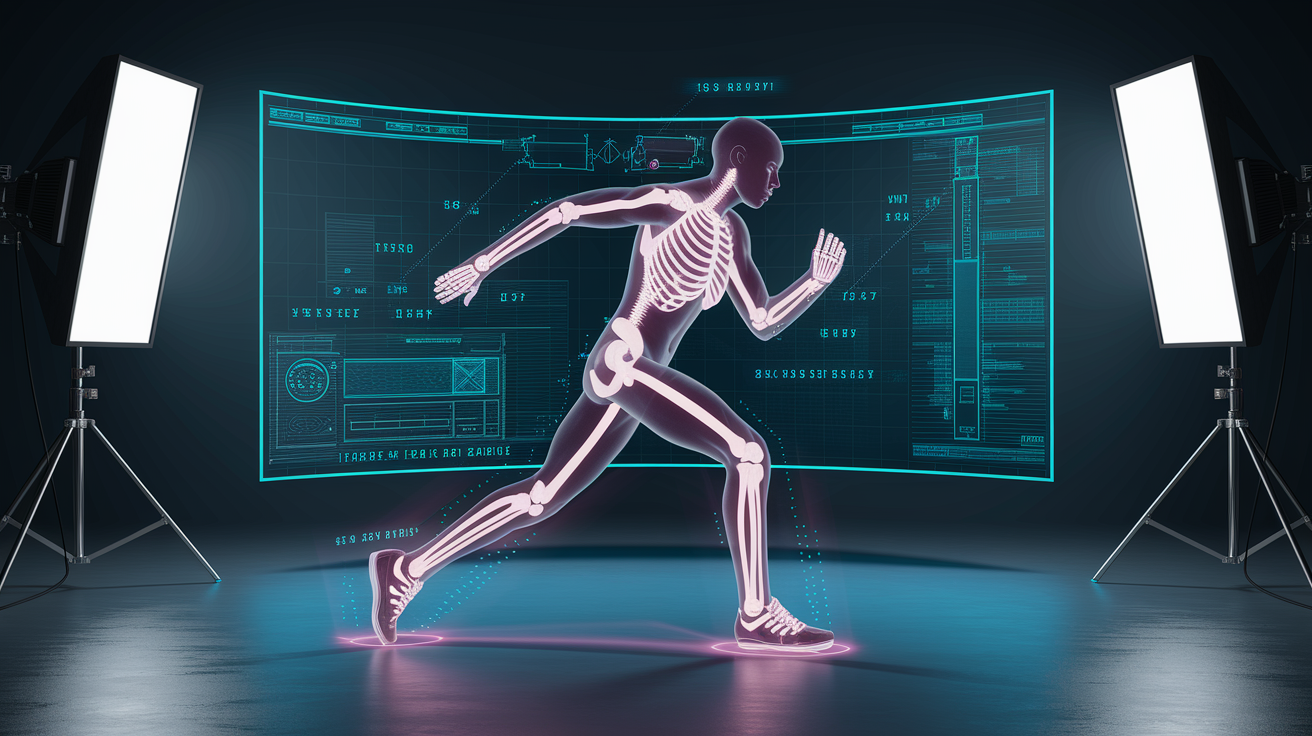
Motion tracking works by using sensors or cameras to capture movement, then running that data through algorithms that turn it into digital coordinates for position and orientation. That’s the short answer. The longer answer gets more interesting, and it applies whether you’re talking about a video game character, a VR headset, or a football player wearing a GPS vest.
At its core, motion tracking follows three stages. First, capture: sensors, cameras, or markers gather raw movement data from a person, object, or even a camera itself. Second, processing: algorithms take that raw data and turn it into usable position and orientation values, numbers that describe where something is and which way it’s facing. Third, output: that digital information gets sent somewhere useful, like a game engine, a film’s animation rig, a VR headset display, or a sports analytics dashboard. The same loop applies whether you’re tracking a stunt performer on a film set or a runner’s stride on a treadmill.
Here’s where people often get tripped up. Motion tracking is the broad term, covering any physical movement converted into digital data, including cameras, drones, or objects. Motion capture (mocap) is more specific. It’s the subset of motion tracking focused on skeletal or actor movement, usually aimed at driving a 3D character rig. So all motion capture is motion tracking, but not all motion tracking is motion capture.
Different methods get you to that same three-stage result in very different ways. Optical systems use cameras and markers. Inertial systems use body-worn sensors. Markerless systems use machine learning to read plain video. Magnetic systems use electromagnetic fields. Each has its own strengths, quirks, and ideal use cases. We’ll break those down next.
Why Motion Tracking Requires Multiple Technologies Working Together
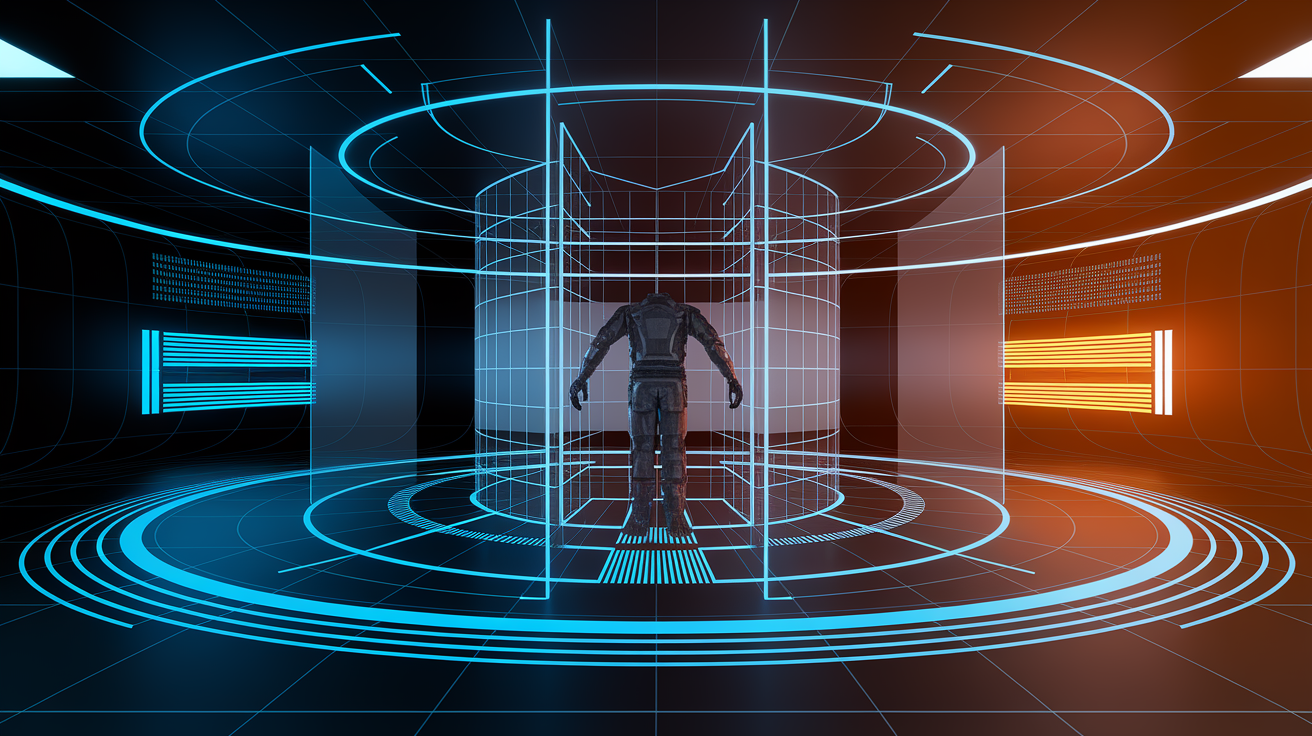
Movement is harder to capture than it looks. Every joint, limb, or object moving through space has multiple degrees of freedom, meaning it can shift position along three axes (x, y, z) and rotate around each of those same axes. Reliably capturing all of that, in real time, without gaps or errors, is genuinely difficult. Cameras lose track of a marker the moment something blocks the view, a problem called occlusion. Lighting changes can confuse image-based systems. Fast motion, like a sprint or a punch, can blur past what a sensor or camera can register cleanly.
This is exactly why sensor fusion exists. Instead of relying on one data source, tracking systems often combine camera data, inertial data, and predictive algorithms to fill in gaps and smooth out errors. If a camera loses a marker for a few frames, an inertial sensor or a motion prediction model can estimate where it likely went. Calibration matters too. All these different data streams need to be translated into one shared coordinate system, otherwise a camera’s sense of “up” won’t match an IMU’s sense of “up,” and the resulting movement data turns into a jittery mess. Getting spatial tracking right means every sensor, camera, and algorithm speaks the same coordinate language before any of the data becomes usable.
Optical Motion Tracking: Cameras, Markers, And Triangulation
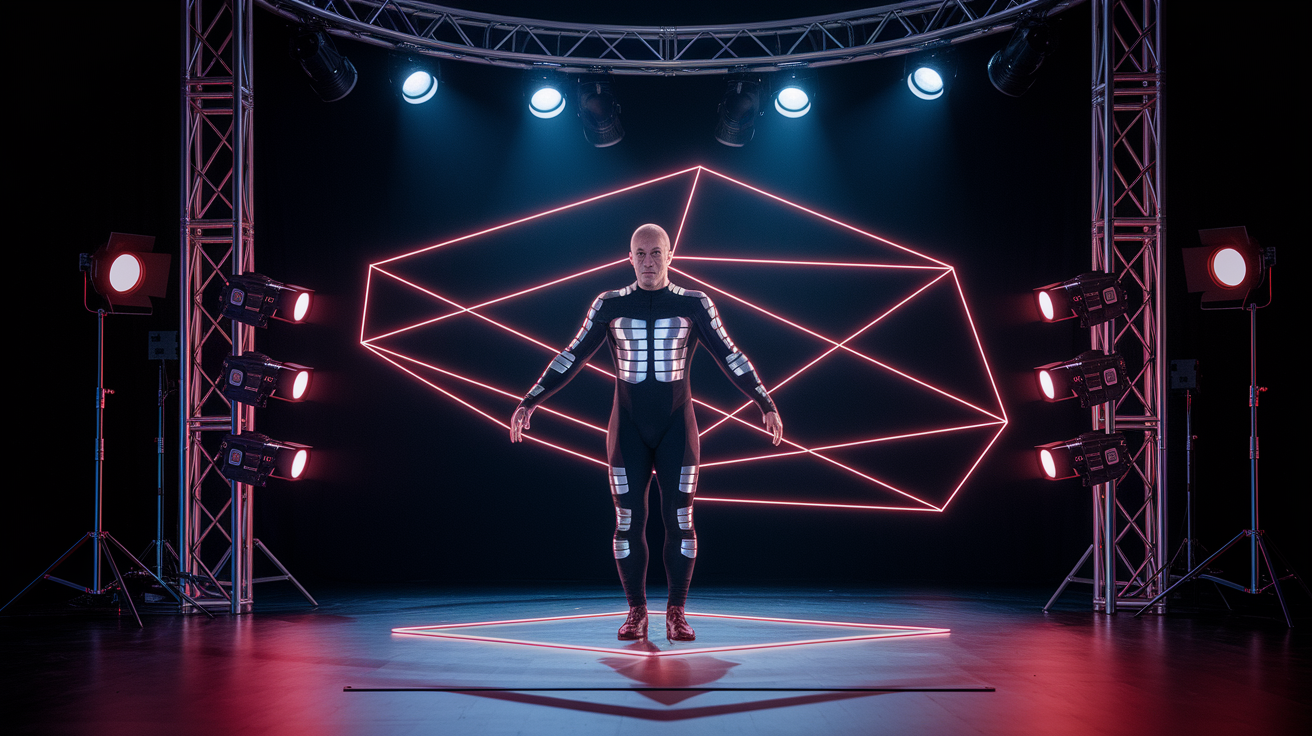
Optical motion tracking is the original professional standard, and it’s still the gold standard for accuracy today. It relies on a room full of synchronized, high-speed infrared cameras working alongside markers placed on a person or object, tracking every twitch and step from multiple angles at once.
The core technique is triangulation. Each camera in the room sees the same marker from a slightly different angle. By comparing where that marker appears across several camera views at the exact same moment, the software calculates its precise position in 3D space. Do this dozens of times per second, for dozens of markers at once, and you get a full moving skeleton in real time. More cameras generally mean fewer blind spots and better accuracy, which is why professional stages often use 20 to 30 or more cameras arranged around the capture volume.
Markers themselves come in two types. Passive markers are small reflective balls that bounce infrared light back to the cameras, requiring no power source of their own. Active markers are small LEDs that emit their own light, which can make them easier to tell apart in complex scenes.
A few quick facts worth knowing about optical setups:
| Aspect | Detail |
|---|---|
| Camera count | 4 (small volumes) to 30+ (large professional stages) |
| Frame rates | 60 to 120 fps, sometimes higher for fast sports or stunt work |
| Accuracy | Extremely high, often the most spatially precise method available |
| Main limitation | Occlusion, when a marker is blocked from camera view, creating data gaps that need manual cleanup |
| Common vendors | Vicon, OptiTrack, Motion Analysis |
Inertial Motion Tracking: How IMU Suits Capture Movement Without Cameras
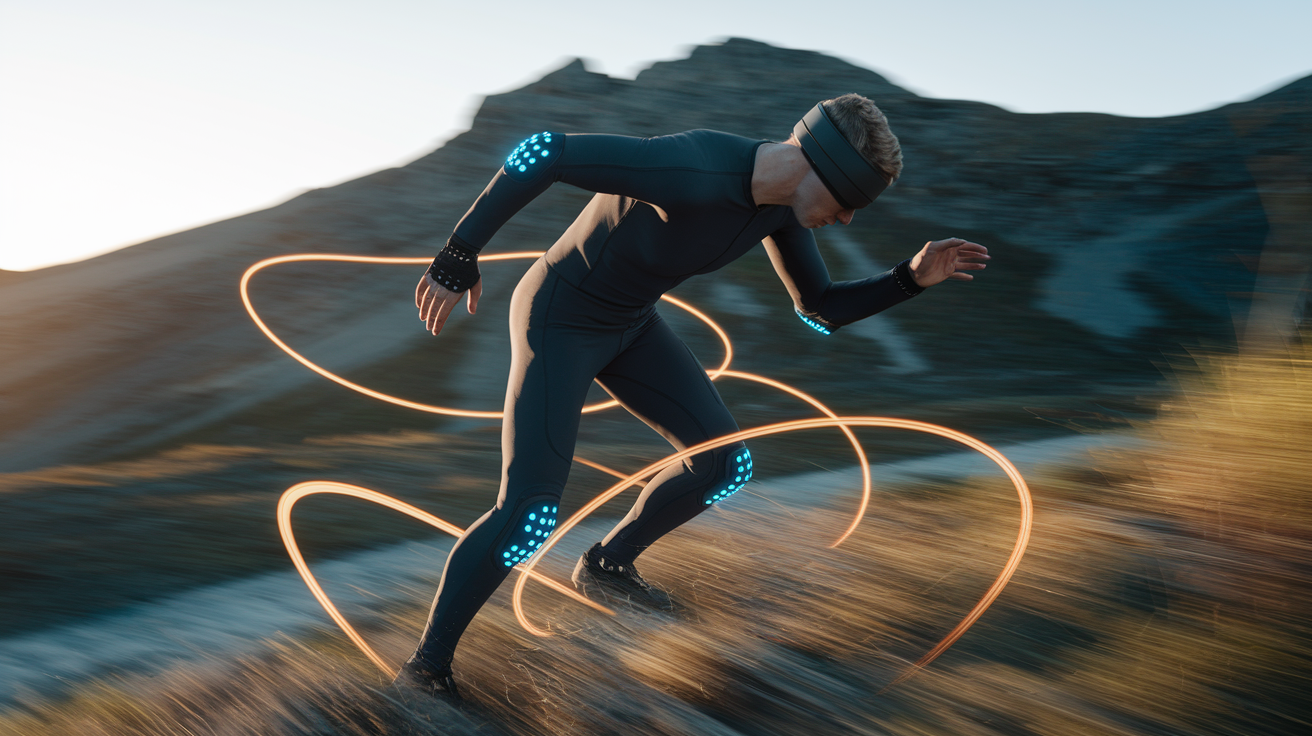
Inertial motion tracking takes a completely different approach. Instead of cameras watching from the outside, sensors get worn directly on the body, so there’s no studio, no marker placement, and no line of sight requirements at all.
These systems rely on inertial measurement units (IMUs), small sensors placed at key body nodes like the wrists, chest, hips, and legs. Each IMU combines an accelerometer (which measures changes in speed and direction) with a gyroscope (which measures rotation), and sometimes a magnetometer for extra orientation reference. Through a process called sensor fusion, the system blends these readings together to figure out how each body part is rotating and moving relative to the others. A full suit, like the Rokoko Smartsuit Pro II, typically uses around 19 of these sensors spread across the body.
The appeal here is portability. There’s no camera rig to set up, no studio required, and performers can move outdoors, on uneven terr
Final Words
We answered how does motion tracking work: sensors or cameras capture movement, and algorithms turn that into position and orientation data. Then we ran through the three-stage flow: capture, process, output.
You saw why systems mix technologies to handle occlusion and drift, and got clear examples: optical systems with markers and IMU suits that work without cameras. We also clarified motion capture versus motion tracking and previewed markerless and magnetic methods.
One simple takeaway about how does motion tracking work: it’s sensors plus smart math that turn motion into useful digital data — and that opens up lots of creative, practical uses.
FAQ
Q: Is motion tracking considered AI?
A: Motion tracking is considered AI when machine learning powers pose estimation or prediction; basic tracking uses sensors and algorithms without ML, so many systems blend classical tracking with AI enhancements.
Q: How do I turn on motion tracking on my iPhone?
A: Turning on motion tracking on an iPhone is done in Settings > Privacy and Security > Motion and Fitness: enable Fitness Tracking, then allow specific apps to access Motion and Fitness data.
Q: How do motion tracking cameras work?
A: Motion tracking cameras work by recording movement across frames and, with multiple synchronized cameras or markers, triangulating positions; software then converts those points into 3D coordinates and usable motion data.
Q: How do motion tracking suits work?
A: Motion tracking suits work by placing IMUs (accelerometers and gyroscopes) at body nodes; sensor fusion calculates each segment’s orientation to build a digital skeleton, with external anchors correcting positional drift.